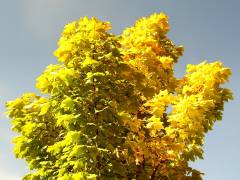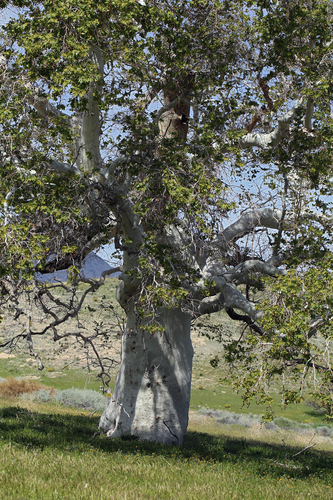
Platanus, Genus, racemosa, Species,
- Genus & species
California sycamore
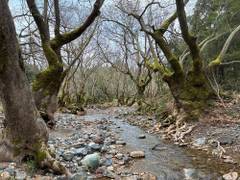
Native to California and Baja California, from Shasta County south to the Sierra San Pedro Mártir; the species occurs along streams, rivers, and canyon bottoms from sea level to approximately 4,000 ft (1,200 m); a riparian obligate — naturally restricted to watercourses where the deep root system accesses groundwater through the dry California summer
Overview
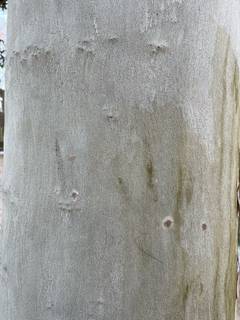
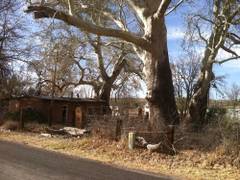
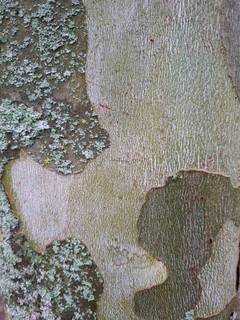
Platanus racemosa is a large deciduous tree in the plane tree family (Platanaceae) growing 40-80 ft (12-24 m) tall and 40-60 ft (12-18 m) wide, typically with a multi-stemmed leaning picturesque growth habit — the trunks often angle outward from the base, creating a wider more sculptural silhouette than the single-trunked P. occidentalis. Bark exfoliates to reveal white, cream, and grey-green mottled inner bark — similar to P. occidentalis but with a greyer less bright white tone. Leaves are palmately lobed with 3-5 deep lobes, 6-10 inches (15-25 cm) across, medium to dark green above, fuzzy pale beneath. Fruit are spherical achene balls 0.75-1 inch (2-2.5 cm) in diameter, produced in racemes of 3-7 balls on a single stalk — the racemose fruit arrangement (multiple balls per stalk) gives the species its epithet and separates it from both P. occidentalis (1 ball per stalk) and P. × acerifolia (2 balls per stalk). Native to riparian corridors in California from the Sacramento Valley south to Baja California. Tolerates summer drought once established — the deep root system accesses groundwater in the species' native streamside habitat. Susceptible to anthracnose and sycamore scale. In the Pacific Northwest, marginally hardy (zones 7b-9) and rarely planted, though the species grows in the mildest areas.
Native Range
Platanus racemosa is native to California and Baja California, from Shasta County south to the Sierra San Pedro Mártir. The species occurs along streams, rivers, and canyon bottoms from sea level to approximately 4,000 ft (1,200 m). A riparian obligate — naturally restricted to watercourses.Suggested Uses
Planted as a shade tree in large California landscapes, parks, and riparian restoration projects. The multi-stemmed sculptural form and white-mottled bark are widely used in California native plant gardens. Used extensively in California riparian restoration — the species gives shade for streams (reducing water temperature) and bank stabilization. In the Pacific Northwest, a specialty planting for the warmest zones.How to Identify
Appearance
Size & Dimensions
Height40' - 80'
Width/Spread40' - 60'
Bloom Information
Inconspicuous flowers in March-April. Spherical fruit balls develop in racemes of 3-7, ripening brown by autumn and persisting through winter on long stalks before disintegrating and releasing hairy achenes in late winter through early spring.
Detailed Descriptions
Foliage Description
Medium to dark green palmately lobed leaves with 3-5 deep lobes, 6-10 inches (15-25 cm) across, fuzzy pale beneath; the deep lobing separates the species from the more shallowly lobed P. occidentalisGrowing Conditions
Sun Requirements
Requires 6-10 hours of direct sunlight daily
• Full Sun: 6+ hours of direct sunlight
• Partial Shade: 3-6 hours of direct sunlight
• Full Shade: Less than 3 hours of direct sunlight
Care & Maintenance
Care Guide
Plant in full sun in deep moist soil at pH 6.0-8.0. Tolerates heavy clay and alkaline soil. Space 30-40 ft (9-12 m) apart. Water regularly during the first 3-5 years; once established, the species is drought-tolerant if deep soil moisture is available. In the Pacific Northwest, the species is suited to the mildest areas only (zones 8b-9). The large spreading canopy requires substantial space.Pruning
Prune in late winter while dormant. Remove dead and crossing branches. The multi-stemmed habit is natural and should not be corrected to a single trunk. Raise canopy by removing lower branches as desired.Pruning Schedule
Prune: February–March
late winter