Image 1 of 12
1 / 12
Plant Reference
Platanus, Genus, ×, Hybrid, acerifolia, Species,
- Genus & species
- Hybrid
London plane tree
Hybrid of garden origin, first documented in the late 17th century in Europe; parent species are {Platanus occidentalis} (American sycamore, native to eastern North America) and {Platanus orientalis} (Oriental plane, native to southeastern Europe and western Asia); the hybrid does not occur in wild populations
Overview
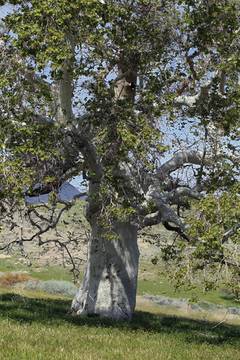
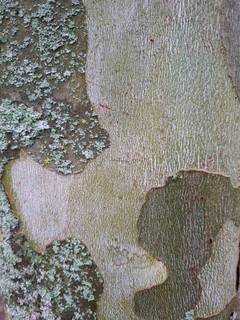
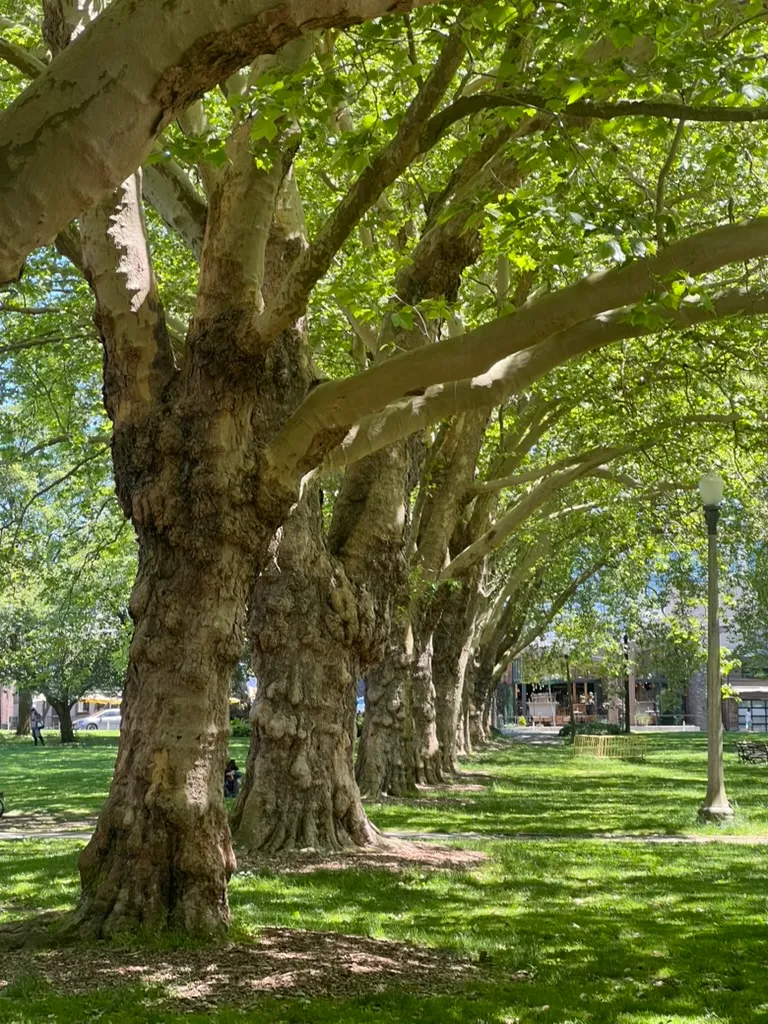
Platanus × acerifolia is a large deciduous tree in the family Platanaceae, reaching 60-80 feet (18-24 m) tall and 50-70 feet (15-21 m) wide with a broad rounded to pyramidal crown carried on massive spreading limbs. The tree is a hybrid between Platanus occidentalis (American sycamore) and Platanus orientalis (Oriental plane) first documented in the late 17th century, and it has been planted widely as a street tree in European and North American cities for over 300 years because of tolerance for urban pollution, compacted soil, and heavy pruning. Bark exfoliates in irregular patches and reveals a mosaic of cream, olive-green, and tan inner bark — the mottled bark is the main diagnostic feature and the principal winter ornamental interest. Leaves are alternate, simple, palmately 3-5 lobed, 6-10 inches (15-25 cm) wide, and medium to dark green with a leathery texture. Fall foliage turns yellowish-brown and the color is not a significant ornamental feature. Inconspicuous monoecious flowers open in April as pendulous spherical heads with male and female heads on the same tree. Bristly spherical seed balls approximately 1 inch (2.5 cm) across develop through summer and hang singly or in pairs on pendulous stalks through winter, releasing wind-borne seeds with irritating stiff hairs in spring. Growth is moderate to fast at 18-24 inches (46-61 cm) per year, and mature trees commonly reach 200-400 years in urban settings — far exceeding the working lifespan of most other street tree species. Anthracnose (Apiognomonia veneta) causes twig dieback and leaf distortion in cool wet springs but is primarily cosmetic and trees typically recover with a second flush of foliage by midsummer. Cultivars 'Bloodgood' and 'Columbia' carry improved anthracnose resistance and are the selections specified for most new street-tree plantings. Leaf and seed ball litter is substantial, and surface roots heave sidewalks and pavement in sites with restricted soil volume.
Native Range
Platanus × acerifolia is a hybrid of garden origin first documented in Europe in the late 17th century, possibly in Spain or the Oxford Botanic Garden in England where the two parent species were growing in proximity. Parent species are Platanus occidentalis (American sycamore, native to eastern North America from southern New England west to Iowa and south to northern Florida) and Platanus orientalis (Oriental plane, native to southeastern Europe, the Balkans, and western Asia east to Iran). The hybrid does not occur in wild populations and exists only in cultivation.Suggested Uses
Planted as a street tree, park tree, and large shade tree in urban and open landscape settings with 30-40 feet (9-12 m) of clearance from buildings and pavement, in zones 4-8. The broad tolerance of urban pollution, compacted soil, heat, drought, periodic flooding, and heavy pruning makes the species suited to street plantings, plaza and park settings, and formal boulevard allées in the classical European tradition. The pollarding pruning technique carries cultivated trees to much larger working canopies on smaller trunks and extends useful life in confined urban positions. Not suited to small residential landscapes where the 50-70 foot (15-21 m) mature spread exceeds available space, sites with restricted soil volume where surface roots heave sidewalks and pavement, landscapes where the substantial leaf and seed-ball litter is an unwelcome maintenance burden, or sites near pedestrian pathways during the March to April seed dispersal window when the irritating hairs become airborne.How to Identify
Appearance
Size & Dimensions
Height60' - 80'
Width/Spread50' - 70'
Colors
Bloom Information
Inconspicuous monoecious flowers open in April in pendulous spherical heads lasting approximately 1 week, with male and female heads borne separately on the same tree. The species is wind-pollinated and the bloom itself is not an ornamental feature. Bristly spherical seed balls approximately 1 inch (2.5 cm) across develop through summer after female bloom and hang on pendulous stalks through fall and winter, shedding wind-borne seeds with stiff irritating hairs in early spring as the balls break apart.
Detailed Descriptions
Flower Description
greenish, inconspicuous, borne in pendulous spherical heads; monoecious with male and female heads on the same tree; wind-pollinatedFoliage Description
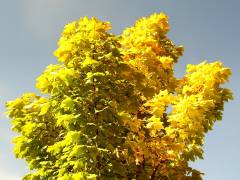
medium to dark green, leathery-textured; palmately lobed with 3-5 lobes, 6-10 inches (15-25 cm) wide; turns yellowish-brown in fall with limited ornamental interestGrowing Conditions
Sun Requirements
Requires 6-12 hours of direct sunlight daily
• Full Sun: 6+ hours of direct sunlight
• Partial Shade: 3-6 hours of direct sunlight
• Full Shade: Less than 3 hours of direct sunlight
Care & Maintenance
Care Guide
Plant in well-drained soil with a pH of 5.0-8.0 in full sun; tolerated soil types include loam, clay, sand, silt, and chalk. The species tolerates air pollution, compacted urban ground, heat, road salt, and periodic flooding, and this broad site tolerance accounts for the long history of street-tree planting in European and North American cities. Water weekly through the first 2-3 growing seasons; established trees are drought-tolerant but maintain denser canopy with moderate moisture during extended dry periods. Anthracnose (Apiognomonia veneta) causes twig dieback and leaf distortion in cool wet springs and affected trees typically recover by midsummer with a second flush of foliage; cultivars 'Bloodgood' and 'Columbia' carry improved anthracnose resistance and are the selections for new street-tree plantings in regions where the disease is recurring. Adequate soil volume for root development reduces sidewalk and pavement heaving from surface roots. Leaf and seed ball litter is substantial and seasonal cleanup is part of routine maintenance. The stiff hairs on dispersing seed balls can cause skin and respiratory irritation during the March to April dispersal window.Pruning
Pruning is done in late winter (January through February) while the tree is dormant. Canopy thinning every 3-5 years reduces wind resistance on mature trees and improves light penetration to lower branches. Dead, damaged, crossing, and low-hanging branches are removed at the branch collar. The species tolerates heavy pruning and pollarding — the traditional European street-tree management technique of cutting back all new growth annually to a permanent framework of knobby heading cuts, which produces a dense head of regrowth on a shortened trunk structure and keeps mature trees within a compact urban silhouette. Pruning during cool wet spring weather is restricted because open cuts become infection sites for anthracnose.Pruning Schedule
Prune: January–February
winter