Image 1 of 18
1 / 18
Plant Reference
Juglans, Genus, nigra, Species,
- Genus & species
black walnut
Eastern and central North America from Massachusetts west to Minnesota and south to Florida and Texas; rich bottomlands, river valleys, and mesic slopes
Overview
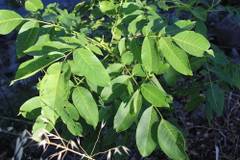
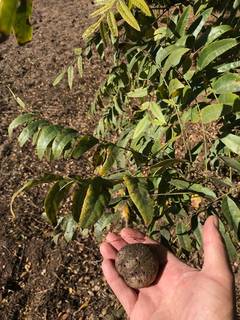
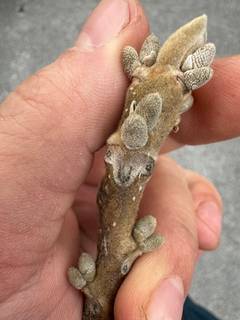
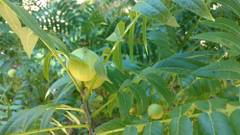
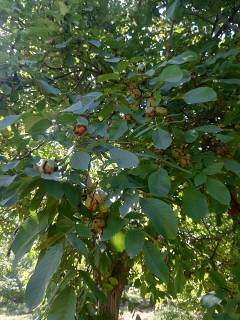
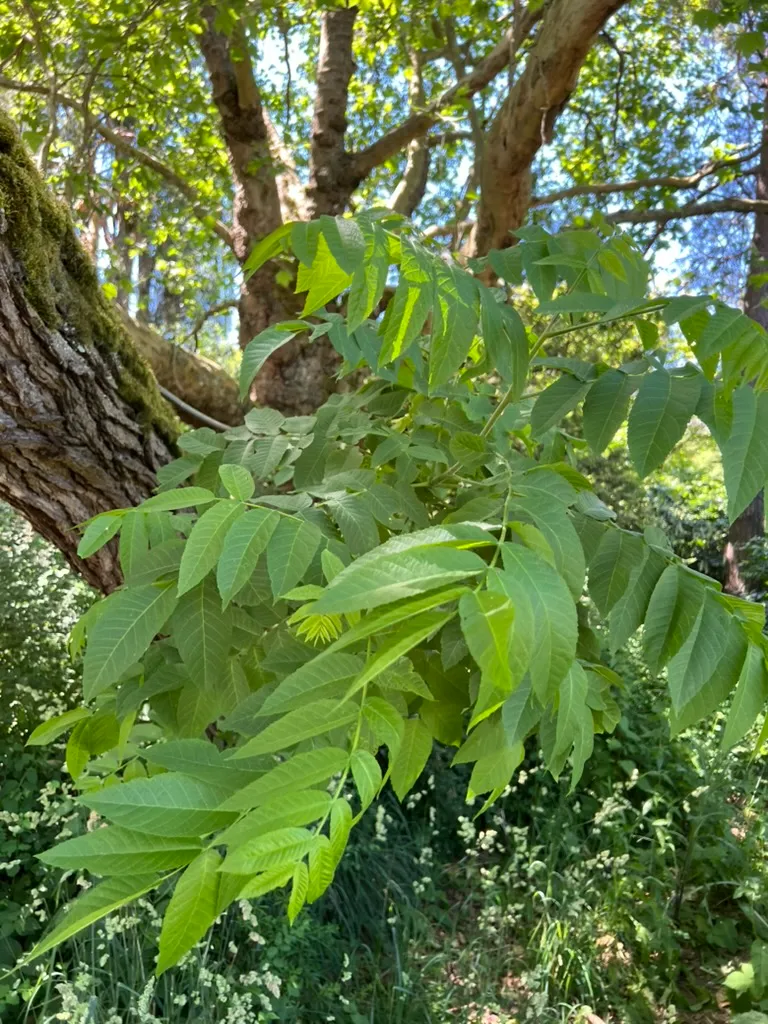
Juglans nigra is a large upright deciduous tree in the family Juglandaceae reaching 50–75 feet (15–23 m) tall and 50–75 feet (15–23 m) wide with a broad open crown. Leaves are alternate, pinnately compound, and carry 15–23 serrated leaflets each 2–5 inches (5–13 cm) long, emerging yellow-green in spring and turning yellow in fall; the leaves drop early in September and October, often several weeks before other deciduous trees. The bark is deeply furrowed and dark brown to black. Round green-husked nuts 1.5–2 inches (4–5 cm) across ripen in October and carry edible kernels inside extremely hard shells, and the husks stain skin and paved surfaces permanently brown-black when handled or crushed. The wood is a highly valued North American hardwood used in furniture, gunstocks, and veneer, and large old-growth trees historically brought high prices at timber auctions. Limitation: J. nigra produces juglone, a phenolic compound released from the roots, leaves, and nut husks, that inhibits the germination and growth of many other plants through allelopathy; the zone of juglone toxicity extends 50–80 feet (15–24 m) from the trunk, and juglone-sensitive species including tomatoes, peppers, potatoes, azaleas, rhododendrons, blueberries, apples, and many common garden perennials fail to thrive within that zone. Thousand cankers disease (Geosmithia morbida fungus transmitted by the walnut twig beetle) is an emerging threat to western populations and has killed many planted black walnuts in the western U.S. since the early 2000s.
Native Range
Native to eastern and central North America from Massachusetts west to Minnesota and south to Florida and Texas, growing on rich bottomlands, river valleys, and mesic slopes at low to middle elevations. The species is a canopy member of mixed mesophytic hardwood forests across its native range.Suggested Uses
Used as a specimen shade tree or timber tree in large open landscapes, farms, and parks at 50–75 foot (15–23 m) spacing from adjacent trees and 50–80 feet (15–24 m) from garden beds holding juglone-sensitive crops. The species supplies edible nuts after 10–15 years and high-value timber after 50+ years. Urban lots, small gardens, and positions above patios, decks, or parking areas are unsuitable because of the mature size, the juglone zone, and the stain from fallen nut husks.How to Identify
Appearance
Size & Dimensions
Height50' - 75'
Width/Spread50' - 75'
Bloom Information
Inconspicuous greenish flowers in April and May. Male catkins 2–4 inches (5–10 cm) long hang from the previous-season wood, and female flowers are tiny and borne in terminal clusters on current-season shoots. The species is wind-pollinated. Round green-husked nuts 1.5–2 inches (4–5 cm) across develop through summer and ripen in October.
Detailed Descriptions
Flower Description
greenish inconspicuous; male catkins 2-4 inches (5-10 cm) long, female flowers tiny in terminal clustersFoliage Description
dark green; alternate, pinnately compound with 15-23 serrated leaflets each 2-5 inches (5-13 cm) long; yellow-green on spring emergence; turns yellow in fall and drops early (September-October)Growing Conditions
Sun Requirements
Requires 6-12 hours of direct sunlight daily
• Full Sun: 6+ hours of direct sunlight
• Partial Shade: 3-6 hours of direct sunlight
• Full Shade: Less than 3 hours of direct sunlight
Care & Maintenance
Care Guide
Site in full sun with 6–12 hours of direct sun per day in deep well-drained loam or silt loam with a pH of 6.0–7.5. The species roots deeply and is drought-tolerant once established. The juglone allelopathy character affects companion planting: tomatoes, peppers, potatoes, azaleas, rhododendrons, blueberries, apples, and many garden perennials decline or fail within the 50–80 foot (15–24 m) zone around the trunk, so garden beds holding juglone-sensitive crops are positioned beyond that zone. Nut husks stain skin and paved surfaces permanently brown-black when handled or crushed, and turf and patio positions below female trees will receive a heavy litter load in October. Pruning is done in late summer and fall (August through October) because spring pruning produces heavy sap bleeding. Thousand cankers disease affects planted black walnuts in the western U.S. and calls for arborist assessment when canopy dieback develops.Pruning
Pruning is done in late summer and fall (August through October) because pruning in late winter or spring produces heavy sap bleeding from Juglans cuts. A strong central leader is developed in the first 10–15 years to build a straight trunk, which has both structural and timber value. Dead, crossing, or low-hanging branches can be removed at the same time. Canopy dieback from the top down in western North America indicates thousand cankers disease and calls for arborist assessment.Pruning Schedule
Prune: August–October
summerfall