Juglans, Genus, californica, Species,
- Genus & species
California black walnut
Southern California (endemic): Santa Barbara County south to San Diego County
Overview
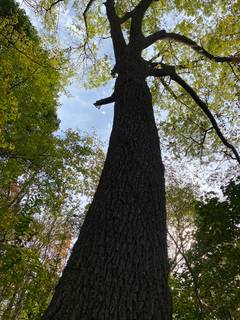
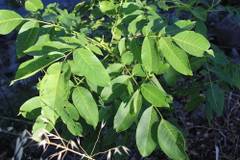
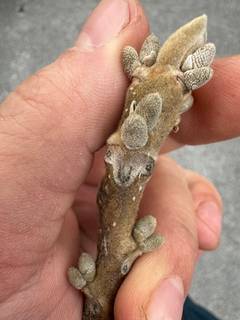
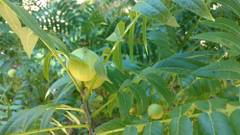
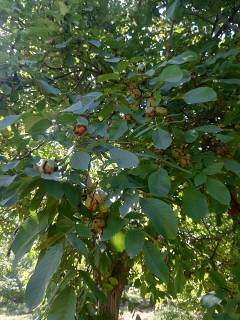
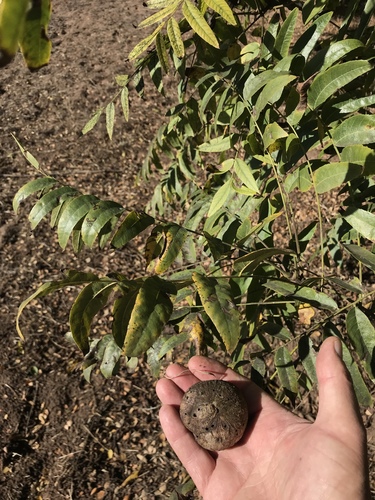
Juglans californica is a deciduous tree or large shrub in the family Juglandaceae growing 15-30 feet (4.5-9 m) tall and 15-30 feet (4.5-9 m) wide, typically multi-stemmed from the base. Leaves are pinnately compound with 9-17 leaflets, each 1.5-3 inches (4-8 cm) long, finely serrate, dark green. Bark is dark grey-brown, deeply furrowed. Male flowers are pendulous catkins 2-4 inches (5-10 cm) long; female flowers are inconspicuous clusters at branch tips. Fruit is a round nut 0.5-0.75 inch (12-18 mm) in diameter enclosed in a green husk: smaller than the commercial English walnut (J. regia) but with an intensely flavoured thick-shelled kernel. The species is endemic to southern California, where it is a component of walnut woodland, a critically threatened plant community: over 95% of native walnut woodland has been lost to urban development. Listed as vulnerable by the IUCN. Widely used as rootstock for commercial English walnut (J. regia) orchards in California due to tolerance of local soil pathogens (Phytophthora, Armillaria) and alkaline soil. Produces juglone, an allelopathic compound that inhibits growth of many plants within the root zone.
Native Range
Juglans californica is endemic to southern California, occurring in coastal valleys, foothills, and canyon bottoms from Santa Barbara County south to San Diego County at elevations below 3,000 feet (900 m). Walnut woodland habitat is critically threatened by urbanization.Suggested Uses
Conservation planting for walnut woodland habitat restoration in southern California. Rootstock for commercial J. regia orchards. In native gardens, planted as a multi-stemmed shade tree giving food for wildlife (squirrels, jays). The small nuts are edible: hard-shelled but intensely flavoured, used in baking and confections by indigenous peoples and modern foragers. Juglone toxicity in the root zone limits companion planting; tomato, pepper, blueberry, and azalea species decline within the dripline.How to Identify
Appearance
Size & Dimensions
Height15' - 30'
Width/Spread15' - 30'
Bloom Information
Male catkins 2-4 inches (5-10 cm) long appear in March-April before full leaf-out. Female flowers are inconspicuous. Wind-pollinated. Nuts develop through summer, ripening in a green husk by October. Husks stain hands and surfaces dark brown.
Detailed Descriptions
Flower Description
Yellowish-green pendulous catkins (male); inconspicuous clusters (female); March-April before leaf-outFoliage Description
Dark green; pinnately compound with 9-17 leaflets each 1.5-3 inches (4-8 cm) long; finely serrate; deciduous; turning yellow in autumnGrowing Conditions
Sun Requirements
Requires 6-10 hours of direct sunlight daily
• Full Sun: 6+ hours of direct sunlight
• Partial Shade: 3-6 hours of direct sunlight
• Full Shade: Less than 3 hours of direct sunlight
Care & Maintenance
Care Guide
Sited in full sun in deep well-drained soil at pH 6.5-8.0. Tolerates alkaline and clay soils. Spaced 15-20 feet (4.5-6 m) apart. Watered regularly during the first 2-3 years; once established, the species is drought-tolerant and survives on 12-15 inches (30-38 cm) annual rainfall. Juglone toxicity affects the root zone (dripline plus 50%): tomatoes, peppers, blueberries, and azaleas decline if planted within this zone. In the Pacific Northwest, marginally hardy and suited only to the warmest sites (zones 8b-9).Pruning
Pruned in late summer to reduce sap bleeding. If trained as a single-trunk tree, the strongest stem is selected and competing trunks are removed over 3-5 years. Otherwise, the natural multi-stemmed form is allowed. Dead and crossing branches are removed.Pruning Schedule
Prune: August–September
summer