Juglans, Genus, regia, Species,
- Genus & species
English walnut
Central Asia (Iran, Kyrgyzstan, China) to southeastern Europe
Overview
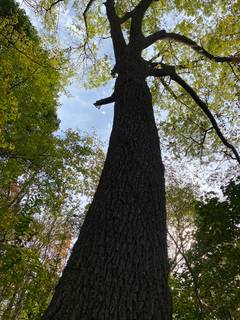
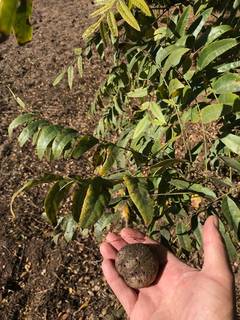
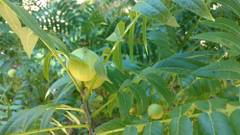
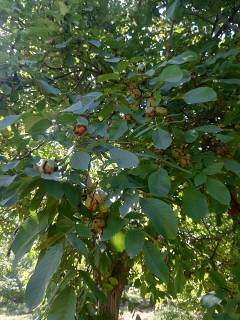
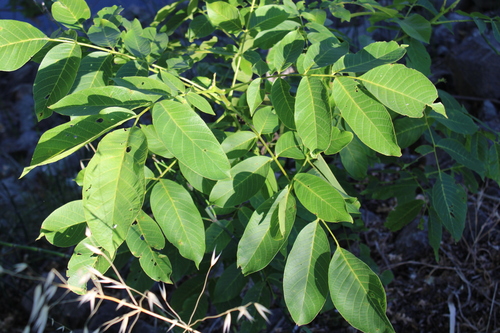
Juglans regia is a large, deciduous tree in the walnut family (Juglandaceae) reaching 30–60 feet (9–18 m) tall with a spread of 30–50 feet (9–15 m) and a broad, rounded crown at maturity. Bark is smooth and silvery-gray on young trees, developing shallow fissures with age. Leaves are pinnately compound, 8–16 inches (20–40 cm) long, with 5–9 (usually 7) broadly elliptic leaflets, the terminal leaflet largest at 3–6 inches (8–15 cm) long. Leaflets are entire to finely serrate, aromatic when crushed. Male flowers are borne in pendulous catkins 2–5 inches (5–13 cm) long. Female flowers are small, borne in clusters of 2–5 at the tips of new growth. Fruit is a green, smooth-husked drupe 1.5–2 inches (4–5 cm) in diameter enclosing the familiar edible walnut. All parts produce juglone (5-hydroxy-1,4-naphthoquinone), an allelopathic compound that inhibits growth of many plant species within the root zone. Juglone concentration is lower in J. regia than in the native J. nigra (black walnut) but sufficient to affect susceptible species. Included in the HORT 280 collection as a woody weed and allelopathic species. Seedling volunteers from squirrel-cached nuts establish in gardens, hedgerows, and forest margins.
Native Range
Native to Central Asia, from Iran and Kyrgyzstan through western China, and into southeastern Europe (Balkans). Cultivated for thousands of years throughout temperate regions for nut production. Widely planted in the Pacific Northwest, particularly in the Willamette Valley of Oregon and the Yakima Valley of Washington. Seedling volunteers from squirrel-dispersed nuts naturalize along fencelines, in hedgerows, and in forest margins.Suggested Uses
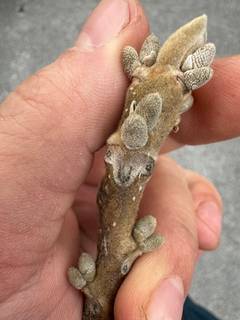
Included in the HORT 280 collection for teaching allelopathy (juglone) and woody weed biology. The chambered pith is a diagnostic teaching feature for Juglans. Studied in allelopathy research and companion planting interactions. Commercially important for nut production (English walnut) and timber (furniture-grade wood). The juglone sensitivity of garden plants is a practical landscape design consideration taught in horticulture courses.How to Identify
Appearance
Size & Dimensions
Height30' - 60'
Width/Spread30' - 50'
Bloom Information
Flowers in April through May. Male catkins emerge before or with new leaves, 2–5 inches (5–13 cm) long, pendulous, releasing pollen by wind. Female flowers are inconspicuous, in terminal clusters of 2–5, with feathery stigmas. Wind-pollinated. Fruit matures by September through October. In the Pacific Northwest, catkins appear in late April.
Detailed Descriptions
Flower Description
Green (catkins)Foliage Description
Dark green, pinnately compound with 5-9 leaflets, aromatic when crushed; leaflets broadly elliptic with entire to finely serrate marginsGrowing Conditions
Sun Requirements
Requires 6-12 hours of direct sunlight daily
• Full Sun: 6+ hours of direct sunlight
• Partial Shade: 3-6 hours of direct sunlight
• Full Shade: Less than 3 hours of direct sunlight
Care & Maintenance
Care Guide
Seedling volunteers are managed as weeds in garden and landscape settings. Young seedlings pull easily; once the taproot is established (2+ years), cutting at ground level is more practical than digging. Seedlings establish where squirrels cache and forget nuts, particularly along fencelines and at the base of other trees. The allelopathic compound juglone persists in soil from root exudates, fallen leaves, and decomposing nut husks. Susceptible plants (tomatoes, peppers, azaleas, blueberries, many Ericaceae) should not be planted within the drip line of mature trees. In orchard settings, trees are trained to a central leader or modified central leader. Pruning is done in late winter (January–February) to minimize bleeding.Pruning
In orchard production, trees are pruned in late winter (January–February) when dormant, before sap flow begins. Pruning during active growth causes excessive bleeding. Young trees are trained to a central leader or modified central leader with 3–5 scaffold branches spaced 12–18 inches (30–45 cm) apart vertically. Mature trees require removal of dead, crossing, and inward-growing branches. Seedling volunteers managed as weeds are cut at ground level; resprouts from the stump may require follow-up cutting.Pruning Schedule
Prune: January–February
winter