Juglans, Genus, spp., Multiple species,
- Genus
- Multiple species
walnuts
Americas, southeastern Europe, and Asia
Overview
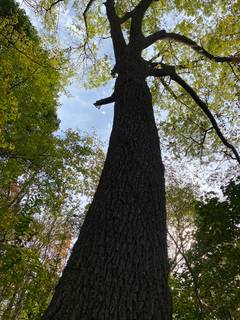
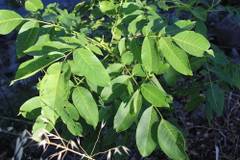
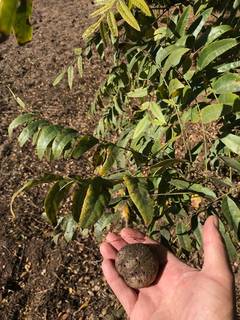
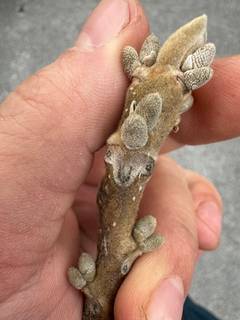
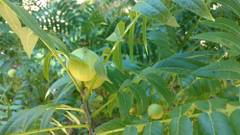
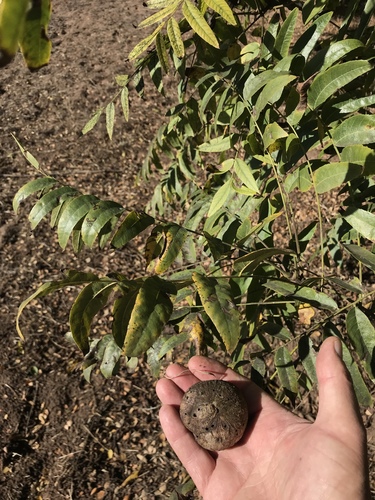
Juglans is a genus of about 20 species of deciduous trees in the family Juglandaceae, native to the Americas, southeastern Europe, and across Asia to Japan. Mature trees range from 33 to 130 feet (10 to 40 m) tall, developing broad, rounded crowns and deeply furrowed grey-brown bark. The alternate leaves are pinnately compound, 8 to 24 inches (20 to 60 cm) long, with 5 to 23 leaflets that release a spicy scent when crushed. Trees are monoecious: drooping male catkins and small female flowers are borne on the same tree in spring, with wind carrying the pollen. Fertilized flowers develop into rounded fruits in which a hard, sculptured nut sits inside a fleshy green husk that blackens as it ripens. J. regia is the source of the commercial walnut, while J. nigra is grown for both nuts and dark timber. The roots, leaves, and husks contain juglone, a compound that suppresses the growth of many neighbouring plants. Most species are slow to begin bearing, taking several years to a decade from seed, and trees may live for more than a century.
Native Range
Native to the Americas from Canada to the Andes, to southeastern Europe and the Balkans, and across temperate and subtropical Asia to China and Japan. J. nigra and J. cinerea are North American, while J. regia ranges from the Balkans to the Himalayas.How to Identify
Appearance
Size & Dimensions
Height33' - 130'
Width/Spread30' - 70'
Bloom Information
Flowering occurs in spring, generally April to May as the leaves expand. Drooping yellow-green male catkins and inconspicuous female flowers appear on the same tree and are wind-pollinated. Nuts mature through summer and drop in autumn.
Detailed Descriptions
Foliage Description
green, turning yellow in autumnGrowing Conditions
Sun Requirements
Requires 6-12 hours of direct sunlight daily
• Full Sun: 6+ hours of direct sunlight
• Partial Shade: 3-6 hours of direct sunlight
• Full Shade: Less than 3 hours of direct sunlight
Care & Maintenance
Care Guide
Juglans species grow in full sun on deep, fertile, well-drained soil with a near-neutral pH of 6.0 to 7.5. They develop a strong taproot and resist transplanting once established, so young trees settle more readily when moved early. Steady moisture supports nut development, though established trees tolerate short dry spells. The juglone released from roots and fallen leaves inhibits many vegetables, fruit trees, and ornamentals grown within the root zone. Mature crowns can spread 40 to 70 feet (12 to 21 m) across, so trees need room to develop.Pruning
Pruning is carried out in late summer or early autumn, since walnuts bleed sap heavily if cut in late winter or spring. Removal of dead, crossing, or low branches develops a clear trunk and a sound framework. Heavy cuts are avoided on mature trees because large wounds close slowly and can admit decay.Pruning Schedule
Prune: August–September
summerfall