Juglans, Genus, hindsii, Species,
- Genus & species
northern California black walnut
Overview
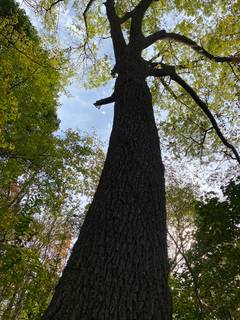
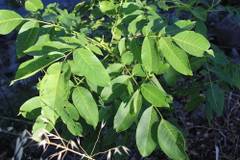
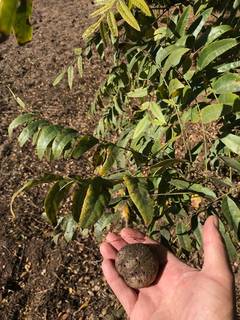
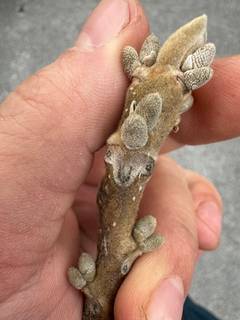
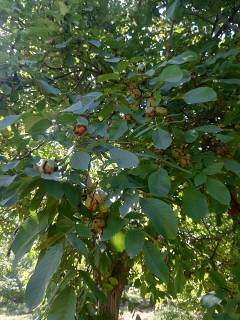
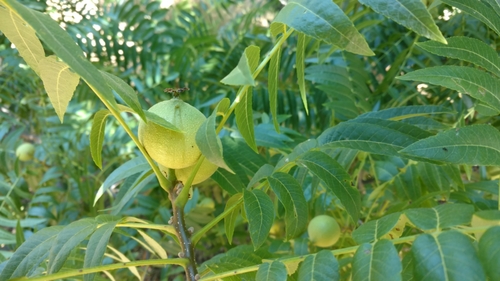
Juglans hindsii is a deciduous tree that grows 30-60 feet (9-18 m) tall with a single straight trunk and a broad, rounded crown spreading 30-50 feet (9-15 m). The pinnately compound leaves are 9-12 inches (23-30 cm) long with 13-21 lance-shaped, toothed leaflets that release a sharp scent when crushed. In spring it bears drooping male catkins and small female flowers on the same tree, followed by round nuts about 1-1.5 inches (2.5-3.8 cm) across with a thick, hard shell inside a green husk. The bark is dark and deeply furrowed. The species is native to a few riparian sites in northern and central California and is widely planted as a rootstock for grafting orchard walnuts. It grows in full sun in deep, moist, well-drained soil along streams and valley floors. Roots and leaves release juglone, a compound that suppresses many plants growing beneath the canopy. The wood is dark and strong. J. hindsii casts heavy shade and drops nuts, husks, and leaves that require cleanup. Hardy in USDA zones 7-9.
Native Range
Juglans hindsii is native to northern and central California, with a small number of natural stands along streams and rivers in the Central Valley and inner Coast Ranges. Its native range is limited, but it has been widely planted and has naturalized beyond it.Suggested Uses
Grown as a shade tree on large properties, in parks, and along rural roads. Used as grafting rootstock for orchard walnuts and in riparian restoration. Planted as a single specimen with 35-50 feet (11-15 m) of clearance from structures and other trees.How to Identify
Appearance
Size & Dimensions
Height30' - 60'
Width/Spread30' - 50'
Bloom Information
Flowers in spring, April to May, as the leaves expand. Male catkins shed pollen while small female flowers open on the same tree for wind pollination. Nuts develop through summer and drop in fall.
Detailed Descriptions
Foliage Description
GreenGrowing Conditions
Sun Requirements
Requires 6-12 hours of direct sunlight daily
• Full Sun: 6+ hours of direct sunlight
• Partial Shade: 3-6 hours of direct sunlight
• Full Shade: Less than 3 hours of direct sunlight
Care & Maintenance
Care Guide
Plant in full sun in deep, fertile, well-drained soil with room for a large canopy and root system. Water young trees regularly until established, after which the tree tolerates seasonal dry spells. Roots and leaves release juglone, which harms tomatoes, apples, and many other plants grown nearby. Mature trees reach 30-60 feet (9-18 m) tall and wide and need open space away from buildings. Falling nuts, husks, and leaves collect under the canopy and need regular cleanup. Deep, infrequent watering supports the taproot better than frequent shallow watering.Pruning
Prune in late summer or early fall to limit sap bleeding, which is heavy if walnuts are cut in late winter or spring. Remove dead, crossing, or low branches to build a sound framework on young trees. Heavy cuts on mature trees can lead to decay.Pruning Schedule
Prune: August–September
summerfall