Juglans, Genus, cinerea, Species,
- Genus & species
butternut
Overview
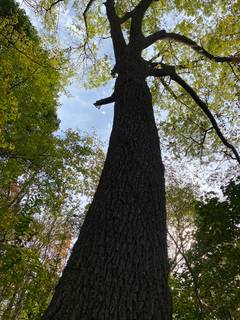
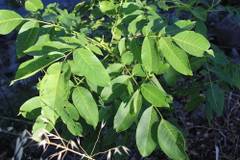
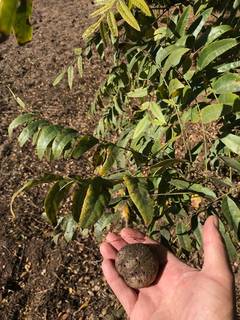
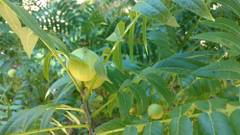
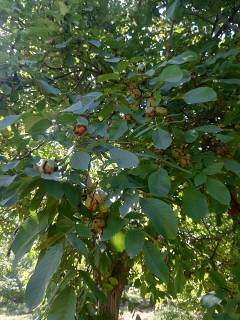
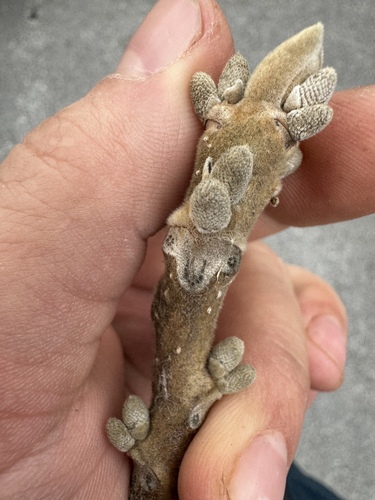
Juglans cinerea is a medium-sized deciduous tree of the walnut family, reaching 40-60 feet (12-18 m) tall and 30-50 feet (9-15 m) wide, with a broad, open, often irregular crown and a short trunk. The pinnately compound leaves are 15-30 inches (38-76 cm) long with 11 to 17 leaflets, turning yellow to yellow-brown before falling in autumn. Young twigs and leaf scars are sticky-hairy, and the grey bark develops flat, intersecting ridges with age. Male catkins and small female flowers appear in spring on the same tree; wind-pollinated female flowers form clusters of egg-shaped, sticky-husked nuts 1.5-2.5 inches (4-6 cm) long. The ridged shells enclose sweet, oily kernels eaten by people and wildlife. Native to eastern North America, it grows fast but is short-lived, often declining within 75 years, and is now threatened across its range by butternut canker, a fungal disease that kills branches and trunks. Roots and leaves release juglone, a compound that suppresses many nearby plants. It grows in moist, rich, well-drained bottomland and slope soils in USDA zones 3-7 and is intolerant of shade and drought. The wood is soft, light brown, and worked for furniture and carving.
Native Range
Native to eastern North America, from New Brunswick and Quebec south through the Appalachians to Georgia and Alabama, and west to Minnesota and Arkansas. It grows in moist bottomlands, stream terraces, and rich wooded slopes.Suggested Uses
Used as a shade and nut tree in large rural gardens, woodland edges, and naturalized plantings, spaced 30-50 feet (9-15 m) apart. Grown for its edible nuts and for restoration, though juglone limits what can be planted beneath it.How to Identify
Appearance
Size & Dimensions
Height40' - 60'
Width/Spread30' - 50'
Bloom Information
Flowering occurs in spring as the leaves expand, April to June depending on latitude. Drooping male catkins shed pollen while short female spikes carry red-tipped stigmas. Wind-pollinated flowers set nuts that ripen in early fall.
Detailed Descriptions
Flower Description
green to reddishFoliage Description
greenGrowing Conditions
Sun Requirements
Requires 6-10 hours of direct sunlight daily
• Full Sun: 6+ hours of direct sunlight
• Partial Shade: 3-6 hours of direct sunlight
• Full Shade: Less than 3 hours of direct sunlight
Care & Maintenance
Care Guide
Grow in full sun on deep, moist, well-drained loam; the tree is intolerant of shade, drought, and compacted or waterlogged soil. It establishes quickly from seed and develops a deep taproot that makes transplanting of older trees difficult. Roots release juglone, which suppresses tomatoes, apples, and many other plants within the root zone. No routine feeding is needed in fertile ground. Trees are widely affected by butternut canker, and disease-free or resistant stock is used where available. Hardy in USDA zones 3-7.Pruning
Prune in late summer or early fall to limit bleeding of sap, removing dead, diseased, or crossing branches. Cankered limbs are cut well below visible sunken lesions. Young trees trained to a central leader develop sound branch structure.Pruning Schedule
Prune: August–September
summerfall