Image 1 of 22
1 / 22
Plant Reference
Populus, Genus, tremuloides, Species,
- Genus & species
quaking aspen
North America from Newfoundland and Labrador west to Alaska and south through the Rocky Mountains to Mexico, absent from the southeastern coastal plain; the species has the broadest continental range of any native North American tree, occupying cool-temperate, boreal, and montane zones from sea level to 12,000 feet (3,600 m) elevation
Overview
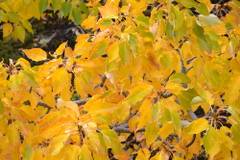
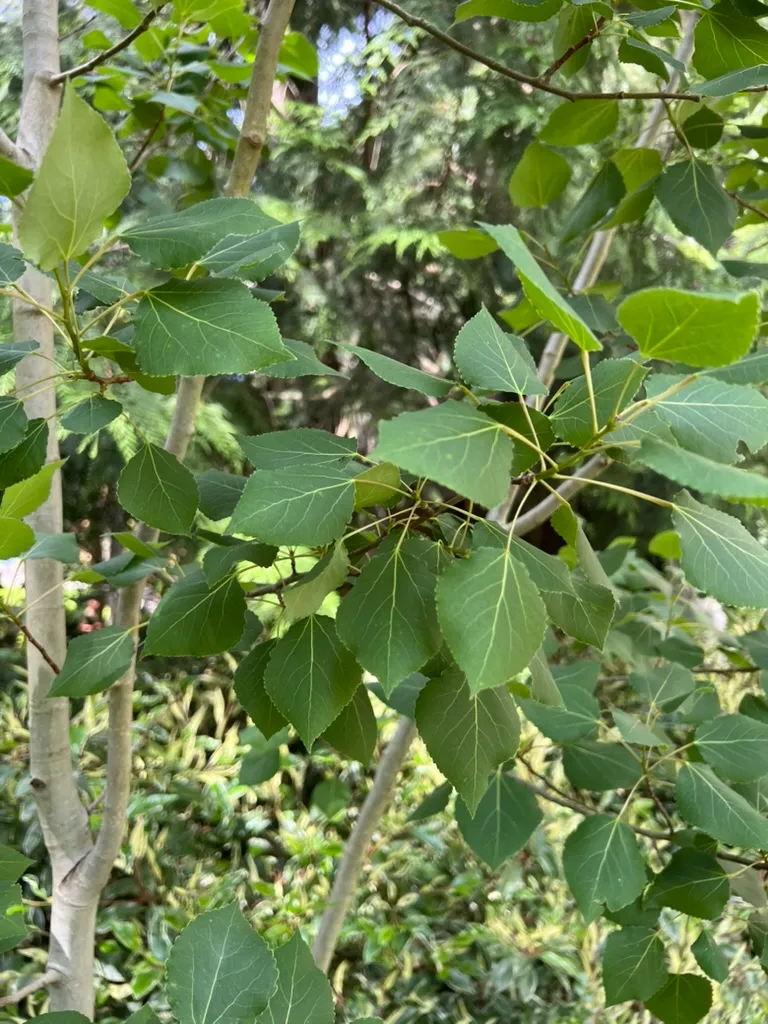
Populus tremuloides is an upright deciduous tree in the family Salicaceae reaching 20-50 feet (6-15 m) tall and 15-30 feet (4.5-9 m) wide with a rounded to narrow crown and smooth white to cream bark marked by horizontal lenticels and black knot scars. The species has the broadest continental range of any native North American tree, with populations extending from Newfoundland and Labrador west to Alaska and south through the Rocky Mountains to central Mexico, and the range covers cool-temperate, boreal, and montane zones from sea level to 12,000 feet (3,600 m) elevation. Leaves are nearly circular (orbicular), 1.5-3 inches (4-7 cm) across, with finely serrated margins, and borne on flattened petioles that cause the leaves to tremble in the slightest breeze — the trembling trait is the source of both the common name quaking aspen and the specific epithet tremuloides. Fall foliage turns bright golden-yellow and creates the gold hillside displays for which Rocky Mountain aspen groves are widely photographed each September and October. The species is dioecious with grayish catkins 1-2 inches (2.5-5 cm) long opening before leaves in March and April, and female trees release cottony seed. The species spreads aggressively by root suckers, and genetically identical clonal stems (ramets) emerge 50-100 feet (15-30 m) from the parent trunk over time; a single aspen clone in Utah known as Pando occupies roughly 106 acres (43 hectares) and contains over 40,000 stems sharing one root system, and is among the largest single organisms known by total biomass. This aggressive suckering is the main cultivation limitation in residential and formal landscapes where the spreading colony outgrows its intended footprint. Individual trunks are short-lived at 40-60 years, but the root system persists and the clone regenerates continuously by new suckers — the physical tree ages and dies, but the genetic individual persists for potentially thousands of years in stable habitats. The species is not drought-tolerant and requires consistent moisture, and it does not tolerate hot humid summers; performance south of zone 7 is poor and cultivation is concentrated in northern tier states, the Mountain West, and Canada. Susceptibility to cankers, borers, leaf diseases, and tent caterpillars is recurring, and deer browse young stems heavily.
Native Range
Populus tremuloides is native to North America with the broadest continental range of any native tree species on the continent. The range extends from Newfoundland and Labrador west through Quebec, Ontario, and the boreal forest to Alaska, and south through the Rocky Mountains to central Mexico, reaching Guatemala at its southernmost extent. The species occupies cool-temperate, boreal, and montane habitats from sea level to 12,000 feet (3,600 m) elevation and is absent only from the southeastern coastal plain where hot humid summers exceed its climate tolerance. In the Rocky Mountain West the species dominates the subalpine aspen belt from roughly 6,000 to 10,000 feet (1,800 to 3,000 m) elevation and forms the fall gold displays that carry the region's autumn tourism.Suggested Uses
Planted as a grove or colony in large naturalistic landscapes, cabin properties, mountain gardens, and ecological restoration sites at 15-30 foot (4.5-9 m) spacing in zones 1-7. The white bark, trembling foliage, and bright golden-yellow fall color carry strong visual interest in cool-summer climates where the species performs well, and clone regeneration through root suckers makes planted groves self-sustaining over decades once established. Combined with Picea engelmannii, Abies lasiocarpa, and subalpine wildflowers in Rocky Mountain-themed plantings in zones 3-6. Not suited to small residential yards or formal landscapes where the aggressive suckering colony outgrows its intended footprint, positions south of zone 7 where hot humid summers cause early decline, drought-prone dry sites without irrigation, or sites with heavy deer pressure where browse damage prevents establishment.How to Identify
Appearance
Size & Dimensions
Height20' - 50'
Width/Spread15' - 30'
Bloom Information
Grayish catkins 1-2 inches (2.5-5 cm) long open before leaf emergence in March and April in zones 1-7, lasting approximately 1 week. The species is dioecious with male and female flowers on separate trees, and female trees release cottony seed in May and June. The species is wind-pollinated and catkins are not an ornamental feature.
Detailed Descriptions
Flower Description
grayish catkins 1-2 inches (2.5-5 cm) long opening before leaves in March and April; the species is dioecious with male and female flowers on separate trees, and female catkins release cottony seed; wind-pollinatedFoliage Description
medium green above and paler beneath; nearly circular (orbicular) leaves 1.5-3 inches (4-7 cm) across with finely serrated margins on flattened petioles that cause the leaves to tremble in the slightest breeze; turns bright golden-yellow in fallGrowing Conditions
Sun Requirements
Requires 6-12 hours of direct sunlight daily
• Full Sun: 6+ hours of direct sunlight
• Partial Shade: 3-6 hours of direct sunlight
• Full Shade: Less than 3 hours of direct sunlight
Care & Maintenance
Care Guide
Plant in well-drained soil with a pH of 5.0-7.0 in full sun; tolerated soil types include loam, sand, and silt. The species is not drought-tolerant and requires consistent summer moisture; dry sites produce stunted growth and early decline. Water weekly through summer in rainfall-deficit periods. The species does not tolerate hot humid summers and performs poorly south of zone 7; cultivation is concentrated in northern tier states, the Mountain West, and Canada where summer nights remain cool. Aggressive root suckers emerge 50-100 feet (15-30 m) from the parent trunk, and routine removal of unwanted suckers is part of maintenance in formal and residential landscapes where the spreading clone outgrows its intended footprint. Individual trunks are short-lived at 40-60 years and replacement or acceptance of clone regeneration are the two working responses to aging specimens. Susceptibility to cankers (including Cytospora), poplar borer, leaf rust, marssonina leaf blight, and tent caterpillars is recurring, though established specimens in appropriate native-range sites tolerate most of these without intervention. Deer browse young stems heavily and fencing or tree protectors are needed in high deer pressure areas during the establishment period.Pruning
Pruning is done during the dormant season (January through February) because spring and summer pruning cause heavy sap bleeding. Dead branches are removed at the branch collar and damaged limbs from winter snow loads are removed after storms. Unwanted root suckers emerging from the spreading root system are removed at their point of origin as they appear, typically 2-3 times per growing season in residential positions where colony spread is not wanted. In naturalistic groves where clone regeneration is part of the design intent, suckers are left in place to replace older stems as they reach the end of their 40-60 year individual lifespan.Pruning Schedule
Prune: January–February
winter