Populus, Genus, alba, Species,
- Genus & species
white poplar
Europe, North Africa, and central Asia
Overview
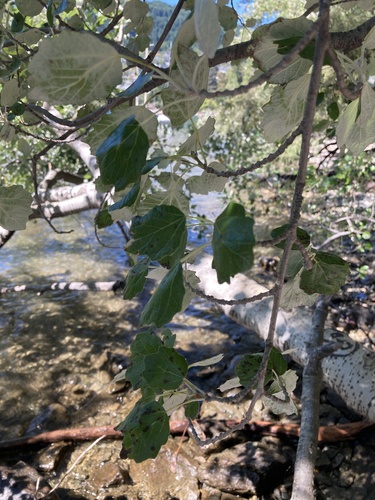
Populus alba is a fast-growing deciduous tree reaching 50-100 feet (15-30 m) tall with a broad, spreading crown 30-60 feet (9-18 m) wide. The bark is smooth and greenish-white to grey with dark diamond-shaped lenticels when young, becoming dark and deeply fissured near the base with age. Young shoots and leaf undersides are coated in dense white felt. Leaves are 2-4.5 inches (5-12 cm) long, broadly oval to maple-like with three to five lobes, dark green above and white-woolly beneath, so the canopy flickers white as wind turns the foliage. The species is dioecious, with male and female catkins borne on separate trees in late winter to early spring before the leaves expand; female trees release cottony seed in late spring. Roots sucker freely and can form dense thickets and surface growth at a distance from the trunk. P. alba tolerates coastal salt, drought, compacted soil, and seasonal flooding. The brittle wood breaks in storms, and the suckering and shallow roots can lift paving and spread into open ground.
Native Range
Populus alba is native to central and southern Europe, North Africa, and central and western Asia east to the Himalayas. It grows naturally along rivers, floodplains, and damp lowlands, and has naturalized widely in North America, where it is regarded as invasive in many regions.Suggested Uses
Planted as a fast screen or windbreak on exposed, coastal, or poor sites where few other trees establish. It is used for soil stabilization on banks and reclaimed land. The white-backed foliage is grown as a large specimen in open parkland with room for suckering.How to Identify
Appearance
Size & Dimensions
Height50' - 100'
Width/Spread30' - 60'
Bloom Information
Catkins appear in late winter to early spring, from February to April, before the leaves unfold. Male and female catkins grow on separate trees, the males reddish and the females greenish. Pollinated female catkins ripen by late spring, releasing seeds carried on white cottony hairs.
Detailed Descriptions
Flower Description
reddish (male) and green (female)Foliage Description
dark green above, white beneathGrowing Conditions
Sun Requirements
Requires 6-12 hours of direct sunlight daily
• Full Sun: 6+ hours of direct sunlight
• Partial Shade: 3-6 hours of direct sunlight
• Full Shade: Less than 3 hours of direct sunlight
Care & Maintenance
Care Guide
Grow Populus alba in full sun on almost any soil, including sand, clay, chalk, and saline ground, from acid to alkaline pH. It withstands drought once established as well as periodic flooding, and is hardy through USDA zones 3 to 9. Set it well back from buildings, drains, and paving, because the shallow roots sucker freely and can cause structural and surface damage. Water young trees through their first two summers to establish the root system. The brittle branches shed in high wind, so an open, uncrowded position reduces breakage. Suckers pulled or mown each season keep colonies in check.Pruning
Prune in late summer or autumn to limit heavy sap bleeding, taking out dead, crossing, or storm-damaged limbs while branches are small. Formative pruning to a single leader reduces weak forks in young trees. Remove root suckers as they appear to limit spread.Pruning Schedule
Prune: August–October
summerfall