Diospyros, Genus, virginiana, Species,
- Genus & species
American persimmon
Eastern North America (Connecticut to Florida, west to Texas, Kansas, Iowa; dry uplands, old fields, woodland edges, bottomlands)
Overview
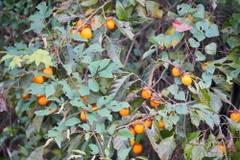
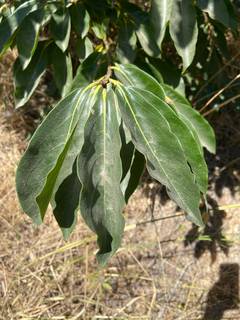
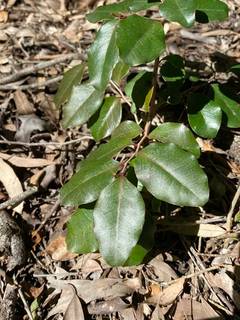
Diospyros virginiana is an upright to pyramidal deciduous tree in the ebony family (Ebenaceae) reaching 35–60 feet (10.5–18 m) tall with a spread of 25–35 feet (7.5–10.5 m). This North American native is the hardiest persimmon species in cultivation, reliable to zone 4 — a cold tolerance that places it well above the Asian D. kaki and D. lotus in northern-climate planting contexts. Fruit is round, 1–2 inches (2.5–5 cm) across, ripening from green to orange to deep reddish-orange in October–November. The fruit stays astringent until fully soft-ripe after frost, when it develops a rich complex sweetness that draws persimmon-pudding cooks and wildlife alike. Leaves are ovate to elliptic 3–6 inches (8–15 cm) long, glossy dark green, turning yellow to reddish-purple in fall. Small inconspicuous yellowish-white flowers open in May–June; the species is dioecious. Bark is the primary identifying feature on mature trunks — dark gray to black, deeply fissured into thick square blocks that produce a pronounced alligator-hide pattern separating this species from virtually every other eastern-North-American native tree at a glance. Growth rate is slow to moderate. The deep taproot makes large specimens resistant to transplanting, so installation is done young. The species suckers from the root system and forms thickets in open-site plantings.
Native Range
Diospyros virginiana is native to eastern North America, from Connecticut south to Florida and west to Texas, Kansas, and Iowa, where it occurs in dry uplands, old fields, woodland edges, and bottomlands. The species range is among the broadest of any native fruit tree in the eastern United States.Suggested Uses
Grown as a shade tree, specimen tree, or in edible-landscape and native-plant installations at 25–30 foot (7.5–9 m) spacing. The deeply fissured alligator-hide bark carries strong winter interest after leaf drop. The fruit is edible when fully ripe and has traditional use in regional baking (persimmon pudding, persimmon bread). Naturalized and restoration plantings match the species suckering habit, which builds wildlife thickets that feed birds and mammals through fall and winter via the persistent fruit. Formal landscapes where suckering is problematic, paved areas where fallen fruit creates cleanup burden, and small residential sites that cannot accommodate the 35–60 foot mature height are not suitable planting contexts.How to Identify
Appearance
Size & Dimensions
Height35' - 60'
Width/Spread25' - 35'
Bloom Information
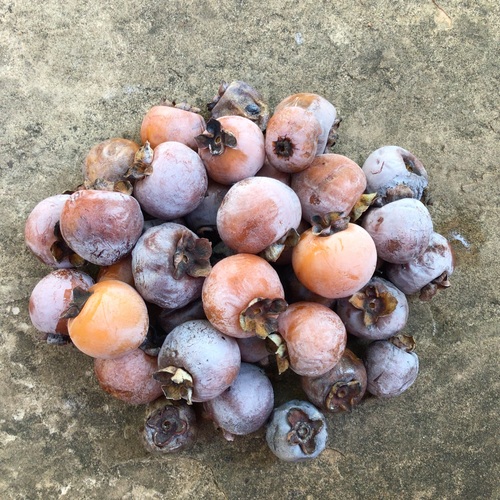
Small inconspicuous yellowish-white flowers open in May–June. The species is dioecious — male and female flowers occur on separate trees — so both sexes are needed for fruit production in most cultivars. Round fruit 1–2 inches (2.5–5 cm) across ripens from green to orange to deep reddish-orange in October–November and sweetens after frost.
Detailed Descriptions
Flower Description
Yellowish-white, small, inconspicuous; fruit orange to deep reddish-orange 1-2 inches roundFoliage Description
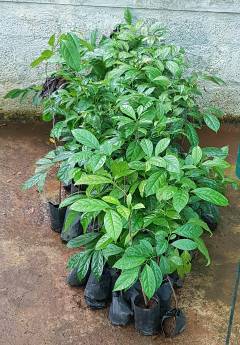
Glossy dark green; ovate to elliptic 3-6 inches long; yellow to reddish-purple in fallGrowing Conditions
Sun Requirements
Requires 6-10 hours of direct sunlight daily
• Full Sun: 6+ hours of direct sunlight
• Partial Shade: 3-6 hours of direct sunlight
• Full Shade: Less than 3 hours of direct sunlight
Care & Maintenance
Care Guide
Grows in full sun in well-drained soil at pH 5.0–7.5, tolerating loam, clay, and sand. Hardy to zone 4. Soil adaptability is broad — clay, sand, and poor soils are all handled, which positions this species as a site-adaptable native tree for sites where fruit trees with narrower soil tolerances fail. Established plants tolerate drought. Dioecious — both male and female trees are needed for reliable fruit set, though some selected cultivars produce parthenocarpic fruit without a male pollinator. The deep taproot makes large transplants difficult to establish successfully; young nursery stock transplants far more reliably. The species suckers from the root system and forms thickets in open-site plantings when suckers are not removed. Fallen ripe fruit can be messy under the tree canopy, which matters in paved or patio-adjacent siting.Pruning
Pruning is done in late winter while the tree is dormant. Young trees are trained to a central leader to establish a strong scaffold structure. Root suckers are removed regularly to prevent thicket formation when a specimen tree is desired. Mature trees need minimal pruning. The wood is dense and hard — closely related to commercial ebony (Diospyros ebenum) — and responds to pruning cuts cleanly without structural weakening.Pruning Schedule
Prune: February
winter