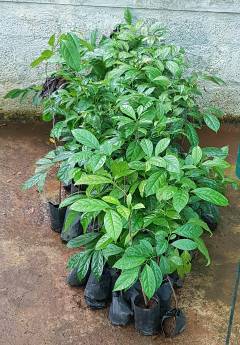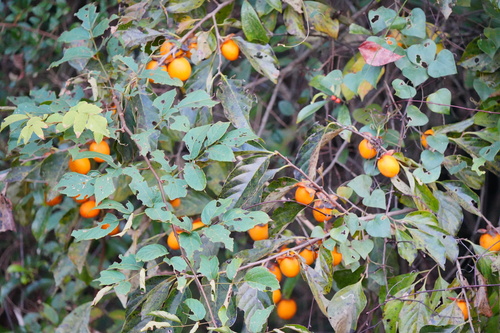
Diospyros, Genus, kaki, Species,
- Genus & species
Japanese persimmon
China (cultivated 2,000+ years; introduced to Japan and Korea)
Overview
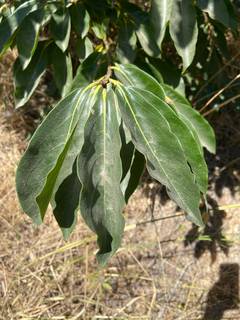
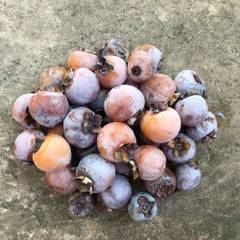
Diospyros kaki is an upright to spreading, deciduous tree reaching 25–40 feet (7.5–12 m) tall with a spread of 20–35 feet (6–10.5 m). The East Asian species is the commercially grown persimmon, cultivated in China for more than 2,000 years and introduced to Japan and Korea several centuries later—the crop is now grown across warm-temperate regions worldwide and ranks among the top-20 global fruit crops by production volume. The fruit is large, 2–3.5 inches (5–9 cm) across, rounded to slightly flattened, ripening to bright orange in October–November. Two physiological fruit types exist in the species: astringent cultivars (such as 'Hachiya') that contain high soluble tannin levels and remain inedible until fully soft-ripe, and non-astringent cultivars (such as 'Fuyu') that convert tannins during early ripening and can be eaten while still firm. Leaves are broadly ovate, 4–7 inches (10–18 cm) long, glossy dark green, and turn vivid orange, red, and yellow during October fall color display. Small, inconspicuous, yellowish-white flowers open in May–June; trees may be dioecious, monoecious, or hermaphrodite-flowered depending on cultivar, and some cultivars set fruit parthenocarpically without pollination. The bark is gray-brown, developing a blocky, alligator-hide fissured pattern after 15–20 years. Growth rate is moderate. Fallen fruit is a consideration—each tree drops 50–200 fruits per season, which create mess on paved surfaces but support wildlife in naturalized settings.
Native Range
Diospyros kaki is native to China, where it has been cultivated for over 2,000 years—early Chinese agricultural records from the Han dynasty (206 BCE–220 CE) document persimmon cultivation. The species was introduced to Japan and Korea by the 8th century CE and is now widely grown in warm-temperate regions across Asia, the Mediterranean basin, California, the southeastern United States, New Zealand, Brazil, and parts of South Africa. Wild populations persist in parts of central and southwestern China.Suggested Uses
Planted as a specimen fruit tree, shade tree, or in edible landscapes at 20–25 foot (6–7.5 m) spacing. The large orange fruit and vivid fall color combine to produce multi-season ornamental value on top of the food crop. The persistent orange fruit on bare winter branches adds December and January interest that few fruit trees match. Fruit uses include fresh eating (non-astringent types eaten firm, astringent types eaten soft-ripe), drying into hoshigaki-style dried persimmons in the Japanese tradition, and baking into puddings and quick breads. Cold zones below 7, sites with late spring frost pockets, and positions next to paved areas are poor fits for the species—the first two cause crop failure and the third creates ongoing mess problems.How to Identify
Appearance
Size & Dimensions
Height25' - 40'
Width/Spread20' - 35'
Bloom Information
Small, inconspicuous, yellowish-white flowers open in May–June. The flowers are not ornamentally significant. The large bright orange fruit 2–3.5 inches (5–9 cm) across ripening in October–November is the primary ornamental display and often persists on bare branches through December and into January.
Detailed Descriptions
Flower Description
Yellowish-white, small, inconspicuous; bright orange fruit 2-3.5 inches (5-9 cm)Foliage Description
Glossy dark green, broadly ovate; vivid orange-red-yellow fall colorGrowing Conditions
Sun Requirements
Requires 6-10 hours of direct sunlight daily
• Full Sun: 6+ hours of direct sunlight
• Partial Shade: 3-6 hours of direct sunlight
• Full Shade: Less than 3 hours of direct sunlight
Care & Maintenance
Care Guide
Plant in full sun in deep, well-drained, loamy soil. Consistent moisture during fruit development (July–September) supports maximum fruit size and quality; drought during this period causes premature fruit drop. Hardy to zone 7 (0°F / −18°C)—late spring frosts after leaf-out damage flowers and reduce fruit set by 60–90 percent when temperatures drop below 28°F (−2°C) at bloom time. Some cultivars require a pollinator tree for fruit set while others are parthenocarpic; nursery tag or catalog notes specify which is which for each cultivar. Fallen fruit in October–December creates staining and slip hazards on driveways, walkways, and patios, so planting position 20–30 feet (6–9 m) away from paved surfaces prevents most of the mess. Japanese beetles and fruit flies affect fruit in some regions but rarely cause tree decline. Minimal other pest problems.Pruning
Pruning is done in late winter (February) while dormant. Young trees are trained to a central leader or modified central leader for the first 4–6 years. Crowded interior branches are thinned to open the canopy to light and air, which reduces fungal problems and improves fruit quality. The wood is brittle and narrow crotch angles split under fruit load, so these are removed during structural pruning. Fruit is borne on current-season wood arising from one-year-old lateral buds, so mature pruning preserves year-old wood with visible fruiting buds.Pruning Schedule
Prune: February
winter