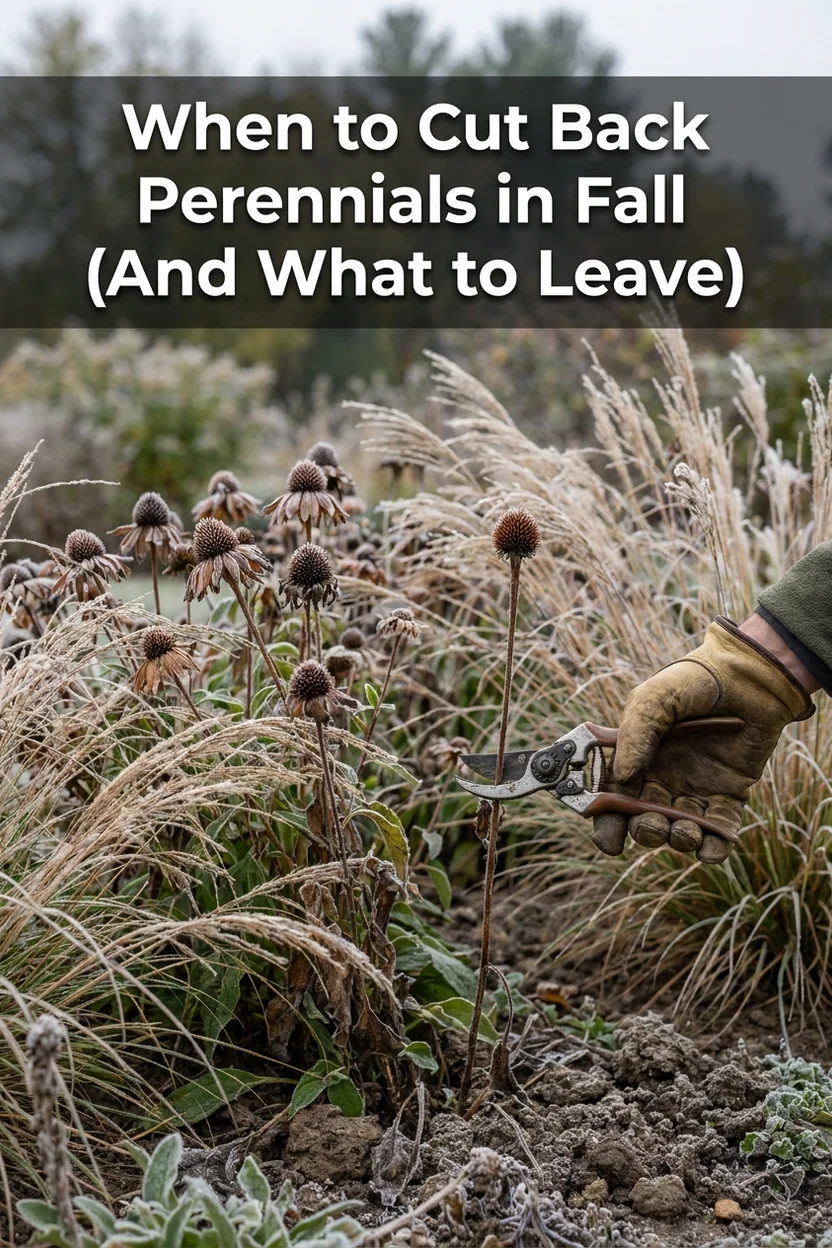
When to Cut Back Perennials in Fall (And What to Leave)
Pets & Toxicity
Recorded toxicity for plants linked in this guide. An unknown status is not a safety assessment.
Toxic to pets: garden peony, bearded iris, Siberian iris and 3 moreDetailsHide
Calamagrostis x acutiflora 'Karl Foerster' — Toxicity
Non-toxicView Calamagrostis x acutiflora 'Karl Foerster' plant profile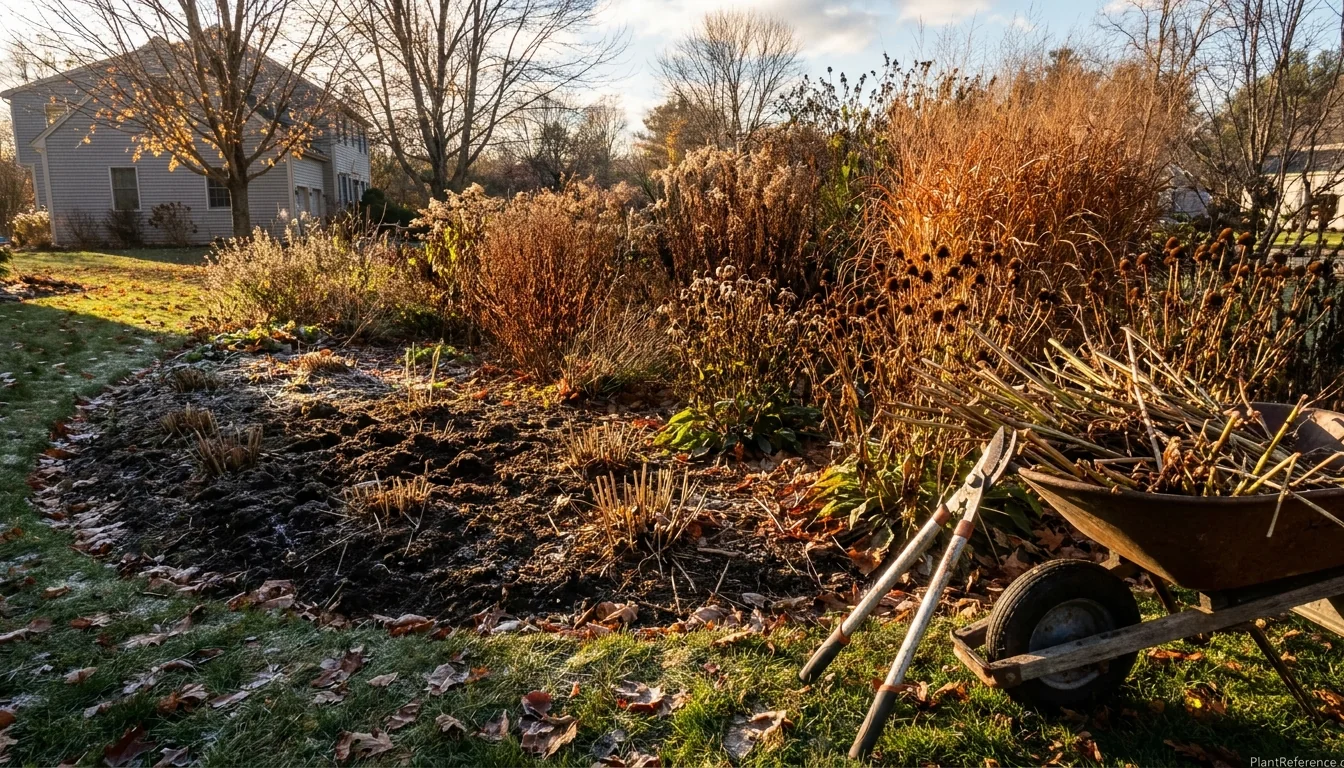
— Image © PlantReference.org 2026
Every October a client asks me the same thing: when to cut back perennials in fall, and how far down. The honest answer surprises most people — the majority of your border should not be cut at all. Fall cleanup is a disease decision, not a tidiness decision, and in a typical New England bed only about five plants actually need the shears before winter.
Why "Cut Everything Back" Is Outdated Advice
The bare-bed-by-Thanksgiving habit came out of an era when a garden was judged on how neat it looked in November. We know more now, and most of what we learned argues for leaving stems where they are.
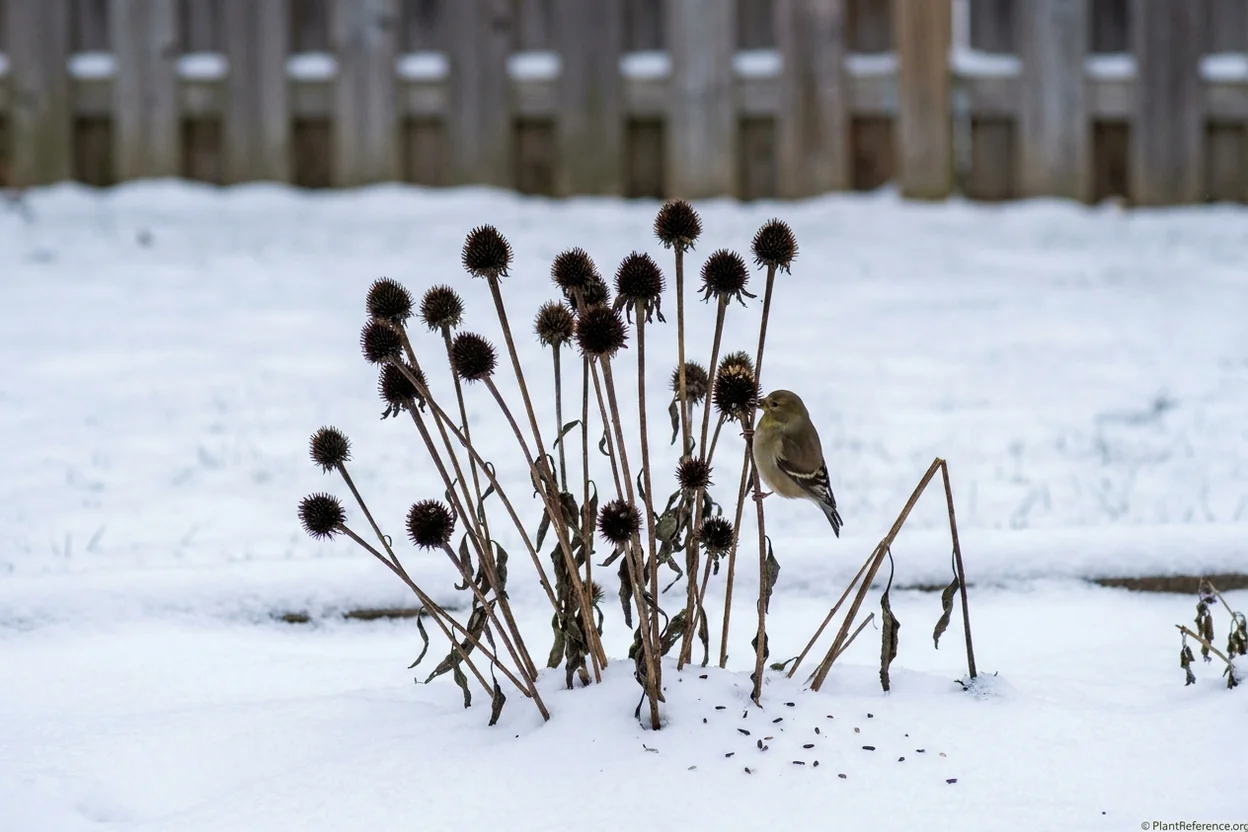
Hollow-stemmed perennials are winter housing. Native bees and other beneficial insects overwinter inside or beside those stems, and a bed cut to the ground in October evicts every one of them. Seed heads do similar work above ground — the central cones of 🌿Echinacea purpurea (ek-in-AY-shee-uh pur-PUR-ee-uh) and 🌿Rudbeckia fulgida 'Goldsturm' are rich in oil and carry goldfinches through the leanest weeks of the year.
There is a straightforward horticultural argument too. Standing stalks catch and hold snow, and snow is a far better insulator than bare soil. That snow blanket is what protects a crown from the freeze-thaw cycling that heaves shallow-rooted perennials right out of the ground in a New England February. Cut the stalks, lose the snow catch, and you have made the plant's winter harder for the sake of appearances.
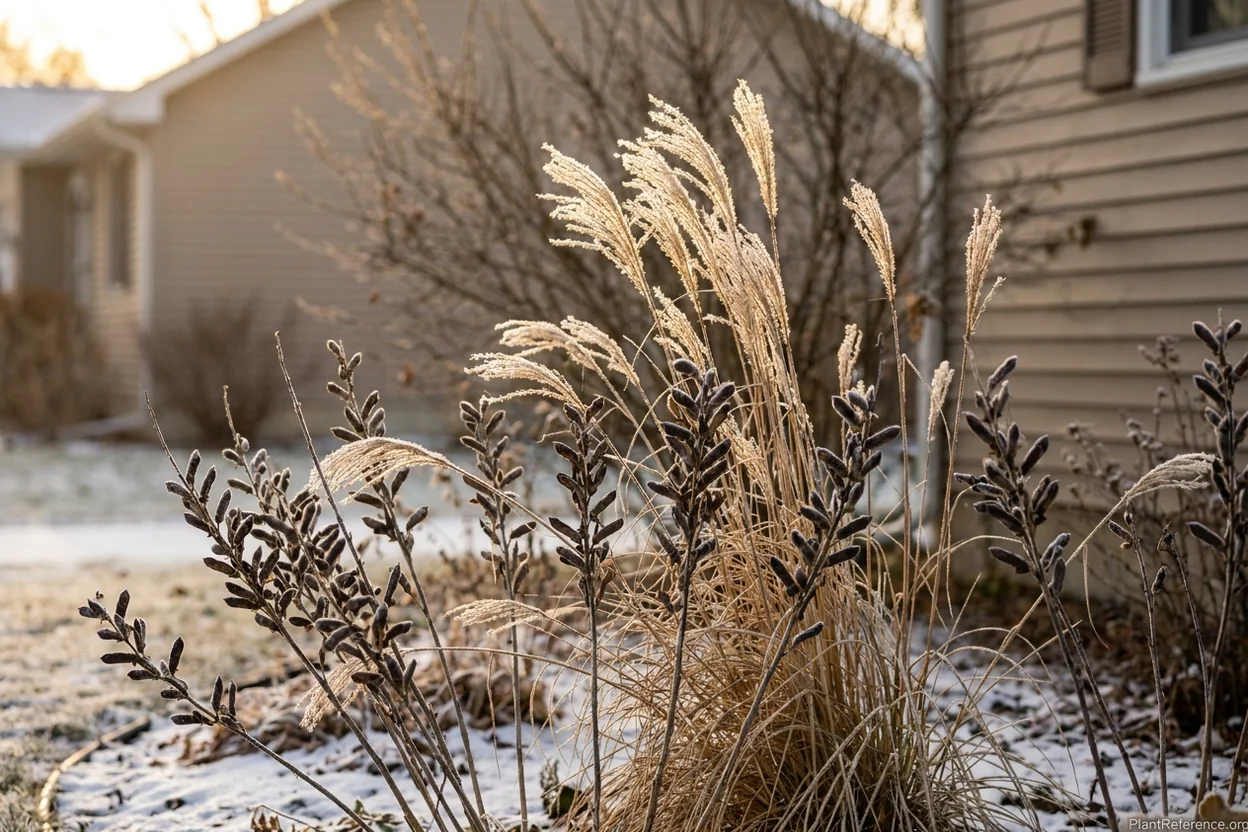
The design case is the one I make to clients. A border of russet grasses, dark seed heads and frost-rimed stems is genuinely good-looking from December through March. That is when the structure of a garden shows — the same principle that makes Winter Tree Identification: Bark, Buds & Branching worth reading before you plant anything.
The Perennials You Must Cut Back in Fall
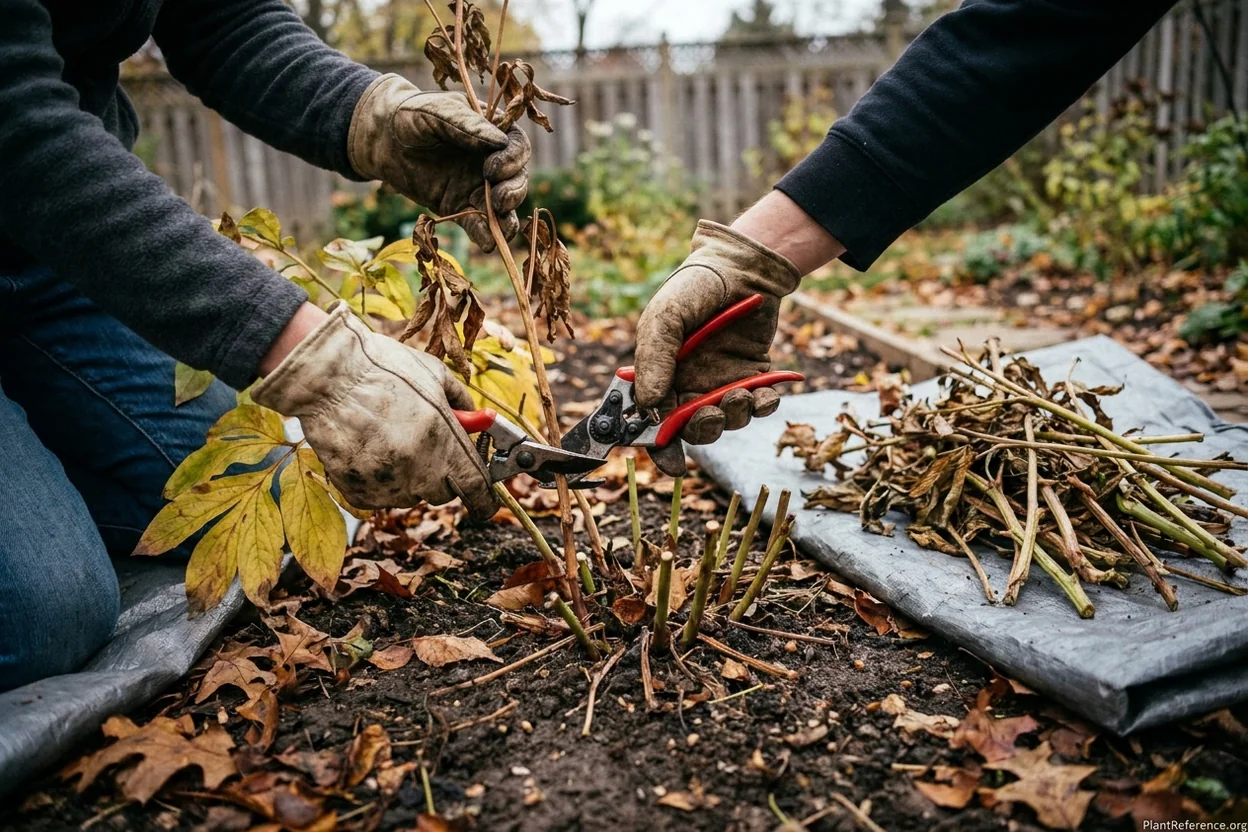
Here is where the ecological argument stops. Certain plants harbour pathogens and pest eggs in their spent foliage, and leaving that foliage in place in autumn means reinfecting the same plant next spring. These are the exceptions, and they are worth doing properly.
Peony. Cut 🌿Paeonia lactiflora stems to 2 inches (5 cm) above the soil after the first hard frost. Peony foliage is the overwintering site for powdery mildew and botrytis blight spores, and botrytis in particular will rot next year's buds before they open. This one is not optional in a humid climate.
Bearded iris. Cut 🌿Iris germanica fans back to 6 inches (15 cm). The target is the iris borer, which lays eggs on old leaf tissue in autumn; those eggs hatch in spring and the larvae tunnel straight into the rhizome. Removing the foliage removes the nursery. Siberian iris, 🌿Iris sibirica, does not have the same borer pressure and can be left standing for its winter texture.
Hosta. Cut 🌿Hosta sieboldiana foliage after frost has knocked it down. Collapsed hosta leaves are a slug hotel — the egg masses overwinter under that wet mat — and they also increase foliar nematode carryover. If slugs are already a running battle in your beds, this cut matters as much as any bait you put down. The same logic sits behind Stop Slugs in the Pacific Northwest Garden Safely.
Bee balm. Cut 🌿Monarda didyma to the ground where the clump ran powdery mildew, which around here is most years. Clean plants can be left, but mildewed ones should come out.
Rudbeckia — only if diseased. Leave 🌿Rudbeckia fulgida 'Goldsturm' standing for the birds unless you saw septoria leaf spot or blackened foliage during the season. If you did, cut it and bag it.
Perennial | Cut To | Reason | Timing |
|---|---|---|---|
2 in (5 cm) | Powdery mildew and botrytis spores overwinter in foliage | After first hard frost | |
6 in (15 cm) | Removes iris borer egg-laying sites | Mid to late fall | |
Ground level | Slug egg masses and foliar nematodes | After frost collapses leaves | |
Ground level | Powdery mildew carryover | After first hard frost | |
Ground level | Only if septoria leaf spot present | After diagnosis, before snow |
What to Leave Standing Through Winter
Everything not on that list stays. In practice that is most of a well-planned border, which is one reason a bed designed for four-season interest is less work, not more — a point I make at length in Plan a Perennial Garden That Blooms Spring to Fall.
Ornamental grasses. 🌿Panicum virgatum 'Shenandoah' and 🌿Calamagrostis × acutiflora 'Karl Foerster' hold their form through snow and give the winter bed its only real movement.
Coneflowers. Healthy 🌿Echinacea purpurea stands stiff and dark all winter and feeds birds while it does.
Sedum. Hylotelephium spectabile 'Autumn Joy' keeps its flat rust-coloured heads well into March.
False indigo. 🌿Baptisia australis turns near-black and its seed pods rattle — one of the best winter silhouettes available.
Bluestar. 🌿Amsonia hubrichtii holds gold-tan foliage far longer than most perennials.
Russian sage. 🌿Perovskia atriplicifolia keeps pale woody stems that read as structure against snow.
Astilbe. Dried 🌿Astilbe chinensis 'Visions' plumes stay upright and catch frost beautifully.
Two of these also want a spring-only cut for plant-health reasons, not just aesthetics. 🌿Perovskia atriplicifolia is a subshrub, and cutting its woody stems in autumn exposes the crown to winter wet and dieback. Ornamental grasses use their own standing thatch as crown insulation; strip it in October and you are relying entirely on snow cover you may not get.
Deadheading is a separate question from cutting back. Snipping spent flowers in summer keeps rebloomers going; cutting whole stems in autumn does not. If a plant is still green and photosynthesising in October, it is loading its roots with carbohydrates for next season, and cutting it short-circuits that.
How to Cut Back Perennials Without Wrecking the Crown
Wait for dormancy. The signal is blackened, collapsed foliage after a hard frost, usually late October through November in Zone 6b. Cutting green foliage in early October interrupts carbohydrate storage and weakens the plant going into winter.
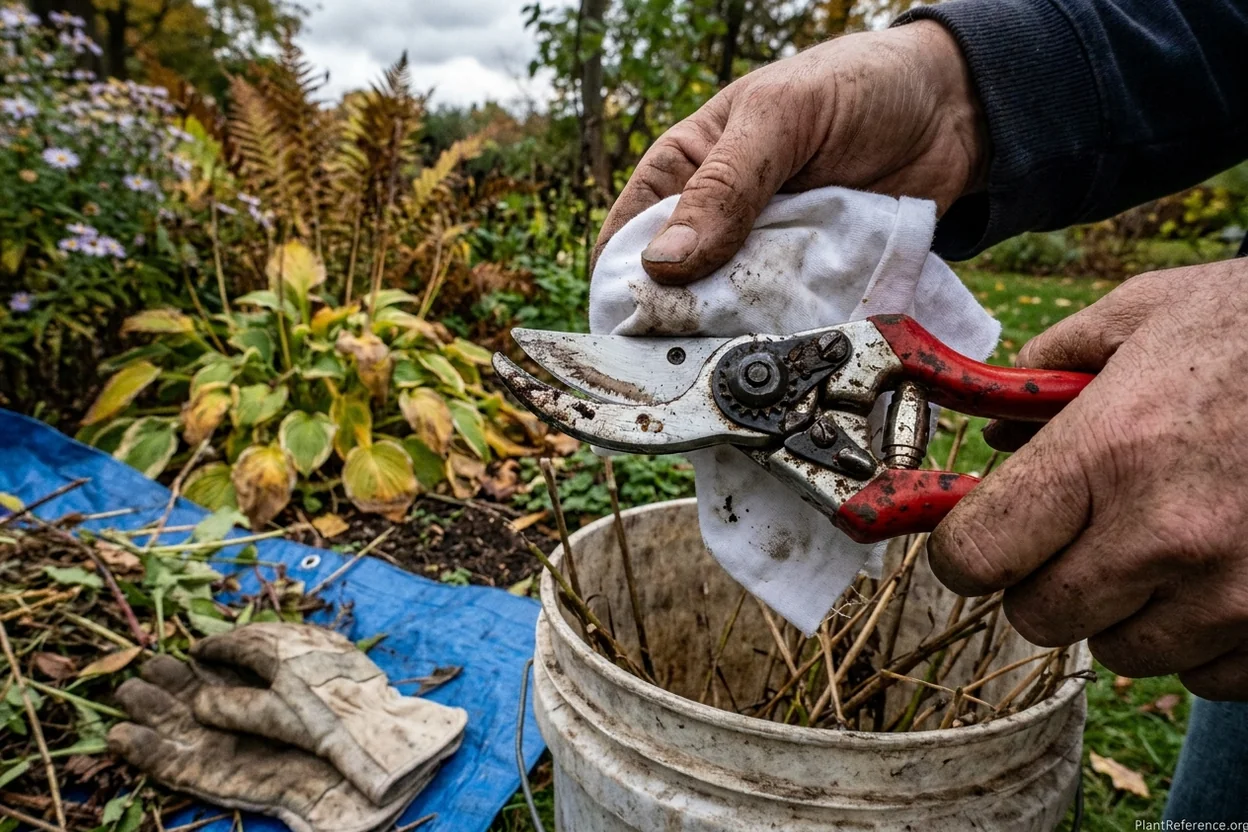
Use sharp bypass pruners, not anvil pruners. Anvil blades crush stem tissue and leave a ragged wound that holds water and invites rot. The same principle governs any woody cut, which is worth understanding properly — see How to Prune Roses: When and How to Prune Every Type of Rose and Prescriptive Pruning: The PPQ Model for Structural Tree Care.
Cut cleanly at the specified height rather than pulling. Yanking dead stems tears the crown and can lift the whole plant, and torn crown tissue is exactly where rot organisms enter.
Disinfect between diseased plants. Wipe blades with 70% isopropyl alcohol or a 10% bleach solution after every mildewed or spotted clump. Moving straight from a botrytis-infected 🌿Paeonia lactiflora to a healthy one with the same blades spreads the problem you just spent an afternoon preventing.
Bag diseased material — do not compost it. Home compost piles rarely hold the 140°F (60°C) needed to kill powdery mildew and botrytis spores reliably, so those spores come back to the bed in your finished compost. Clean stems and healthy foliage can go in the pile without concern.
Mulch after the ground freezes, not before. Two to three inches (5-7.5 cm) of shredded bark or evergreen boughs applied once the soil is frozen keeps it frozen and stops the heaving cycle. Mulch applied in warm October soil does the opposite — it keeps the ground soft and gives voles a comfortable winter runway straight to your crowns. Drainage matters just as much going into winter; the failure modes are the same ones covered in Poor Drainage in Raised Beds: Causes and Fixes for Waterlogged Soil.
When to Do the Spring Cut Instead
For everything you left standing, the haircut waits until daytime temperatures hold consistently in the 50s°F (10-13°C). That threshold is not arbitrary — it is roughly when cavity-nesting bees emerge from hollow stems. Cut earlier and you compost the insects you spent all winter housing.
Leave stubble when you do cut. Eight to 24 inches (20-60 cm) of standing stem gives this year's bees somewhere to nest, and the new season's growth hides it completely within about six weeks. Nobody notices it but you.
Around Boston that usually lands in early to mid April, though I go by the thermometer rather than the calendar — the same soil-and-air-temperature approach that governs Lawn Care Schedule by Month: Your Complete Cool-Season Grass Calendar and When to Stop Mowing in Fall (And When to Start Again in Spring).
Spring is also when the standing material earns its last bit of value: it tells you exactly where every dormant clump sits before anything emerges, which saves you spearing a sleeping 🌿Baptisia australis with a spade.
Three Fall Cleanup Mistakes I See Every Year
Cutting while the foliage is still green. October green means the plant is still feeding its roots. Wait for blackened, frost-collapsed tissue.
Mulching too early. Mulch over unfrozen soil keeps it unfrozen, encourages heaving, and hands voles a covered corridor. Wait for a hard freeze.
Composting infected foliage. Mildewed 🌿Monarda didyma and spotted 🌿Rudbeckia fulgida 'Goldsturm' go in the bin, not the pile. Weed seed follows the same rule — a habit worth building, as Raised Bed Weeds: Prevention Strategies and Control Methods explains.
Get those three right and the fall list shrinks to about twenty minutes of actual cutting. The rest of the border earns its keep standing up.
Frequently Asked Questions
Reading about plants and recognising them are different skills. These three build the second.
- Daily PlantIdentify the day’s mystery plant from a close-up photograph.
- Keyed OutWork a dichotomous key, lead by lead, to name a hidden specimen.
- Name That PlantName a specimen from botanical clues dealt hardest first.
Free to play, no account needed
Tagged with
Kevin is a landscape contractor in the Boston area who specializes in cold-climate perennial gardens and hardscaping. He studied landscape design and worked at a prominent nursery on the North Shore before starting his own design-build firm. Kevin's gardens are built to handle New England weather—freeze-thaw cycles, nor'easters, late springs, and heavy snow loads. He's particularly interested in native perennials and shrubs that provide four-season interest without constant maintenance. Kevin writes about cold-hardy plant selection, winter garden structure, and building landscapes that look good even in February.