Stop Slugs in the Pacific Northwest Garden Safely
Pets & Toxicity
Recorded toxicity for plants linked in this guide. An unknown status is not a safety assessment.
— Image © Plant Reference 2026
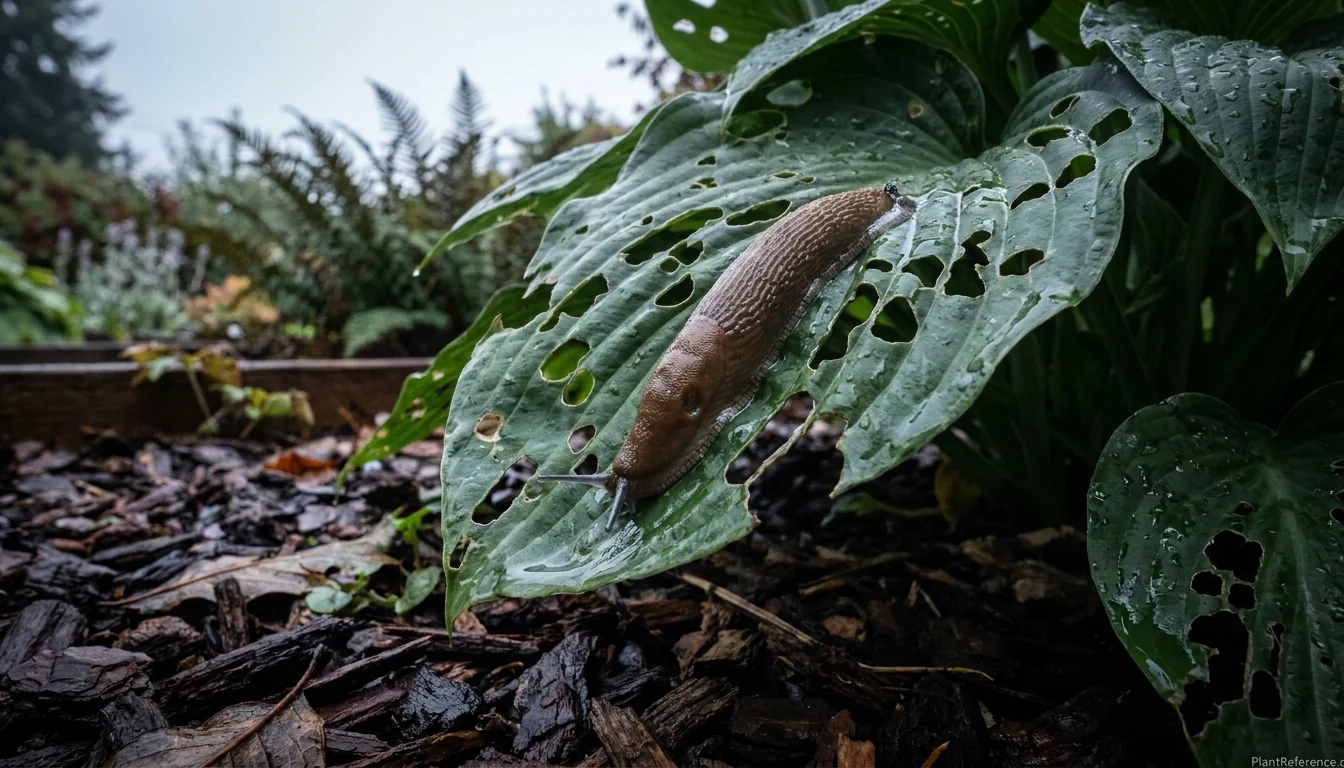
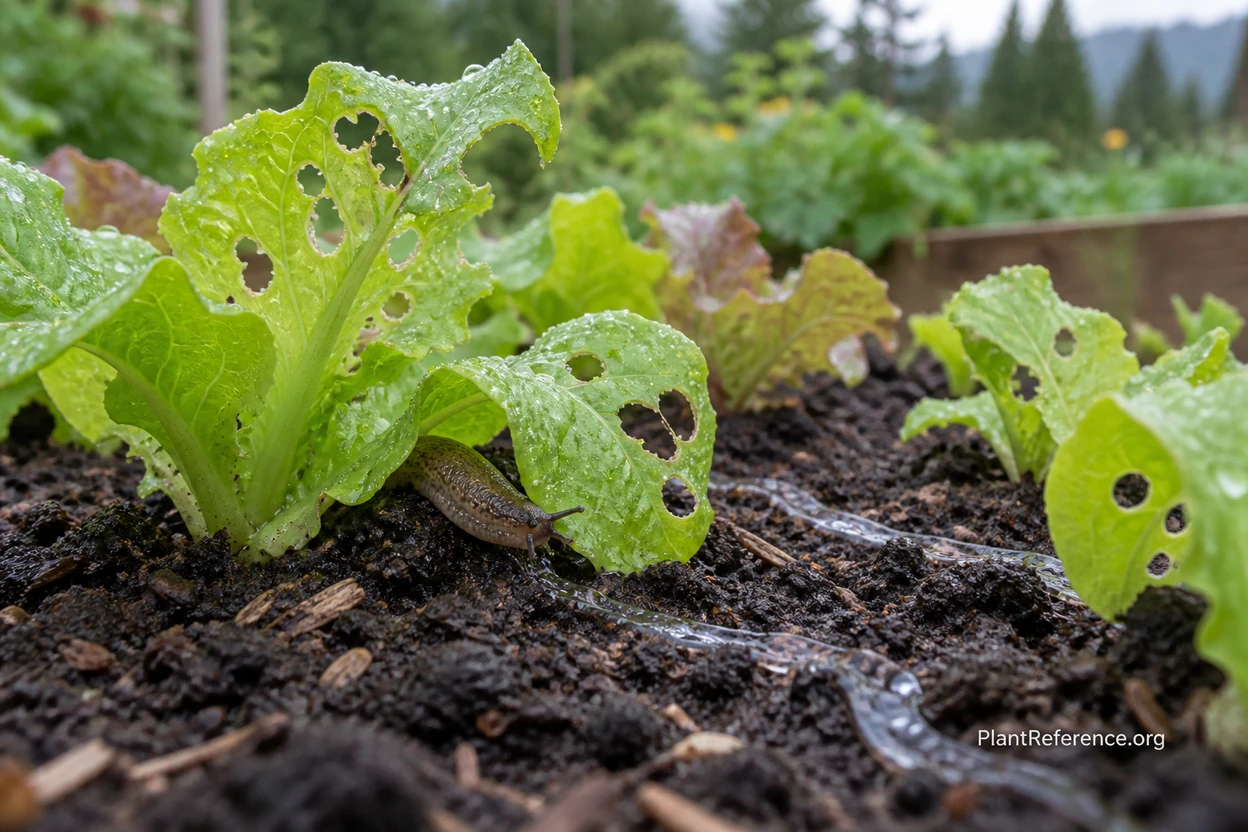
Every gardener west of the Cascades knows the morning gut-punch: a row of lettuce seedlings you nursed for weeks, sheared to stubs overnight, with nothing but silver trails to show who did it. Slugs are the single most destructive pest in the Pacific Northwest garden, and the maritime climate that makes our region so good for growing also makes it paradise for them. The good news is that you can beat slugs reliably without spreading anything that threatens your dog, your kids, or the songbirds and toads that are quietly on your side.
Why Slugs Rule the Pacific Northwest Garden
Slugs are basically soft, shell-less snails that need constant moisture to survive, and the PNW hands them exactly that. Our mild winters rarely get cold enough to kill them off, and our long, damp springs and falls let them feed and breed for most of the year. In drier climates a summer heat wave knocks slug populations flat; here, a shady mulched bed stays cool and moist enough for them to ride out all but the hottest weeks.
They feed at night and on overcast, drizzly days—which in the maritime corridor is most days—then retreat to dark, damp hiding spots when the sun comes out. That nocturnal habit is why the damage seems to appear from nowhere. You are seeing the aftermath, not the act.
Seedlings and tender greens take the worst of it. Lettuce Lactuca sativa (lak-TOO-kah sah-TEE-vah), young brassicas Brassica oleracea, strawberries 🌿Fragaria vesca, and ornamentals like hostas Hosta plantaginea are slug magnets. Knowing what they target lets you concentrate your defenses where they count, instead of treating the whole yard. For the bigger picture on regional pest pressure, the Pacific Northwest Gardening Guide: Climate, Soil & Plant Selection sets the context, and Raised Bed Pest Problems: Identification and Organic Control Methods covers the broader pest lineup.
Start With Cultural Control
The cheapest, most durable slug control costs nothing but attention. Slugs need damp daytime shelter close to their food, so the first move is to take that shelter away.
Clear leaf litter, boards, pots, and debris piles from around vulnerable beds
Pull mulch back a few inches (8-10 cm) from seedling stems where slugs hide
Thin dense, low foliage to let air and sun dry the soil surface
Keep a tidy strip between the lawn edge and your beds—long grass is a slug highway
Watering timing is the other free lever, and it is the one most gardeners overlook. Slugs are most active in the evening and through the night. If you water in the late afternoon or evening, you hand them a moist, comfortable surface to travel and feed on right when they wake up. Switch to watering in the early morning instead. The soil surface dries by dusk, which makes the nightly commute far less pleasant for them. This works hand in hand with the deep, infrequent watering approach that suits our dry-summer climate anyway.
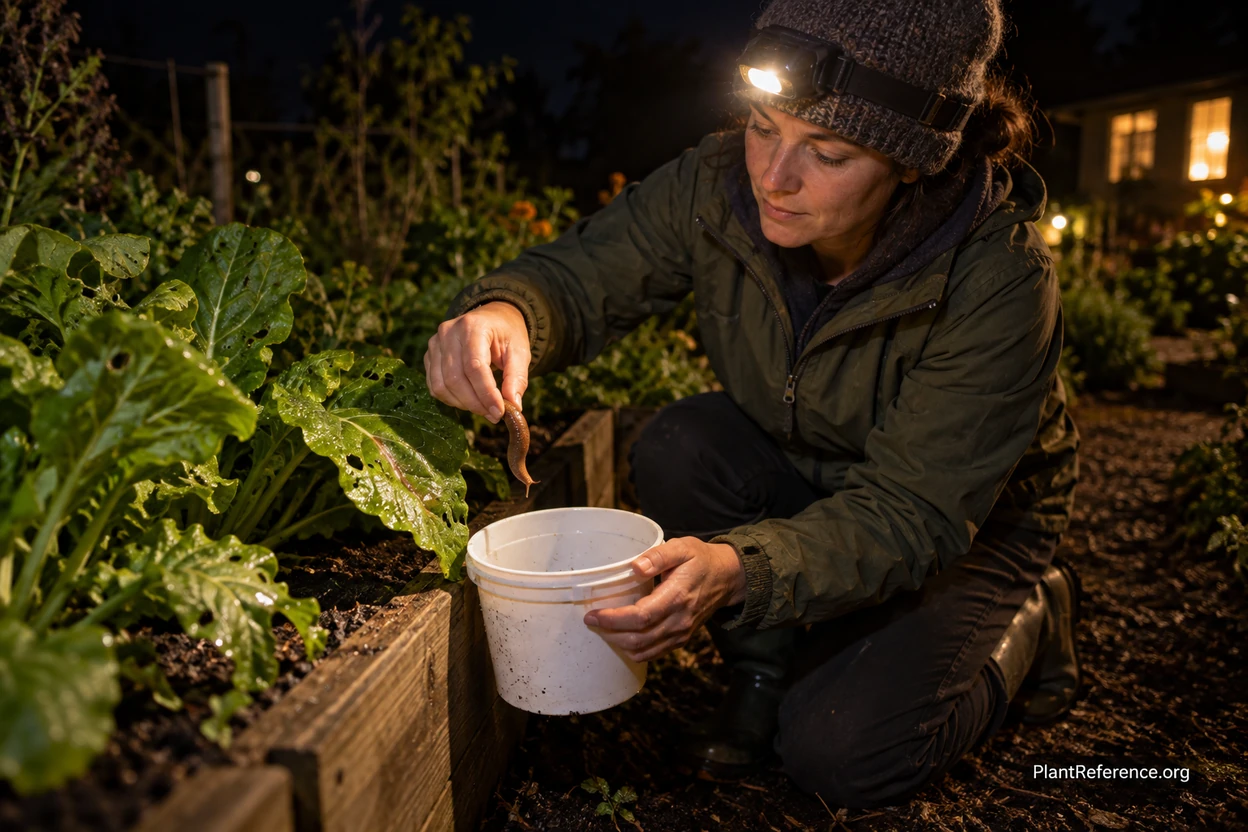
Hand-picking sounds tedious, but it is genuinely effective when you do it right. Head out after dark with a headlamp for the first week or two of a new planting, drop the slugs you find into a bucket of soapy water, and you will knock the local population down fast. Twenty minutes a night during the vulnerable seedling window prevents most of the damage people end up reaching for poison to fix. Building beds you can reach across easily makes this far less of a chore—see Raised Bed Vegetable Garden Layout: Planning for Maximum Production.
Physical Barriers That Actually Work
Barriers buy your seedlings time to outgrow the most vulnerable stage. A plant with mature, tougher leaves shrugs off slug pressure that would have killed it as a sprout.
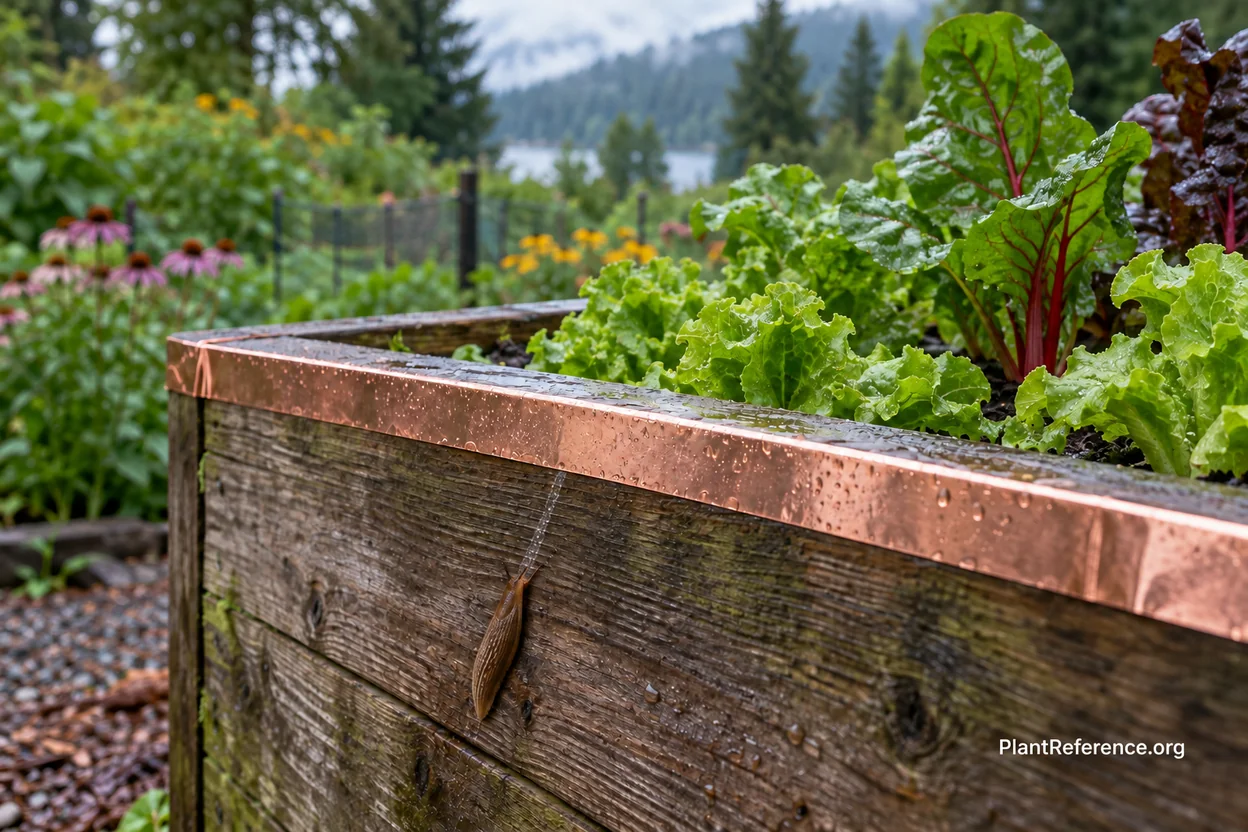
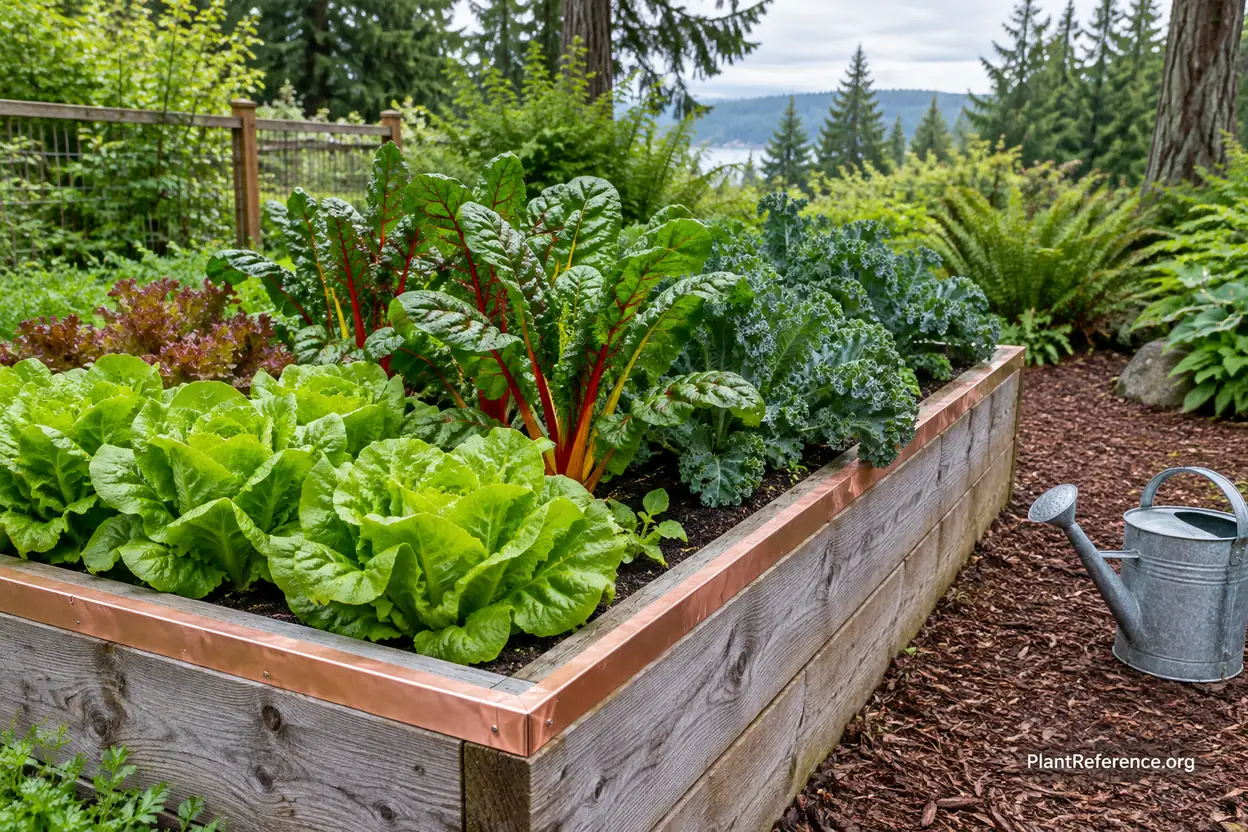
Copper is the classic. A strip of copper tape around a bed rim or pot gives slugs a small electrical-feeling charge when their slime contacts it, and they turn back. It works best on contained beds and containers where you can run an unbroken line; keep it clean and make sure no leaf bridges over it, or the slugs simply use the leaf as a detour.
Sharp, dry barriers help too. A band of crushed eggshells, coarse grit, or diatomaceous earth around a plant is uncomfortable for a soft-bodied slug to cross. The catch in the PNW is rain—these barriers lose their bite once they get wet, so they need refreshing and work better in covered or container situations than in open ground during our drizzle.
For whole beds of seedlings, a floating row cover is the most reliable barrier I use. Laid over hoops with the edges weighted down, it physically excludes slugs from the bed during the critical establishment weeks, and it buys frost protection as a bonus. Just check underneath periodically, because any slug already in the soil when you cover the bed is now enjoying a protected buffet.
Barrier | How It Works | Best Use in the PNW |
|---|---|---|
Copper tape | Mild charge repels slugs on contact | Container rims and contained raised beds |
Crushed grit / eggshells | Sharp surface slugs avoid crossing | Around individual plants; refresh after rain |
Diatomaceous earth | Abrasive, drying barrier | Covered or container plantings; useless when wet |
Floating row cover | Physically excludes slugs from the bed | Protecting whole beds of seedlings |
Iron Phosphate Bait: The Wildlife-Safe Workhorse
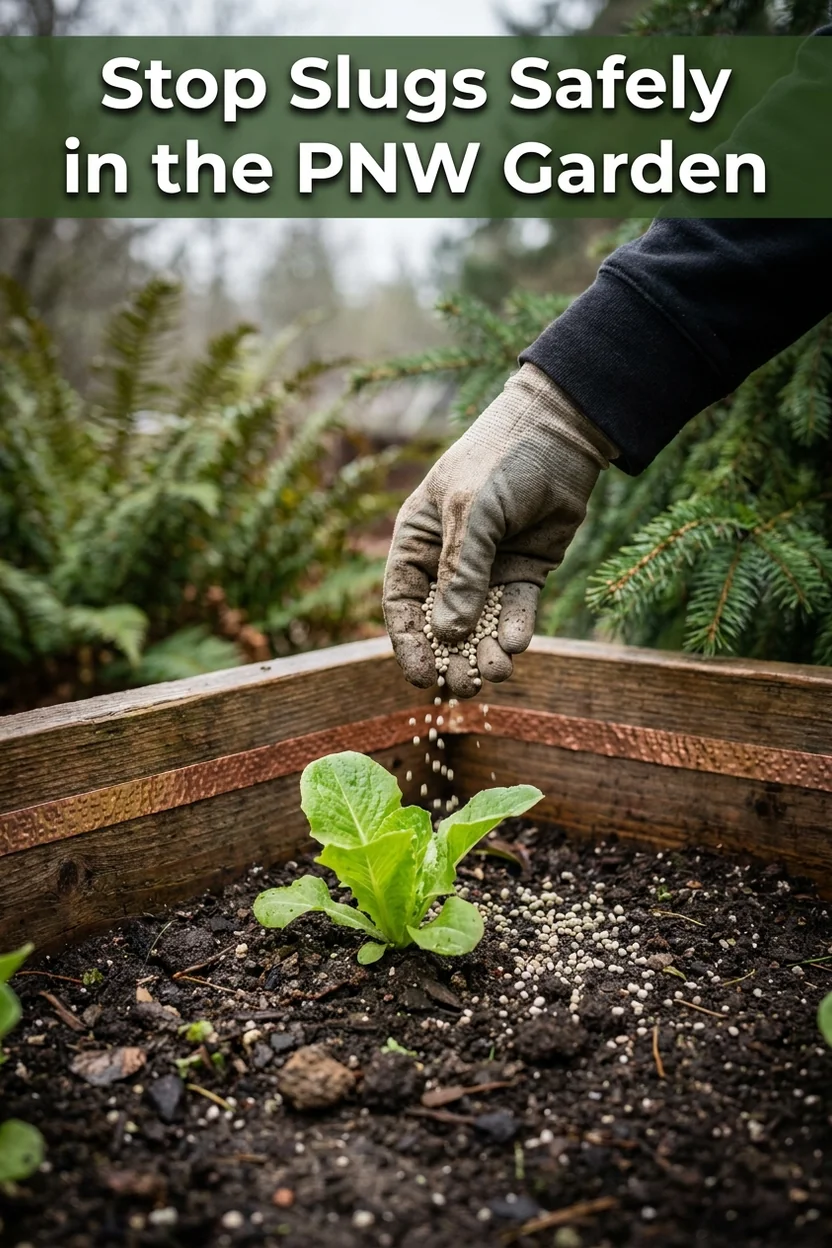
When cultural controls and barriers are not enough—and during a wet spring, they sometimes are not—iron phosphate bait is the tool I reach for. Products like Sluggo are the gold standard for organic slug control in this region for one simple reason: they work without putting anything dangerous in your garden.
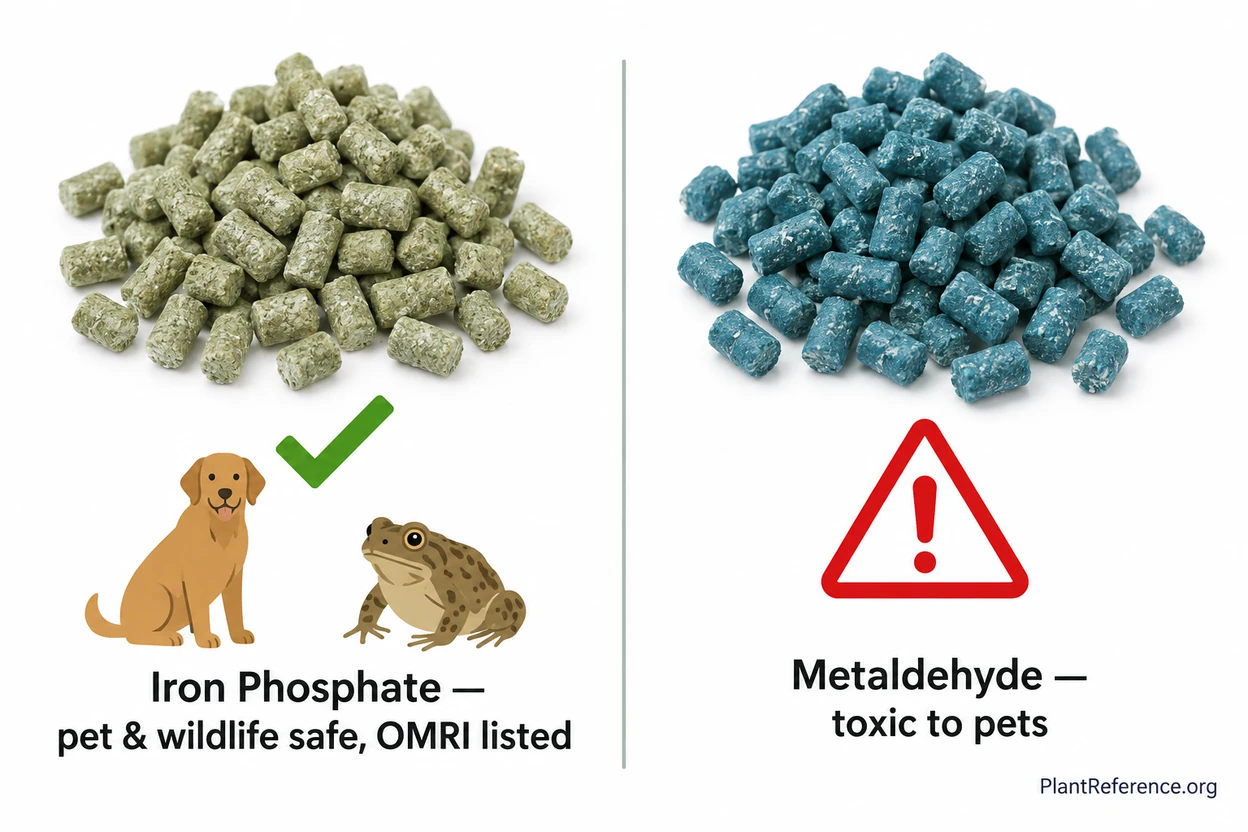
Iron phosphate is a compound of iron and phosphate, both of which occur naturally in soil. Slugs that eat the bait stop feeding and die within a few days. What is left over breaks down into plain soil nutrients. That means it is non-toxic to pets, children, birds, and the toads, ground beetles, and snakes that prey on slugs for you. This is a real distinction, not marketing—it is why iron phosphate is OMRI-listed for organic growing.
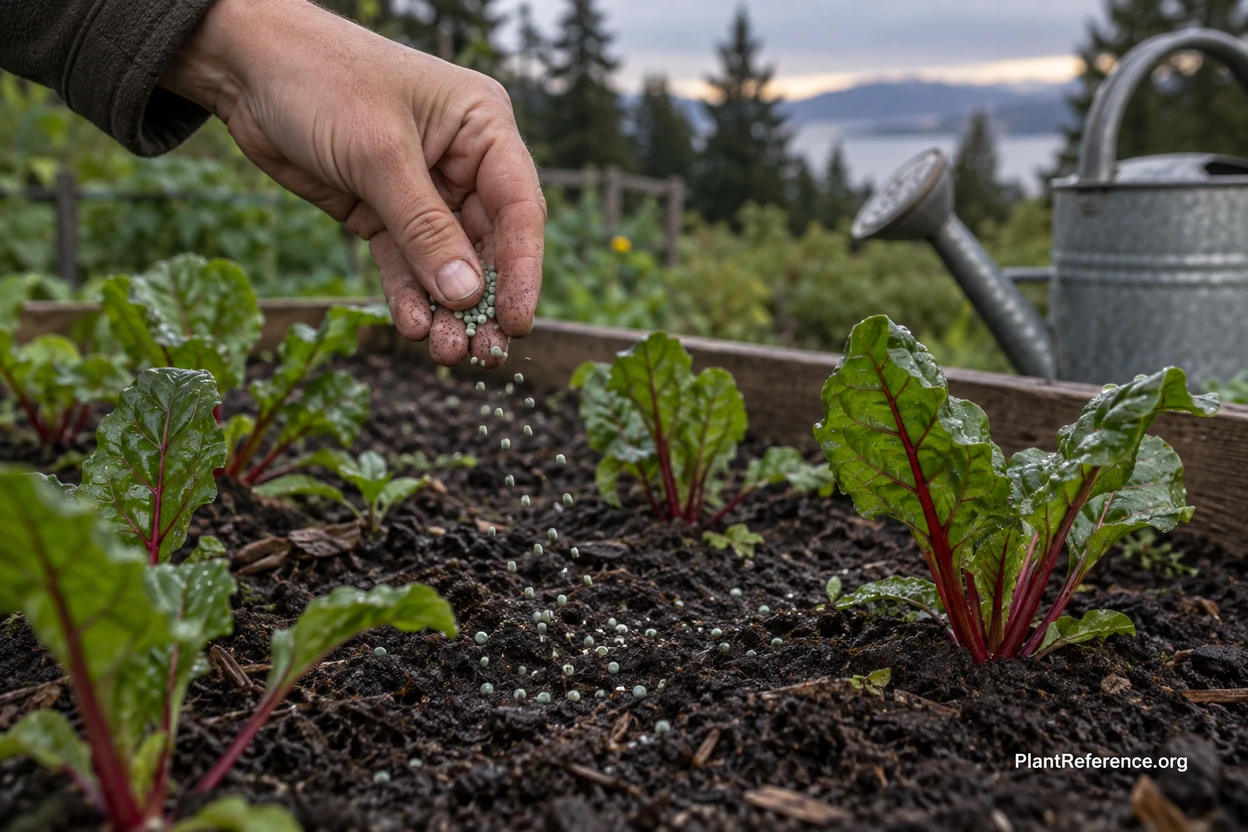
Scatter the pellets thinly across the soil surface around vulnerable plants, roughly a teaspoon per square yard, rather than piling them up. Slugs will find a thin, even scattering far more reliably than a heap. Reapply after heavy rain or every couple of weeks during peak pressure, since our rain gradually breaks the pellets down. Bait at dusk, when slugs are heading out to feed, for the best hit rate.
The point is to combine bait with the cultural work, not to lean on it alone. A clean, morning-watered bed needs only a light, occasional baiting; a debris-choked, evening-watered one will burn through bait and still lose seedlings. For beds full of the greens slugs love most, time your defenses to your planting calendar using guides like When to Plant Lettuce in Seattle: Complete Guide + Best Varieties for Zone 8b and When to Plant Kale in Seattle: Complete Guide + Best Varieties for Zone 8b.
What to Skip: Metaldehyde, Salt, and the Beer Trap Myth
Not every slug remedy belongs in a garden where pets and wildlife roam. Metaldehyde baits—the older blue or green pellets—are genuinely toxic to dogs and cats, and dogs in particular are drawn to them. Every PNW vet sees metaldehyde poisonings each spring. Given that iron phosphate works and is safe, there is no reason to keep metaldehyde in the shed. Skip it.
Salt kills slugs on contact, but it is a terrible garden tool. Salt damages soil structure and harms plant roots, and sprinkling it around beds slowly poisons the ground you are trying to grow in. Use it, if at all, only on hard surfaces away from soil—and honestly, hand-picking does the same job without the collateral damage.
The famous beer trap deserves an honest verdict. It does attract and drown some slugs, and it is harmless. But it also draws slugs in from neighboring yards, and in a wet PNW spring you will empty a lot of traps for modest results. Treat beer traps as a minor supplement and monitoring tool, not a primary defense. If weeds are giving slugs extra cover, tackling them helps too—see Raised Bed Weeds: Prevention Strategies and Control Methods.
Your Season-Long Slug Plan
Slug control is not a one-time event; it is a rhythm that follows the season. Think of it as prevention layered over the year rather than a battle you fight once.
In late winter and early spring, before you plant, clear debris and hiding spots and do a few nights of hand-picking to lower the overwintering population. As you set out seedlings, protect them with row covers or copper, water in the morning, and bait lightly at dusk around the most vulnerable rows. Through the wet stretches of spring and fall, stay on top of reapplying bait after heavy rain and keep checking under any covers.
By midsummer, established plants and drier soil usually ease the pressure on their own, and you can back off. The gardeners who lose the fewest plants are not the ones with the strongest poison—they are the ones who built clean, well-drained beds and stayed consistent. That prevention-first mindset is the same one behind The Complete Guide to Raised Bed Gardening for Beginners (2025) and choosing resilient crops from Best Raised Bed Vegetables for Beginners: Top 10 Easy-Growing Crops. Get the bed right, water in the morning, keep iron phosphate on hand, and slugs become a manageable nuisance instead of the heartbreak they used to be. If you garden farther south in the corridor, When to Plant Lettuce in Portland: Complete Guide + Best Varieties for Zone 8b and Best Soil Mix for Raised Beds: Creating the Perfect Growing Medium round out the system.
Frequently Asked Questions
Three daily games
Can you name a plant on sight?
Monday’s specimenDaphne × transatlantica 'Summer Ice'Reading about plants and recognising them are different skills. These three build the second.
- Daily PlantIdentify the day’s mystery plant from a close-up photograph.
- Keyed OutWork a dichotomous key, lead by lead, to name a hidden specimen.
- Name That PlantName a specimen from botanical clues dealt hardest first.
Free to play, no account needed
Tagged with
Mike's been designing residential landscapes in the Seattle area, with a particular focus on Pacific Northwest natives and sustainable practices. He's a Washington State Master Gardener and worked in construction before landscaping, which gives him a practical edge when it comes to building raised beds and hardscaping projects. He runs a small side business propagating and selling unusual perennials at farmers markets on weekends. His property serves as a testing ground for low-maintenance, wildlife-friendly garden designs. Mike's philosophy: if it requires weekly maintenance, it's not sustainable.