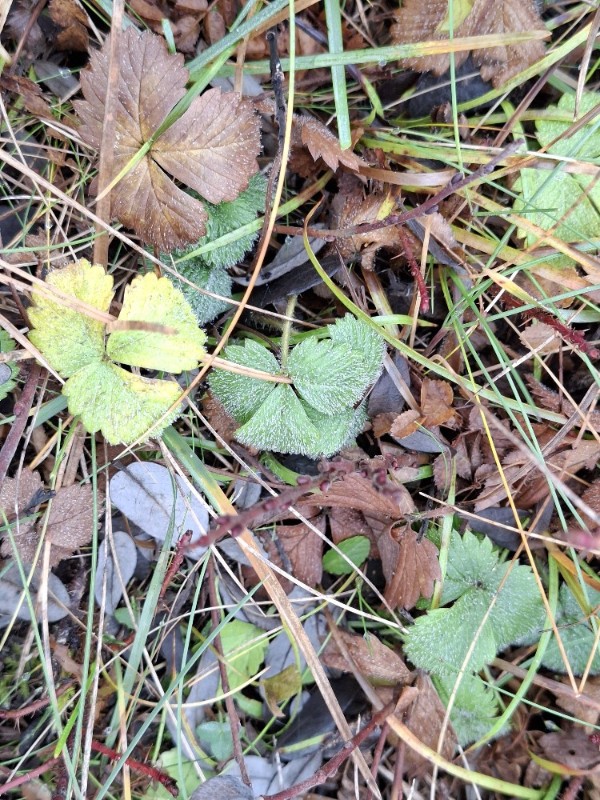
Fragaria, Genus, vesca, Species,
- Genus & species
woodland strawberry
Northern Hemisphere (Europe, Asia, North America)
Overview
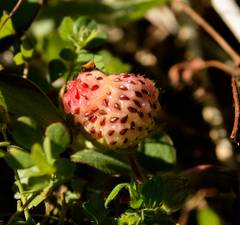
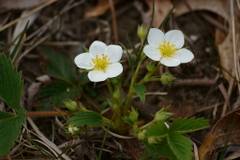
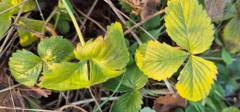
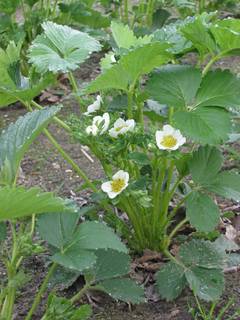
Fragaria vesca is a low-growing herbaceous perennial reaching 4-10 inches (10-25 cm) tall and spreading indefinitely by stoloniferous runners that root at nodes. Leaves are basal, trifoliate, with toothed margins; leaflets are 0.8-2 inches (2-5 cm) long, bright green with a hairy underside. The terminal tooth of each leaflet equals or exceeds adjacent teeth in length, which separates it from F. virginiana. White, 5-petaled flowers 0.4-0.7 inches (1-1.8 cm) across appear on slender stems held above the foliage from April through July, often with intermittent rebloom into fall. Fruits are small, conical, bright red strawberries 0.3-0.6 inch (0.7-1.5 cm) long, with achenes projecting from the surface rather than embedded in pits. Fruits ripen 4-6 weeks after flowering. Plants spread aggressively in moist conditions, with a single parent producing 5-15 daughter plants per season via runners. Foliage is semi-evergreen in zones 7-10 and dies back in colder zones. Individual crowns persist 3-5 years; populations remain perpetual through runner replacement.
Native Range
Native across the Northern Hemisphere - throughout most of Europe, much of temperate Asia, and across North America from Alaska south through California and east to the Atlantic. Found in deciduous woodland edges, clearings, meadows, stream banks, and disturbed sites at 0-9,000 feet (0-2,750 m) elevation.Suggested Uses
Used as a groundcover in woodland gardens, shaded slopes, edible landscape understories, and stream-bank plantings at 12-18 inch (30-45 cm) spacing. Suited to forest edges and naturalized meadow plantings; flowers and fruit attract bees, butterflies, songbirds, and small mammals. Performs poorly in dry, hot exposed sites and conventional turf areas.How to Identify
Appearance
Size & Dimensions
Height4" - 10"
Width/Spread1' - 2'
Bloom Information
Flowers open from April through July across most of the range, with peak bloom in May at low elevations and June at higher sites. Individual flowers last 4-6 days; total bloom period extends 8-12 weeks per population, with intermittent rebloom from August through September on healthy plants in cool climates. Fruit set follows flowering by 3-4 weeks.
Detailed Descriptions
Flower Description
white with yellow centersFoliage Description
bright green; trifoliate with toothed marginsGrowing Conditions
Sun Requirements
Requires 3-8 hours of direct sunlight daily
• Full Sun: 6+ hours of direct sunlight
• Partial Shade: 3-6 hours of direct sunlight
• Full Shade: Less than 3 hours of direct sunlight
Care & Maintenance
Care Guide
Water deeply weekly during the establishment phase; established plants tolerate 2-3 weeks without rain in regions receiving at least 25 inches (63 cm) of annual precipitation. Plants in dense shade flower and fruit poorly; runner production continues but berry yield declines by 60-80%. Slugs feed on ripening fruit and emerging shoots in cool wet climates. Verticillium wilt can kill plants on previously cropped tomato or potato ground. Plants self-replace via runners; older crowns decline after 3-5 years and are replaced by daughter plants. Mulch with 1-2 inches (2.5-5 cm) of straw or shredded leaves to retain moisture and protect ripening fruit.Pruning
Cut back ratty foliage in late winter or early spring; new leaves emerge from basal crowns within 2-3 weeks. To control spread, sever runners where they root at nodes and remove unwanted plants. Remove leaves with leaf scorch, leaf spot, or powdery mildew during the growing season; severely affected plants can be cut to the ground and will resprout.Pruning Schedule
Prune: February–March
winterearly spring
Container Growing
Suitable for container growing
Minimum container size: 1 gallons