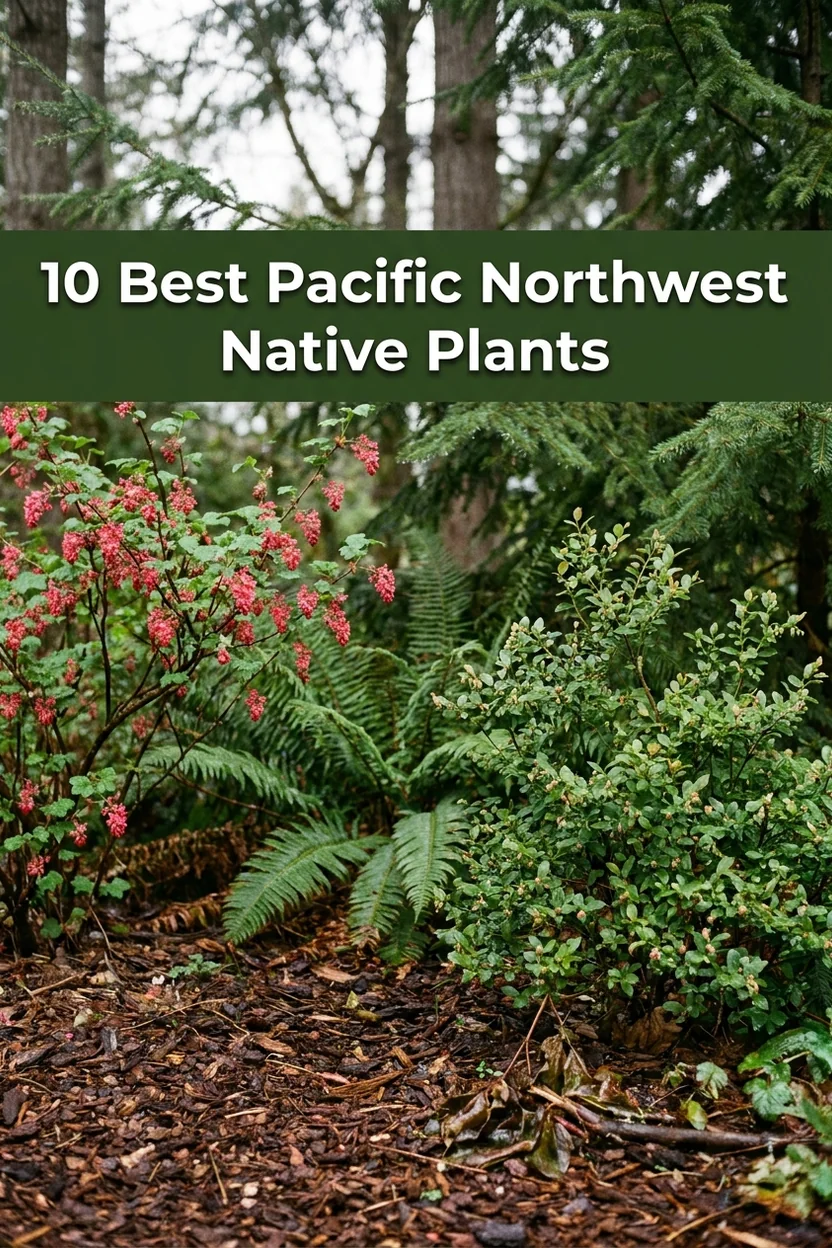
Pacific Northwest Native Plants: 10 Resilient Picks
Pets & Toxicity
Recorded toxicity for plants linked in this guide. An unknown status is not a safety assessment.
Rhododendron macrophyllum — Toxicity Warning
Toxic to pets and humansView Rhododendron macrophyllum plant profile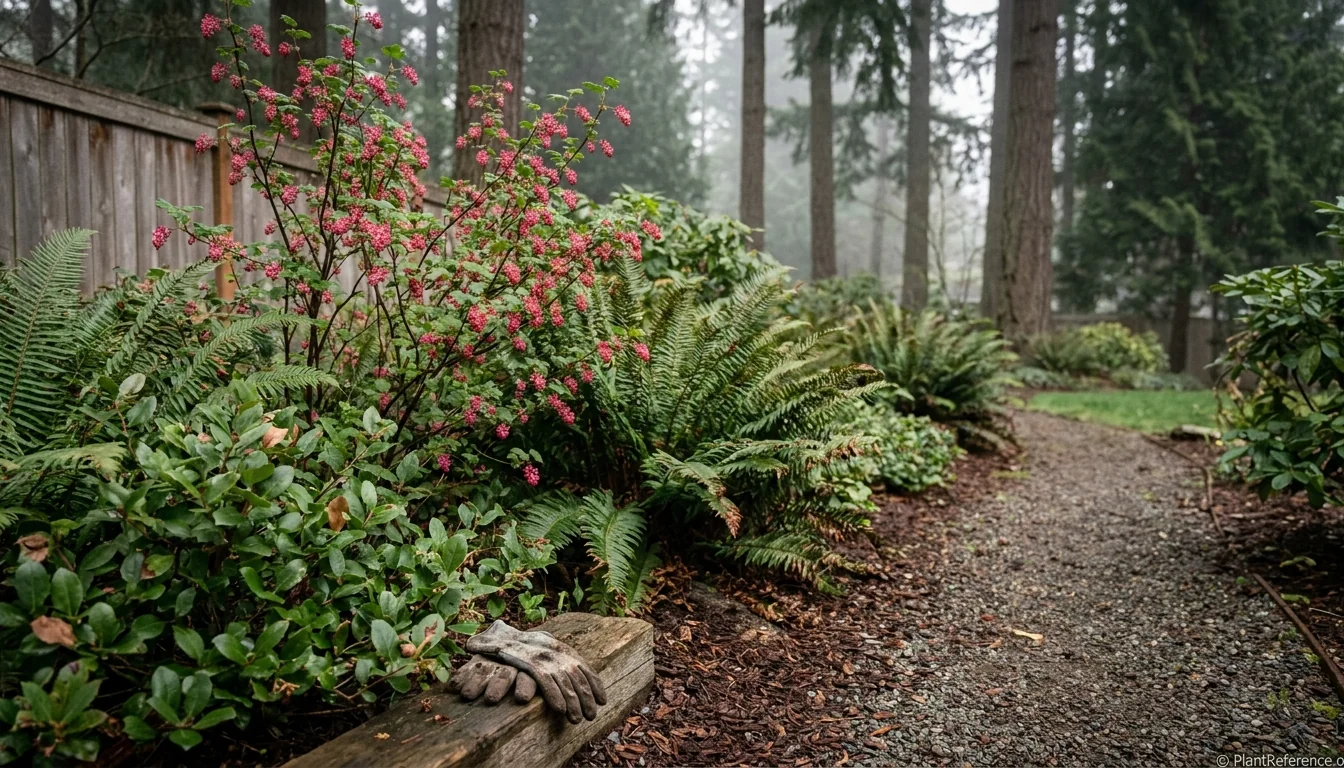
— Image © Plant Reference 2026
If you want a garden that looks good without weekly babysitting, Pacific Northwest native plants are the smartest place to start. These species co-evolved with our maritime climate—long, saturated winters and a dry summer stretch from July through September—so they handle conditions that flatten thirstier imports. My rule has always been simple: if it needs weekly maintenance, it isn't sustainable. Natives pass that test, and they feed local pollinators and birds while they do it.
Why Native Plants Thrive in Pacific Northwest Gardens
Native plants work because they're already built for the assignment. The maritime PNW swings between months of winter saturation and a hard summer drought, and our soils trend acidic thanks to high rainfall leaching calcium and magnesium out of the ground. Plants shipped in from milder or drier regions fight that pattern. Natives lean into it.
That match means lower inputs across the board. Established native shrubs and ferns rarely need summer irrigation, they don't ask for fertilizer, and they shrug off the fungal pressure that humid PNW air throws at fussier ornamentals. You build the bed once, get the plants through their first year, and then mostly step back.
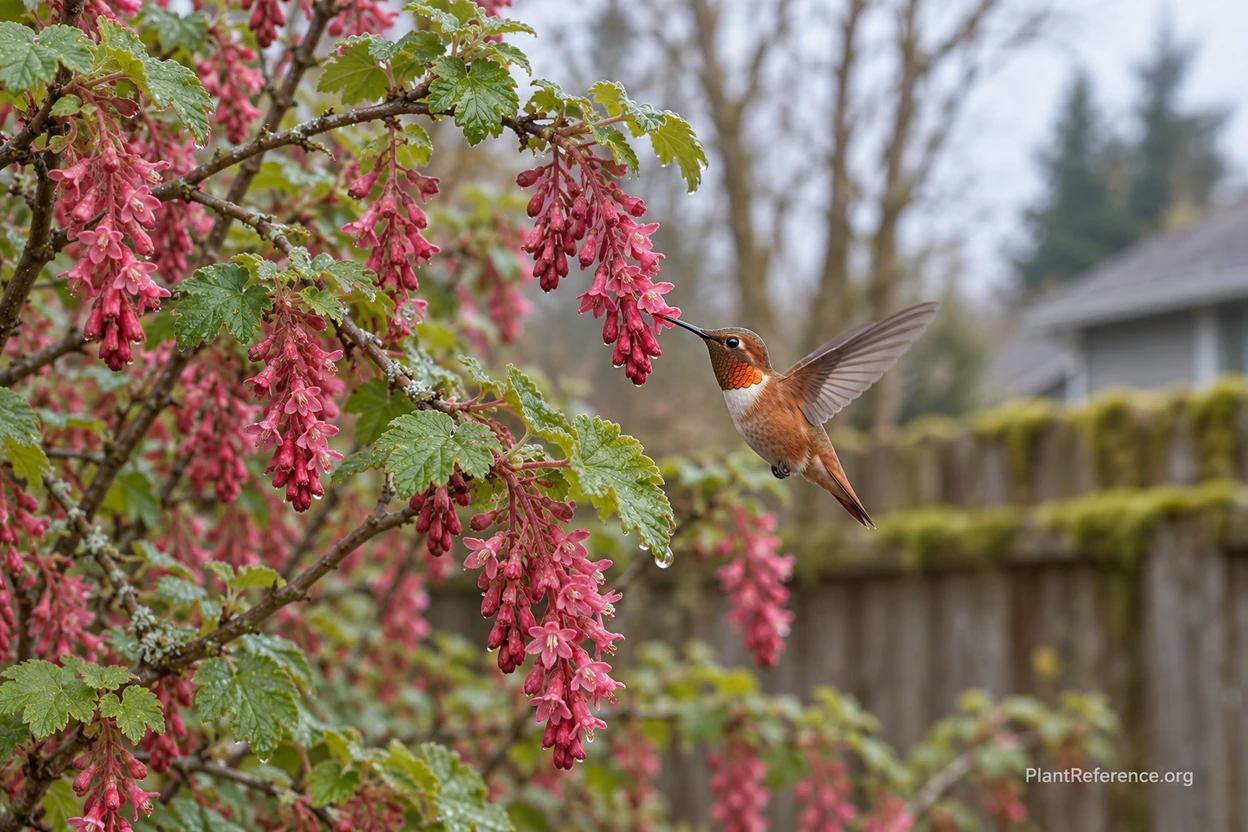
There's an ecological payoff too. Red-flowering currant flowers line up almost perfectly with the return of rufous hummingbirds each spring, and our native bees are most efficient on the plants they evolved alongside. Research on PNW "nativars"—cultivars bred from native species—shows that wild-type plants generally outperform double-bloom or drastically recolored selections at supporting specialized bees. Some lightly altered cultivars still feed pollinators well, but when habitat is the goal, plainer is usually better.
One honest caveat: "low-maintenance" is not "no-maintenance," and "drought-tolerant" only kicks in after establishment. Every plant below still needs consistent water through its first summer. Get them through year one and the garden starts paying you back.
The 10 Best Pacific Northwest Native Plants
Here are ten natives I plant again and again in Seattle-area gardens. They cover the full structure of a bed—canopy, mid-level shrubs, evergreen bones, groundcover, and a spring bulb show—so you can build an entire low-input landscape from this list alone.
Plant | Type & Mature Size | Light | Wildlife Value |
|---|---|---|---|
Deciduous shrub, 6-10 ft (1.8-3 m) | Sun to part shade | Early nectar for hummingbirds | |
Evergreen shrub, 3-6 ft (0.9-1.8 m) | Part shade | Winter pollen, berries for birds | |
Evergreen shrub, 3-8 ft (0.9-2.4 m) | Sun to deep shade | Berries for birds and people | |
Evergreen fern, 3-4 ft (0.9-1.2 m) | Shade | Cover for ground-feeding birds | |
Small tree, 10-20 ft (3-6 m) | Part to full shade | Structure, fall color, seed | |
Bulb, 12-30 in (30-76 cm) | Sun to part shade | Spring nectar for native bees | |
Evergreen groundcover, 2-4 ft (0.6-1.2 m) | Part to deep shade | Berries, nesting cover | |
Deciduous shrub, 6-9 ft (1.8-2.7 m) | Sun to part shade | Wet-zone berries, red winter stems | |
Evergreen groundcover, 6-12 in (15-30 cm) | Full sun | Drought groundcover, early flowers | |
Evergreen shrub, 4-12 ft (1.2-3.7 m) | Part shade | Late-spring nectar |
Red-Flowering Currant
🌿Ribes sanguineum (RYE-beez san-GWIN-ee-um) is the plant I'd choose first. This deciduous shrub throws cascades of pink to deep-red flowers in early spring, right as rufous hummingbirds arrive looking for fuel. It takes sun to part shade, tolerates our summer dry spell once established, and reaches 6-10 feet (1.8-3 m). Give it decent drainage and it asks for nothing else.
Oregon Grape
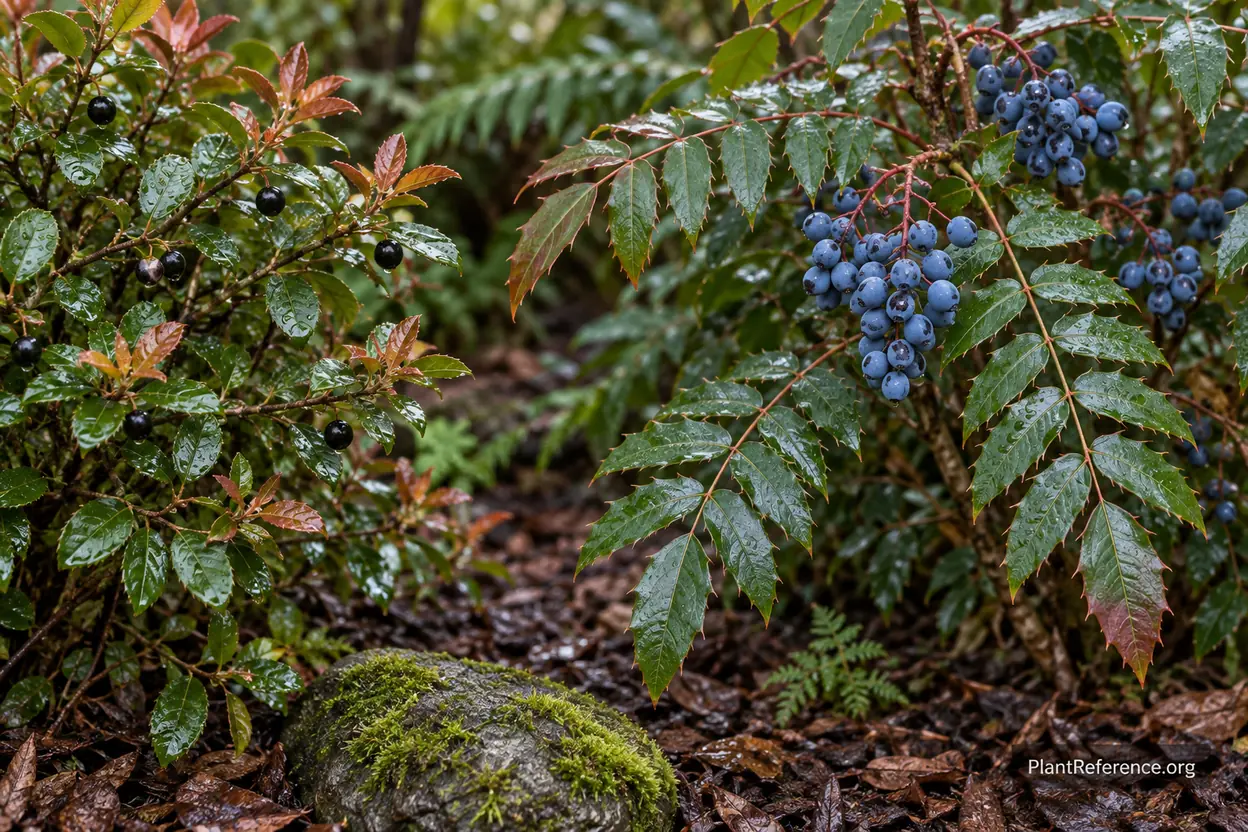
🌿Mahonia aquifolium (mah-HOH-nee-uh ah-kwih-FOH-lee-um) earns its keep as an evergreen backbone. The holly-like foliage looks sharp year-round, and bright yellow flower clusters open in late winter when almost nothing else is feeding bees. Blue berries follow for the birds. It holds at 3-6 feet (0.9-1.8 m) and handles part shade beautifully.
Evergreen Huckleberry
🌿Vaccinium ovatum (vak-SIN-ee-um oh-VAH-tum) is the most flexible shrub on this list. It grows in full sun or genuinely deep shade—the shade plants just stay shorter and more open. New growth flushes bronze-red, the small black berries are excellent eating, and the glossy evergreen leaves make it a clean hedge or foundation plant at 3-8 feet (0.9-2.4 m).
Western Sword Fern
🌿Polystichum munitum (pol-ISS-tih-kum myoo-NYE-tum) is the plant that says "Pacific Northwest" more than any other. This evergreen fern defines our forest understory, holds its dark fronds all winter, and becomes genuinely drought-tolerant once its roots are down. Plant it in shade, water it the first summer, and it'll anchor the shady side of the garden for decades at 3-4 feet (0.9-1.2 m).
Vine Maple
🌿Acer circinatum (AY-ser sir-sih-NAH-tum) gives you mid-level structure and a fall show. Often multi-trunked, it grows happily in the part-to-full shade under taller conifers—exactly where many ornamentals sulk—and lights up scarlet and orange in autumn. At 10-20 feet (3-6 m) it bridges the gap between groundcover and canopy without overwhelming a small yard.
Camas Lily
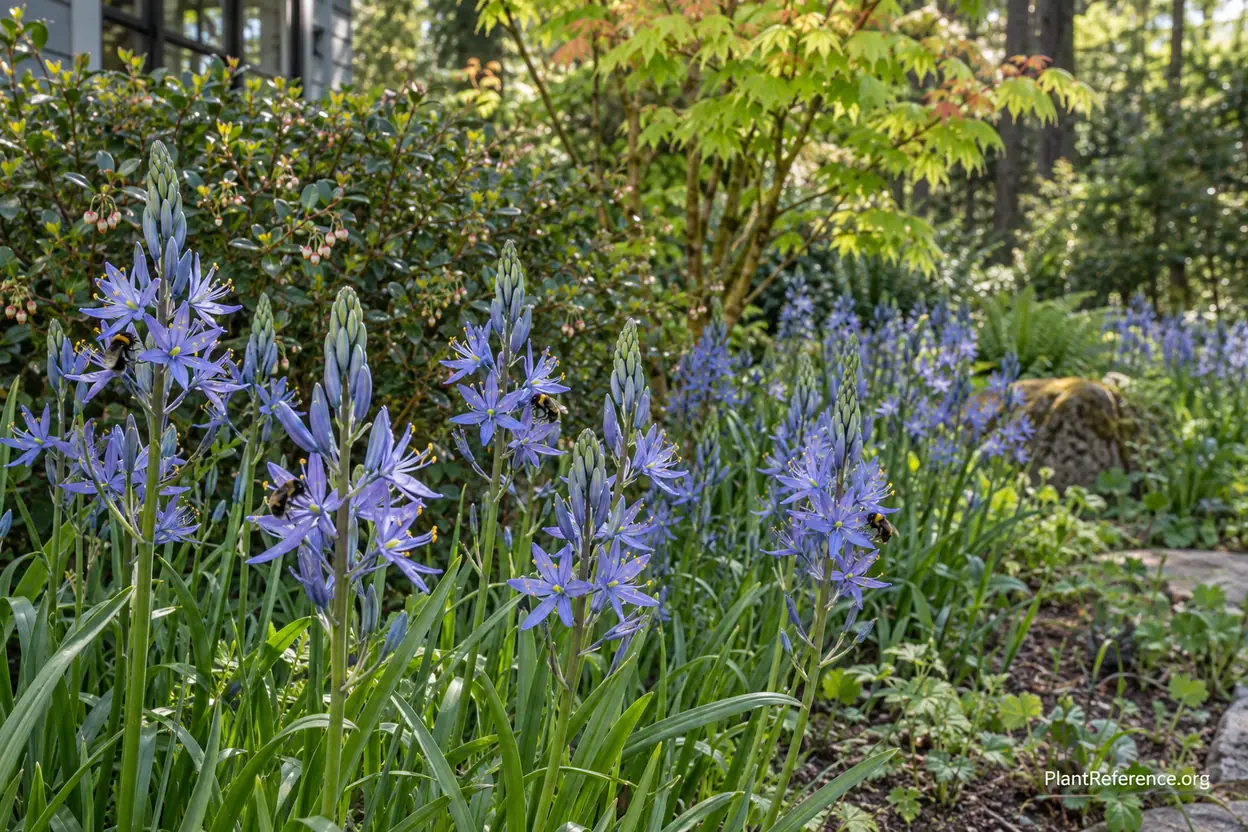
🌿Camassia quamash (kah-MASS-ee-uh KWAH-mash) is the spring surprise. This perennial bulb sends up spikes of periwinkle-blue flowers in May and was historically managed as a staple food crop by Indigenous peoples across the region. Plant the bulbs in fall in a spot that's moist in spring and drier in summer, and they'll naturalize into drifts over the years at 12-30 inches (30-76 cm).
Salal
🌿Gaultheria shallon (gawl-THEER-ee-uh SHAL-on) is my go-to evergreen groundcover for filling space under shrubs and trees. It spreads to form a dense, glossy carpet 2-4 feet (0.6-1.2 m) tall, tolerates part to deep shade, and produces edible dark berries that birds love. Once it's established it outcompetes most weeds, which is the kind of low-maintenance I'm after.
Red-Osier Dogwood
🌿Cornus sericea (KOR-nus ser-IH-see-uh) is the answer for that soggy corner where nothing else survives. This deciduous shrub thrives in the wet zone of a rain garden or a low spot that floods each winter, then glows with brilliant red stems once the leaves drop. It reaches 6-9 feet (1.8-2.7 m) and feeds birds with white berries in late summer.
Kinnikinnick
🌿Arctostaphylos uva-ursi (ark-toh-STAF-ih-los OO-vah-ER-see) is the tough, sun-loving groundcover for hot, dry, well-drained spots—think slopes and parking strips. It hugs the ground at 6-12 inches (15-30 cm), shrugs off summer drought completely once established, and offers early pink-white flowers followed by red berries. It's the opposite habitat from salal, so between the two you can cover sun and shade.
Pacific Rhododendron
🌿Rhododendron macrophyllum (roh-doh-DEN-dron mak-roh-FIL-um) is Washington's state flower and a knockout in part shade. It blooms in showy pink trusses in late spring, holds evergreen leaves year-round, and ranges from 4-12 feet (1.2-3.7 m) depending on light. Like most rhododendrons it wants the acidic, well-drained soil the PNW naturally provides—just keep its shallow roots mulched and never waterlogged.
How to Plant and Establish PNW Natives
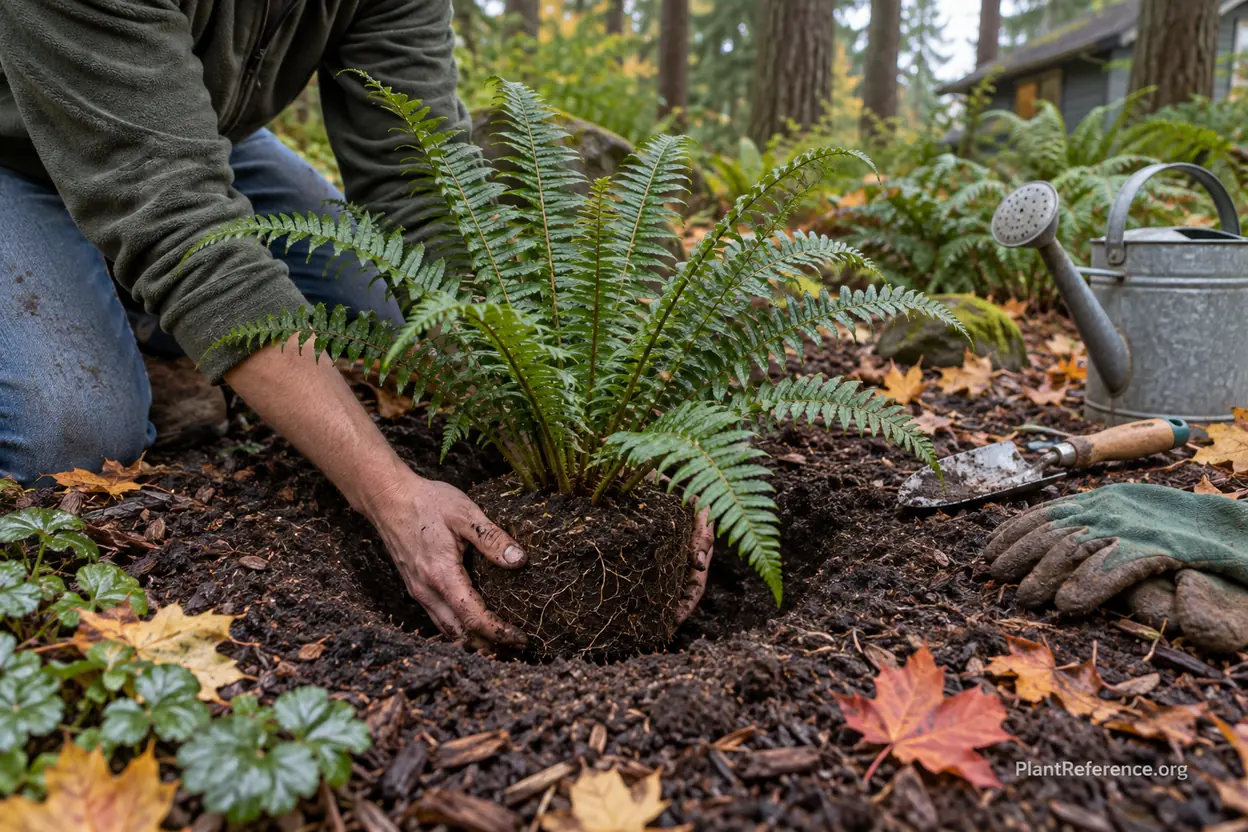
The single best thing you can do for native plants is plant in fall. From late September through November, the soil is still warm but winter rain is on the way, so roots establish for months while you do nothing. Spring planting works, but then you're on the hook for irrigation all summer.
Site each plant to its habitat. Sun-lovers like 🌿Arctostaphylos uva-ursi and 🌿Camassia quamash go in the open; shade plants like 🌿Polystichum munitum, 🌿Gaultheria shallon, and 🌿Acer circinatum go under the canopy. Match the plant to the spot and you eliminate most future problems before they start.
Drainage matters more than richness. Most PNW natives evolved in lean, fast-draining ground and resent the constant wet feet that our glacial-till and clay soils create in winter. If your soil holds water, build up instead of digging down—a raised bed or a gentle mound solves saturated root zones immediately. For the how-to, see The Complete Guide to Raised Bed Gardening for Beginners (2025) and Best Soil for Raised Beds: 6 Commercial Mixes Tested and Compared. If you've already got beds that pool water, Too Much Water in Raised Beds: Signs and Solutions for Overwatering walks through fixes, and Raised Bed Soil Settling and Compaction: Prevention and Solutions covers keeping that drainage long-term.
Skip the fertilizer and go easy on amendments. These plants don't want a rich vegetable-garden mix—save that for your edibles. A modest amount of compost worked into heavy soil to improve structure is fine, but the goal is drainage and a steady supply of the slightly acidic conditions natives prefer, not a nutrient feast. If your beds are showing problems, Nutrient Deficiencies in Raised Beds: Visual Diagnosis and Treatment helps you tell a real deficiency from over-amending.
First-Year Watering
This is where most native plantings succeed or fail. Through the first summer, water deeply once or twice a week so the root zone stays moist 6-8 inches (15-20 cm) down. Deep, infrequent watering pulls roots downward into cooler soil; shallow daily sprinkles keep them lazy at the surface. A 2-3 inch (5-8 cm) layer of bark or leaf mulch cuts that watering need roughly in half and keeps roots cool.
By the second summer, taper off. Most plants on this list—especially 🌿Ribes sanguineum, 🌿Mahonia aquifolium, 🌿Polystichum munitum, and 🌿Arctostaphylos uva-ursi—will carry themselves through the dry months on their own. 🌿Cornus sericea and 🌿Camassia quamash prefer spots that stay naturally moister in spring.
Designing a Native Garden for Pollinators
Good habitat is about sequence as much as species. Aim for something blooming from late winter straight through summer so pollinators always have a meal. 🌿Mahonia aquifolium opens the season in late winter, 🌿Ribes sanguineum and 🌿Arctostaphylos uva-ursi take over in early spring, 🌿Camassia quamash and 🌿Rhododendron macrophyllum cover mid-to-late spring, and your edible plantings carry the summer.
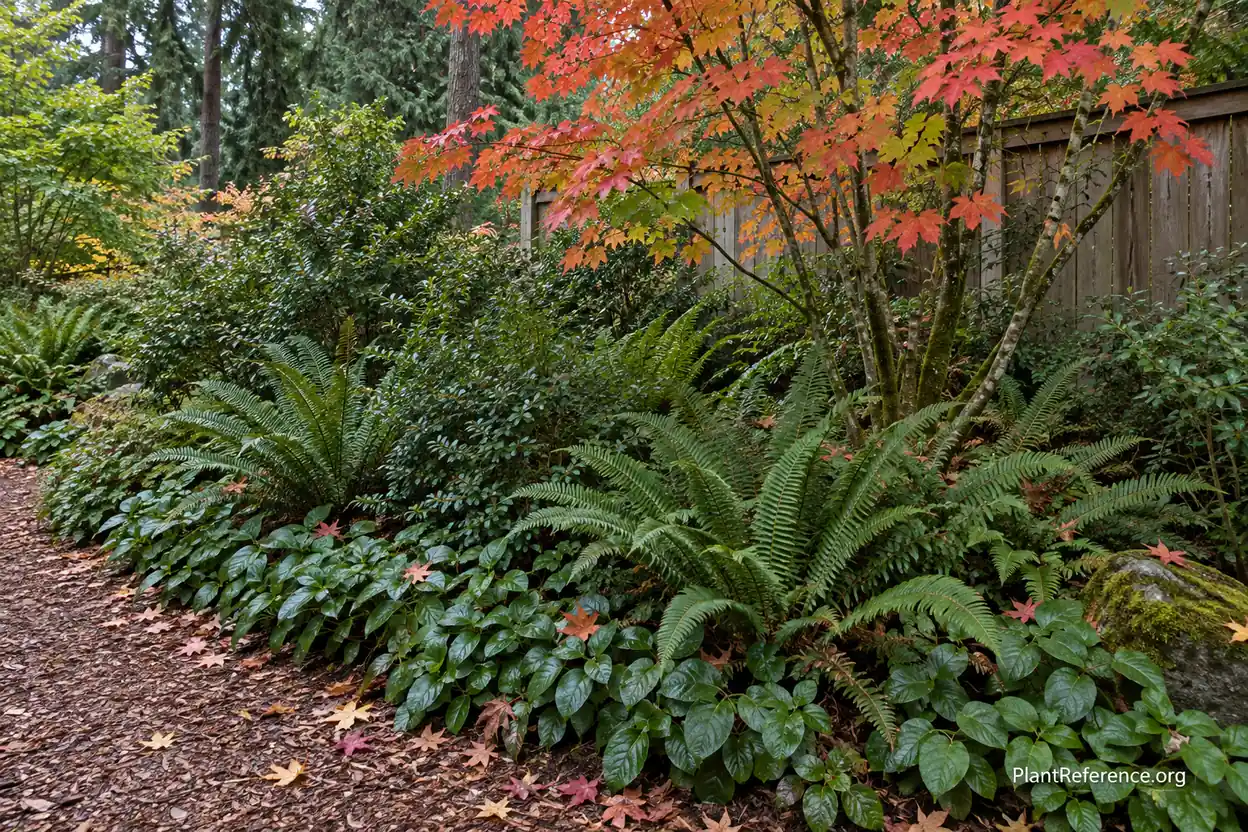
Layer the structure, too. Use 🌿Acer circinatum for the upper level, fill the middle with 🌿Vaccinium ovatum and 🌿Cornus sericea, and carpet the ground with 🌿Gaultheria shallon in shade and 🌿Arctostaphylos uva-ursi in sun. Layered plantings shelter more wildlife and read as a real landscape rather than a row of dots.
When you buy, favor wild-type plants over heavily bred cultivars if pollinators are the point. Double-flowered or radically recolored selections often make less accessible nectar and pollen for specialized native bees. A lightly modified cultivar can still perform, but the straight species is the safe bet for habitat.
Natives also pair well with a productive edible garden—the pollinators you attract work your vegetables for free. If you're adding food crops nearby, our regional guides like When to Plant Onions in Seattle: Complete Guide + Best Varieties for Zone 8b, When to Plant Carrots in Seattle: Zone 8b Dates + Best Varieties, and When to Plant Carrots in Portland: Zone 8b Dates + Best Varieties line up planting dates for the maritime zone.
Troubleshooting Common Native Plant Problems
Plants Struggling in Their First Summer
If a new native wilts or browns its first July, the cause is almost always water, not the plant. Natives are only drought-tolerant after establishment. Check soil moisture 6 inches (15 cm) down before assuming the worst, and deep-water once or twice weekly through that first dry season. Mulch heavily to buy yourself margin.
Winter Root Rot and Soggy Soil
Yellowing, dieback, and sudden collapse over winter usually trace back to drainage, not cold. Our glacial-till hardpan and clay soils can keep root zones saturated for months, which rots the roots of drought-adapted plants like 🌿Arctostaphylos uva-ursi and 🌿Rhododendron macrophyllum. Plant these in raised mounds or beds, and reserve the low, wet spots for 🌿Cornus sericea, which actually wants them.
Powdery Mildew and Leaf Spot
Our humid air invites powdery mildew and leaf spotting, especially on 🌿Mahonia aquifolium and currants in crowded, still corners. The fix is airflow, not chemicals: space plants properly and thin congested growth so leaves dry quickly after rain. Most native infections are cosmetic and don't threaten an established plant's life.
Slugs on New Growth
Slugs are the defining PNW pest and they'll target tender new shoots on young natives. Keep mulch pulled back slightly from stems, water in the morning so surfaces dry by evening, and use an iron-phosphate bait if pressure is heavy—it's non-toxic to pets and wildlife and breaks down into the soil. Established plants generally outgrow slug damage.
Aphids on Tender Tips
Aphids cluster on the soft new growth that excess nitrogen encourages—another reason to skip fertilizing natives. Blast colonies off with a sharp spray of water and let lacewings and parasitic wasps mop up the rest. A healthy native garden builds its own pest control within a season or two.
Frequently Asked Questions
Three daily games
Can you name a plant on sight?
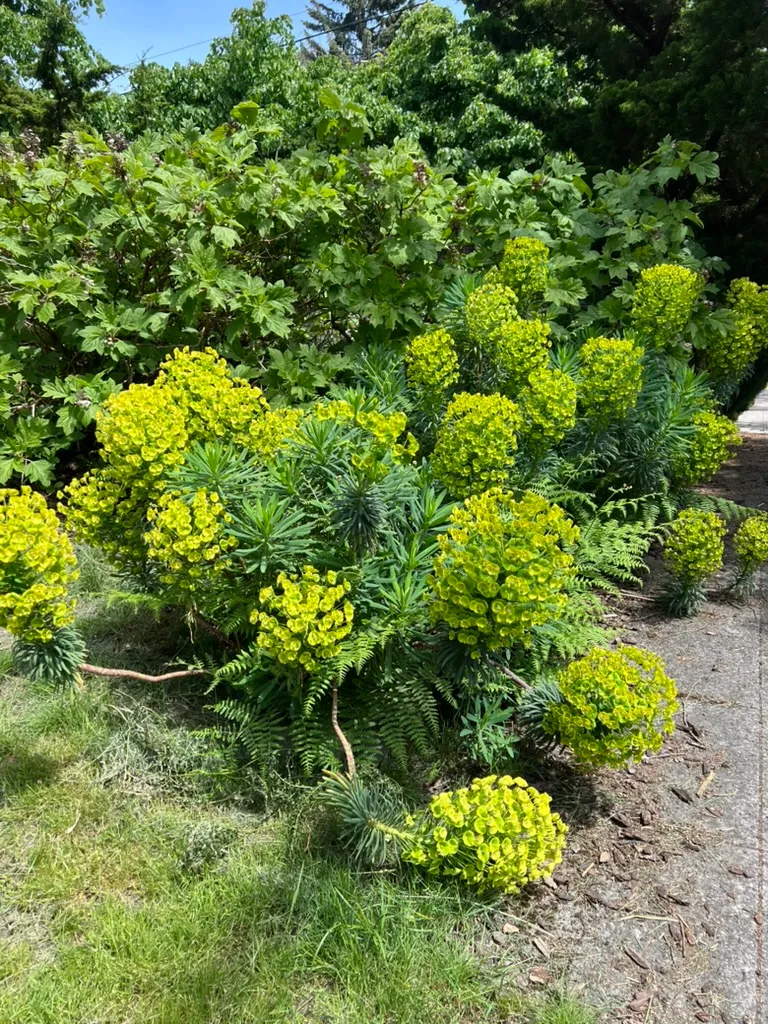
Wednesday’s specimenEuphorbia characias ssp. wulfeniiReading about plants and recognising them are different skills. These three build the second.
- Daily PlantIdentify the day’s mystery plant from a close-up photograph.
- Keyed OutWork a dichotomous key, lead by lead, to name a hidden specimen.
- Name That PlantName a specimen from botanical clues dealt hardest first.
Free to play, no account needed
Tagged with
Mike's been designing residential landscapes in the Seattle area, with a particular focus on Pacific Northwest natives and sustainable practices. He's a Washington State Master Gardener and worked in construction before landscaping, which gives him a practical edge when it comes to building raised beds and hardscaping projects. He runs a small side business propagating and selling unusual perennials at farmers markets on weekends. His property serves as a testing ground for low-maintenance, wildlife-friendly garden designs. Mike's philosophy: if it requires weekly maintenance, it's not sustainable.