Image 1 of 16
1 / 16
Plant Reference
Arctostaphylos, Genus, uva-ursi, Species,
- Genus & species
kinnikinnick
Circumpolar across the full Northern Hemisphere — North America from Alaska to California and east to Newfoundland, Europe from Scandinavia to the Mediterranean mountains, and northern Asia; sandy or rocky open sites, coastal bluffs, dry forest openings, alpine slopes, and glacial outwash plains
Overview
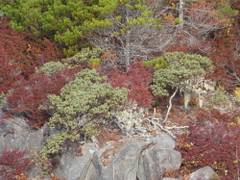
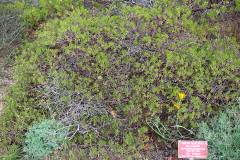
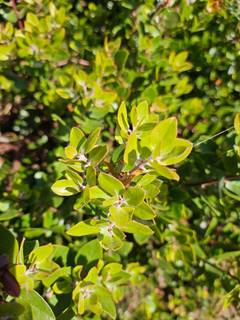
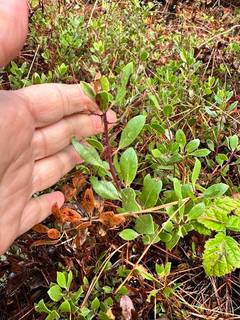
Arctostaphylos uva-ursi is a prostrate trailing broadleaf evergreen shrub in the heath family Ericaceae growing 6–12 inches (15–30 cm) tall and spreading 36–72 inches (90–180 cm) wide from a central root system that sends out trailing stems that root at the nodes as they spread along the ground surface. The genus name Arctostaphylos is Greek for bear grape, and the specific epithet uva-ursi is Latin for bear's grape — both names refer to the glossy bright red berries that bears eat in the native range, and the double etymology in two languages reflects the species' description by both Greek-speaking and Latin-speaking botanical traditions. The common name kinnikinnick is from Algonquian and means smoking mixture, referring to the long history of Indigenous peoples across North America drying and smoking the leathery leaves as a tobacco additive or substitute in ceremonial and social smoking traditions. The species has a circumpolar distribution across the full Northern Hemisphere — North America from Alaska to California and east to Newfoundland, Europe from Scandinavia south to the mountains of the Mediterranean, and northern Asia — making it a widespread shrub of sandy, rocky, and exposed sites across the boreal, temperate, and alpine zones. Leaves are dark green and glossy on the upper surface, small, leathery, spatula-shaped, 0.5–1 inch (1.3–2.5 cm) long, carried densely along the trailing stems, and the foliage develops a bronze tint in winter cold temperatures that fades back to dark green as temperatures warm in spring. Tiny white to pale pink urn-shaped (urceolate) flowers 0.2 inch (5 mm) long open in small terminal clusters of 3–10 at the stem tips in April and May across a 2–3 week bloom period, and the flowers are followed by glossy bright red berries 0.3 inch (8 mm) in fall that persist on the trailing stems through the winter months and supply food for birds and small mammals. Limitation: the species is slow to establish in garden settings and the root system resents disturbance during and after transplanting, and plants often stall for 1–2 years after planting before the trailing stems begin to spread — this slow establishment and the sensitivity to root disturbance are the main reasons for the careful handling of nursery stock and the avoidance of bare-root transplanting. The species calls for acidic well-drained sandy or rocky soil with a pH of 4.5–6.0 and develops root rot in clay or poorly drained positions where the trailing stems contact saturated soil. Drought-tolerant once established. The berries are edible but bland and mealy. Non-toxic and deer-resistant.
Native Range
Circumpolar across the full Northern Hemisphere — North America from Alaska to California and east to Newfoundland, Europe from Scandinavia south to the mountains of the Mediterranean, and northern Asia. The species grows on sandy or rocky open sites, coastal bluffs, dry forest openings, alpine slopes, and glacial outwash plains, and the circumpolar distribution reflects an ancient Holarctic range that predates the modern configuration of the Northern Hemisphere continents.Suggested Uses
Used as an evergreen trailing ground cover on sandy slopes, coastal bluffs, dry banks, rock gardens, and roadside stabilization plantings at 36–72 inch (90–180 cm) spacing between plants. The prostrate evergreen habit, the glossy red winter berries, and the drought tolerance combine to suit the species for dry exposed positions where taller shrubs and perennials cannot grow, and the slow trailing spread forms a dense weed-suppressing mat over several years that holds the soil on slopes and banks. Birds and small mammals eat the berries through the winter months, and the species is planted in wildlife habitat gardens as a winter berry source. Clay soils, poorly drained positions, positions with frequent soil disturbance, and alkaline soils above pH 6.0 are unsuitable because of the drainage requirement, the root disturbance sensitivity, and the strict acid-soil preference of the species.How to Identify
Appearance
Size & Dimensions
Height6" - 1'
Width/Spread3' - 6'
Bloom Information
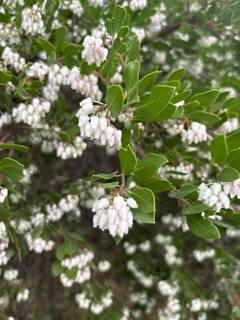
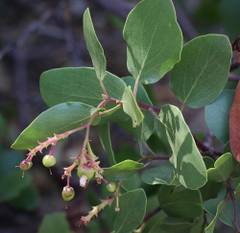
Tiny white to pale pink urn-shaped (urceolate) flowers 0.2 inch (5 mm) long open in small terminal clusters of 3–10 at the stem tips in April and May across a 2–3 week bloom period. Honeybees, bumblebees, and native solitary bees work the small urn-shaped flowers for nectar during the spring bloom window, and butterflies visit the flowers for nectar in warm spring conditions. The flowers are followed by glossy bright red berries 0.3 inch (8 mm) that develop through summer, ripen in fall, and persist on the trailing stems through the winter months.
Detailed Descriptions
Flower Description
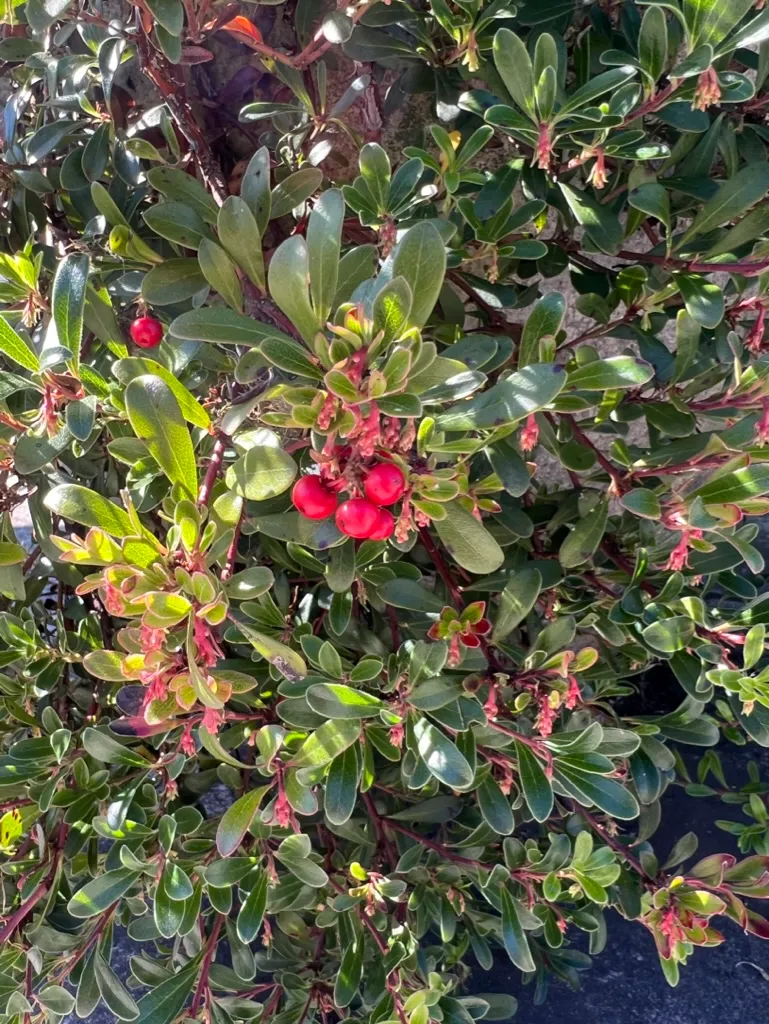
white to pale pink tiny urn-shaped (urceolate) flowers 0.2 inch (5 mm) long in small terminal clusters of 3-10 at the stem tips; followed by glossy bright red berries 0.3 inch (8 mm) in fall that persist through the winter months on the trailing stemsFoliage Description
dark green and glossy on the upper surface; small leathery spatula-shaped evergreen leaves 0.5-1 inch (1.3-2.5 cm) long carried densely along the trailing stems; the foliage develops a bronze tint in winter cold temperaturesGrowing Conditions
Sun Requirements
Requires 4-10 hours of direct sunlight daily
• Full Sun: 6+ hours of direct sunlight
• Partial Shade: 3-6 hours of direct sunlight
• Full Shade: Less than 3 hours of direct sunlight