Image 1 of 19
1 / 19
Plant Reference
Acer, Genus, circinatum, Species,
- Genus & species
vine maple
Western North America — from British Columbia south through Washington, Oregon, and northern California; understory of coniferous forests from sea level to 5,000 feet (1,500 m)
Overview
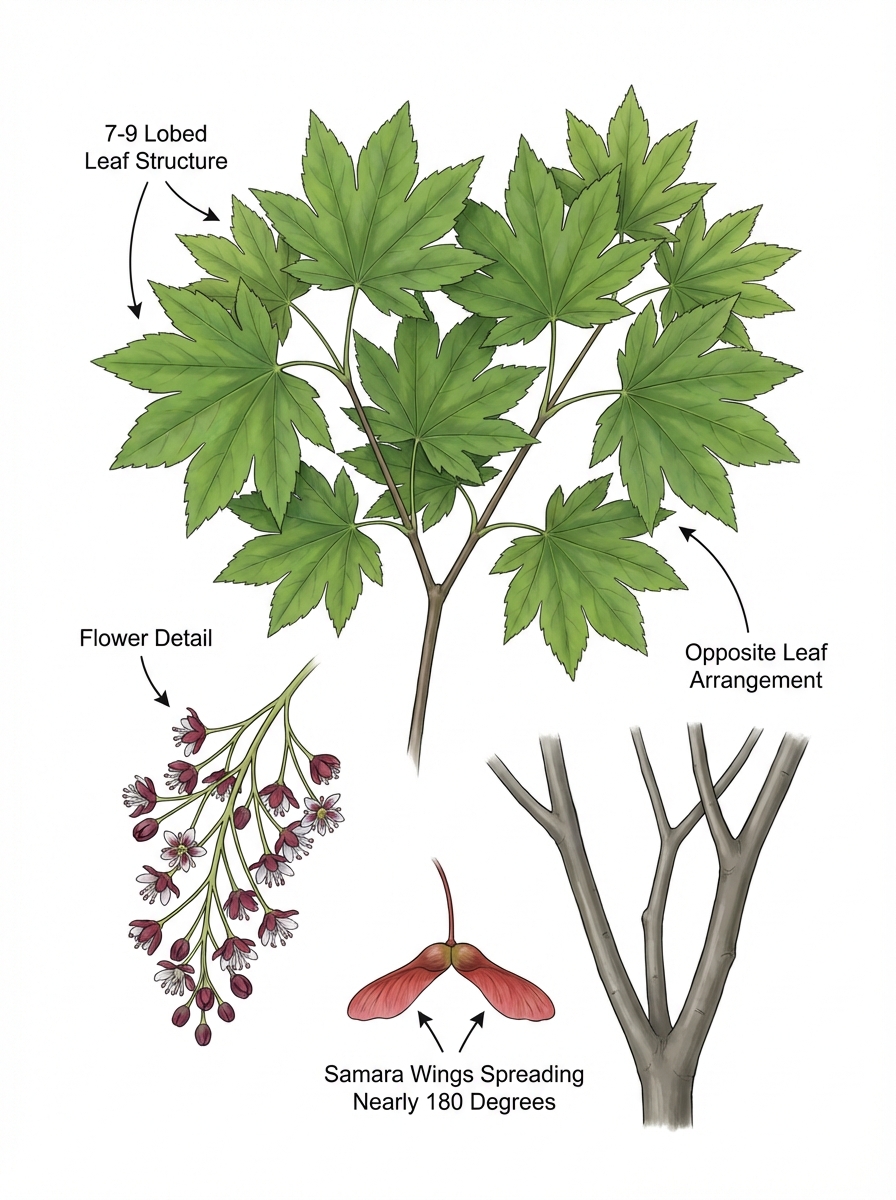
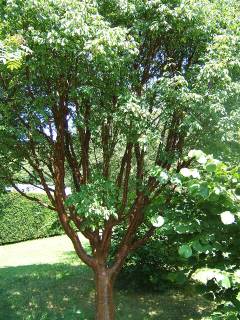
Acer circinatum is vine maple (Oregon maple), a small spreading often multi-stemmed deciduous tree growing 10-25 feet (3-7.6 m) tall and 10-20 feet (3-6 m) wide. Nearly circular (orbicular) palmately 7-9 lobed leaves 2-5 inches (5-13 cm) across — bright green in summer, turning orange, red, and golden yellow in fall. Reddish-purple sepals with white petals 0.5 inch (1.3 cm) in pendant clusters in April-May. Paired samaras spread horizontally at nearly 180 degrees. In Sapindaceae. Native to the Pacific Northwest — understory of coniferous forests from British Columbia to northern California. The species name 'circinatum' means 'rounded' referring to the nearly circular leaf outline. Often multi-stemmed — stems arch toward the ground and layer (root on contact with soil) to form thickets. Green photosynthetic bark on young stems is visible in winter after leaf drop. Not drought-tolerant — requires consistent moisture throughout the growing season; leaf scorch and premature defoliation occur in dry conditions. This moisture requirement is the primary limitation outside the Pacific Northwest maritime climate. Performs poorly in hot, dry, or continental climates. Deer browse the foliage. Non-toxic. Zones 6-9. Part shade to full shade. Growth rate is moderate.
Native Range
Native to western North America — from British Columbia south through Washington, Oregon, and northern California. Found in the understory of coniferous forests from sea level to 5,000 feet (1,500 m).Suggested Uses
Grown as an understory tree in woodland gardens and naturalized areas spaced 10-15 feet (3-4.5 m) from adjacent plants. Native to the Pacific Northwest. Multi-stemmed form. Fall color (orange, red, gold). Not drought-tolerant — requires consistent moisture. Non-toxic. Zones 6-9.How to Identify
Appearance
Size & Dimensions
Height10' - 25'
Width/Spread10' - 20'
Bloom Information
Mid to late spring (April-May). Reddish-purple sepals with white petals 0.5 inch (1.3 cm) in pendant clusters of 4-20 flowers. 4 weeks of bloom. Bee-pollinated. Followed by paired samaras spreading at nearly 180 degrees.
Detailed Descriptions
Flower Description
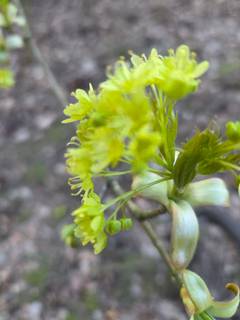
Reddish-purple sepals with white petals, 0.5 inch (1.3 cm), in small pendant clusters of 4-20 flowersFoliage Description
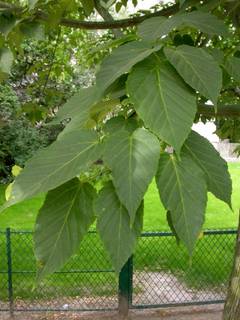
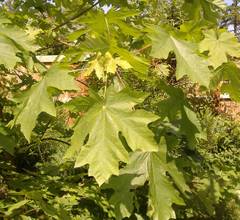
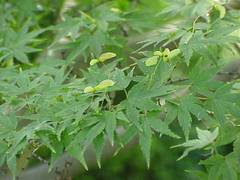
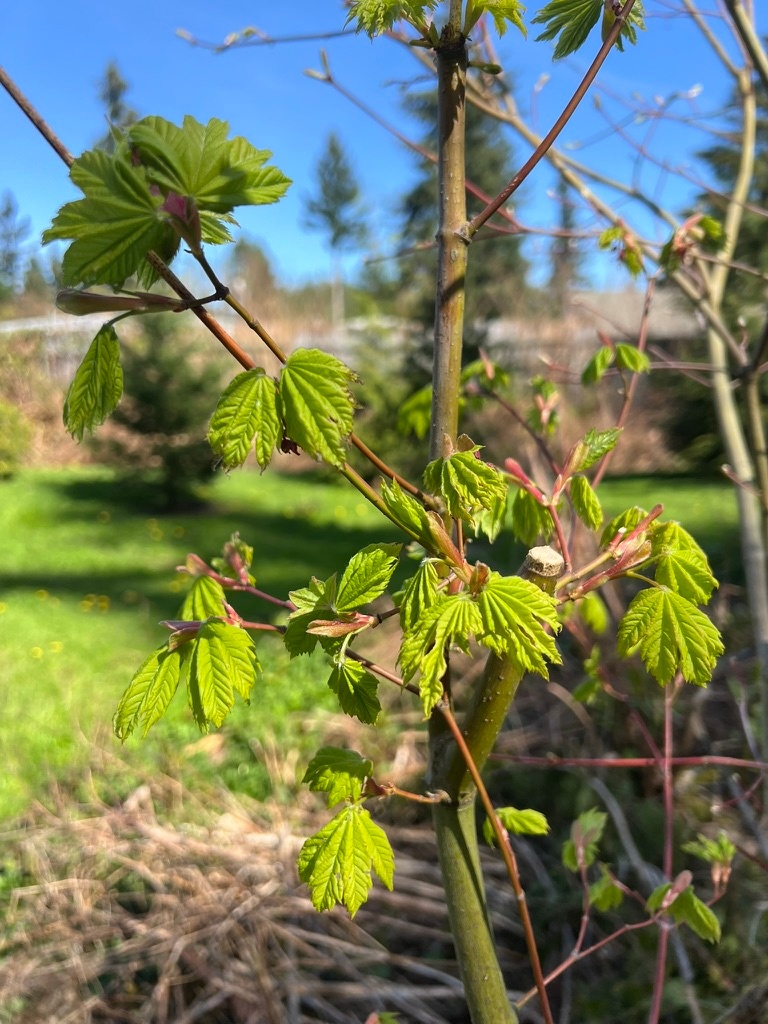
Bright green, nearly circular (orbicular), palmately 7-9 lobed, 2-5 inches (5-13 cm) across; turns orange, red, and golden yellow in fallGrowing Conditions
Sun Requirements
Requires 2-4 hours of direct sunlight daily
• Full Sun: 6+ hours of direct sunlight
• Partial Shade: 3-6 hours of direct sunlight
• Full Shade: Less than 3 hours of direct sunlight
Care & Maintenance
Care Guide
Part shade to full shade (2-4 hours direct sun). Moist soil pH 5.0-7.0. Requires consistent moisture — not drought-tolerant. Leaf scorch in dry conditions. Prune in summer (July-August) — avoid pruning in late winter or spring (sap bleeding). Not deer-resistant. Non-toxic. Zones 6-9.Pruning
Prune in summer (July-August) to avoid sap bleeding. Remove crossing or damaged branches. The multi-stemmed form can be trained to a single trunk if desired by removing competing leaders when young. Stems that contact the ground will layer (root) — remove layered stems to prevent thicket formation.Pruning Schedule
Prune: July–August
summer
Toxicity
Non-toxicBotanical Flashcard