Acer, Genus, spicatum, Species,
- Genus & species
mountain maple
Overview
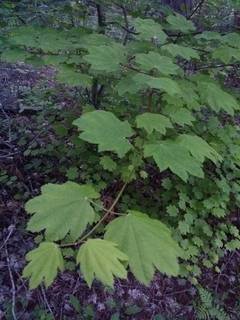
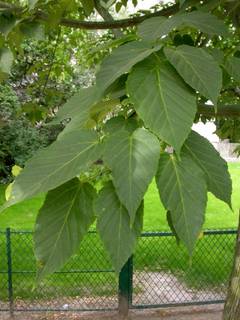
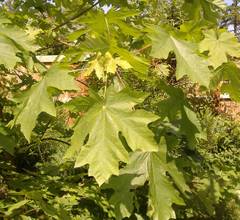
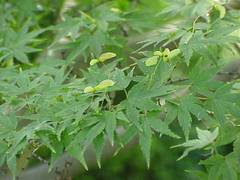
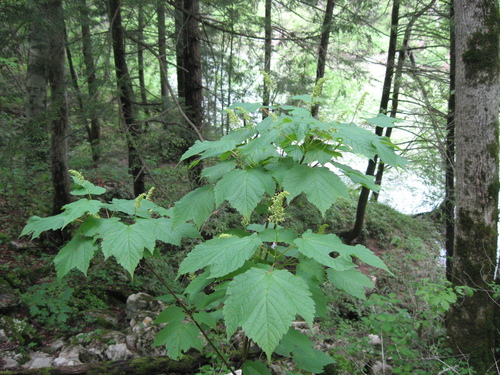
Acer spicatum is a deciduous large shrub or small understory tree in the family Sapindaceae, reaching 10-30 feet (3-9 m) tall, often multi-stemmed and shrubby in form. The thin, gray-brown bark stays smooth, and the slender branches bear opposite, three- to five-lobed leaves 3-5 inches (8-13 cm) long with coarse teeth, dull green above and downy beneath. Unlike most maples, the small yellow-green flowers are held in narrow, upright spikelike clusters 3-6 inches (8-15 cm) long that appear in late spring after the leaves expand. Paired winged samaras follow, ripening from red to brown, each about 0.8 inch (2 cm) long with wings spread at a wide angle. Fall foliage turns yellow, orange, and red, often with all three on one plant. It grows slowly and stays small, and its understory habit means it performs poorly in hot, dry, exposed sites. A. spicatum occupies cool, moist, shaded slopes and ravines, frequently along streams and beneath taller trees.
Native Range
Native to northeastern North America, Acer spicatum ranges from Newfoundland and Quebec west to Saskatchewan and south through the Great Lakes and Appalachians to Georgia. It grows in cool, moist, shaded woods, ravines, and streambanks, usually as an understory plant.Suggested Uses
Used in shade and woodland gardens, naturalized plantings, and cool, moist slopes and streambanks. Its small size suits understory and northern native gardens where larger maples would be too big. The flowers feed early pollinators, the samaras feed birds and small mammals, and the fall color extends seasonal interest.How to Identify
Appearance
Size & Dimensions
Height10' - 30'
Width/Spread10' - 20'
Bloom Information
Flowers open in late spring, generally May to June, after the leaves have expanded, in slender upright clusters. Bloom lasts about 2 weeks. Bees and other small insects pollinate the yellow-green flowers, and samaras ripen and color through late summer into fall.
Detailed Descriptions
Foliage Description
greenGrowing Conditions
Sun Requirements
Requires 2-6 hours of direct sunlight daily
• Full Sun: 6+ hours of direct sunlight
• Partial Shade: 3-6 hours of direct sunlight
• Full Shade: Less than 3 hours of direct sunlight
Care & Maintenance
Care Guide
Grows in part shade to full shade in cool, moist, well-drained, acidic to neutral soil rich in organic matter, at a pH around 5.0-6.5. It is adapted to cool northern and high-elevation climates and declines in heat, drought, and exposed sun. Consistent soil moisture and a cool root run support steady growth, and a leaf-litter or bark mulch keeps the shallow roots cool. It transplants readily when young but grows slowly. Little pruning or feeding is needed in suitable woodland conditions. Hot, dry urban sites are poorly suited to it.Pruning
Pruning needs are minimal. Dead, damaged, or crossing stems are removed in late winter or after flowering. Multi-stemmed plants can be thinned to a few main stems for a more tree-like form, or left to grow as a broad shrub.Pruning Schedule
Prune: February–March
winterearly spring