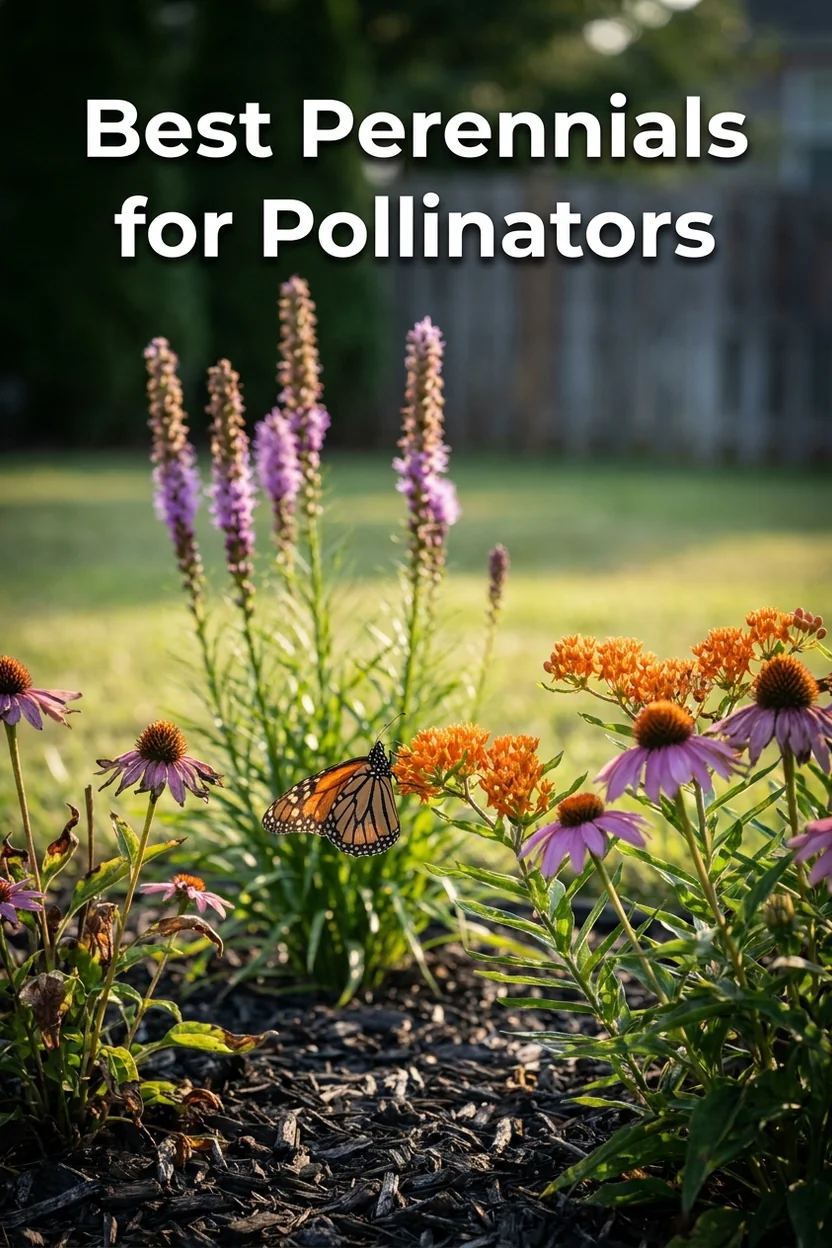
Best Perennials for Pollinators: Bees & Butterflies
Pets & Toxicity
Recorded toxicity for plants linked in this guide. An unknown status is not a safety assessment.
Toxic to pets: butterfly weed, blue wild indigoDetailsHide
Asclepias tuberosa — Toxicity Warning
Toxic to pets and humans (cardiac glycosides — cardenolides — at moderate concentration; less toxic than other milkweed species but still toxic if ingested in quantity)View Asclepias tuberosa plant profile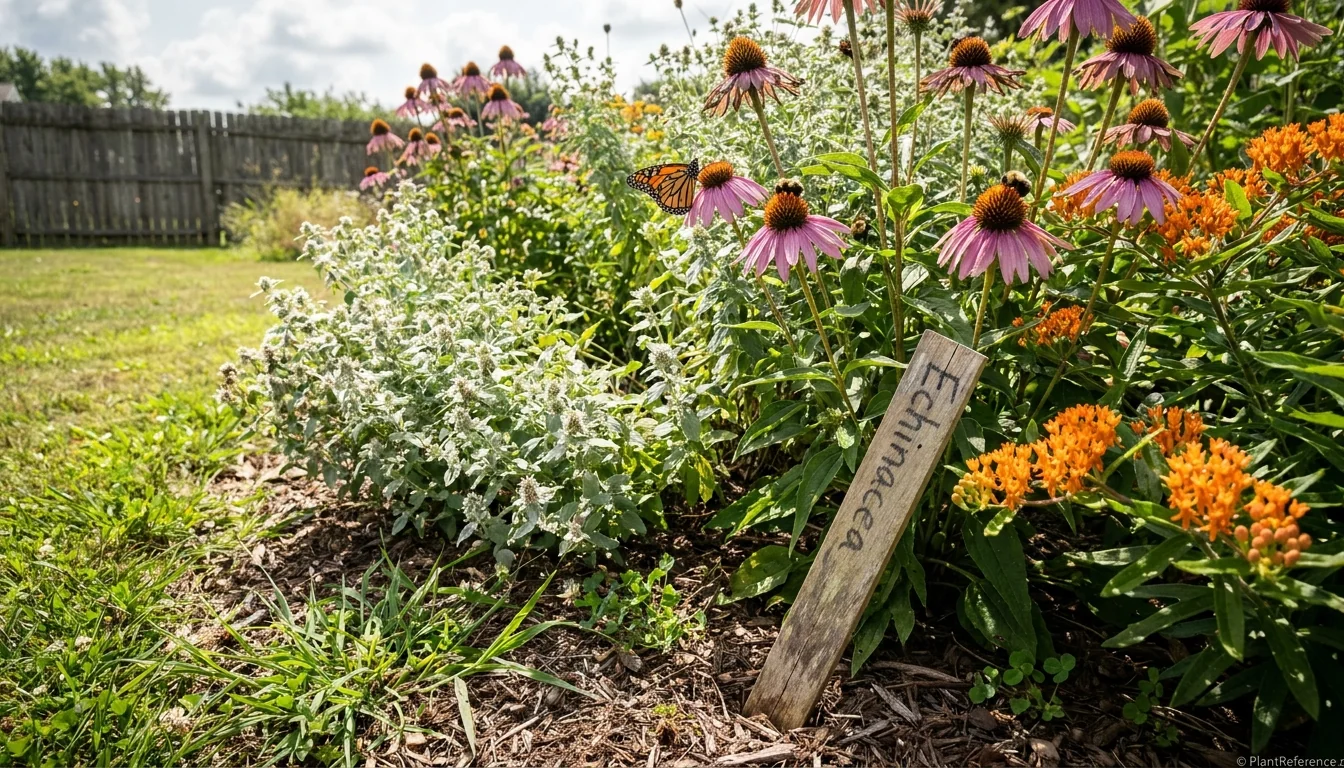
— Image © PlantReference.org 2026
Most pollinator garden advice starts with flowers. I'd rather start with the calendar and the soil. The best perennials for pollinators are the ones that put nectar and pollen on the table during the weeks when almost nothing else is blooming, and that stay healthy in your actual soil without a spray schedule. Ten species will cover a full season in most of the country, and about half of them are the plants nobody photographs.
What Pollinators Actually Need From a Perennial Bed
Four things, in order of how often gardens get them wrong.
Continuous bloom from April to hard frost. Most yards have a June-July surplus and a spring and September famine. The gaps matter more than the peak.
Larval host plants, not just nectar. Adult butterflies drink from many flowers; their caterpillars eat very few. No host plant, no next generation.
Nesting habitat. About 70% of native bee species nest in bare ground, and most of the rest nest in hollow or pithy stems. Both are destroyed by tidy fall cleanup and wall-to-wall mulch.
Zero insecticide. Systemic neonicotinoids move into pollen and nectar and stay in perennial tissue for more than one season. Check plant tags and ask your garden center directly.
Plant groupings matter too. Bees forage more efficiently on a patch than on a scattered single. Three plants of one species in a 3 foot (90 cm) cluster outperforms nine different species planted one apiece.
Native or Adapted: Why Both Earn Space
Regional natives support specialist bees and butterfly larvae that adapted plants cannot. Roughly a quarter of native bee species are pollen specialists tied to particular plant genera, and monarch caterpillars eat nothing but milkweed. That work is non-negotiable.
Adapted non-natives still contribute real generalist forage, especially in the shoulder seasons and in the compacted, alkaline soils common in new suburban lots. My own quarter-acre in Indianapolis runs about 70% native by area, with the balance in long-blooming adapted plants that keep nectar available between native bloom peaks.
The 10 Best Perennials for Pollinators
These ten are ordered by how much unique work they do, not by how they look in a catalog.
Plant | Botanical Name | Zones | Bloom | Pollinator Value |
|---|---|---|---|---|
Butterfly weed | 3-9 | Jun-Aug | Monarch host plus nectar | |
Mountain mint | 4-8 | Jul-Sep | Highest observed insect diversity | |
Aromatic aster | Symphyotrichum oblongifolium 'Raydon's Favorite' | 3-8 | Sep-Nov | Last nectar before frost |
Wild bergamot | Monarda fistulosa 'Claire Grace' | 3-9 | Jul-Aug | Long-tongued bees, hummingbirds |
Coneflower | 3-9 | Jun-Sep | Nectar, pollen, winter seed | |
Blazing star | 3-9 | Jul-Aug | Monarch migration fuel | |
Goldenrod | 4-9 | Sep-Oct | Critical late pollen source | |
False indigo | 3-9 | May-Jun | Bumblebee queens, spring gap | |
Anise hyssop | Agastache foeniculum 'Blue Fortune' | 4-9 | Jun-Sep | 14 weeks of continuous nectar |
Meadow sage | 4-8 | May-Jun | Earliest reliable bee forage |
Spring and Early Summer: Closing the Hungry Gap
Bumblebee queens emerge in April with nothing in reserve. What they find in the next six weeks determines whether a colony gets founded at all, and most ornamental borders offer them nothing until June.
🌿Salvia nemorosa 'Caradonna' (SAL-vee-uh nem-oh-ROH-suh) is my first line of defense. It opens dark violet spikes in May, and shearing it back after the first flush produces a second round in August. It wants sharp drainage; in heavy clay, plant it high and skip the compost.
🌿Baptisia australis (bap-TIZ-ee-uh aw-STRAH-liss) fills the same window with a different customer base. Its flowers require enough force to open that essentially only bumblebees can work them. The tradeoff is patience — the taproot spends three years establishing before the plant looks like anything. Site it once and never move it.
🌿Nepeta racemosa 'Walker's Low' is the adapted plant I recommend most often for this stretch. It blooms for weeks, tolerates poor soil, and deer and rabbits leave it alone, which is why it shows up on Deer-Resistant Perennials: A Zone-by-Zone Planting Guide as well.
Midsummer Powerhouses
This is the easy season, and it's where most gardeners over-invest. Four plants cover it thoroughly.
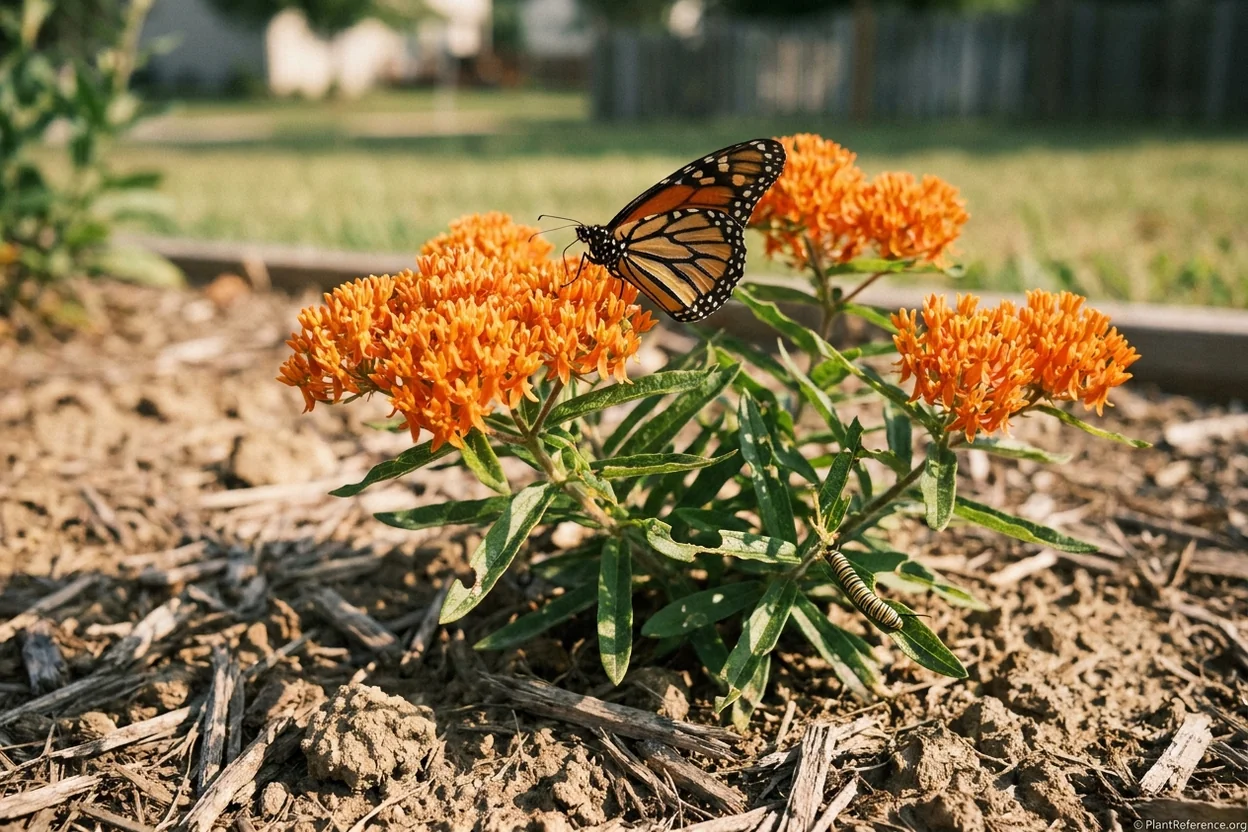
🌿Asclepias tuberosa (ass-KLEE-pee-us too-ber-OH-suh) is the one plant I'd call mandatory. It is both nectar source and monarch larval host, and unlike common milkweed it stays in a tidy clump rather than running through the bed. It emerges very late in spring — often not until soil hits 60°F (16°C) — so mark its spot or you will dig it up by accident.
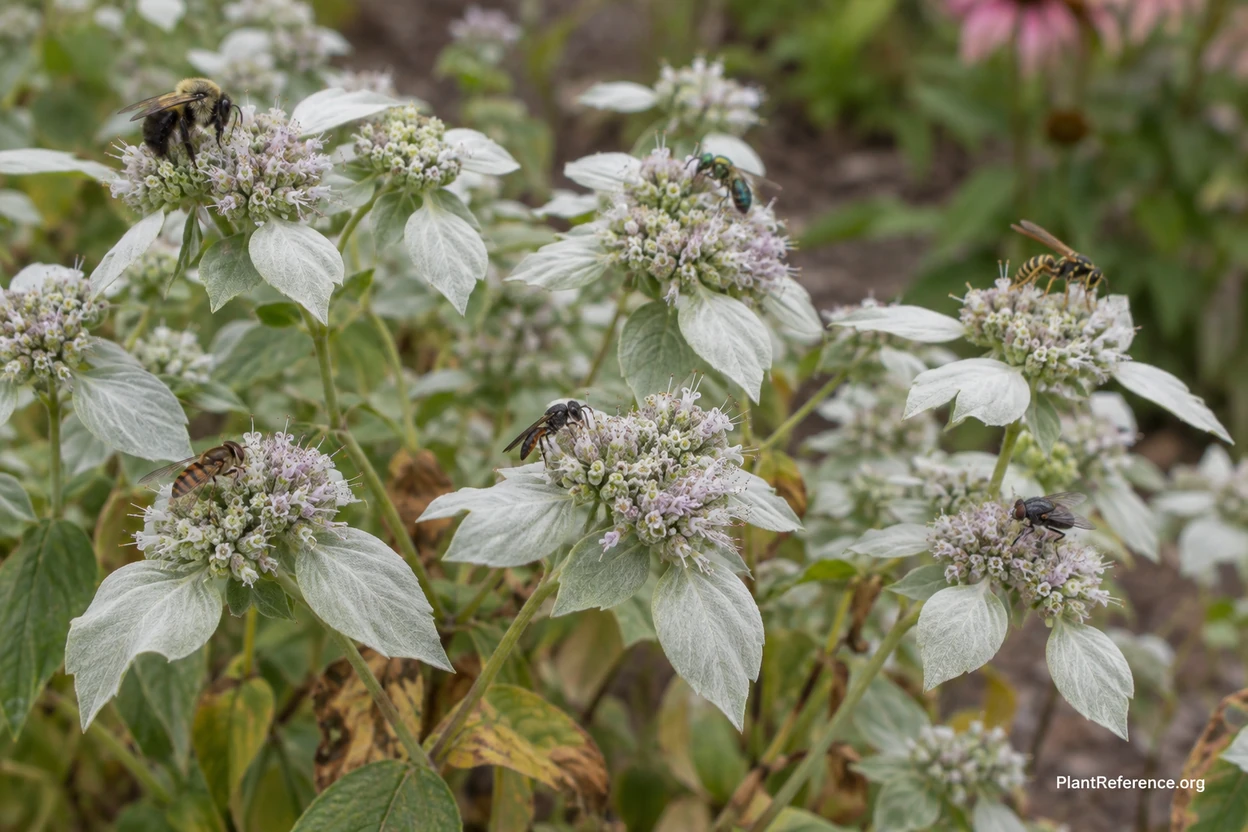
🌿Pycnanthemum muticum (pik-NAN-thee-mum MEW-tih-kum), mountain mint, is the plant that surprises people. Its flowers are tiny and greyish, and in side-by-side pollinator counts it routinely draws more insect species than anything else in the bed. Small bees, wasps, flies and skippers work it constantly. It spreads by rhizome, so give it 3 feet (90 cm) or plant it inside a bottomless pot.
Monarda fistulosa 'Claire Grace' handles long-tongued bees and hummingbirds. Choose this wild species selection over the garden hybrids — it carries far better powdery mildew resistance in humid Midwest summers, and it drinks less.
🌿Echinacea purpurea 'Magnus' and 🌿Liatris spicata 'Kobold' round out the midsummer group. Blazing star in particular coincides with the start of monarch migration staging, and its dense purple spikes are easy fuel stops. Coneflower care is covered in more depth in How to Grow Coneflowers (Echinacea) That Feed Pollinators.
Late Season: The Most Important Bloom of the Year
If you plant only one thing from this article, make it a late-season bloomer. September and October nectar builds the fat reserves that bumblebee queens overwinter on and that fuels monarchs south, and the average landscape is finished flowering by Labor Day.
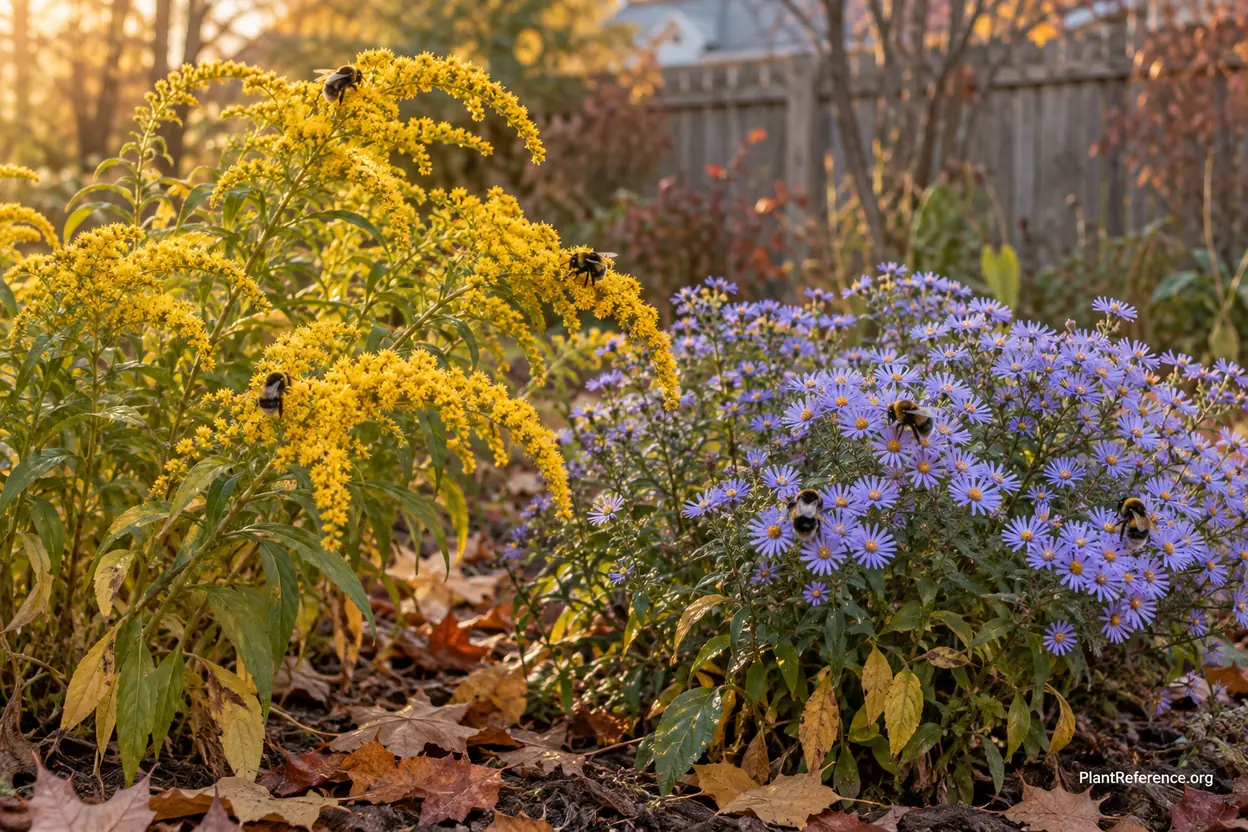
Symphyotrichum oblongifolium 'Raydon's Favorite' (sim-fy-oh-TRIK-um ob-long-ih-FOH-lee-um) is the best aromatic aster selection I've grown. It forms a sturdy 2 to 3 foot (60-90 cm) mound that doesn't flop, blooms lavender-blue into November in mild autumns, and tolerates dry alkaline soil that defeats other asters.
🌿Solidago rugosa 'Fireworks' is goldenrod, and no, it does not cause hay fever — its pollen is heavy and insect-carried, not windborne. That's ragweed blooming at the same time taking the blame. 'Fireworks' is a well-behaved clumping selection with arching sprays, not the running roadside type.
Pair the two. Aster and goldenrod flowering together is the single highest-value pollinator combination in eastern North America, and it happens to look good, which Perennial Combinations That Look Good Together and Plan a Perennial Garden That Blooms Spring to Fall explore further.
Planting a Pollinator Border That Works
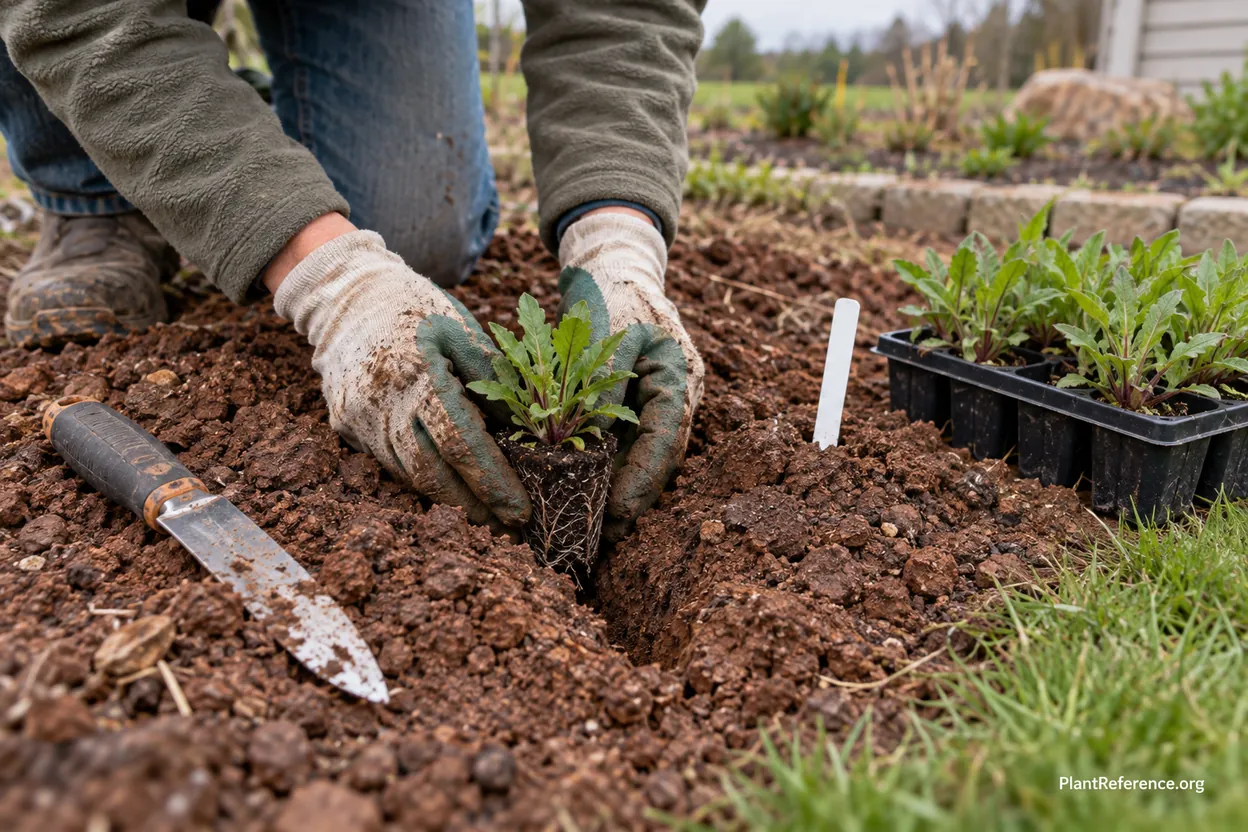
Start with the soil, because everything above ground depends on it. Most of these species evolved on lean prairie and woodland-edge soils and will flop or rot in beds that have been heavily amended.
Test before you amend. A $15 extension soil test tells you pH and phosphorus. Most suburban lots already run high in phosphorus, and adding more suppresses the mycorrhizal fungi these natives depend on.
Skip the compost for prairie species. 🌿Asclepias tuberosa, 🌿Liatris spicata 'Kobold' and 🌿Baptisia australis all want lean, well-drained soil. Amend for drainage with grit, not richness.
Plant in threes or fives. Aim for clusters at least 3 feet (90 cm) across so foraging bees can work a patch efficiently.
Mulch thinly, and leave bare patches. Cap at 2 inches (5 cm), and leave a sunny 1 to 2 square foot (0.1-0.2 m²) patch of open soil for ground-nesting bees.
Water deeply through year one only. About 1 inch (2.5 cm) weekly. After establishment, most of these species prefer to be left alone.
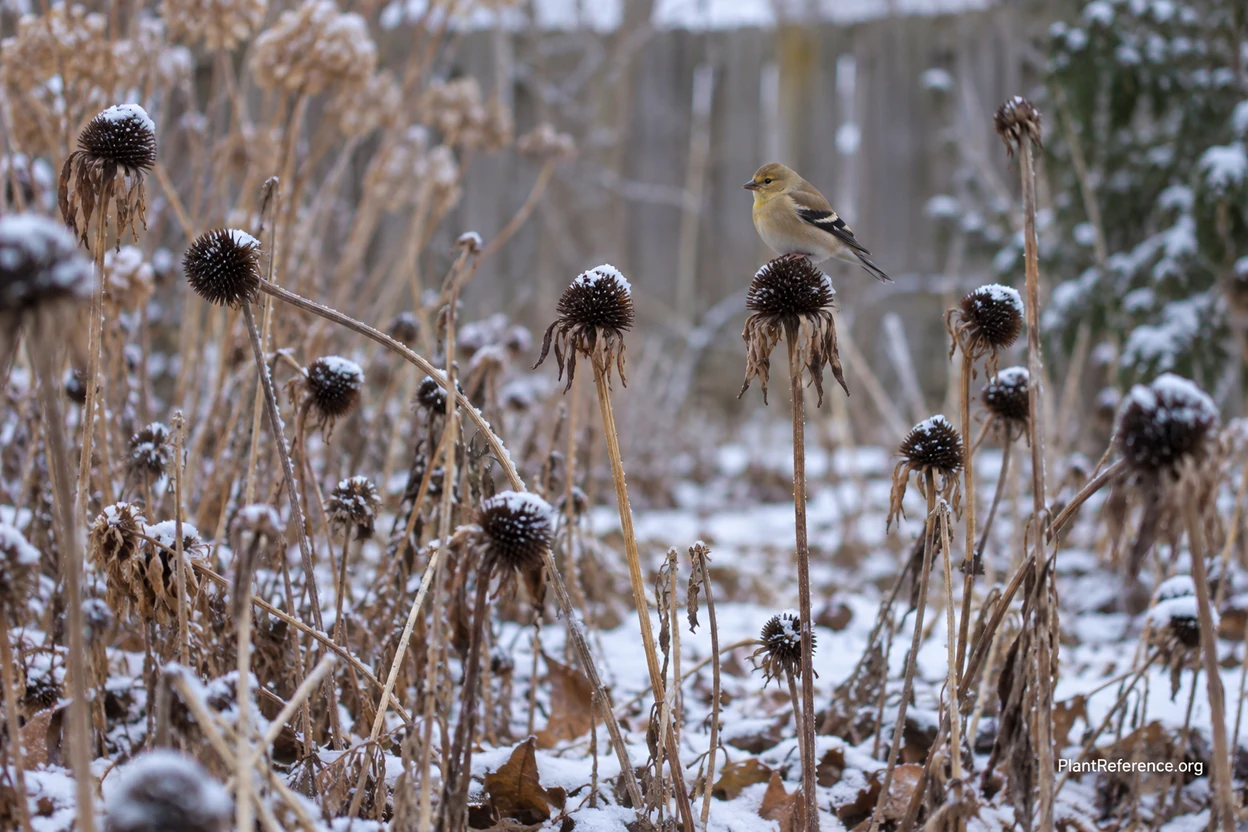
Fall cleanup is where good pollinator gardens get undone. Stem-nesting bees overwinter inside hollow and pithy stems, so cut back in late spring rather than October, and leave 12 to 18 inch (30-45 cm) stubs when you do. When to Cut Back Perennials in Fall (And What to Leave) and How to Prepare Perennial Gardens for Winter by Species break this down species by species.
One more thing worth saying plainly: a pollinator border does not have to replace your whole garden. Converting a single 10 by 4 foot (3 x 1.2 m) strip of lawn to these ten species produces measurably more insect activity than scattering pollinator plants through an existing bed. If you're weighing a bigger conversion, Lawn Alternatives That Actually Work: 5 Options Beyond Grass covers the options, and gardeners in wetter western climates should start with Pacific Northwest Native Plants: 10 Resilient Picks instead of this eastern-leaning list.
For shaded yards, the pickings are thinner but not empty — woodland species bloom early when the tree canopy is still open, and Best Perennials for Shade: 12 Species That Thrive covers the options. And when clumps of Monarda fistulosa 'Claire Grace' or Symphyotrichum oblongifolium 'Raydon's Favorite' thin out in the center after four or five years, How to Divide Perennials: A Species-by-Species Guide has the timing.
Frequently Asked Questions
Reading about plants and recognising them are different skills. These three build the second.
- Daily PlantIdentify the day’s mystery plant from a close-up photograph.
- Keyed OutWork a dichotomous key, lead by lead, to name a hidden specimen.
- Name That PlantName a specimen from botanical clues dealt hardest first.
Free to play, no account needed
Tagged with
Priya is a soil scientist at an agricultural extension office who gardens on a quarter-acre suburban lot in Indianapolis. Her professional work focuses on soil health and nutrient management, which gives her a perspective most gardening writers don't have—she thinks about what's happening underground before worrying about what's happening above it. Priya maintains a large pollinator garden, grows herbs and vegetables, and is slowly converting her conventional lawn to a mix of native grasses and low-growing groundcovers. She writes about soil health, composting, fertilizer use, and building the kind of foundation that makes plants thrive without constant intervention.