Image 1 of 14
1 / 14
Plant Reference
Tilia, Genus, americana, Species,
- Genus & species
basswood
Eastern North America from southern Manitoba and Quebec south to northern Florida and west to eastern Oklahoma and Texas; rich mesic forests, bottomlands, cove forests, and moist well-drained slopes; the species is a major component of eastern North American hardwood forests and is widely planted as a landscape shade tree and honey-source tree across its native range and beyond
Overview
Tilia americana is a large upright deciduous tree in the family Malvaceae native to eastern North America, reaching 50-80 feet (15-24 m) tall and 35-50 feet (10.5-15 m) wide with a broad rounded crown at maturity. Leaves are simple, alternate, heart-shaped (cordate), coarsely serrated, and 4-8 inches (10-20 cm) long and wide — substantially larger than the 2-3 inch (5-7 cm) leaves of the related European Tilia cordata (little-leaf linden), which is planted more often in North American cities because of smaller leaf size and reduced litter. Tiny pale yellow flowers open in pendant cymes of 5-20 flowers during June and July, each cluster attached to a 3-5 inch (7-13 cm) long strap-shaped bract that later functions as a wing for wind dispersal of the developing nutlets. The flowers carry a strong sweet honey-like fragrance noticeable from considerable distance during peak bloom, and basswood flowers are a major nectar source for honeybees — basswood honey is a named commercial variety in the eastern United States and eastern Canada, recognized for its pale color and mild flavor. Small round nutlets with the attached wing-like bract develop after bloom and disperse by wind through late summer and fall. Japanese beetles skeletonize the large leaves during the June through August adult flight period in zones 5-7, and heavy infestations can defoliate mature trees by midsummer, which is the central pest concern on the species in its cultivated range. Aphids feed on the foliage through summer and secrete sticky honeydew that coats surfaces beneath the canopy — parked cars, walkways, patio furniture, and understory plants all become coated during heavy aphid seasons, and the honeydew is followed by black sooty mold that stains light-colored surfaces. The species is not drought-tolerant and leaf scorch develops in dry conditions on mature trees. Basal suckers emerge vigorously from the root system and form multi-stemmed clumps when left unmanaged, and sucker removal is a routine maintenance task on single-trunked landscape specimens. The soft wood is brittle in ice storms and large-wind events, which is a secondary structural concern on mature specimens. The species is a major component of eastern North American rich mesic hardwood forests alongside Acer saccharum (sugar maple) and Fagus grandifolia (American beech) and functions as a canopy dominant in the cove forests of the southern Appalachians.
Native Range
Tilia americana is native to eastern North America with a range extending from southern Manitoba and southeastern Quebec south to northern Florida and west to eastern Oklahoma and Texas. The species grows in rich mesic forests, bottomlands, cove forests, and moist well-drained slopes with deep fertile soil, and is a major canopy component of eastern hardwood forests alongside Acer saccharum (sugar maple), Fagus grandifolia (American beech), and Fraxinus americana (white ash). The species reaches its largest size in the cove forests of the southern Appalachians where deep soil, high rainfall, and summer humidity together favor maximum growth. Basswood has been valued historically for soft easily-carved wood used in hand tools, furniture, and woodcarving, and the inner bark (bast) was the source of cordage for many Indigenous cultures across the species' range.Suggested Uses
Planted as a large shade tree and honey-source tree in rural and suburban landscapes at 35-50 foot (10.5-15 m) spacing in zones 2-8. The fragrant summer flower display and heavy honeybee activity make basswood a practical choice for properties with beekeeping operations where the species functions as a concentrated midsummer nectar source. The deep shade and large rounded canopy suit the species to open lawn positions on rural and suburban properties where the 50-80 foot (15-24 m) mature size fits the available space. Not suited to positions over parking areas, patios, pool decks, or outdoor seating where aphid honeydew and sooty mold stain surfaces through the growing season, small residential lots where the large mature size exceeds available space, urban street-tree positions where Japanese beetle defoliation is a recurring concern (the related European Tilia cordata is substituted in cities because of smaller leaf size, reduced litter, and somewhat lower beetle damage), or drought-prone sites without supplemental watering where leaf scorch develops on mature trees.How to Identify
Appearance
Size & Dimensions
Height50' - 80'
Width/Spread35' - 50'
Colors
Bloom Information
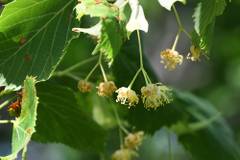
Pale yellow tiny flowers open in pendant cymes of 5-20 flowers during June and July in zones 2-8, lasting approximately 3 weeks of bloom. Each flower cluster is attached to a 3-5 inch (7-13 cm) long strap-shaped bract that later functions as a wing for seed dispersal. The flowers carry a strong sweet heavy honey-like fragrance and are a major nectar source for honeybees — basswood honey is a named commercial variety in the eastern United States and eastern Canada. Small round nutlets 0.25-0.5 inch (6-13 mm) across develop after bloom with the strap-shaped bract still attached, and the winged seed units disperse through late summer and fall.
Detailed Descriptions
Flower Description
pale yellow; tiny flowers borne in pendant cymes of 5-20 flowers attached to a 3-5 inch (7-13 cm) long strap-shaped bract (the bract functions as a wing for later seed dispersal); strongly fragrant with a sweet heavy honey-like scentFoliage Description
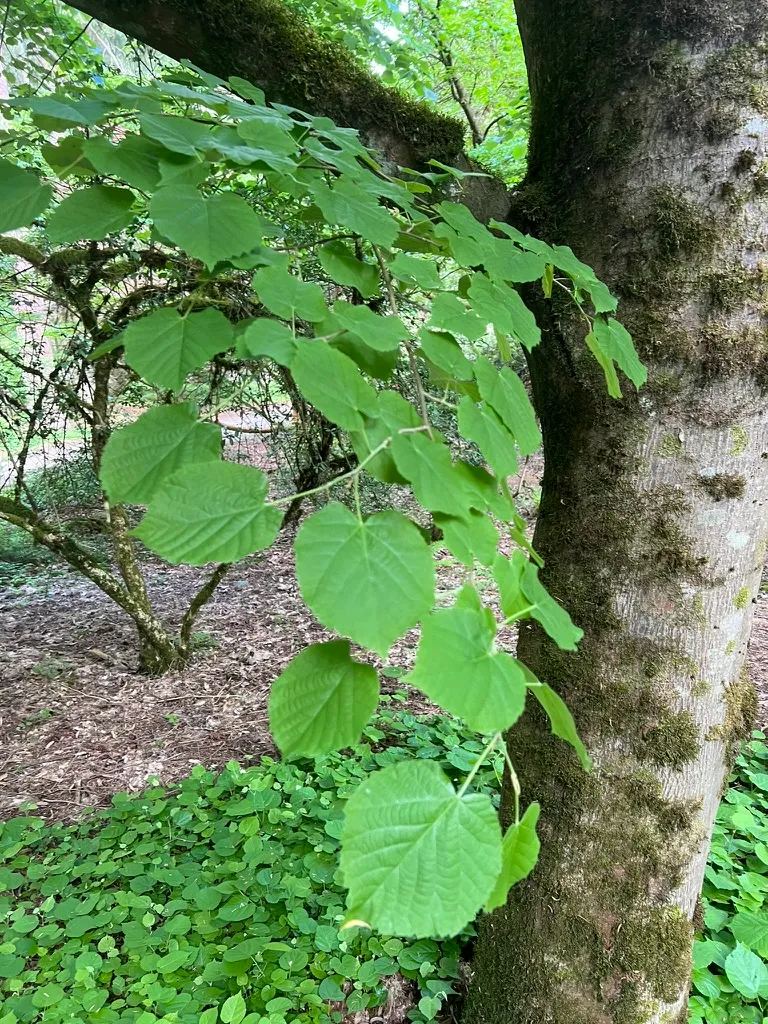
dark green above and paler beneath; simple heart-shaped (cordate) alternate coarsely serrated leaves 4-8 inches (10-20 cm) long and wide — substantially larger than the 2-3 inch (5-7 cm) leaves of Tilia cordata (little-leaf linden); turns yellow in fall with limited ornamental interestGrowing Conditions
Sun Requirements
Requires 4-12 hours of direct sunlight daily
• Full Sun: 6+ hours of direct sunlight
• Partial Shade: 3-6 hours of direct sunlight
• Full Shade: Less than 3 hours of direct sunlight
Care & Maintenance
Care Guide
Plant in well-drained loamy, clay, or silty soil with a pH of 5.5-7.5 in full sun to partial shade (4-12 hours); full sun produces the densest canopy and heaviest flowering. The species is not drought-tolerant and leaf scorch develops in dry conditions, so water weekly through the first 2-3 growing seasons and continue supplemental watering during extended drought on mature trees. Japanese beetles skeletonize the large leaves during the June through August adult flight period in zones 5-7 and heavy infestations can defoliate mature trees by midsummer — the beetle damage is the central pest concern on cultivated specimens in the affected zones. Aphids feed on the foliage through summer and secrete sticky honeydew that coats surfaces beneath the canopy, and the sooty mold that follows stains light-colored surfaces, which makes the species poorly suited to positions over parking areas, patios, pool decks, and outdoor seating. Basal suckers emerge vigorously from the root system and form multi-stemmed clumps when left unmanaged, and sucker removal is a routine maintenance task on single-trunked landscape specimens. Deer browse young stems and foliage when accessible. Pruning is done during the dormant season (January-February).Pruning
Pruning is done during the dormant season (January through February) while the tree is leafless. A single central leader with well-spaced scaffold branches is developed in young trees through corrective pruning over the first 5-10 years after planting. Basal suckers from the root system are removed at the soil line during pruning visits to maintain a single-trunked form on landscape specimens — if left unmanaged the suckers grow vigorously and convert the tree to a multi-stemmed clump. Dead, damaged, crossing, and weak-angled branches are removed at the branch collar. The broad rounded crown is the natural mature form and minimal structural pruning is needed on healthy established trees beyond routine deadwood removal and sucker management.Pruning Schedule
Prune: January–February
winter