Tilia, Genus, platyphyllos, Species,
- Genus & species
bigleaf linden
Overview
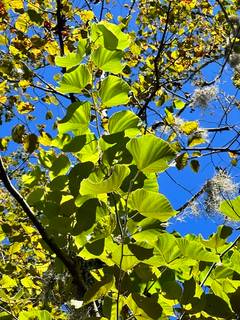
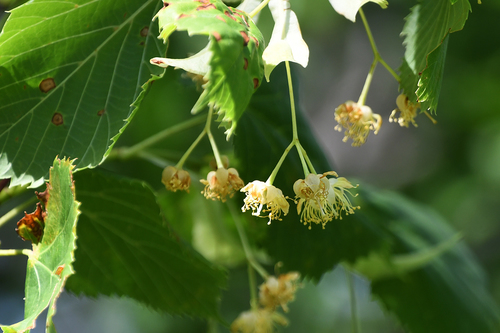
Tilia platyphyllos is a large deciduous tree in the family Malvaceae, reaching 65-130 feet (20-40 m) tall with a broad, domed crown and a straight trunk 3-7 feet (1-2 m) in diameter. The bark is grey and smooth, becoming shallowly ridged with age, and young shoots are often reddish and downy. Rounded, heart-shaped leaves 2.5-6 inches (6-15 cm) long are dark green above, paler and softly hairy below, with toothed margins and tufts of whitish hairs in the vein angles. In June and July clusters of three to nine yellowish-white, strongly scented flowers hang from a narrow papery bract, drawing many bees. The fruit is a hard, rounded, faintly ribbed nutlet about 0.4 inch (10 mm) wide. The species is native to woodlands of central and southern Europe, often on lime-rich soils, and is widely planted in parks, avenues, and streets. It is long-lived and tolerates hard pruning but casts dense shade, produces abundant suckers and basal shoots, and its flowers and foliage drip sticky honeydew where aphids are present.
Native Range
Native to central and southern Europe, from France and southern Britain east through Germany and the Balkans to western Asia, mainly on fertile, lime-rich woodland soils. It is widely planted well beyond its native range in parks, gardens, avenues, and along streets.Suggested Uses
Planted as a specimen and shade tree in large gardens, parks, and on estates, and as a street, avenue, and pleaching tree where its tolerance of pruning is useful. The fragrant flowers are dried for herbal lime-flower tea and are a major nectar source for bees. Its dense canopy gives heavy summer shade over open lawns and walks.How to Identify
Appearance
Size & Dimensions
Height65' - 130'
Width/Spread33' - 50'
Bloom Information
Flowering occurs in June and July, slightly earlier than small-leaved lime, with pendulous clusters of yellowish-white flowers hanging beneath a pale, strap-shaped bract. The flowers are heavily scented and rich in nectar, drawing large numbers of bees and other insects. After flowering the bract acts as a wing that carries the ripe nutlets on the wind.
Detailed Descriptions
Foliage Description
dark greenGrowing Conditions
Sun Requirements
Requires 5-10 hours of direct sunlight daily
• Full Sun: 6+ hours of direct sunlight
• Partial Shade: 3-6 hours of direct sunlight
• Full Shade: Less than 3 hours of direct sunlight