Tilia, Genus, spp., Multiple species,
- Genus
- Multiple species
lindens, basswoods, and lime trees
Temperate Northern Hemisphere: Europe, Asia, eastern North America
Overview
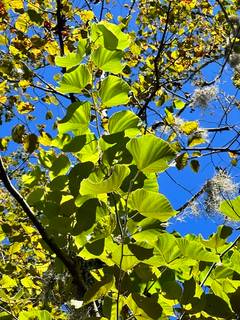
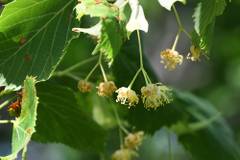
Tilia is a genus of about 30 species of deciduous trees in the family Malvaceae, known as lindens, basswoods, and lime trees, the last name unrelated to the citrus. Mature trees reach 50 to 130 feet (15 to 40 m) tall with a dense, domed to pyramidal crown and a straight trunk, serving as long-lived shade and street trees. The alternate leaves are heart-shaped with an uneven, lopsided base, finely toothed margins, and a pointed tip, 2 to 8 inches (5 to 20 cm) long, turning pale yellow in autumn. In early to mid summer the trees carry drooping clusters of small, pale-yellow, five-petaled flowers, each cluster hung from a narrow papery bract that later acts as a wing to carry the seeds on the wind. The flowers are strongly fragrant and rich in nectar, drawing large numbers of bees. The fruit is a small, hard, rounded nutlet 0.2 to 0.4 inch (5 to 10 mm) across. Tilia grows across the temperate Northern Hemisphere in Europe, Asia, and eastern North America, in rich woodland and along rivers. Many species sucker from the base and some hybridize freely, and the soft, even-grained wood is used for carving.
Native Range
Tilia is native to the temperate Northern Hemisphere, with species in Europe, much of temperate and subtropical Asia, and eastern North America; it is absent from western North America. Trees grow in rich, moist deciduous forest, on river terraces, and on lower mountain slopes.Suggested Uses
Tilia is planted as a shade tree in parks and large lawns and as a street and avenue tree, and pleached or pollarded forms are trained as screens and formal allees. Trees are spaced 30 to 50 feet (9 to 15 m) apart as specimens. The summer flowers support bees and are gathered for herbal tea, and the light wood is used for carving and turnery.How to Identify
Appearance
Size & Dimensions
Height50' - 130'
Width/Spread30' - 50'
Bloom Information
Tilia blooms in early to mid summer, generally June and July, two to four weeks later than most spring-flowering trees. The small pale-yellow flowers hang in clusters of 5 to 40 beneath the strap-like bracts and last about two weeks on the tree. Their strong fragrance and heavy nectar flow draw bees, hoverflies, and other insects in large numbers. Honey made from linden nectar is pale and aromatic.
Detailed Descriptions
Flower Description
pale yellow to creamy whiteFoliage Description
dark green, turning pale yellow in autumnGrowing Conditions
Sun Requirements
Requires 4-10 hours of direct sunlight daily
• Full Sun: 6+ hours of direct sunlight
• Partial Shade: 3-6 hours of direct sunlight
• Full Shade: Less than 3 hours of direct sunlight
Care & Maintenance
Care Guide
Tilia grows in full sun to partial shade and deep, moist, fertile, well-drained soil at a pH of 6.0 to 7.5, tolerating clay and a range of conditions once established. Young trees need regular water until rooted, after which most species handle short dry spells, though they drop leaves early in drought. The genus is cold hardy to USDA zone 3 in the hardiest species and is sensitive to road salt and severe compaction. Aphids are common and shower the area below with sticky honeydew that blackens with sooty mold. Japanese beetles and linden borer also feed on the trees. Trees sucker from the base, and the suckers are removed to keep a single trunk.Pruning
Tilia is pruned in late winter while dormant to remove crossing, dead, or damaged branches and to set a strong central leader on young trees. Basal suckers and watersprouts are cut off through the growing season to maintain a clean trunk. The genus tolerates hard pruning and pollarding, a traditional method used to keep street and avenue trees within bounds.Pruning Schedule
Prune: February–March
winter