Tilia, Genus, europaea, Species,
- Genus & species
European linden
A natural hybrid between {T. cordata} (littleleaf linden) and {T. platyphyllos} (large-leaved linden); found throughout central and western Europe; the fragrant flowers are a major nectar source for honeybees, and linden honey is a commercial product across European apiculture
Overview
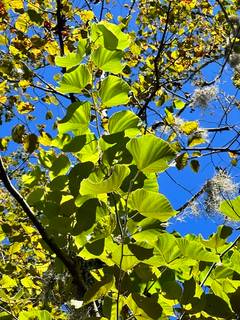
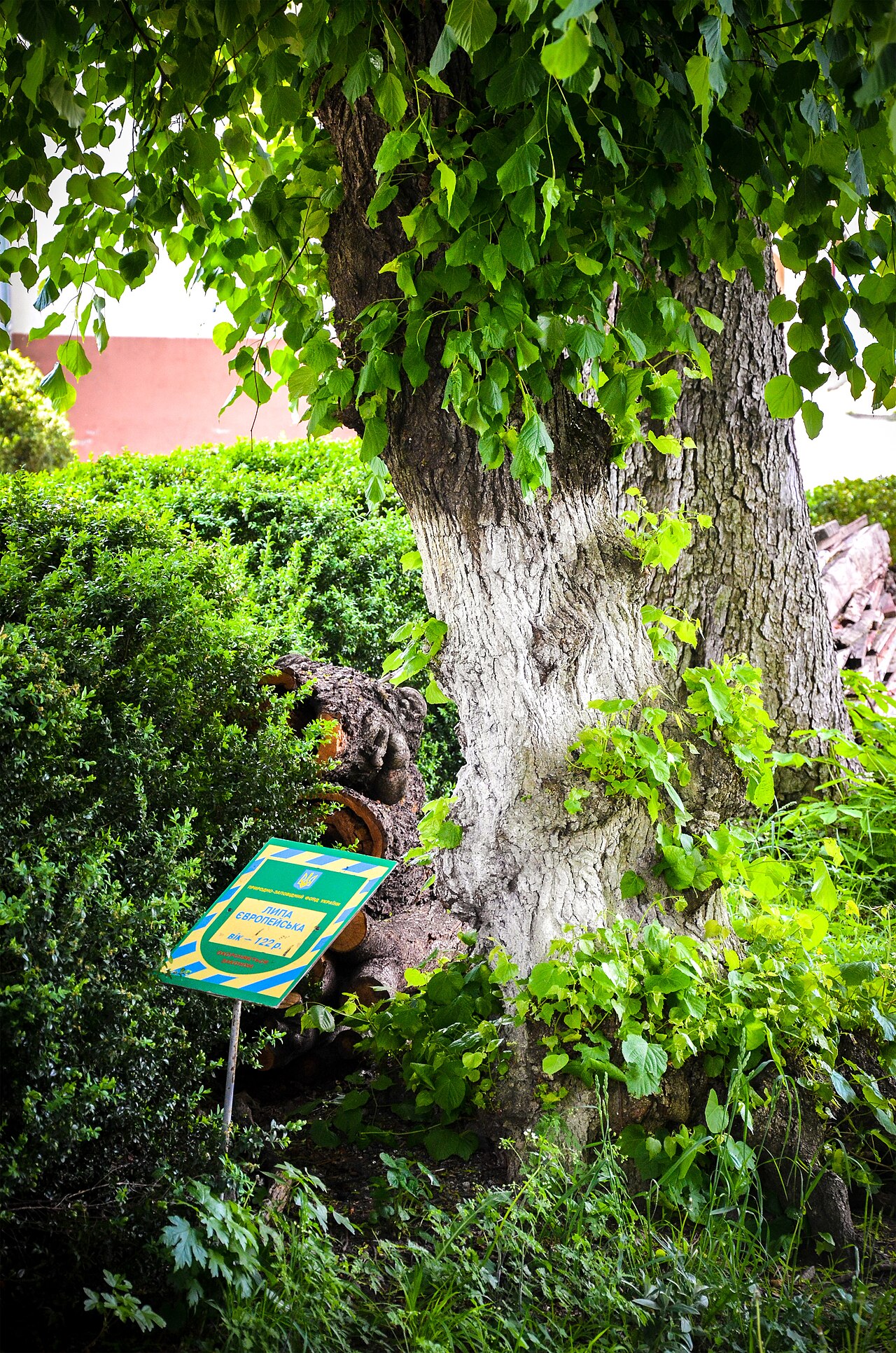
Tilia europaea is European linden (common lime), a large deciduous shade tree growing 60-80 ft (18-24 m) tall with a dense rounded to oval canopy 40-50 ft (12-15 m) wide. Dark green heart-shaped (cordate) leaves 2.5-4 inches (6-10 cm) wide with serrated margins, paler green beneath. Pendulous cymes of 5-10 yellowish-white fragrant flowers 0.3 inch (8 mm), each cluster attached to a pale green bract 2-4 inches (5-10 cm) long — the honey-scented fragrance carries 50+ ft (15+ m) in still air. Silver-gray bark with shallow furrows. In the mallow family (Malvaceae, reclassified from Tiliaceae). A natural hybrid: T. europaea = T. cordata (littleleaf linden) × T. platyphyllos (large-leaved linden). The fragrant flowers are a major nectar source for honeybees — linden honey is a commercial product in Europe. Produces abundant basal suckers (epicormic shoots from the trunk base and roots) — the primary maintenance limitation, requiring regular removal to maintain a clean trunk form. Aphids colonize the foliage and excrete honeydew that drips onto surfaces below — do not site over parking areas, patios, or walkways. Japanese beetle (Popillia japonica) feeds on the foliage in eastern North America. 15-20 years to full canopy. Zones 3-8. Non-toxic. Not deer-resistant. Full sun to partial shade. Growth rate is moderate.
Native Range
A natural hybrid between T. cordata and T. platyphyllos. Found throughout central and western Europe.Suggested Uses
Planted as a shade tree in parks and large residential landscapes spaced 40-50 ft (12-15 m) from structures. Used as an avenue and street tree. Not over parking or patios (aphid honeydew). Fragrant flowers for honeybees. Non-toxic. Zones 3-8.How to Identify
Appearance
Size & Dimensions
Height60' - 80'
Width/Spread40' - 50'
Bloom Information
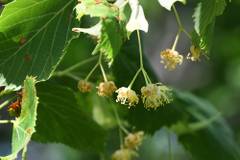
Early to midsummer (June-July). Pendulous cymes of yellowish-white fragrant flowers attached to pale green bracts. Honey-scented — major bee nectar source. 2 weeks of bloom. Bee-pollinated.
Detailed Descriptions
Flower Description
Yellowish-white fragrant 5-petaled flowers 0.3 inch (8 mm), in pendulous cymes of 5-10 attached to a pale green bract 2-4 inches (5-10 cm) long — the bract-attached flower cluster is diagnostic for the genus TiliaFoliage Description
Dark green heart-shaped (cordate) leaves 2.5-4 inches (6-10 cm) wide with serrated margins; paler green beneathGrowing Conditions
Sun Requirements
Requires 4-10 hours of direct sunlight daily
• Full Sun: 6+ hours of direct sunlight
• Partial Shade: 3-6 hours of direct sunlight
• Full Shade: Less than 3 hours of direct sunlight
Care & Maintenance
Care Guide
Full sun to partial shade. Moist well-drained soil pH 6.0-7.5. Remove basal suckers (epicormic shoots) regularly — the primary maintenance task. Aphid honeydew drips on surfaces below — site accordingly. Japanese beetle in eastern North America. Prune in late winter. Zones 3-8. Non-toxic. Not deer-resistant.Pruning
Remove basal suckers (epicormic shoots) regularly throughout the growing season. Prune dead wood and crossing branches in late winter (January-March). The species suckers prolifically — this is the primary maintenance requirement. Do not top — lindens have a strong central leader.Pruning Schedule
Prune: January–March
winterearly spring