Liatris, Genus, spicata, Species, 'Kobold', Cultivar,
- Genus & species
- Cultivar
kobold liatris
Cultivar of species native to eastern and central North America
Overview
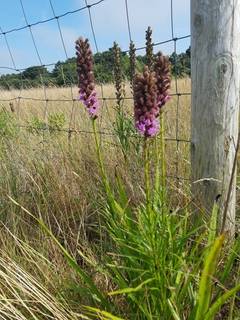
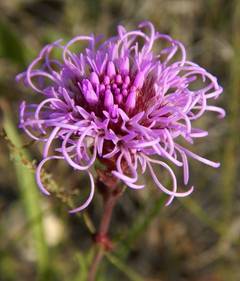
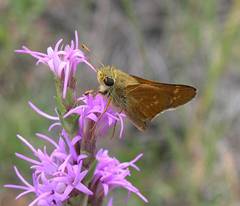
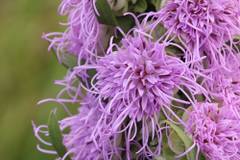
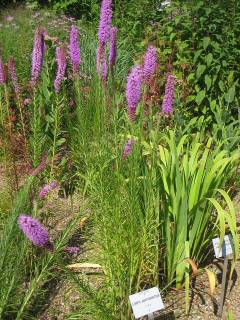
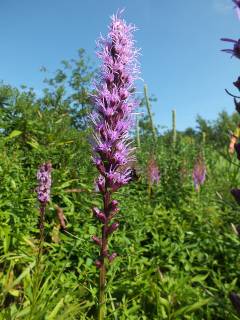
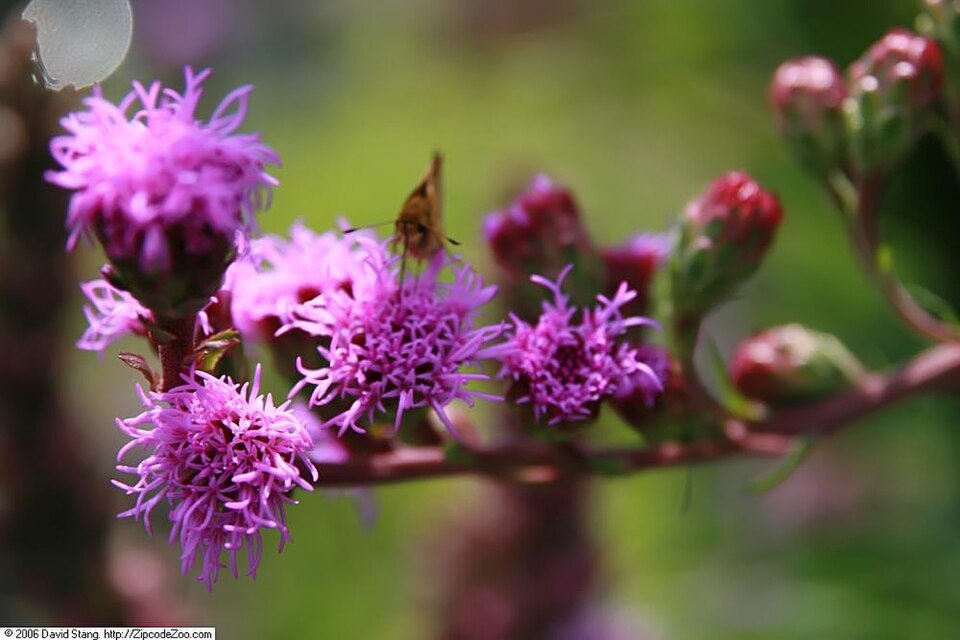
Liatris spicata 'Kobold' is a clump-forming herbaceous perennial reaching 18-24 inches (45-60 cm) tall in flower with a basal foliage clump 12-15 inches (30-38 cm) tall and 12-18 inches (30-45 cm) wide. Foliage grass-like, narrow, 6-12 inches (15-30 cm) long and 0.25-0.5 inch (0.6-1.3 cm) wide, dark green, arising from a corm-like base. Flowering stems erect and unbranched, terminating in dense bottlebrush-form spikes 6-12 inches (15-30 cm) long composed of small rose-purple to magenta tufted flowers approximately 0.5 inch (1.3 cm) across. Flowers open from the top of the spike downward over a 3-4 week period, opposite the bottom-up sequence of most spike-forming perennials. Bloom occurs from mid-July through August in zones 4-7. Plants establish a flowering-size clump within the second growing season. The 'Kobold' selection is more compact than the species type, which reaches 36-48 inches (90-120 cm) and often requires staking. Foliage holds dark green through the season and yellows after first hard frost. Crown rot can develop in poorly drained winter soils; corms rot in waterlogged conditions.
Native Range
Liatris spicata is native to moist tallgrass prairies, wet meadows, and stream banks across the eastern and central United States from Maine to Florida and west to Wisconsin and Louisiana, at 0-1,500 feet (0-450 m) elevation. The cultivar 'Kobold' is a compact selection introduced through European horticulture in the mid-20th century.Suggested Uses
Used in mixed perennial borders at 12-18 inch (30-45 cm) spacing, prairie-style and meadow plantings, and pollinator gardens. Cut spikes are commonly used in fresh and dried floral arrangements due to their long vase life and color persistence. Containers of at least 3 gallons (11 L) accommodate 2-3 corms; container plantings persist 2-3 seasons before division.How to Identify
Appearance
Size & Dimensions
Height1'6" - 2'
Width/Spread1' - 1'6"
Bloom Information
Mid-July through August in zones 4-7. Bloom timing is similar across zones 5-9 with limited regional variation; cooler summers may extend the bloom by 1-2 weeks. Individual flowers stay open 5-7 days; total spike bloom extends 3-4 weeks. Cut flower spikes hold color in dry arrangements for 2-3 months after harvest.
Detailed Descriptions
Flower Description
rose-purple to magentaFoliage Description
dark greenGrowing Conditions
Sun Requirements
Requires 6-8 hours of direct sunlight daily
• Full Sun: 6+ hours of direct sunlight
• Partial Shade: 3-6 hours of direct sunlight
• Full Shade: Less than 3 hours of direct sunlight
Care & Maintenance
Care Guide
Water weekly during the first growing season in the absence of rain. Established plants tolerate 2-3 weeks without rain, but may go semi-dormant in extreme drought. Corms rot in heavy clay soils with poor winter drainage; raised beds or sandy amendments improve survival in zones 4-5 with wet winters. Voles and rabbits chew leaves and crowns, particularly in winter under snow cover. Plants persist 5-8 years before declining; corms produce offsets that can be lifted and divided in early spring. Self-seeding occurs in undisturbed conditions, but seedlings vary in stature and color from the parent.Pruning
Cut spent flower spikes at the base after bloom or leave them standing for winter form and seed for songbirds. Cut all foliage to 2 inches (5 cm) above ground in late autumn after frost or in early spring before new growth emerges. Deadheading is not required for plant health; spikes are removed selectively to limit self-seeding.Pruning Schedule
Prune: March & November
fallearly spring
Container Growing
Suitable for container growing
Minimum container size: 3 gallons