Liatris, Genus, ligulistylis, Species,
- Genus & species
meadow blazing star
Central North America — Great Plains from Alberta south to New Mexico
Overview
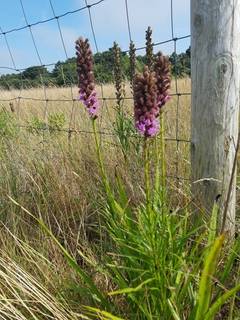
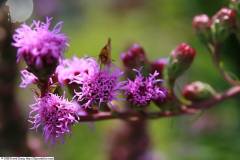
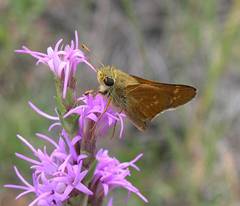
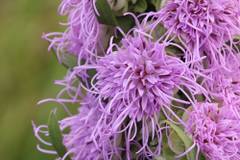
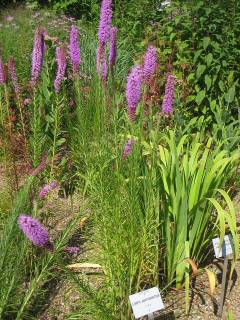
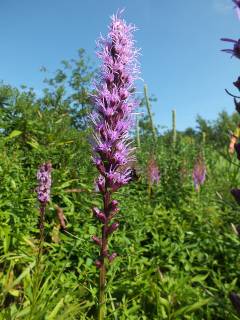
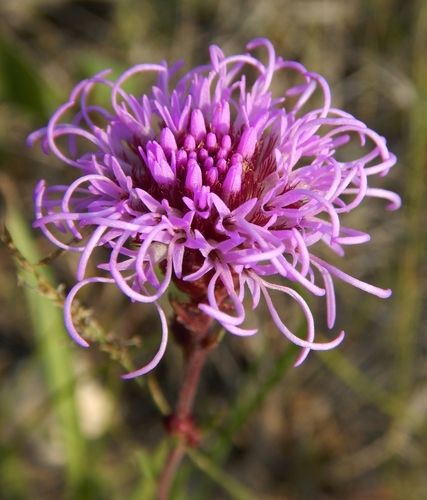
Liatris ligulistylis is meadow blazing star, widely planted in monarch butterfly habitat plantings for its strong attraction to migrating monarchs. Plants grow 30–48 inches (75–120 cm) tall and 12–18 inches (30–45 cm) wide. Rose-purple to magenta-pink flower heads in dense button-like clusters on tall spikes appear in August and September, opening from the top of the spike downward — a genus trait (most flower spikes open from the bottom up). The individual flower heads are larger (0.75–1 inch / 2–2.5 cm) than those of the more common L. spicata, creating a bolder display. The species name 'ligulistylis' describes the strap-shaped style branches. The monarch butterfly attraction is well-documented — monarch staging sites during fall migration feature massive concentrations of monarchs on L. ligulistylis plants, sometimes dozens of butterflies per spike. Moist prairie soils suit this species — more moisture-tolerant than L. spicata. Native to the Great Plains. Deer avoid the foliage.
Native Range
Liatris ligulistylis is native to central North America — the Great Plains from Alberta south to New Mexico.Suggested Uses
Used in native plant gardens, pollinator gardens, meadows, and monarch butterfly waystation plantings. The species draws monarchs more strongly than most other native perennials. The larger flower heads are showier than L. spicata. A core species for fall monarch migration staging.How to Identify
Appearance
Size & Dimensions
Height2'6" - 4'
Width/Spread1' - 1'6"
Bloom Information
Detailed Descriptions
Flower Description
Rose-purple to magenta-pink, in dense button-like heads on tall spikes opening from the top downFoliage Description
Medium green, narrow, grass-likeGrowing Conditions
Sun Requirements
Requires 6-10 hours of direct sunlight daily
• Full Sun: 6+ hours of direct sunlight
• Partial Shade: 3-6 hours of direct sunlight
• Full Shade: Less than 3 hours of direct sunlight
Care & Maintenance
Care Guide
Plant in full sun. Moist to average soil — tolerates clay. More moisture-tolerant than L. spicata. Leave seed heads for goldfinches. Cut to ground in early spring.Pruning
Leave standing through fall and winter for seed heads and wildlife. Cut to ground in late February–March.Pruning Schedule
Prune: March
early spring