Image 1 of 15
1 / 15
Plant Reference
Liatris, Genus, spicata, Species,
- Genus & species
prairie star
Native to eastern and central North America — New York to Michigan, south to Florida and Louisiana — growing in moist prairies, meadows, and open woodlands; the top-down flowering sequence is the genus identifier and separates {Liatris} from most other spike-flowered perennials, which open from the base upward
Overview
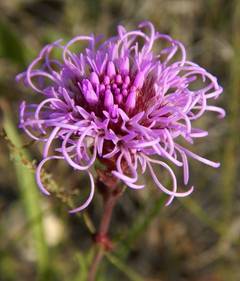
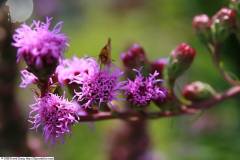
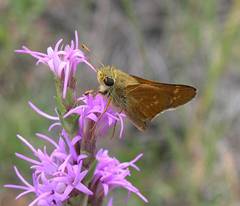
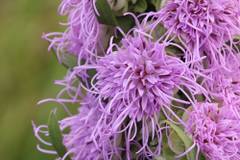
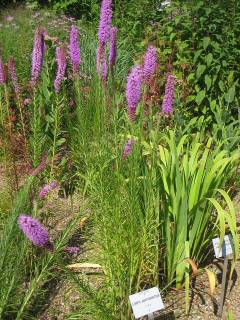
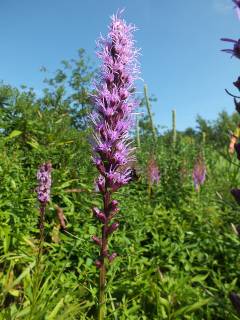
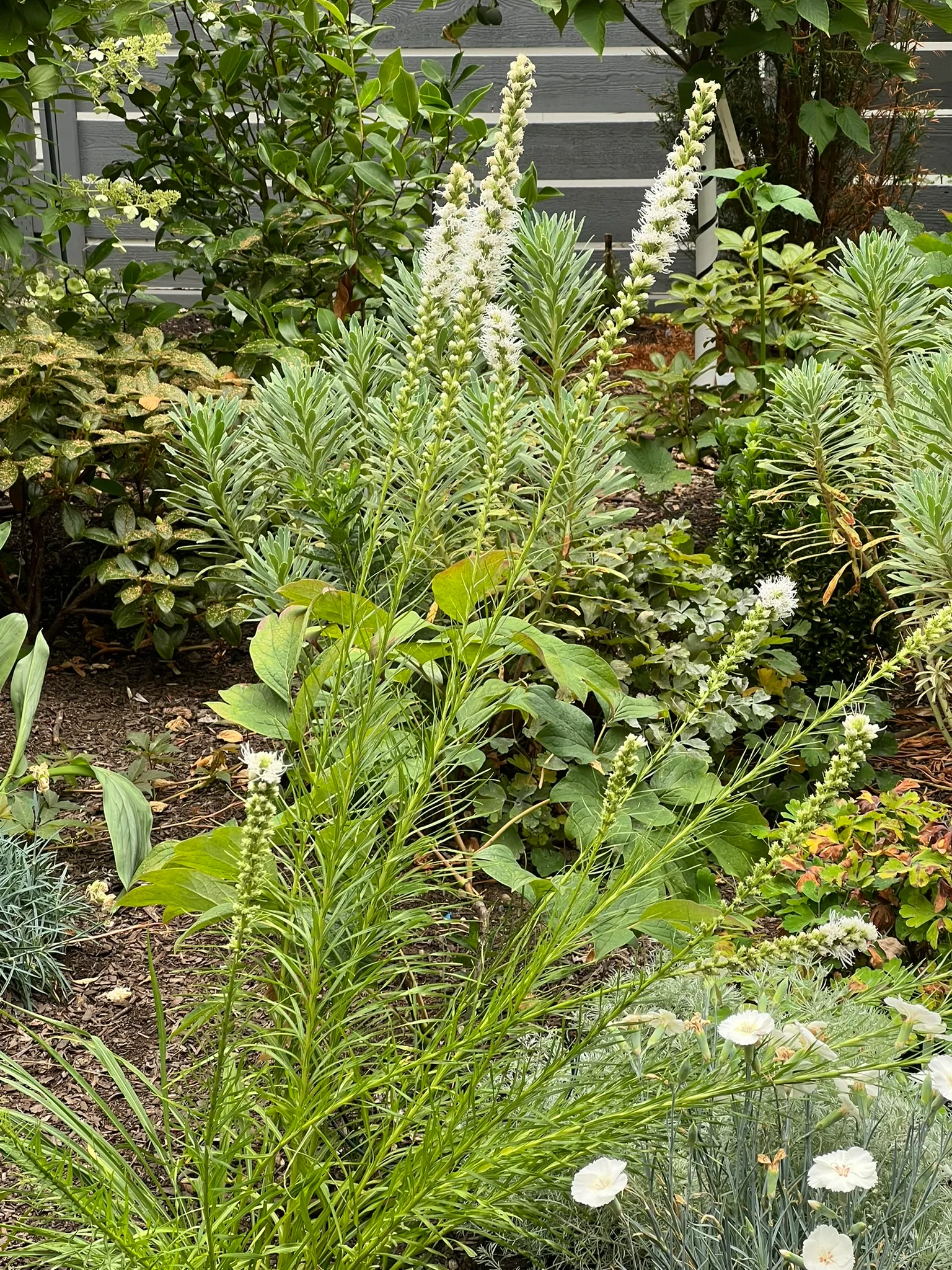
Liatris spicata is a deciduous perennial in the daisy family (Asteraceae) reaching 24-48 inches (60-120 cm) tall with a spread of 12-18 inches (30-45 cm) and an upright habit. The species carries dense bottlebrush spikes 6-12 inches (15-30 cm) long of rose-purple to pale purple florets that open from the top of the spike downward in July-August — a top-down flowering sequence uncommon among spike-flowered perennials and the primary genus identifier for Liatris. The top-down bloom sequence means the upper portion fades while the lower portion is still opening, giving the spike a characteristic two-tone transitional appearance during the peak of bloom. Medium green narrow grass-like leaves 8-12 inches (20-30 cm) long at the base become shorter up the stem. Growth rate is moderate. Hardy to USDA zone 3. Grows from a corm rather than a fibrous root system. Butterfly nectar source — visited by monarchs, swallowtails, and painted ladies, which makes the species a reliable mid-summer pollinator plant. Seed heads are consumed by goldfinches through fall and winter if left standing. 'Kobold' is a compact cultivar (18-24 inches / 45-60 cm); 'Floristan Weiss' has white flowers. Native to moist prairies, meadows, and open woodlands of eastern and central North America. Tolerates clay soil. Deer browse the foliage and flower spikes, so the species is not deer-resistant. Mildly toxic to dogs and cats. Drought tolerant once established despite the moist-prairie native habitat.
Native Range
Liatris spicata is native to eastern and central North America — New York to Michigan, south to Florida and Louisiana — growing in moist prairies, meadows, and open woodlands.Suggested Uses
Used in prairie gardens, meadow plantings, and mixed borders in zones 3-8 at 12-18 inch (30-45 cm) spacing. The top-down bloom sequence gives a specific visual signature that identifies the genus at a distance, which suits positions where the plant is viewed frequently from close range — border edges, walkway plantings, or cutting-garden rows. Butterfly nectar source across the July-August window. Native to eastern and central North America, which fits the species to native-plant restoration plantings. Tolerates clay soil. Goldfinch winter food role pairs with leaving the seed heads standing through the dormant season. Deer susceptibility rules out unfenced positions in high-deer-pressure areas.How to Identify
Appearance
Size & Dimensions
Height2' - 4'
Width/Spread1' - 1'6"
Bloom Information
Dense bottlebrush spikes 6-12 inches (15-30 cm) long of rose-purple to pale purple florets, July-August across a 4-5 week bloom window. Florets open top-down rather than bottom-up. Butterfly nectar source visited by monarchs, swallowtails, and painted ladies. Seed heads are consumed by goldfinches through fall and winter if left standing.
Detailed Descriptions
Flower Description
Rose-purple to pale purple dense bottlebrush spikes 6-12 inches (15-30 cm) long; florets open from the top of the spike downward — a top-down sequence uncommon among spike-flowered perennials; 'Floristan Weiss' is whiteFoliage Description
Medium green narrow grass-like leaves 8-12 inches (20-30 cm) long at the base, becoming shorter up the stemGrowing Conditions
Sun Requirements
Requires 6-10 hours of direct sunlight daily
• Full Sun: 6+ hours of direct sunlight
• Partial Shade: 3-6 hours of direct sunlight
• Full Shade: Less than 3 hours of direct sunlight
Care & Maintenance
Care Guide
Grows in full sun (6+ hours of direct sun daily) in moist soil at pH 5.5-7.0. Hardy to USDA zone 3. Tolerates clay and moist conditions — the species grows in moist prairies and meadows in its native habitat, which separates it from most drought-tolerant North American prairie forbs. Grows from a corm rather than a fibrous root system; division is done by separating corms rather than by clump-splitting. Leave seed heads standing through fall and winter for goldfinch food and winter structure. Deer browse the foliage and flower spikes. Mildly toxic to dogs and cats. Drought tolerant once established, which gives the species flexibility across both moist-meadow and drier border positions.Pruning
Leave stems and seed heads standing through fall and winter for goldfinch food and winter structure. Cut the stems to the ground in early spring (March) before new growth emerges. Divide congested corms every 3-4 years in spring, replanting individual corms at 12-inch (30 cm) intervals.Pruning Schedule
Prune: March
early spring