Liatris, Genus, aspera, Species,
- Genus & species
rough blazing star
Overview
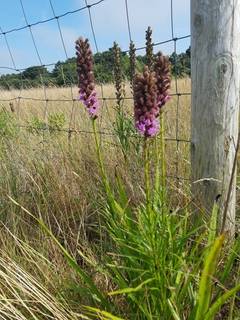
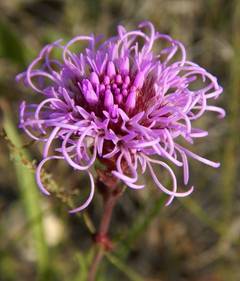
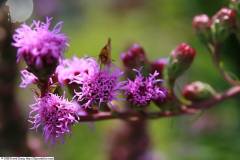
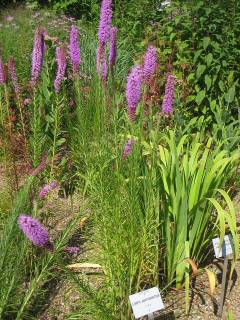
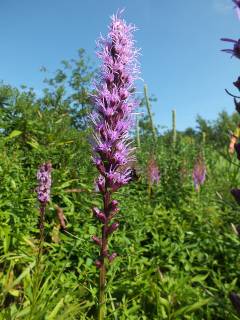
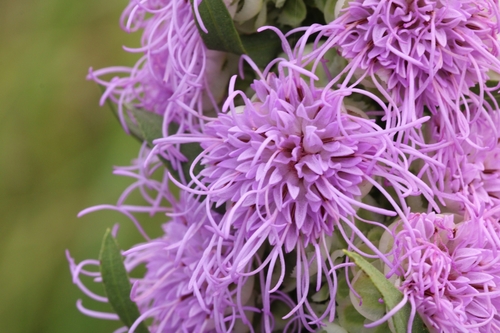
Liatris aspera is an upright herbaceous perennial in the daisy family, growing 2-5 feet (60-150 cm) tall from a rounded corm. The single stiff stem is clothed in narrow, rough-textured leaves that shorten toward the top. From late summer into autumn it carries a tall spike of rounded, button-like flower heads, each 0.5-0.75 inch (13-19 mm) wide and packed with 16-35 rose-purple disk florets; the heads open from the top of the spike downward. The bracts beneath each head have rounded, papery, often ragged margins, a feature behind the name rough blazing star. After bloom the heads form tufts of feathery seeds. It is native to the central and eastern United States and adjacent Canada, growing in dry prairie, sandy savanna, and open ground. It withstands drought and lean soil but flops in rich or shaded sites, and the tall spikes may need support in windy gardens.
Native Range
Liatris aspera is native to central and eastern North America, from Ontario south to Texas and the Florida panhandle and west to the Dakotas. It is most common in dry prairies and sandy savannas of the Midwest and Great Plains.Suggested Uses
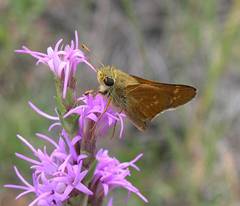
Grown in prairie and meadow plantings, sunny borders, and cut-flower gardens for late-season color. The spikes draw butterflies and bees and are cut fresh or dried. It naturalizes on dry, sandy, open sites with little competition.How to Identify
Appearance
Size & Dimensions
Height2' - 5'
Width/Spread1' - 1'6"
Bloom Information
Rose-purple flower heads open from late summer into autumn, roughly August to October, several weeks later than many prairie forbs. Bloom progresses downward from the top of the spike. Color holds for three to four weeks before the seed tufts form.
Detailed Descriptions
Foliage Description
greenGrowing Conditions
Sun Requirements
Requires 6-10 hours of direct sunlight daily
• Full Sun: 6+ hours of direct sunlight
• Partial Shade: 3-6 hours of direct sunlight
• Full Shade: Less than 3 hours of direct sunlight
Care & Maintenance
Care Guide
Grow Liatris aspera in full sun and dry to average, sharp-draining soil, including sandy and rocky ground. It withstands drought and heat once established and rots in wet winter soil. Plants grown in rich or shaded conditions stretch and flop, so lean soil and open exposure keep the spikes upright. No feeding is needed on fertile prairie soil. The corms are set 2-4 inches (5-10 cm) deep in autumn or spring. Clumps are lifted and divided every few years if they crowd.Pruning
No structural pruning is required. Spent spikes can be removed after bloom, or left so the feathery seed heads feed birds and self-sow. Foliage is cut to the ground after it browns in late autumn.Container Growing
Suitable for container growing
Minimum container size: 3 gallons