Liatris, Genus, punctata, Species,
- Genus & species
dotted gayfeather
Central North America (Great Plains)
Overview
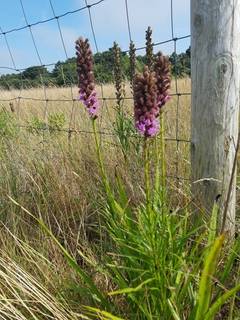
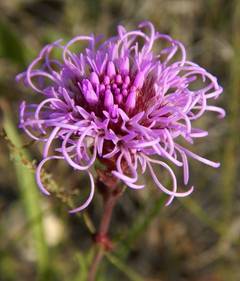
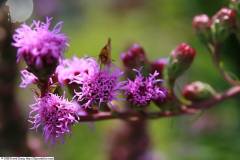
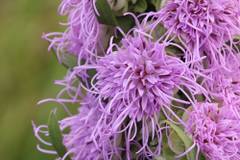
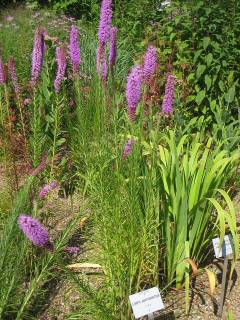
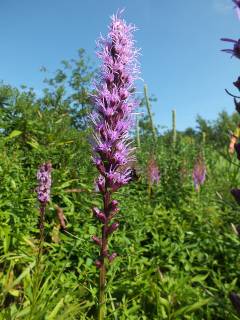
Liatris punctata is an upright prairie perennial that grows 8-30 inches (20-75 cm) tall from a thick, woody taproot reaching several feet into the soil. The stems are clothed in narrow, grass-like leaves 1-5 inches (3-13 cm) long, dotted with sunken glands that give the species its name. From late summer into fall it produces a dense terminal spike of rosy-purple flower heads, each head packed with tubular disc florets and feathery styles; the spike opens from the top downward. The deep taproot stores water and lets the plant survive prolonged drought and prairie fire, regrowing from the root crown. L. punctata grows in dry shortgrass and mixedgrass prairie, on rocky slopes and roadsides across the Great Plains. It is slow to establish from seed, often taking two to three years to bloom, and the long taproot makes mature plants difficult to move. Foliage stays low and inconspicuous until the flower spikes rise. It is hardy in USDA zones 3 through 9.
Native Range
Native to central North America, ranging across the Great Plains from Alberta and Manitoba south to Texas and into northern Mexico. It grows in dry shortgrass and mixedgrass prairie, on limestone outcrops, and along roadsides.Suggested Uses
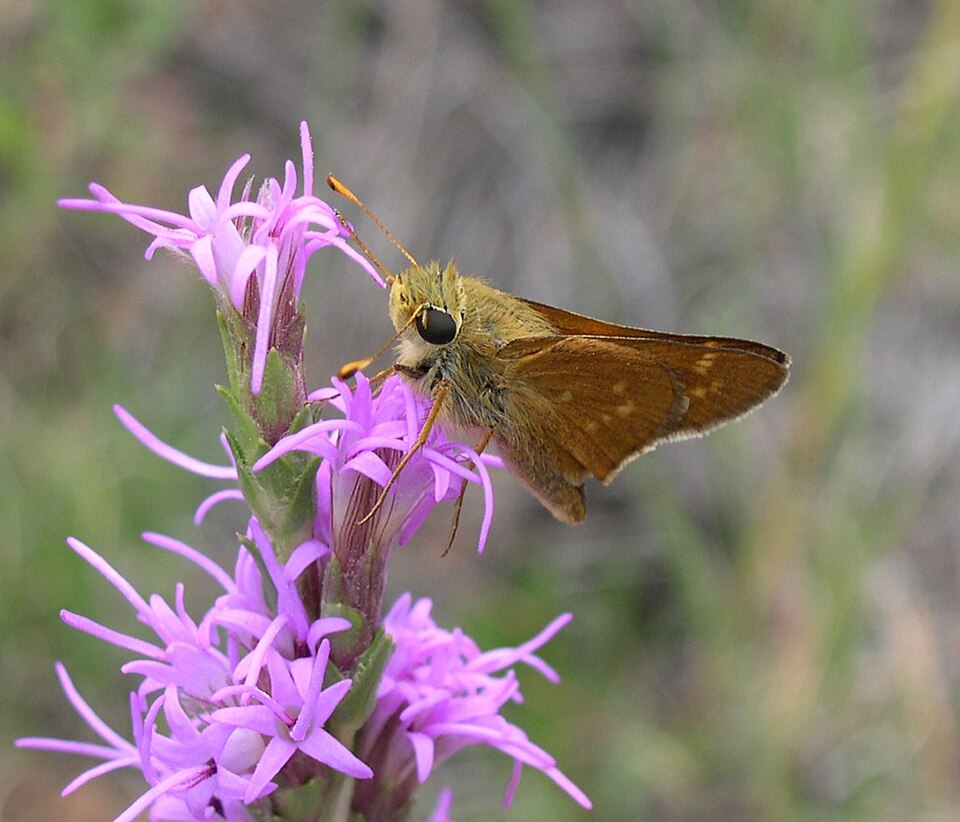
Planted in prairie and meadow gardens, rock gardens, and water-wise borders in full sun. It works as a late-season nectar source for butterflies and combines with native grasses and other prairie forbs.How to Identify
Appearance
Size & Dimensions
Height8" - 2'6"
Width/Spread9" - 1'6"
Bloom Information
Rosy-purple flower spikes open from late summer into fall, generally August through October. Each spike flowers from the top down over three to four weeks, drawing butterflies, bees, and other pollinators. The dried seed heads, topped with feathery bristles, persist into winter.
Detailed Descriptions
Foliage Description
GreenGrowing Conditions
Sun Requirements
Requires 6-10 hours of direct sunlight daily
• Full Sun: 6+ hours of direct sunlight
• Partial Shade: 3-6 hours of direct sunlight
• Full Shade: Less than 3 hours of direct sunlight
Care & Maintenance
Care Guide
Grow L. punctata in full sun and lean, fast-draining soil; it tolerates sand, clay, and rocky ground but fails in wet or rich conditions. Once the taproot is established the plant withstands extended drought and needs no irrigation. Avoid overwatering and heavy feeding, which cause floppy growth and rot. Plants establish more readily from seed or from young transplants, since the deep taproot resists moving later. Cold stratification improves seed germination. Established clumps need little care beyond cutting old stems in late winter.Pruning
No routine pruning is required. Cut the spent flower stalks to the ground in late winter or early spring before new shoots appear. Leaving the seed heads standing through winter feeds finches and other seed-eating birds.Pruning Schedule
Prune: February–March
winterearly spring
Container Growing
Suitable for container growing
Minimum container size: 2 gallons