Liatris, Genus, spp., Multiple species,
- Genus
- Multiple species
Blazing stars
Overview
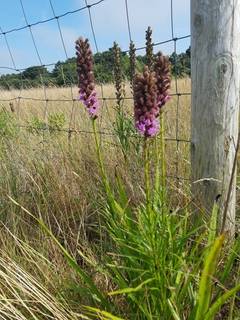
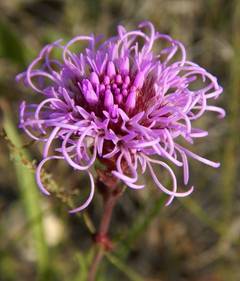
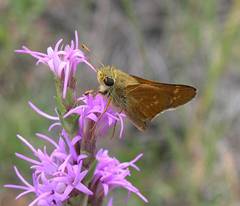
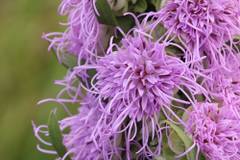
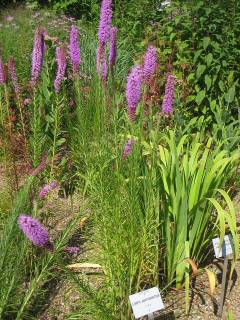
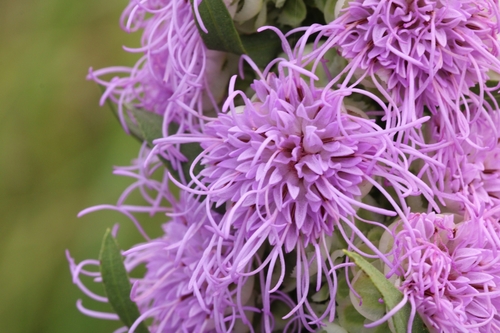
Liatris is a genus of about 50 species of upright perennials in the daisy family (Asteraceae), native to North America and called blazing star or gayfeather. Plants grow from a rounded corm into one or more stiff, unbranched stems 1 to 5 ft (30 to 150 cm) tall, lined with narrow, grass-like leaves that shorten toward the top. The flower heads are packed into a dense bottle-brush or wand-like spike, each head holding tufted disk florets in rose-purple, lilac, or white; unlike most spike flowers, the heads open from the top of the stalk downward. Blooming runs through mid to late summer, when the feathery flowers draw butterflies, bees, and other pollinators in large numbers. After flowering, the seeds carry feathery bristles that catch the wind. The genus grows wild in prairies, open woods, and moist meadows across central and eastern North America, from Canada to the Gulf, and the corm-bearing rootstock lets it survive fire and drought. Liatris suits sunny borders and prairie plantings but tends to flop in rich or shaded soil, where the tall spikes grow weak. The corms rot in wet winter ground.
Native Range
Liatris is native to central and eastern North America, from southern Canada through the United States to the Gulf of Mexico and into northern Mexico. It grows in tallgrass and mixed prairie, open oak woods, glades, and moist meadows.Suggested Uses
Liatris is grown in sunny borders, prairie and meadow plantings, and pollinator gardens, and the long spikes are cut for fresh and dried arrangements. It is planted in drifts among grasses, where the vertical spikes rise above mounded perennials.How to Identify
Appearance
Size & Dimensions
Height1' - 5'
Width/Spread9" - 1'6"
Bloom Information
Liatris blooms in mid to late summer, roughly July to September, with each spike opening from the top downward over three to four weeks. The tufted flower heads draw butterflies and bees while in bloom. Feathery seed heads follow and stand into autumn.
Detailed Descriptions
Flower Description
rose-purple, lilac, or whiteFoliage Description
greenGrowing Conditions
Sun Requirements
Requires 6-12 hours of direct sunlight daily
• Full Sun: 6+ hours of direct sunlight
• Partial Shade: 3-6 hours of direct sunlight
• Full Shade: Less than 3 hours of direct sunlight
Care & Maintenance
Care Guide
Liatris grows in full sun on average to lean, well-drained soil at pH 6.0 to 7.5, and tolerates heat, drought, and poor sandy ground once established. The corms rot in soil that stays wet over winter, so sharp drainage matters more than fertility. Most species are hardy across USDA zones 3 to 9 and need no winter protection. Rich soil and shade make the stems tall and weak, so they fall over as the heavy spikes form. Clumps are lifted and divided every few years in spring to keep them dense, and plants also grow readily from seed.Pruning
Spent flower spikes are cut back after bloom to tidy the plant, though the feathery seed heads are often left to feed finches and self-sow. Foliage is cut to the ground in late autumn or early spring. Lifting and dividing crowded corms every three to four years keeps the clumps dense.Pruning Schedule
Prune: November
fall
Container Growing
Suitable for container growing