Lawn Alternatives That Actually Work: 5 Options Beyond Grass
Pets & Toxicity
Recorded toxicity for plants linked in this guide. An unknown status is not a safety assessment.
No linked plant is recorded as toxicDetailsHide
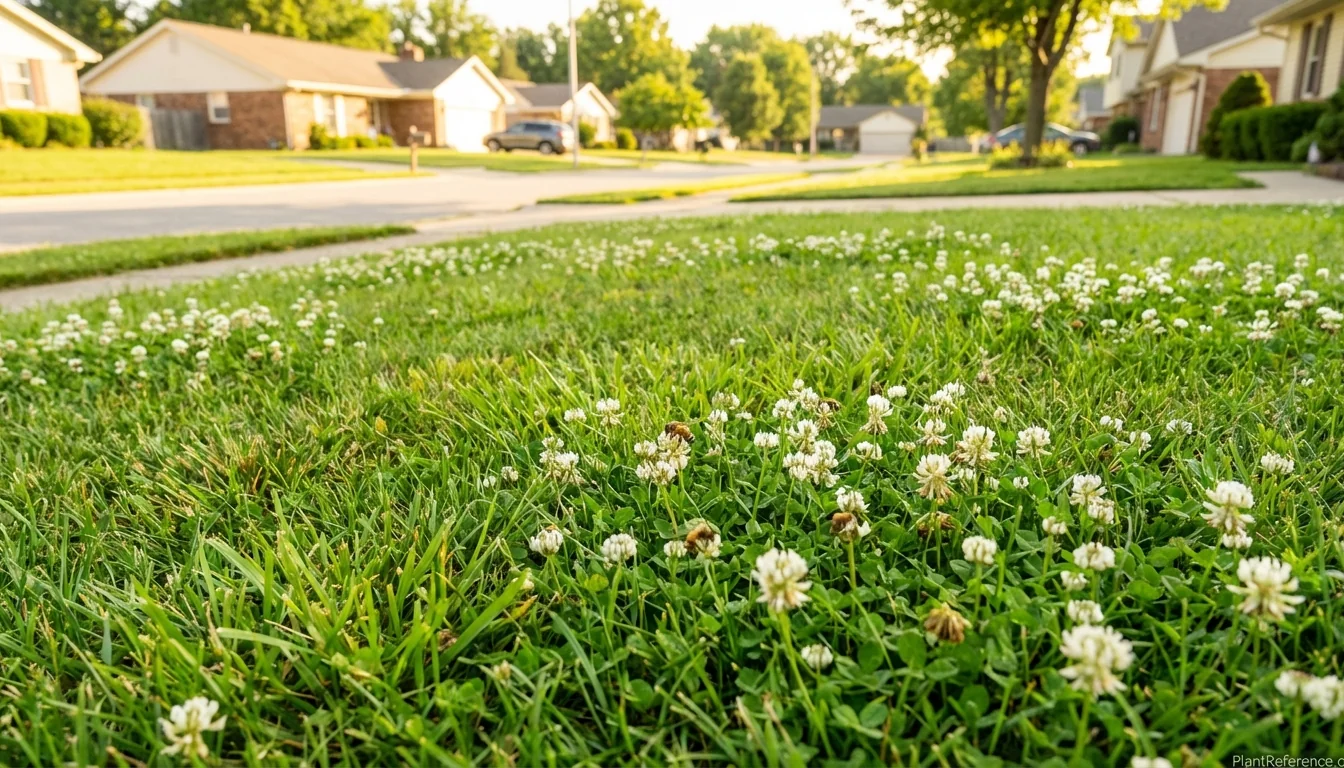
— Image © Plant Reference 2026
I spend most of my time helping people grow better grass. But there are situations where the honest advice is to stop growing grass altogether — or at least stop trying to grow it in areas where it consistently fails. The strip between the sidewalk and street that bakes in 100°F heat. The shaded north side of the house where nothing survives. The backyard that nobody walks on but someone mows every week anyway. For these areas, lawn alternatives are not a compromise — they are an upgrade.
Why Consider Lawn Alternatives
The Maintenance Math
A traditional 🌿Poa pratensis Kentucky bluegrass or 🌿Festuca arundinacea tall fescue lawn in the northern U.S. requires approximately 30-40 mowings per year, 4 fertilizer applications, 1 inch of water per week during summer (20-25 weeks), and periodic aeration, overseeding, and weed control. That is a significant investment of time, money, and water for what is functionally a green carpet. Lawn Care Schedule by Month: Your Complete Cool-Season Grass Calendar
Lawn alternatives reduce some or all of these inputs. Clover eliminates fertilizer entirely. Fine fescue meadows cut mowing from 40 times to 4. Native sedges eliminate both irrigation and fertilizer. The savings compound — less mowing means less fuel, less noise, and less time spent on a chore that many homeowners do not enjoy.
The Ecological Argument
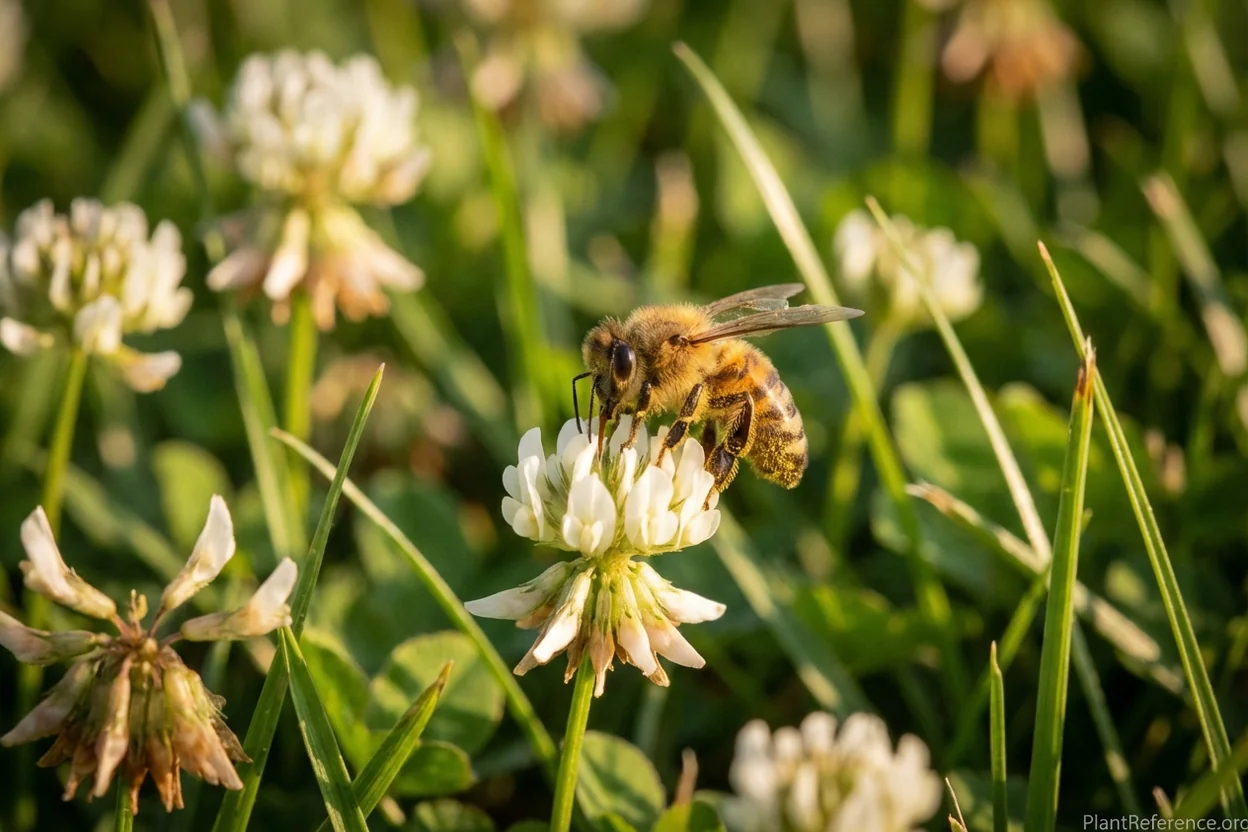
Traditional mowed lawns are ecological deserts — they provide minimal habitat for pollinators, insects, or wildlife. A clover lawn feeds bees. A creeping thyme lawn feeds butterflies. A native sedge lawn supports the food web that songbirds depend on. Even a partial conversion from pure grass to a grass-clover blend measurably increases pollinator visits to your property.
1. White Clover: The Nitrogen-Fixing Lawn
Why It Works
White clover (🌿Trifolium repens) is a legume that forms a symbiotic relationship with nitrogen-fixing bacteria in its root nodules. These bacteria convert atmospheric nitrogen into plant-available nitrogen in the soil — the same nutrient you pay $25-35 per bag to apply as fertilizer. A clover lawn fertilizes itself and shares that nitrogen with surrounding grass plants. Lawn Fertilization Schedule: When and What to Feed by Grass Type
How to Establish
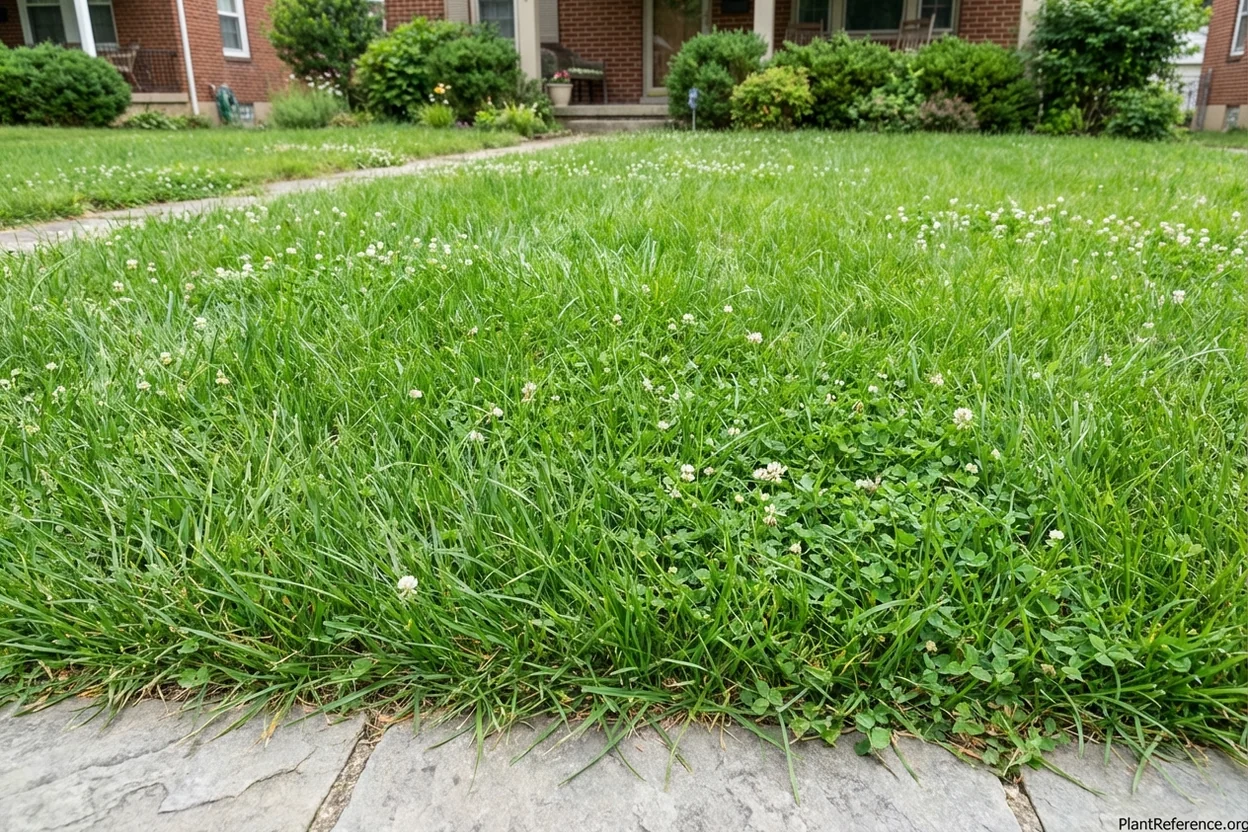
The easiest approach is overseeding existing grass with white clover seed at 2 oz (about 2 tablespoons) per 1,000 sq ft. Broadcast the tiny seeds over the lawn in early spring or early fall, water lightly, and let them establish among the existing grass. Within one season, clover fills in to create a mixed clover-grass lawn that stays green through summer drought (clover has deeper roots than most grasses) and eliminates the need for nitrogen fertilizer.
For a pure clover lawn, seed at 4-8 oz per 1,000 sq ft on prepared soil. Pure clover lawns handle light foot traffic but are softer and less wear-resistant than grass — they work best in low-traffic areas.
The Trade-Offs
Clover attracts bees — which is an ecological benefit but a practical concern for families with bee-allergic members who walk barefoot. Clover also goes dormant and turns brown in winter (Zones 5-7) while cool-season grasses stay green longer. And pure clover lawns cannot withstand heavy traffic the way turf grass can. The best compromise for most homeowners is a clover-grass blend — the clover provides nitrogen and drought tolerance while the grass provides traffic resilience and year-round structure.
Mowing a Clover Lawn
Mow clover-grass blends at 3-4 inches (8-10 cm) — the same height recommended for cool-season grasses. Clover blooms at the tips; if you want flowers for pollinators, mow every 2-3 weeks instead of weekly. If you prefer a tidier appearance without flowers, mow weekly as usual. Lawn Mowing Height Guide: The One-Third Rule and Seasonal Timing
2. Creeping Thyme: The Walkable Groundcover
Why It Works
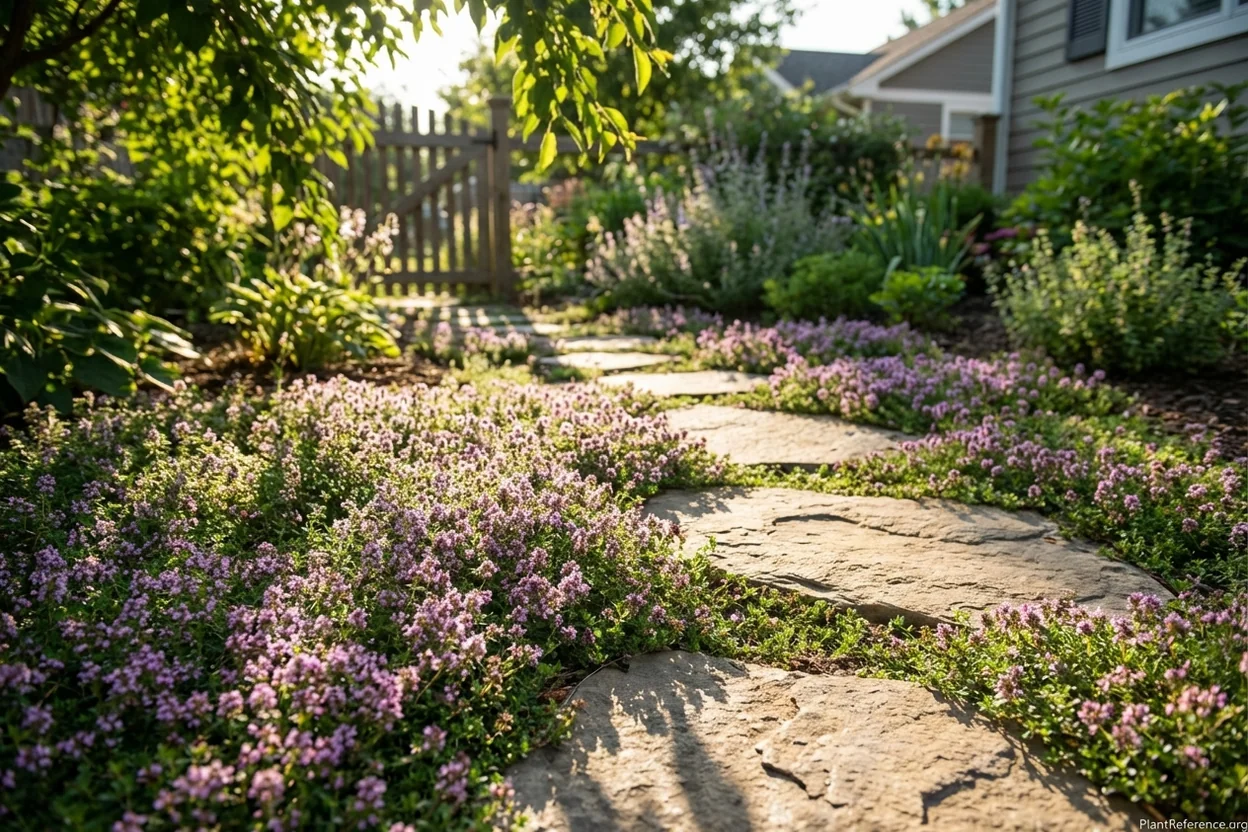
Creeping thyme (🌿Thymus serpyllum and related species) forms a dense, low-growing mat that reaches only 2-4 inches (5-10 cm) tall without mowing. It produces purple or pink flowers in early summer that attract butterflies and pollinators, releases a pleasant fragrance when stepped on, and tolerates light to moderate foot traffic.
Creeping thyme is extremely drought-tolerant once established — it thrives in the same hot, dry, sunny conditions that kill traditional grass (parking strips, south-facing slopes, spaces between stepping stones). It needs no fertilizer, no irrigation after the first season, and mowing only 1-2 times per year (optional — some homeowners never mow it).
Where It Works Best
Creeping thyme excels in full sun with well-drained soil. It does not tolerate shade or consistently wet conditions. The best applications are parking strips between the sidewalk and street, pathways between stepping stones, sunny slopes that are difficult to mow, and borders around patios and driveways. It is not a full lawn replacement for high-traffic play areas — heavy foot traffic crushes it.
Establishment
Plant creeping thyme from plugs or divisions spaced 6-12 inches (15-30 cm) apart in prepared soil. Water regularly during the first growing season to establish roots. By the second year, the plants fill in to form a continuous mat. Seed establishment is possible but slow (germination takes 14-21 days and full coverage takes 2 growing seasons). How to Water Your Lawn the Right Way: Depth, Timing, and Drought
3. Fine Fescue No-Mow Meadow
Why It Works
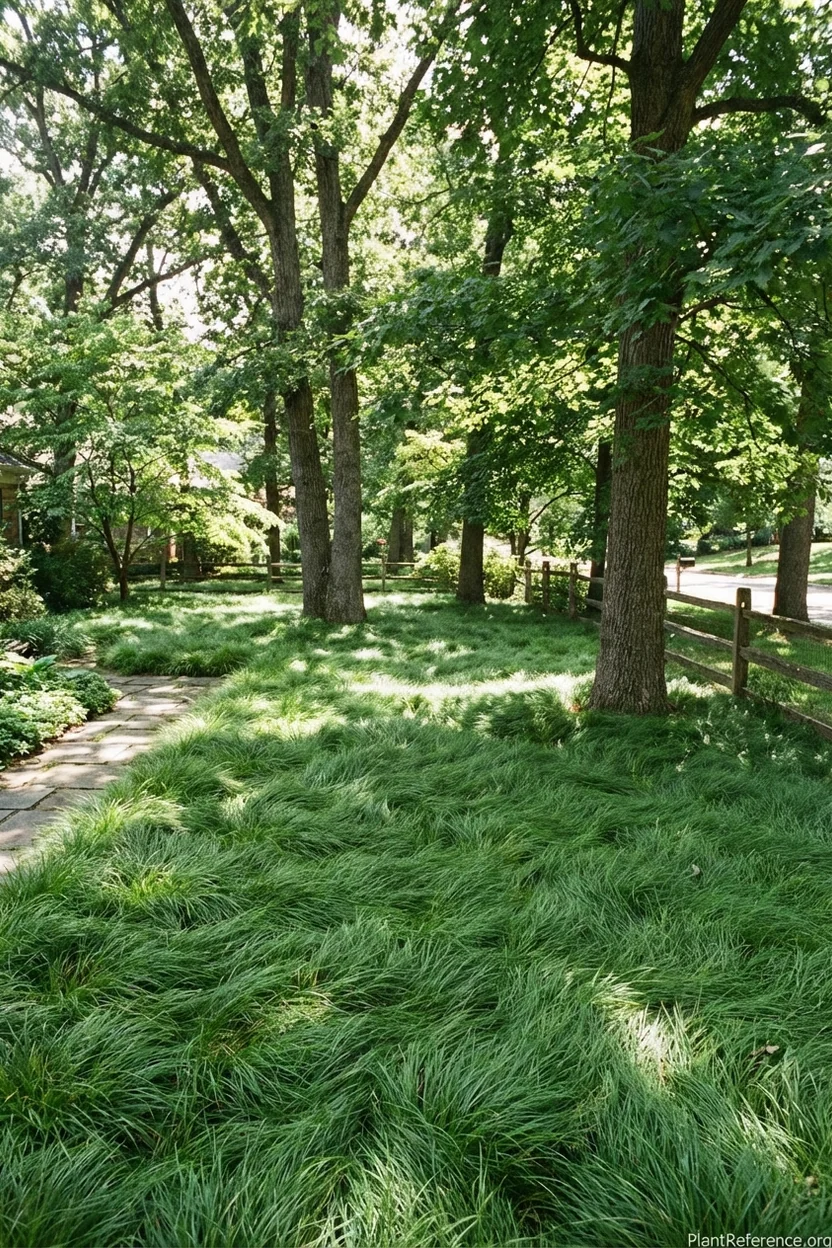
This is the lawn alternative for homeowners who want something that still looks like grass but requires dramatically less maintenance. Fine fescues (🌿Festuca rubra, 🌿Festuca brevipila) grow slowly enough that mowing 3-4 times per season instead of weekly maintains an attractive, slightly informal meadow appearance. Left unmowed entirely, they reach 8-12 inches and develop a soft, flowing texture. Best Grass Seed for Shade Under Trees: 5 Species That Actually Work
No-mow fine fescue blends need no fertilizer (they actually perform worse with high nitrogen), minimal irrigation (drought-tolerant once established), and no herbicide (the dense growth suppresses most weeds). The total annual maintenance is a fraction of a traditional lawn.
Where It Works Best
No-mow meadows work in full sun to partial shade in Zones 3-7. They look best in naturalized areas — side yards, back sections of large properties, slopes, and areas where a formal mowed lawn is not necessary. They do not tolerate heavy foot traffic; reserve play areas and high-use zones for traditional turf.
The Aesthetic Question
This is the biggest barrier to adoption. No-mow meadows do not look like a traditional mowed lawn — they look like a low meadow or prairie edge. Some homeowners love this natural aesthetic. Others (and some HOAs) consider it unkempt. Check your local ordinances and HOA rules before converting visible front yard areas. Side yards and backyards are usually unrestricted.
4. Native Sedge Lawn
Why It Works
Native sedges (🌿Carex declinata species) are grass-like plants that form dense, low-growing tufts requiring no fertilizer, no irrigation, and mowing only 1-2 times per year. They tolerate shade better than any grass and thrive in the moist, partially shaded conditions that kill most lawn species. Transition Zone Lawn Care: Growing Grass in America's Toughest Climate Belt
Best Species by Region
🌿Carex pensylvanica Pennsylvania sedge** — the most popular lawn sedge for the northeastern and midwestern U.S. (Zones 3-8). Grows 6-8 inches tall, tolerates deep shade and dry soil under trees. Spreads slowly by rhizomes to form a continuous cover.
🌿Carex praegracilis California field sedge** — excellent for western U.S. lawns (Zones 3-10). Tolerates full sun, moderate traffic, and alkaline soils. The closest sedge to a traditional lawn appearance.
🌿Carex appalachica Appalachian sedge** — native to eastern woodlands. Thrives in deep shade and acidic soil under oaks and maples. Ideal for areas where even fine fescue struggles.
Establishment
Plant sedges from plugs spaced 8-12 inches (20-30 cm) apart. Water during the first growing season. Full coverage takes 2-3 growing seasons as the plants slowly spread to fill gaps. Seed establishment is difficult — plugs are the reliable method.
5. Mulch and Garden Bed Conversion
Why It Works
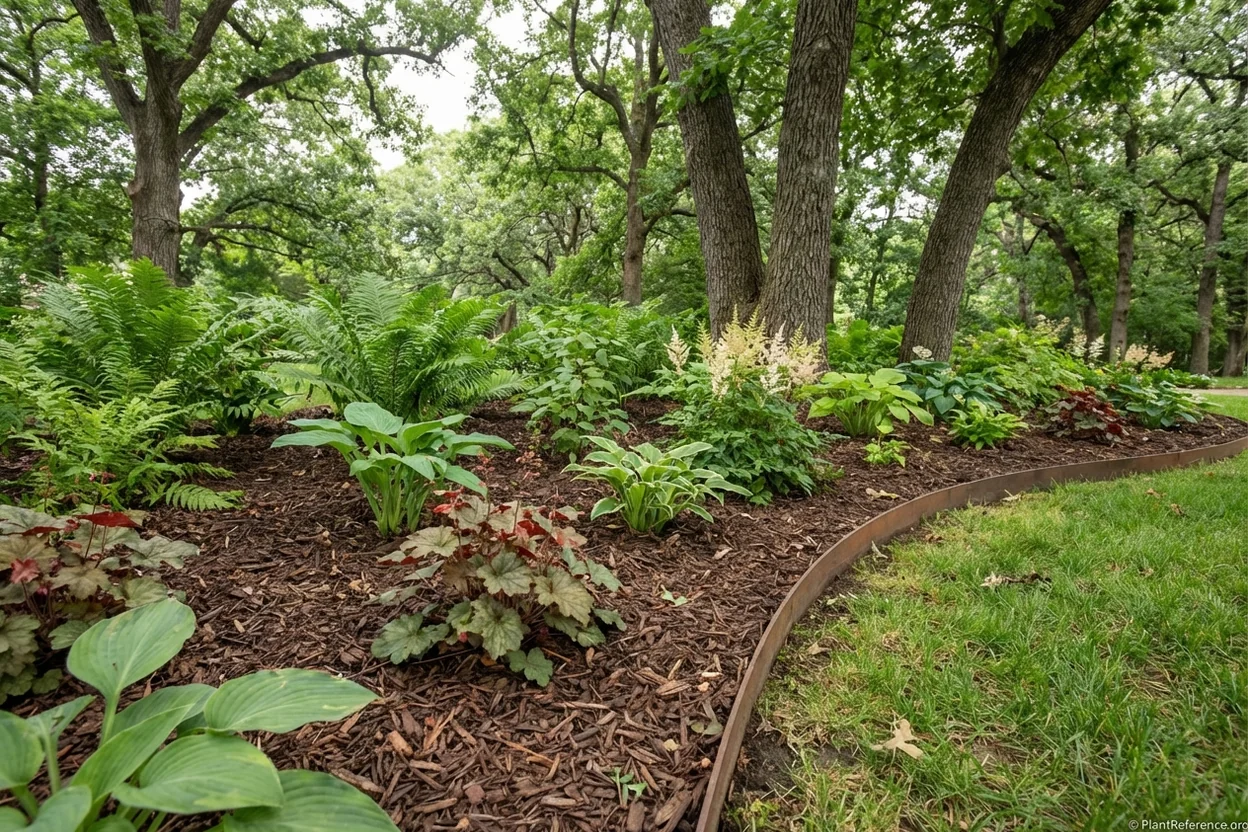
Sometimes the best lawn alternative is no plant at all. Converting problem lawn areas to mulch beds, garden beds, or hardscape eliminates maintenance entirely in spots where grass has repeatedly failed — under dense evergreens, in narrow shaded strips along the house foundation, or in compacted high-traffic zones.
How to Convert
Kill existing grass with sheet mulching (cardboard layer topped with 3-4 inches / 8-10 cm of wood mulch) rather than herbicide. The cardboard smothers the grass over 6-8 weeks while the mulch provides an immediate finished appearance. Plant shade-tolerant shrubs, perennials, or native groundcovers through the mulch if desired, or maintain as a simple mulch bed.
Design Integration
The key to making lawn-to-garden conversions look intentional rather than neglected is clean edges. Install steel or aluminum landscape edging between the mulch bed and remaining lawn for a crisp transition. Curved bed lines look more natural than straight ones. A well-edged mulch bed under a tree looks like a designed landscape feature; an unedged bare patch looks like a dead zone. How to Fix Bare Spots in Your Lawn Fast
Alternative | Mowing | Fertilizer | Irrigation | Traffic Tolerance | Sun Requirement |
|---|---|---|---|---|---|
White clover (with grass) | Weekly (or every 2-3 weeks) | None needed | Low | Moderate-high | Full sun to partial shade |
Creeping thyme | 1-2x per year (optional) | None | None after year 1 | Light-moderate | Full sun only |
Fine fescue no-mow | 3-4x per season | None (performs worse with N) | Minimal | Low | Sun to partial shade |
Native sedge | 1-2x per year | None | None after year 1 | Low-moderate | Shade to partial sun |
Mulch/garden bed | None | None | Varies by plants | N/A | Any |
Cool-Season vs Warm-Season Grass: Which Type Fits Your Lawn?
Frequently Asked Questions
Reading about plants and recognising them are different skills. These three build the second.
- Daily PlantIdentify the day’s mystery plant from a close-up photograph.
- Keyed OutWork a dichotomous key, lead by lead, to name a hidden specimen.
- Name That PlantName a specimen from botanical clues dealt hardest first.
Free to play, no account needed
Tagged with
James is a lawn care professional in Dallas who runs a small residential maintenance company. He started mowing lawns as a teenager and worked his way up to running crews for a large landscaping firm before going out on his own. James specializes in warm-season turf grasses—Bermuda, St. Augustine, and Zoysia—and knows how to keep a lawn alive through Texas summers without wasting water. He's also experienced with the transition zone challenges that Dallas faces, where warm-season and cool-season grasses overlap. James takes a practical, science-informed approach to lawn care and pushes back on the idea that a good lawn requires heavy chemical inputs.