Trifolium, Genus, repens, Species,
- Genus & species
white clover
Europe and western Asia; lawns, pastures, parks, roadsides, and meadows from sea level to approximately 10,000 feet (3,000 m).
Overview
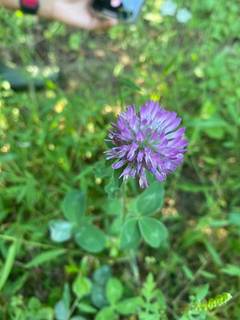
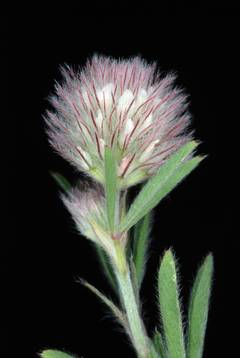
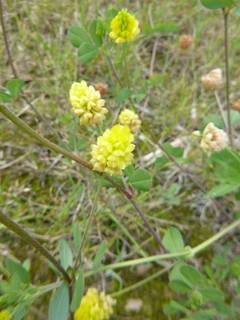
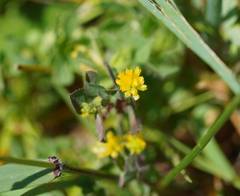
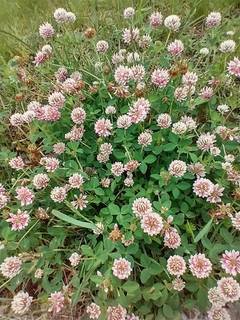
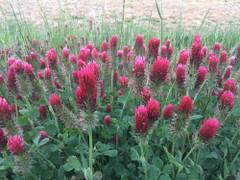
Trifolium repens is a prostrate stoloniferous perennial reaching 2-8 inches (5-20 cm) tall and 12-36 inches (30-90 cm) wide, forming dense creeping mats via stolons that root at every node. Stems are prostrate and smooth, rooting at the nodes, with erect petioles and flower peduncles arising from the stolon nodes. Leaves are trifoliate, with round to obovate leaflets 0.3-0.8 inch (8-20 mm) long, smooth, each usually bearing a pale V-shaped or chevron marking. Petioles are 2-6 inches (5-15 cm) long. Flower heads are globose, 0.6-1 inch (15-25 mm) in diameter, held on long peduncles 2-8 inches (5-20 cm) tall that rise well above the foliage, a key separation from T. pratense, whose heads sit among the leaves. Each head is composed of 20-80 white to pinkish papilionaceous florets; individual florets turn brown and reflex downward after pollination, so a given head carries a mix of upright white fresh florets and downturned brown spent florets through the bloom period. Fruit is a small pod containing 3-4 seeds, enclosed within the persistent calyx. Plants form the standard legume-Rhizobium root-nodule symbiosis and fix atmospheric nitrogen, which supports growth on low-nitrogen soils that limit grass establishment. A single plant produces 1,000-5,000 seeds per year. The stoloniferous habit drives rapid lateral spread: a single stolon extends 6-12 inches (15-30 cm) per growing season and roots at every node. Plants are widespread in lawns, pastures, parks, and meadows worldwide, both as a weed in turf and as an intentional component of clover seed mixes, clover lawns, and living mulches. Hardy in USDA zones 3-10 (-40°F / -40°C). Non-toxic.
Native Range
Trifolium repens is native to Europe and western Asia, where it grows in lawns, pastures, parks, roadsides, and meadows from sea level to approximately 10,000 feet (3,000 m). The species has naturalized across all 50 U.S. states and all Canadian provinces and is widespread in Pacific Northwest lawns, pastures, and low-maintenance turf, where it is simultaneously a volunteer weed and an intentionally seeded component in many modern lawn management systems.Suggested Uses
The species is used in Fabaceae identification courses for the trifoliate leaf, the papilionaceous flower structure, and root-nodule nitrogen fixation through Rhizobium symbiosis. The sessile-versus-pedunculate flower head comparison between T. pratense and T. repens is a standard exercise, and the shorter corolla tube with honeybee accessibility (versus the bumblebee-dependent T. pratense) is a teaching point in pollination biology. The species is used in clover lawns, living mulches, cover cropping, and regenerative agriculture for nitrogen fixation, weed suppression between rows, and pollinator support. White clover is a primary early-season and midsummer nectar source for honeybees, and commercial white clover honey is a recognized varietal.How to Identify
Appearance
Size & Dimensions
Height2" - 8"
Width/Spread1' - 3'
Bloom Information
Globose white-to-pinkish flower heads 0.6-1 inch (15-25 mm) in diameter open continuously from May through October, with a total bloom span of 12-16 weeks and peak bloom in the Pacific Northwest in June through August. Individual florets in each head are pollinated primarily by honeybees and bumblebees, and the corolla tube of 5-6 mm (shorter than the 9-10 mm tube of T. pratense) is within reach of honeybee tongues, which gives honeybees routine access to the nectar that T. pratense reserves for longer-tongued bumblebees. Individual florets reflex downward and turn brown after pollination, and each head carries a mix of upright fresh florets and downturned spent florets through the bloom.
Detailed Descriptions
Flower Description
White to pinkish; globose flower heads 0.6-1 inch (15-25 mm) in diameter composed of 20-80 papilionaceous florets, held on long peduncles 2-8 inches (5-20 cm) tall that rise well above the foliageFoliage Description
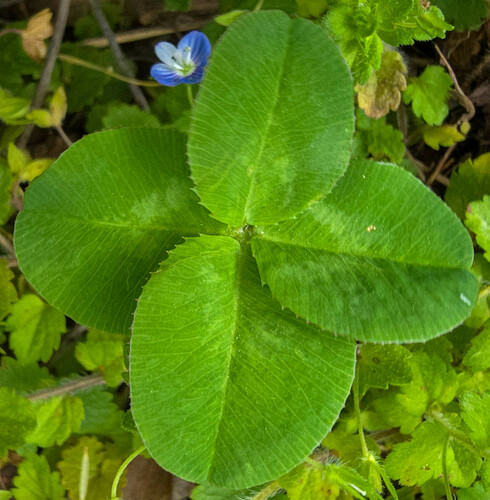
Medium green; trifoliate with round to obovate smooth leaflets 0.3-0.8 inch (8-20 mm) long, each usually carrying a pale V-shaped or chevron marking on the upper surface; petioles 2-6 inches (5-15 cm) long rising from prostrate stolon nodesGrowing Conditions
Sun Requirements
Requires 4-10 hours of direct sunlight daily
• Full Sun: 6+ hours of direct sunlight
• Partial Shade: 3-6 hours of direct sunlight
• Full Shade: Less than 3 hours of direct sunlight