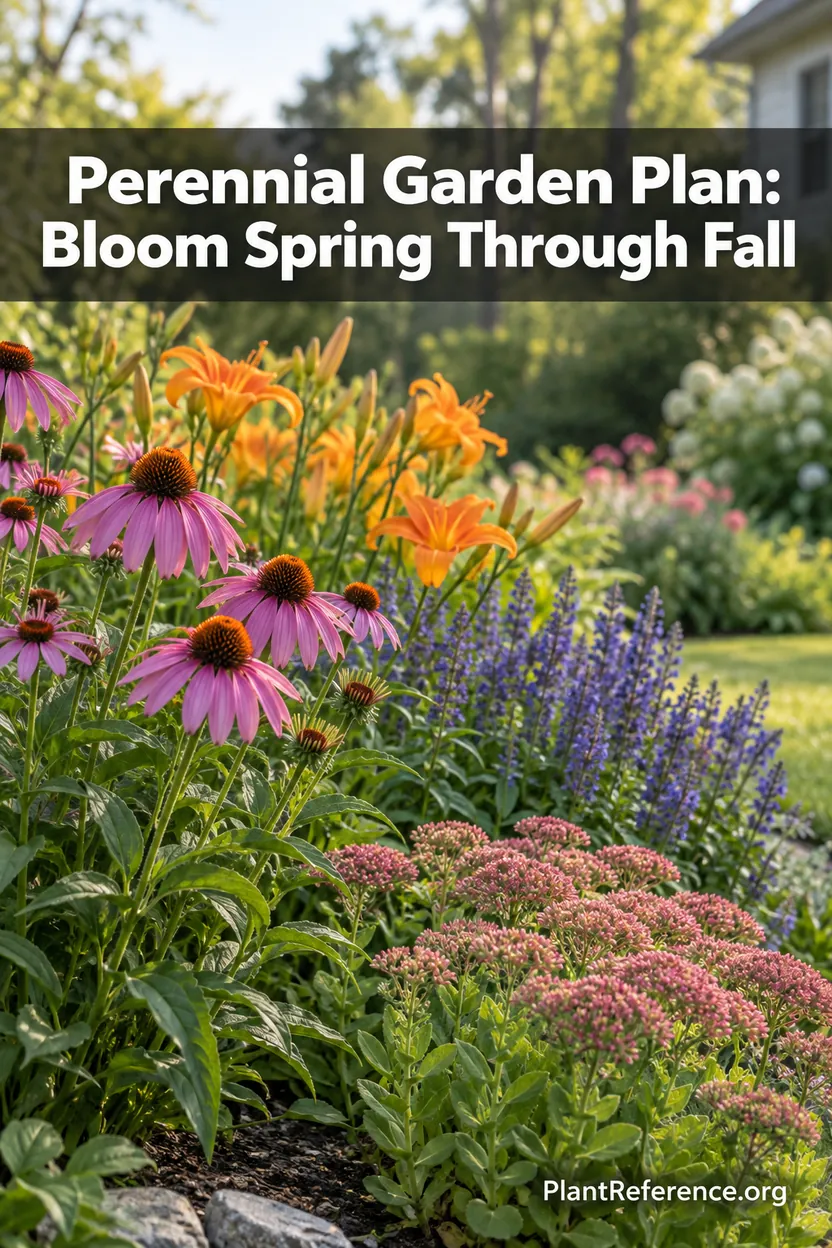
Plan a Perennial Garden That Blooms Spring to Fall
Pets & Toxicity
Recorded toxicity for plants linked in this guide. An unknown status is not a safety assessment.
Hemerocallis 'Stella de Oro' — Toxicity Warning
Toxic to petsView Hemerocallis 'Stella de Oro' plant profile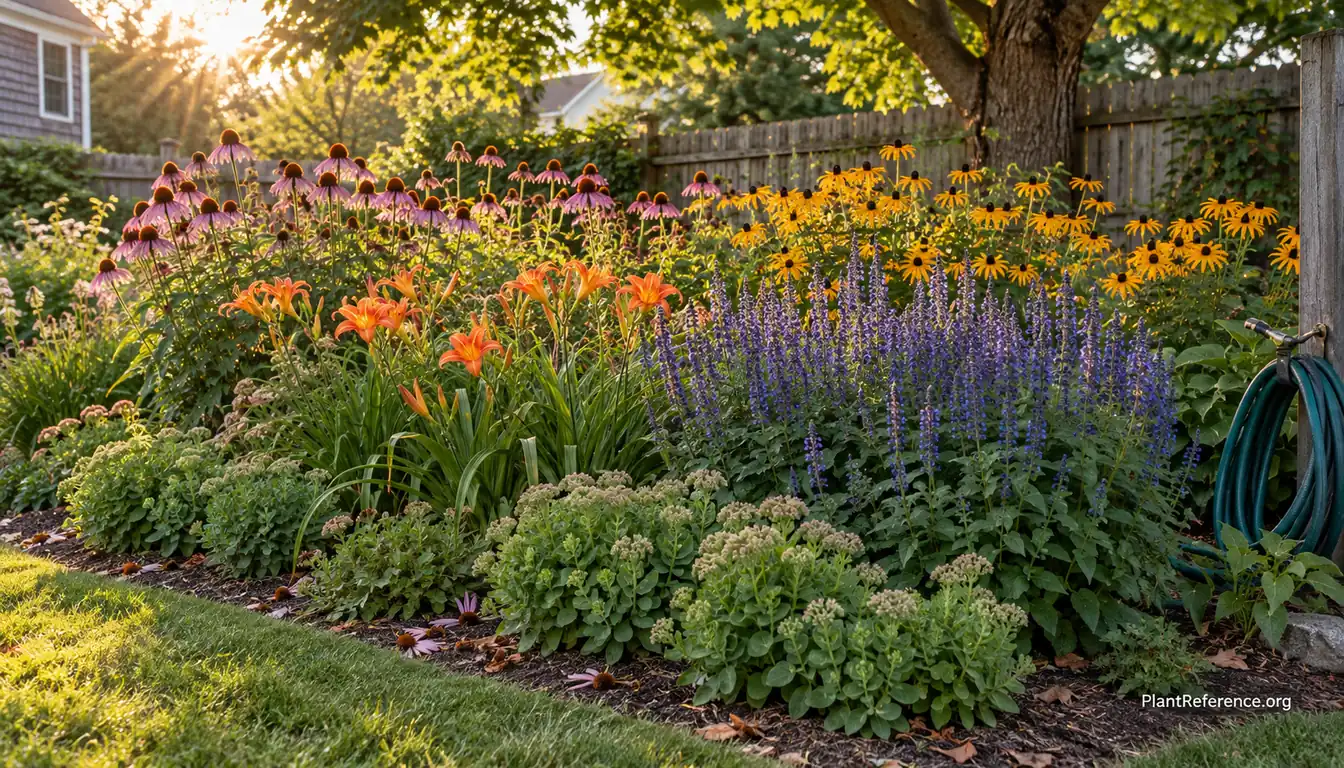
— Image © PlantReference.org 2026
A perennial garden plan built for spring through fall bloom isn't about buying the prettiest plants at the nursery in May. It's about time. The whole trick is choosing species whose bloom windows overlap just enough that as one plant fades, the next is already opening. Get that sequence right and the garden runs itself for years. Get it wrong and you end up with a burst of color in June and a green nothing by August.
How Continuous-Bloom Planning Actually Works
A garden that only looks good from June through September isn't really designed—it's just planted. The bones of a good perennial garden show up when you map the whole season out on paper before you dig a single hole.
The core concept is bloom succession: deliberately layering plants so that early, mid, and late bloomers hand off to one another. The North American perennial palette breaks roughly into five bloom windows—early spring, late spring, early summer, late summer, and fall. Your job as the planner is to make sure every one of those windows has at least two or three species carrying color.
The reason this matters more with perennials than annuals comes down to how these plants live. Perennials are a permanent framework. Unlike annuals, which you rip out and replace every year, backbone perennials return and expand, offering increasing biological and aesthetic returns over time. A daylily clump you plant this spring will be three times the size in four years. That permanence is the payoff, but it also means your mistakes are permanent too—so the planning stage is where the real work happens.
Early spring: creeping phlox, candytuft, Lenten rose, plus spring bulbs like daffodils and crocus
Late spring: peonies, bearded iris, bleeding heart, astilbe
Early summer: daylilies, salvia, lavender, Siberian iris
Late summer: coneflowers, black-eyed Susans, Russian sage
Fall: sedum, asters, Japanese anemone
Think of these five windows as relay legs. If any leg is missing a runner, the garden goes quiet for two or three weeks—and in a small yard, that gap is exactly when you're outside wanting something to look at.
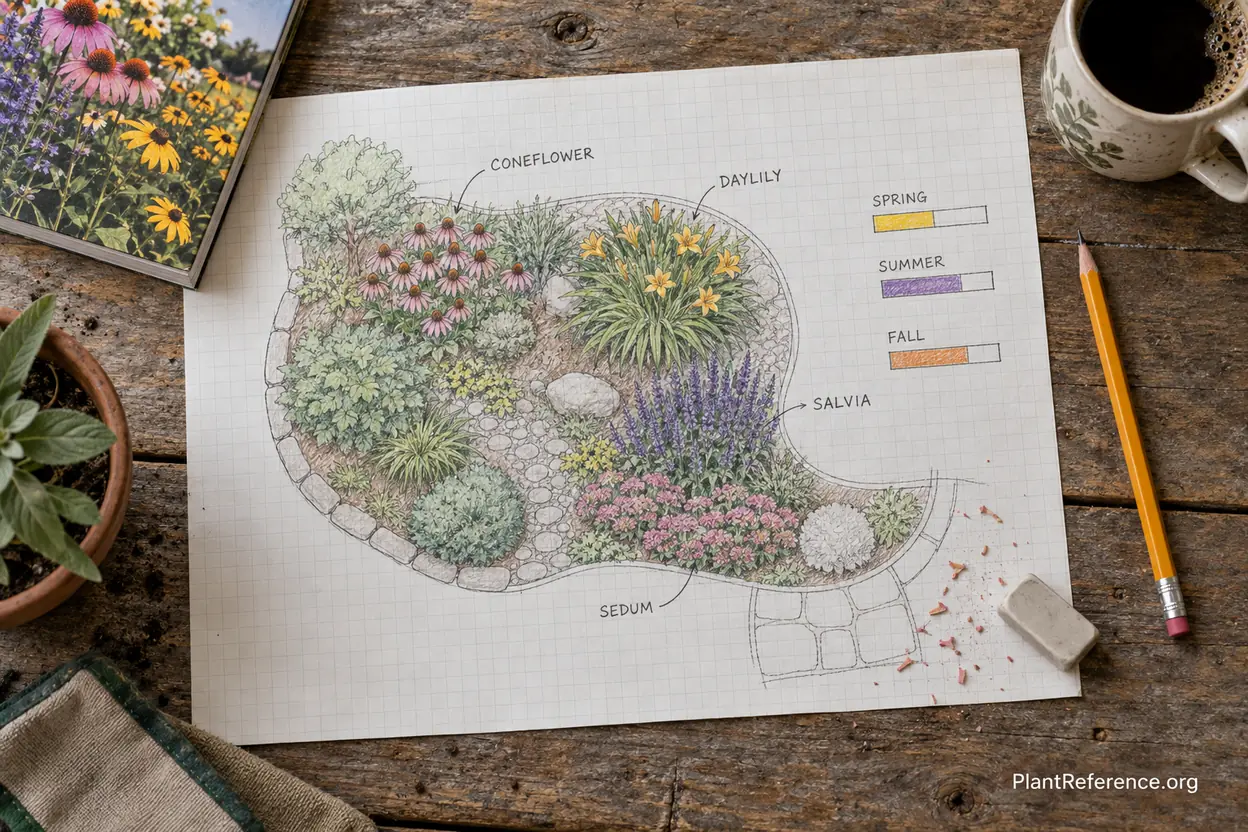
The Backbone Perennials Every Plan Needs
Before you get fancy, you build the frame. A handful of tough, reliable species do most of the heavy lifting in any continuous-bloom plan. These are the backbone perennials—selected not just for looks but for resilience, adaptability, and the ability to anchor a bed for decades.
Hemerocallis (hem-er-oh-KAL-iss), the daylily, is the versatile workhorse. It isn't a true lily; it grows from fleshy, tuberous roots that store water and nutrients, which makes it exceptionally drought-tolerant once established and content in almost any soil, including heavy clay. Each flower lasts only about 24 hours, but a mature clump throws up multiple scapes carrying dozens of buds that open in succession for weeks. Reblooming cultivars like 🌿Hemerocallis 'Stella de Oro' keep pushing new scapes from late spring until frost if you remove the spent ones.
Paeonia (pay-OH-nee-uh), the peony, is the long-lived aristocrat. Some clumps persist 50 to 100 years in the same spot, which makes correct placement critical—you're planting for a generation. Peonies bloom in mid-to-late spring with massive, often fragrant flowers, and they're cold-hardy enough to be legendary performers in Zone 3.
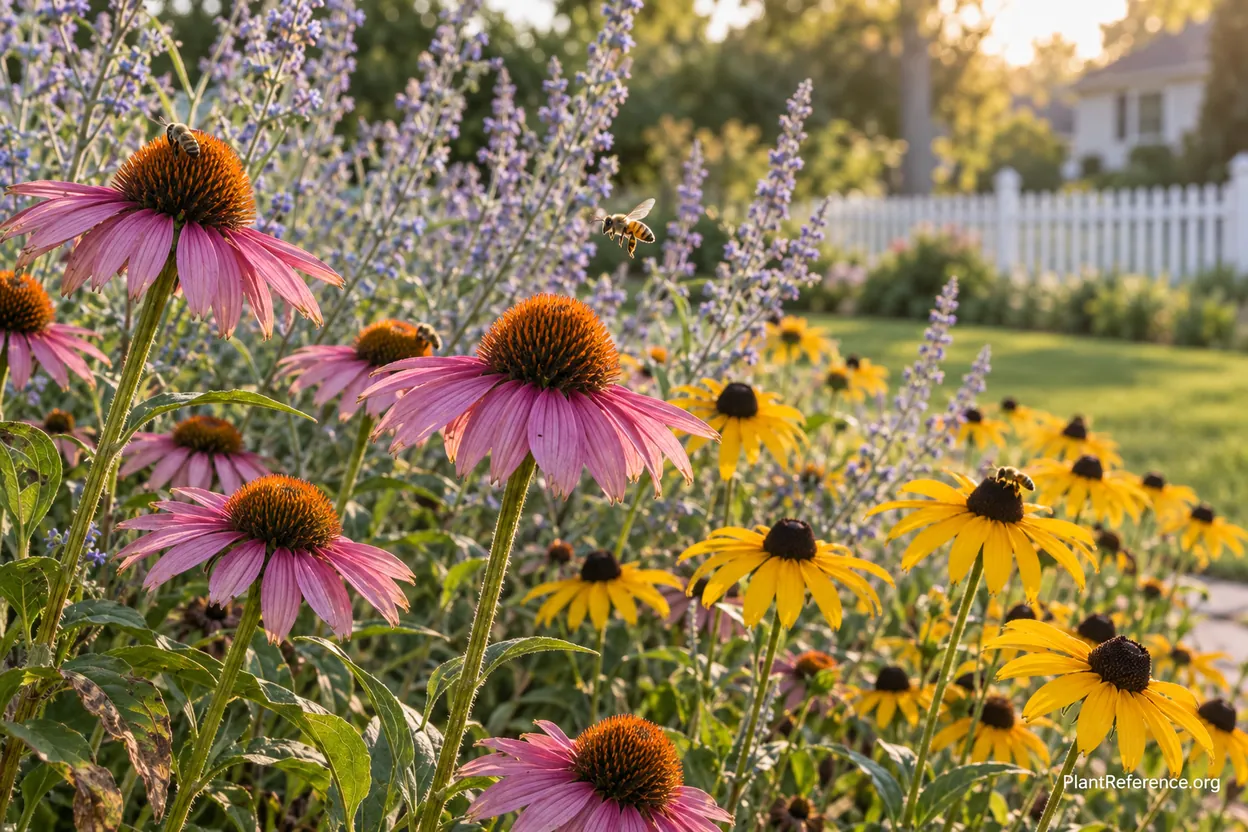
🌿Echinacea purpurea (ek-in-AY-shuh pur-PUR-ee-uh), the purple coneflower, carries the late-summer border. It has evolved deep, fibrous roots that punch through heavy soil and pull moisture during drought. Sturdy cultivars like 🌿Echinacea purpurea 'Magnus' produce three- to four-inch blooms on stems that rarely need staking, and the spiny seed heads feed finches and sparrows straight into winter.
Rudbeckia (rud-BEK-ee-uh), the black-eyed Susan, is the hallmark of the late-summer and fall garden. It's heat-tolerant, unfussy about soil, and its fuzzy stems naturally deter deer. 🌿Rudbeckia fulgida 'Goldsturm' is the reliable standard, blooming from mid-summer to fall in a two- to three-foot mound.
🌿Sedum spp. (SEE-dum), or stonecrop, closes the season. It's a succulent, storing water in thick leaves that shrug off drought and heat. Sedum 'Autumn Joy' provides structure and rose-pink color from late summer through the winter, when its dried heads catch snow. Round out the frame with 🌿Salvia spp. (SAL-vee-uh)—Salvia 'May Night' is among the first perennials to send up its purple spikes in early summer—and 🌿Hosta spp. (HOSS-tuh) for structural foliage in the shady corners.
Backbone Perennial | Bloom Window | USDA Zones | Why It Earns Its Spot |
|---|---|---|---|
Paeonia | Late spring | 3-8 | 50+ year lifespan, fragrant blooms, cold-legendary |
Salvia 'May Night' | Early summer | 4-8 | One of the first upright spikes; long-blooming |
Early summer to frost | 3-9 | Rebloomer, drought-proof, thrives in clay | |
Mid-to-late summer | 3-9 | No staking, feeds pollinators, winter seed heads | |
Mid-summer to fall | 3-9 | Heat-tolerant, deer-resistant, profuse bloom | |
Sedum 'Autumn Joy' | Late summer to winter | 3-9 | Fall color, standing winter structure |
Building Your Season-by-Season Bloom Map
Once you know your backbone species, you lay them out across the calendar. This is the part most people skip, and it's exactly why so many gardens peak in June and stall by August.
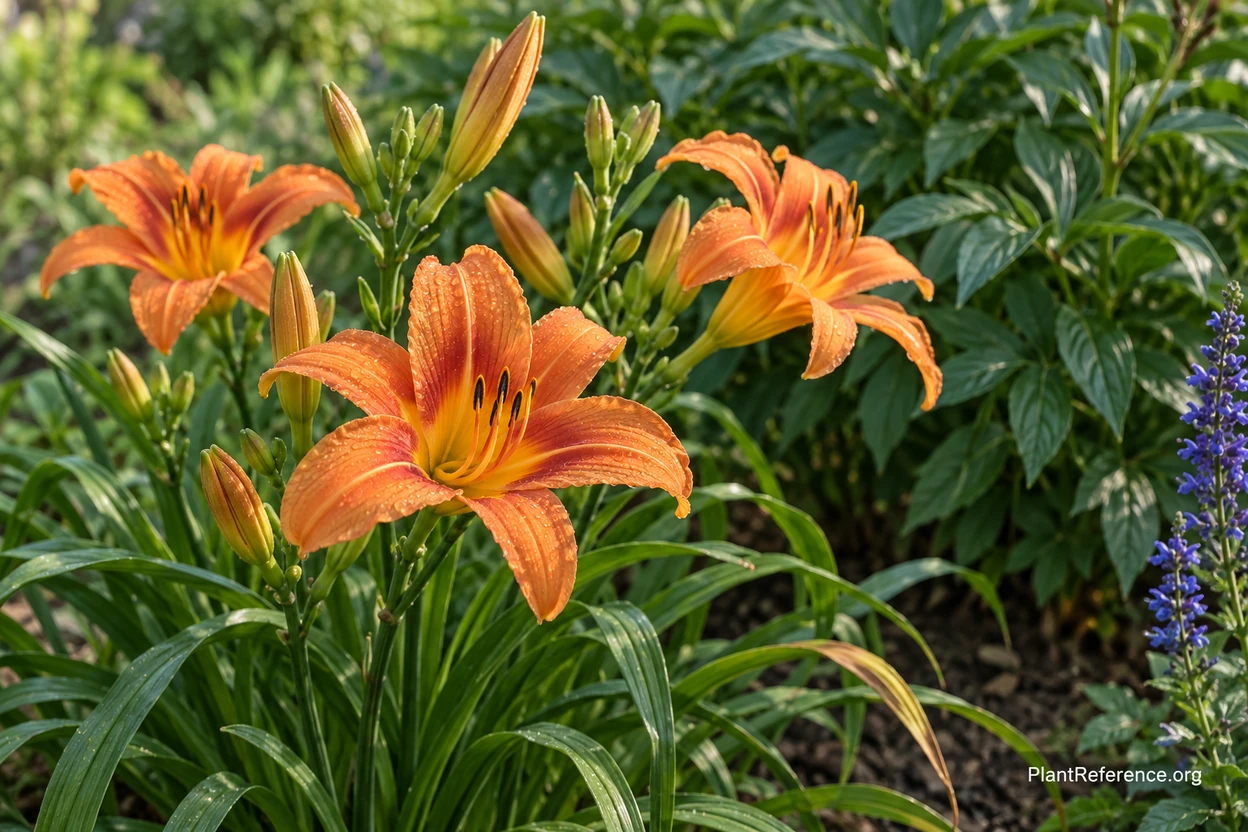
Start with a simple sketch of your bed on graph paper, then assign plants to bloom windows rather than to spots. Work through the five windows in order and make sure each one has coverage before you worry about the specifics of placement. Best Soil Mix for Raised Beds: Creating the Perfect Growing Medium
Early and Late Spring
Spring belongs to the bulbs and the early risers. Underplant with daffodils and crocus for the first color, then let Paeonia and bearded iris (🌿Iris germanica) take over in mid-to-late spring. Astilbe fills the shady spring gaps with feathery plumes. A smart move here: position daylilies and hostas near your spring bulbs so their emerging foliage masks the yellowing bulb leaves as they go dormant.
Early Summer
This is where Hemerocallis and Salvia 'May Night' carry the show, joined by lavender and Siberian iris (🌿Iris sibirica), whose grass-like foliage stays attractive long after the flowers fade. Early summer is usually the easiest window to fill—the danger is overloading it and leaving late summer bare.
Late Summer and Fall
The late-season gap is where most plans fall apart, so weight your selections here. 🌿Echinacea purpurea 'Magnus' and 🌿Rudbeckia fulgida 'Goldsturm' anchor late summer alongside Russian sage. Then Sedum 'Autumn Joy', asters, and Japanese anemone carry you to frost. Leave the coneflower and sedum heads standing—they read as intentional structure and feed the birds. Winter Tree Identification: Bark, Buds & Branching
Designing for Light, Soil, and Structure
A bloom map only works if each plant is standing where it can actually thrive. This is where a lot of otherwise good plans quietly fail—people put a sun-lover in shade and blame themselves when it sulks.
Read Your Light First
Spend a day watching where the sun lands. Full-sun beds (six-plus hours) are home to coneflowers, daylilies, salvia, lavender, and sedum. Shade-dominated beds belong to 🌿Hosta spp., astilbe, and Lenten rose. Hostas earn their keep here with intense blue-greens, chartreuse, and variegated foliage that few other perennials can match—Hosta 'Halcyon' brings heavy-textured blue leaves to a dim corner. In hotter zones, plants that are part-sun up north need full shade to avoid scorching. Best Grass Seed for Shade Under Trees: 5 Species That Actually Work
Match Plants to Your Soil and Drainage
Drainage is the quiet killer. Lavender demands full sun and sharp drainage; it rots in heavy clay or humid air. Astilbe is the opposite—it will scorch and die if the soil dries out. Sedum wants it lean and dry; astilbe and hosta want it evenly moist. Grouping plants with matching moisture needs is the single most important design decision after light. If your native soil is heavy, amend it hard with compost, or build up. Poor Drainage in Raised Beds: Causes and Fixes for Waterlogged Soil Raised Bed Soil pH Problems: Testing, Adjusting, and Maintaining Balance
Layer by Height
Structure comes from stacking. Put the tall players—coneflowers, black-eyed Susans, Russian sage at two to four feet (60-120 cm)—at the back or center. Mid-height daylilies and salvia at eighteen to twenty-four inches (45-60 cm) form the body. Low edgers like Sedum 'Autumn Joy' and creeping phlox at six to twelve inches (15-30 cm) finish the front. This tiering means every plant is visible and the bed reads as full rather than flat. Best Soil for Raised Beds: 6 Commercial Mixes Tested and Compared
Companion Pairings and Winter Interest
Once the frame is set, companion planting is what turns a collection of plants into a garden. The idea is grouping species that share cultural needs or actively help one another.
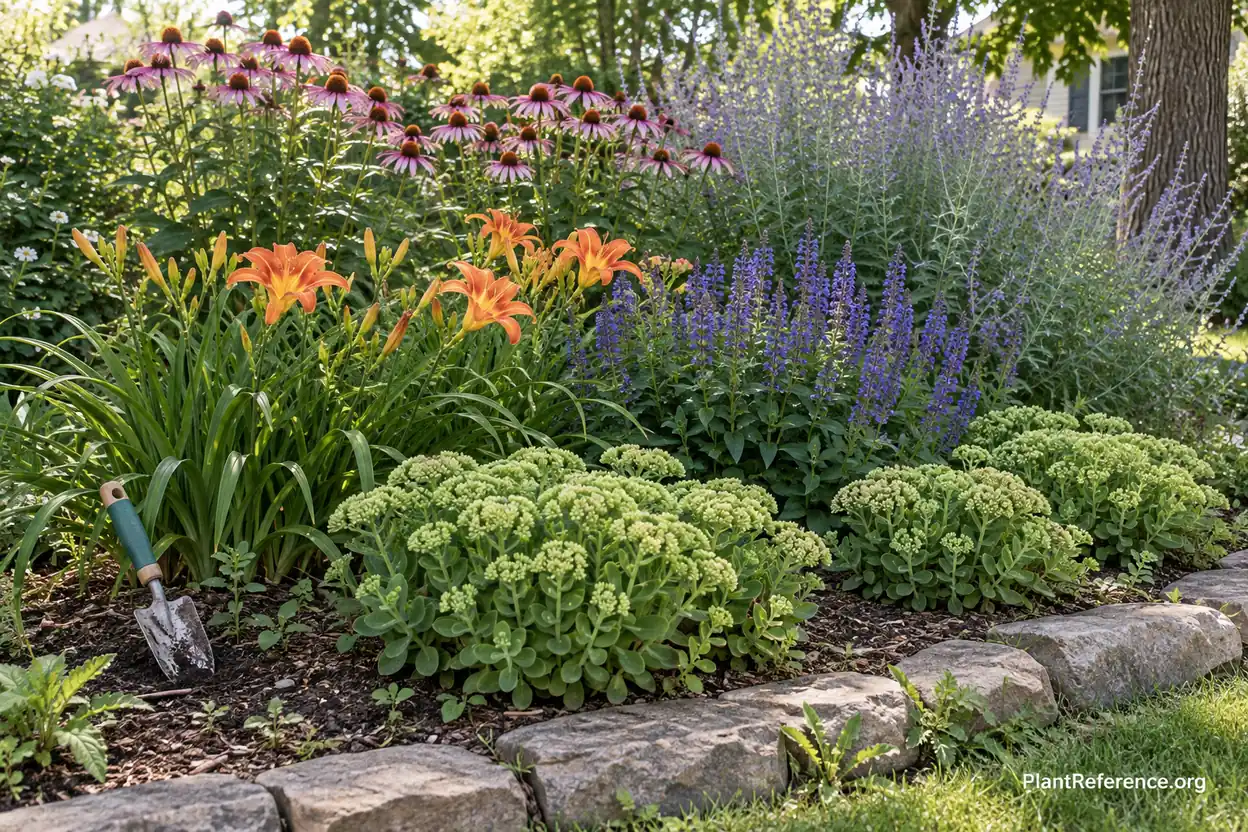
Textural echoing is the easy win: set the bold, corrugated leaves of a 🌿Hosta spp. against the lacy foliage of a fern or astilbe and both look better for the contrast. For pollinators, pair 🌿Echinacea purpurea with bee balm (🌿Monarda spp.) or milkweed (🌿Asclepias spp.) to build a high-performance station that pulls in bees, butterflies, and hummingbirds at once.
There's a defensive angle too. Deer herbivory is a real limiting factor, and no plant is fully deer-proof, but the aromatic mint-family plants—lavender, salvia, Russian sage, catmint—are generally left alone. Planting a fragrant buffer of lavender or rosemary around a bed of daylilies helps mask the scent of the more palatable plants from foraging deer. Pacific Northwest Gardening Guide: Climate, Soil & Plant Selection
Design the Winter Garden Too
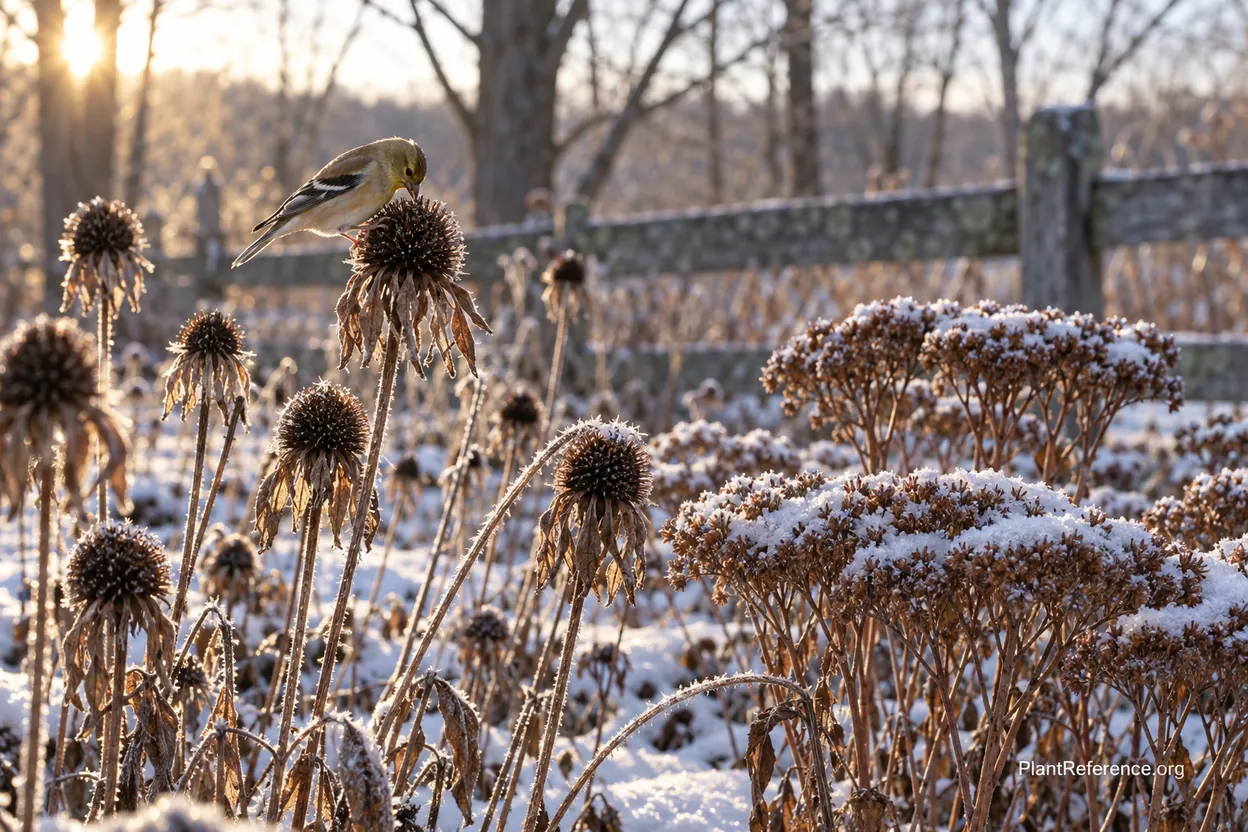
The bones of a good garden show in winter: interesting seed heads, standing stalks, evergreen structure. The modern approach to winterizing favors leaving many perennials standing rather than cutting everything to the ground. Hollow stems shelter overwintering native bees, coneflower and rudbeckia cones feed goldfinches, and standing stalks catch snow—a far better insulator than bare soil against the freeze-thaw heaving that can push plants right out of the ground.
That said, some plants must come down in fall for sanitation. Cut peonies to two inches to prevent botrytis and powdery mildew spores from overwintering, cut hostas after frost to remove slug-egg hiding spots, and cut bearded iris to six inches to eliminate iris borer egg sites. Everything else can wait until spring temperatures hold in the 50s°F (10°C), giving overwintering pollinators time to emerge. Why Pacific Northwest Soil Is Acidic + How to Fix It
Maintaining the Plan Over Time
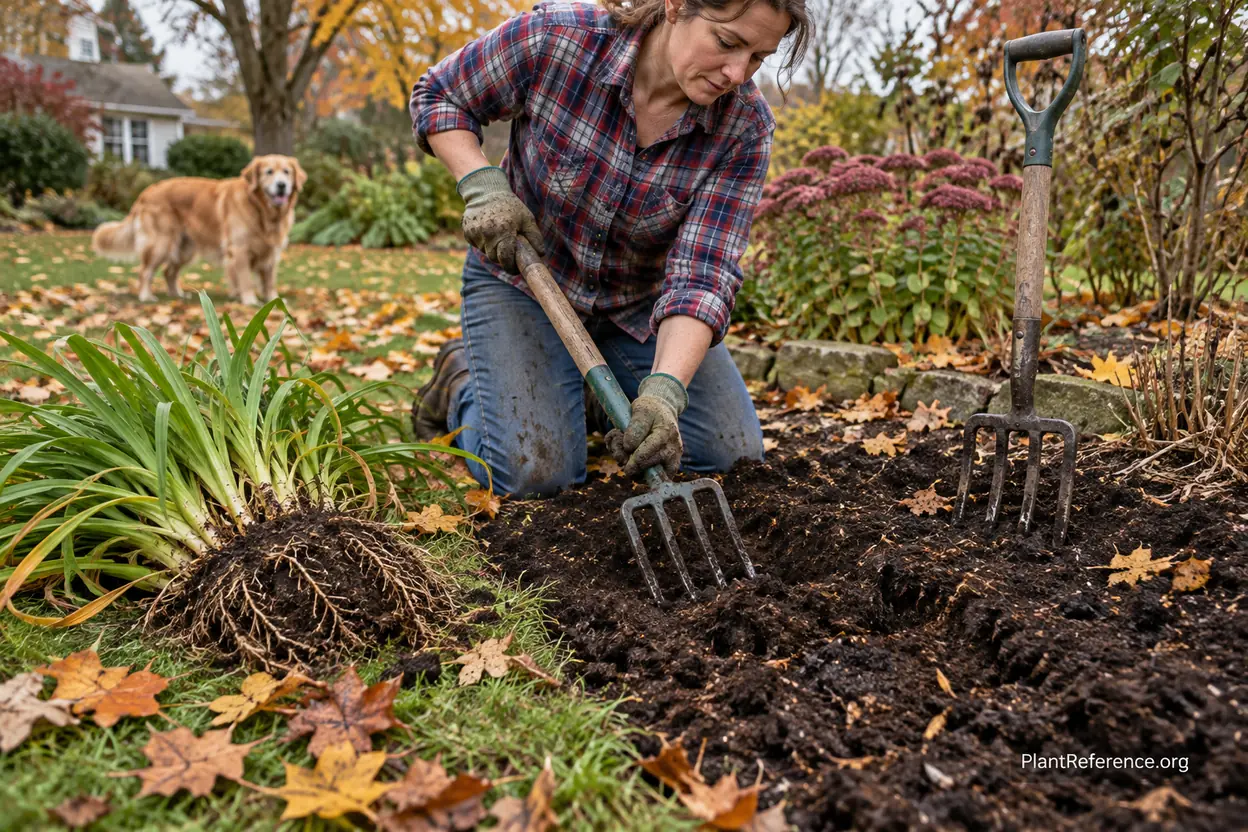
A perennial plan is a living system, not a one-time install. The clumps you plant will expand, crowd, and eventually need dividing—usually every three to five years—to stay vigorous. When you lift a clump for division, amend the open soil with compost before you replant. The rule of thumb: for every wheelbarrow of plant you pull out, work a wheelbarrow of compost back in. That replaces the organic matter and keeps the bed productive for the next several years.
Mulch is the other constant. Maintain a three- to four-inch (7.5-10 cm) layer for moisture and weed suppression, but never pile it against stems or crowns—that "mulch volcano" traps moisture and invites rot. And water deeply and infrequently rather than in daily sips; established perennials do best with a deep soak every seven to ten days in hot weather, which drives roots down instead of keeping them shallow. Raised Bed Soil Settling and Compaction: Prevention and Solutions
The beauty of a well-planned perennial garden is that it gets better while asking for less. The first year it establishes, the second it fills, and by the third it's doing exactly what you drew on that graph paper—handing color from one season to the next without a gap. That's the whole game: plan the time, and the plants take care of the rest.
Frequently Asked Questions
Reading about plants and recognising them are different skills. These three build the second.
- Daily PlantIdentify the day’s mystery plant from a close-up photograph.
- Keyed OutWork a dichotomous key, lead by lead, to name a hidden specimen.
- Name That PlantName a specimen from botanical clues dealt hardest first.
Free to play, no account needed
Tagged with
Kevin is a landscape contractor in the Boston area who specializes in cold-climate perennial gardens and hardscaping. He studied landscape design and worked at a prominent nursery on the North Shore before starting his own design-build firm. Kevin's gardens are built to handle New England weather—freeze-thaw cycles, nor'easters, late springs, and heavy snow loads. He's particularly interested in native perennials and shrubs that provide four-season interest without constant maintenance. Kevin writes about cold-hardy plant selection, winter garden structure, and building landscapes that look good even in February.