Best Low-Maintenance Perennials for Beginners: 10 Picks
Pets & Toxicity
Recorded toxicity for plants linked in this guide. An unknown status is not a safety assessment.
Toxic to pets: Stella de Oro daylily, Sarah Bernhardt peonyDetailsHide
Hemerocallis × 'Stella de Oro' — Toxicity Warning
Toxic to petsView Hemerocallis × 'Stella de Oro' plant profileGeranium macrorrhizum 'Ingwersen's Variety' — Toxicity
Non-toxicView Geranium macrorrhizum 'Ingwersen's Variety' plant profileHeuchera villosa 'Autumn Bride' — Toxicity
Non-toxicView Heuchera villosa 'Autumn Bride' plant profilePaeonia lactiflora 'Sarah Bernhardt' — Toxicity Warning
Toxic to pets and humansView Paeonia lactiflora 'Sarah Bernhardt' plant profile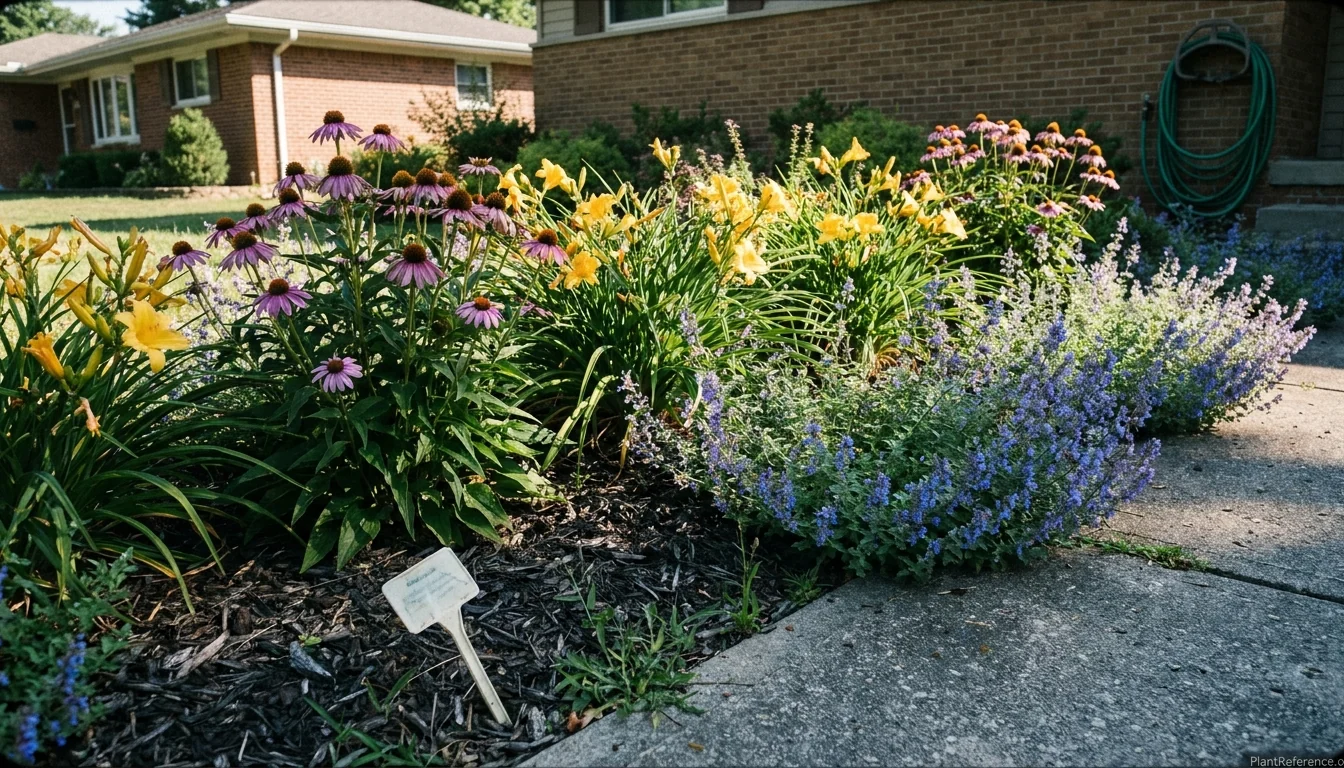
— Image © PlantReference.org 2026
Every spring, someone walks into the garden center and asks for plants that don't need any work. I tell them the same thing I'll tell you: there's no such thing as a no-maintenance perennial, but there's a big gap between plants that forgive mistakes and plants that punish them. The best low-maintenance perennials for beginners are the forgiving ones, and after thirty-odd years of watching customers succeed or fail with the rest, I've got a short list I stand behind.
What Actually Makes a Perennial Low-Maintenance
Low maintenance isn't a marketing category. It's a set of physical traits you can check for before you buy.
Storage roots. Fleshy or tuberous roots hold water and carry a plant through a dry week you forgot about.
Self-supporting stems. If a plant needs staking, it needs a gardener. Stiff stems under 3 feet (90 cm) rarely flop.
No deadheading requirement. Some plants bloom on schedule whether you cut the spent flowers or not.
Pest and disease resistance. A plant that never needs spraying is a plant you never have to think about.
Slow, clumping growth. Aggressive spreaders create more work than they save.
Notice what isn't on that list: drought tolerance in year one. Every perennial on earth needs regular water through its first season while roots move out of the nursery root ball into your soil. Tough plants earn their reputation in year two.
The 10 Easiest Perennials for Beginners
These ten are the plants I hand to first-time gardeners without a second thought. Zones cover most of the country, and every one of them is widely stocked, so you won't be chasing mail order.
Plant | Botanical Name | Zones | Light | Mature Size | Why It's Easy |
|---|---|---|---|---|---|
Daylily | 3-9 | Sun to part sun | 12 in (30 cm) | Tuberous roots, reblooms, no staking | |
Coneflower | 3-9 | Full sun | 3 ft (90 cm) | Deep taproot, stiff stems, feeds birds | |
Black-eyed Susan | 3-9 | Full sun | 2 ft (60 cm) | Blooms 8 weeks untouched | |
Sedum | Hylotelephium spectabile 'Autumn Joy' | 3-9 | Full sun | 2 ft (60 cm) | Succulent leaves, thrives on neglect |
Catmint | 3-8 | Full sun | 30 in (75 cm) | Deer-proof, one shearing per year | |
Hosta | Hosta 'Halcyon' | 3-9 | Shade to part shade | 18 in (45 cm) | Fills space, smothers weeds |
Bigroot geranium | 3-8 | Part shade | 12 in (30 cm) | Evergreen groundcover, never sprayed | |
Coral bells | 4-9 | Part shade | 2 ft (60 cm) | Heat-tolerant species type, no rot | |
Peony | 3-8 | Full sun | 3 ft (90 cm) | Lives 50+ years in one spot | |
Russian sage | Salvia yangii 'Blue Spire' | 4-9 | Full sun | 4 ft (120 cm) | Drought-proof, deer ignore it |
Five Full-Sun Workhorses
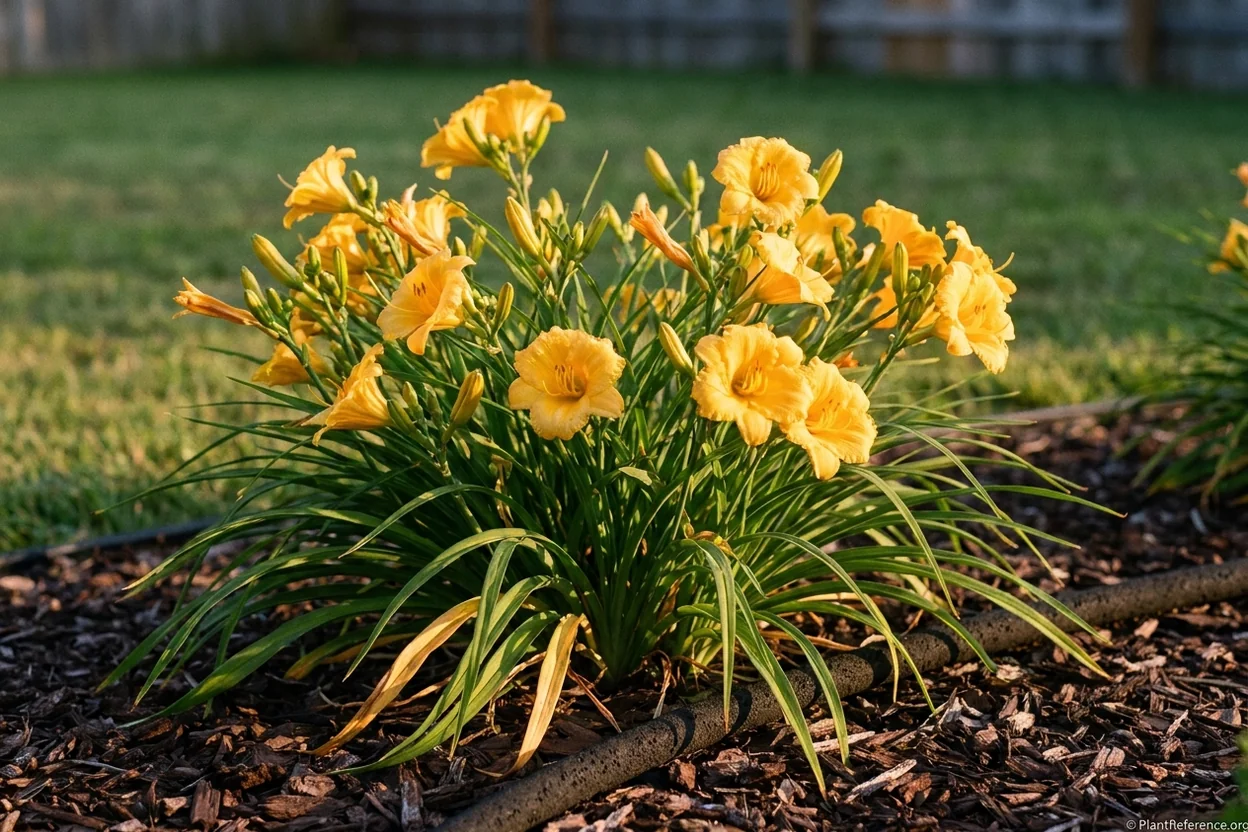
Daylilies, Hemerocallis (hem-er-oh-KAL-iss), earn top billing for one reason: they're nearly impossible to kill. Their fleshy tuberous roots store water and nutrients, which is why they shrug off both clay and drought. 🌿Hemerocallis 'Stella de Oro' reblooms from June until frost, and a mature clump crowds weeds out on its own. If yours quits flowering, the cause is almost always shade or overcrowding rather than anything you did wrong — Why Your Daylilies Stopped Blooming (And How to Fix It) walks through the diagnosis.
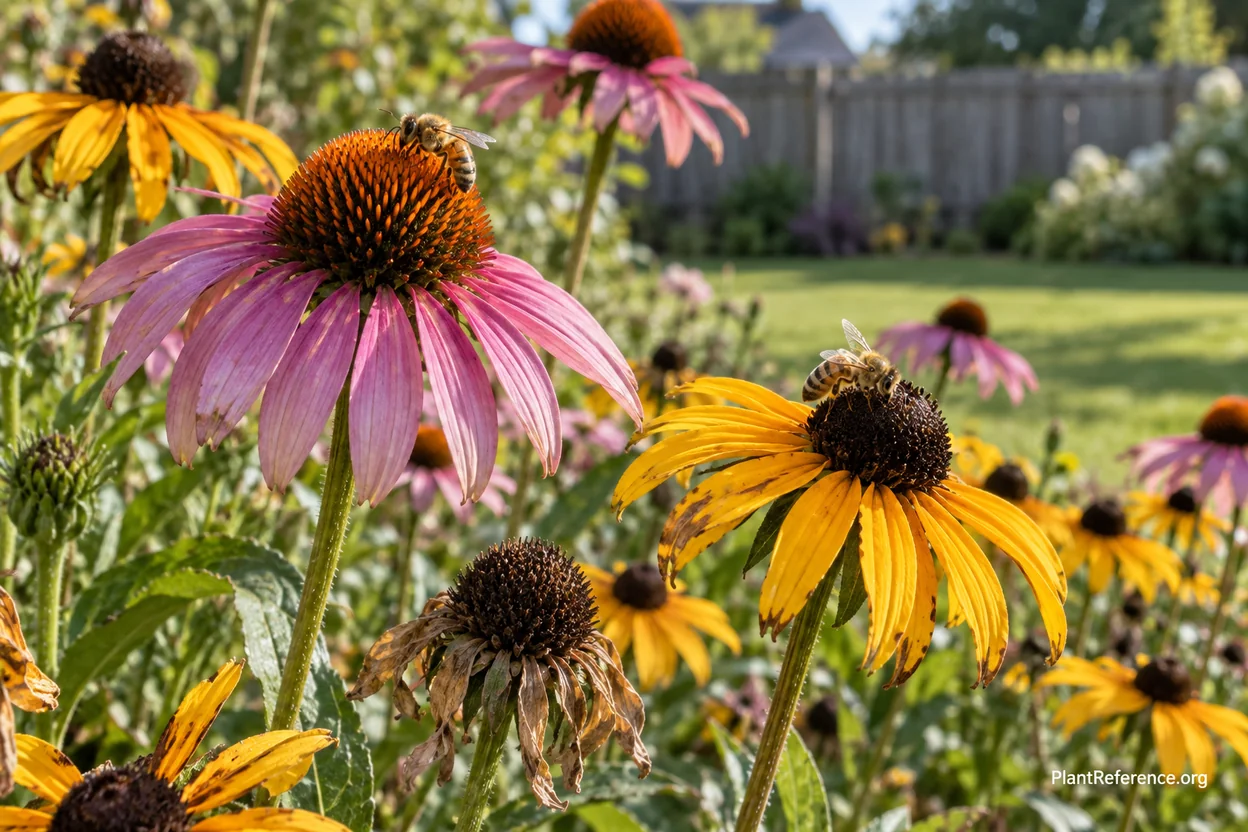
Coneflowers, 🌿Echinacea purpurea (ek-in-AY-shee-uh pur-PUR-ee-uh), send a taproot straight down into heavy soil and stay standing through summer thunderstorms. 🌿Echinacea purpurea 'Magnus' carries 3 to 4 inch (8-10 cm) blooms on stems that don't need staking. Leave the seedheads up over winter and goldfinches will work them through February. They're also one of the best pollinator plants you can buy, covered in How to Grow Coneflowers (Echinacea) That Feed Pollinators.
🌿Rudbeckia fulgida 'Goldsturm' is the black-eyed Susan customers keep coming back for. It blooms for eight weeks with no deadheading whatsoever, holds its color in August heat, and spreads slowly enough that you won't be pulling it out of the lawn.
Sedum has the shortest care list of anything I sell. Hylotelephium spectabile 'Autumn Joy' — still labeled as Sedum at most garden centers — stores water in succulent leaves and actively resents rich soil and extra fertilizer. Plant it in the driest, sunniest corner you've got.
Catmint, 🌿Nepeta racemosa (NEP-eh-tuh ras-eh-MOH-suh), gets one job per year: shear it back by half after the first flush of bloom and it flowers again into September. 🌿Nepeta racemosa 'Walker's Low' is aromatic enough that deer and rabbits walk past it, which makes it a good partner for anything on Deer-Resistant Perennials: A Zone-by-Zone Planting Guide.
Five Shade and Part-Shade Reliables
Shade beds are where beginners usually give up, and it's almost always because they picked the wrong plant. These four hold up.
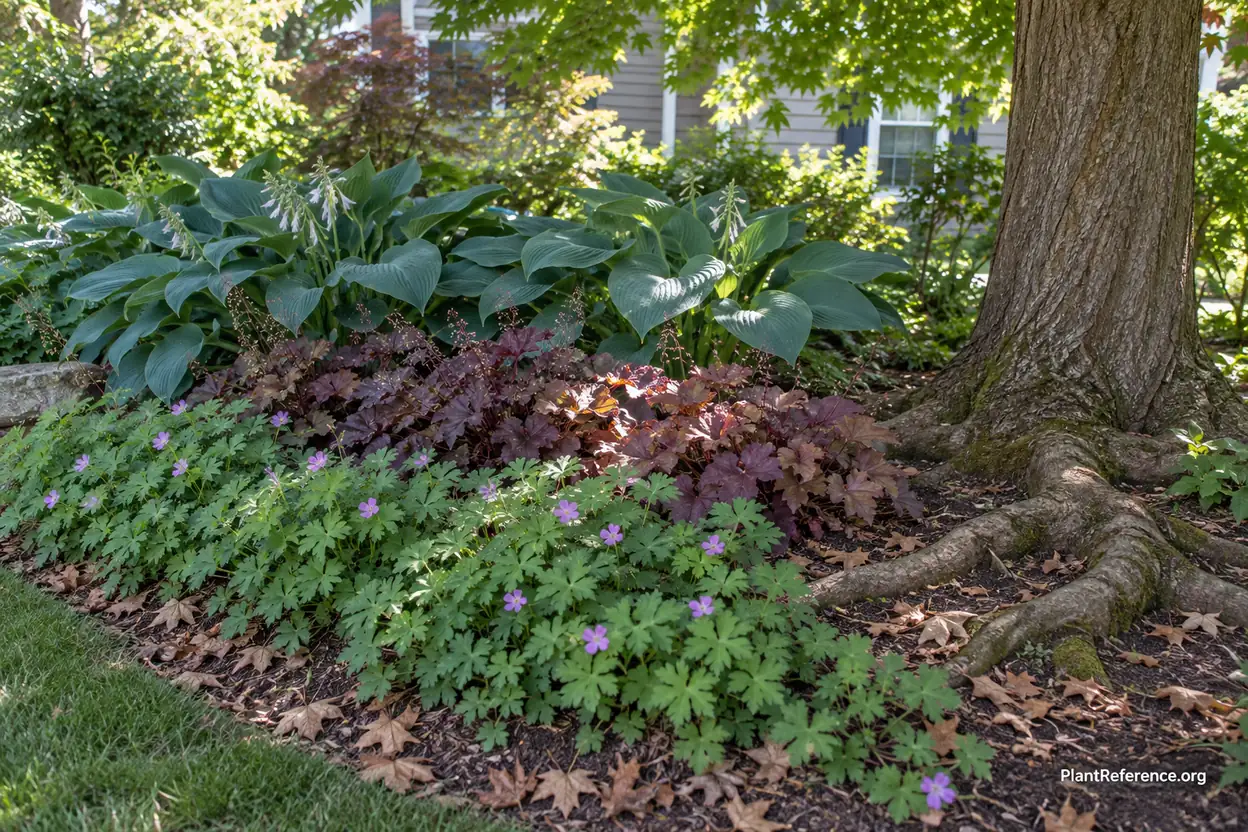
Hostas do the structural work. Hosta 'Halcyon' has heavy blue leaves thick enough that slugs struggle to chew them, and a mature plant covers enough ground to keep weeds down entirely. Slugs are the one recurring issue in damp climates, and How to Get Rid of Slugs on Hostas: What Works covers the controls worth using. For a wider selection, Best Perennials for Shade: 12 Species That Thrive and How to Grow Hostas: Varieties, Care & Pest Solutions are the places to start.
Bigroot geranium is the plant I wish more people knew about. 🌿Geranium macrorrhizum 'Ingwersen's Variety' forms a dense 12 inch (30 cm) mat under trees, holds semi-evergreen foliage through winter in mild zones, and I have never once seen it sprayed for anything. It handles dry shade, which almost nothing does.
Coral bells get a bad reputation because gardeners buy the wrong ones. The fancy colored hybrids heave out of the ground and rot in wet clay. 🌿Heuchera villosa 'Autumn Bride' descends from a heat- and humidity-tolerant native species and stays put for years.
Peonies belong on any beginner list because they ask for one correct decision and then nothing else. Plant 🌿Paeonia lactiflora 'Sarah Bernhardt' with its eyes no more than 2 inches (5 cm) below the soil surface, in full sun, and it will outlive you. Too deep is the single reason most peonies fail to flower — see How to Grow Peonies: Planting, Staking & 50-Year Blooms and Why Your Peonies Won't Bloom: The 5 Most Common Causes.
Russian sage rounds out the ten for hot, dry sites where nothing else cooperates. Salvia yangii 'Blue Spire' throws silvery stems and hazy blue flower spikes to 4 feet (120 cm) on almost no water once established.
How to Plant Them So They Stay Easy
Getting the first season right is the whole game. Do these five things and these plants will take care of themselves afterward.
Buy fewer, bigger plants. One 1-gallon (3.8 L) pot establishes faster and outcompetes weeds sooner than three 4-inch (10 cm) pots.
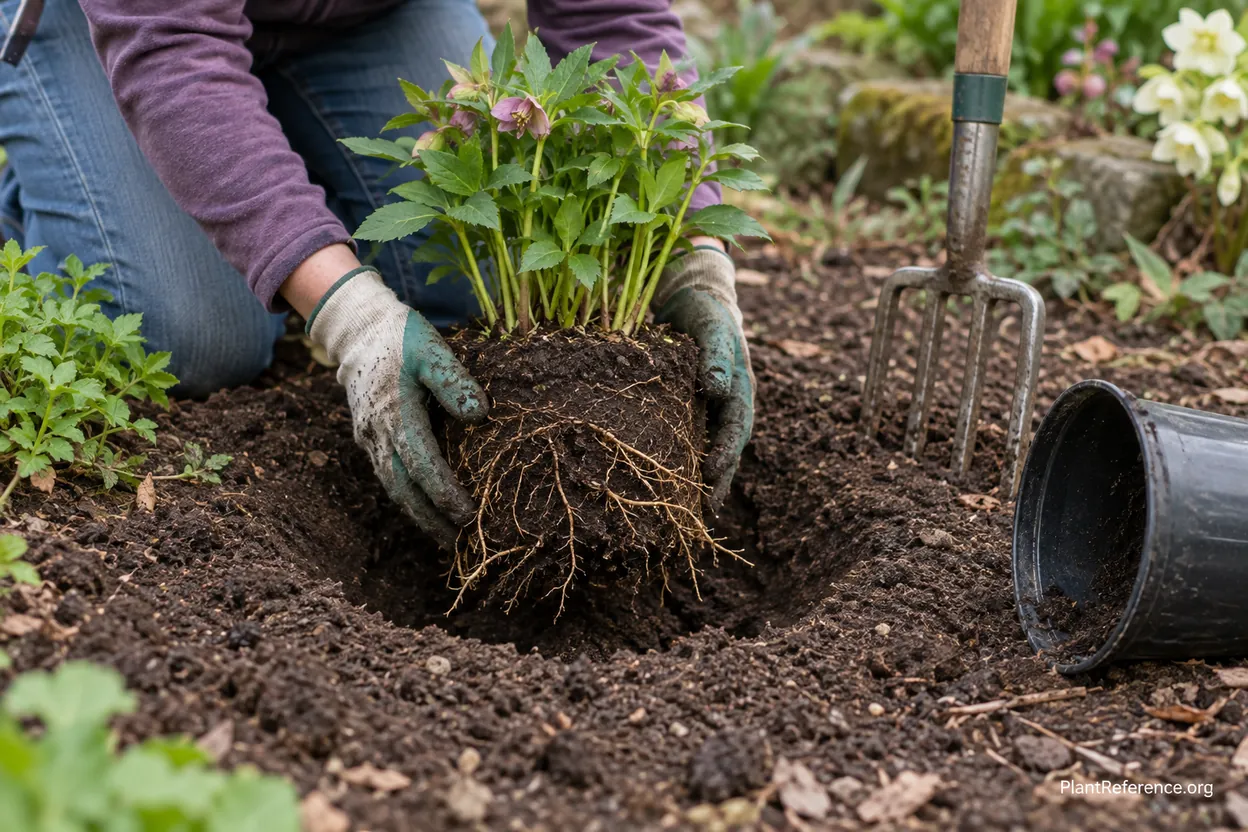
Dig the hole twice as wide as the root ball, no deeper. Perennials settle when you loosen soil beneath them, and settling buries crowns.
Tease the roots apart. Nursery plants come out pot-bound. Score the sides with your fingers or a knife so roots grow outward instead of circling.
Water deeply once a week, not daily. About 1 inch (2.5 cm) of water per week through the first growing season, delivered slowly, drives roots down.
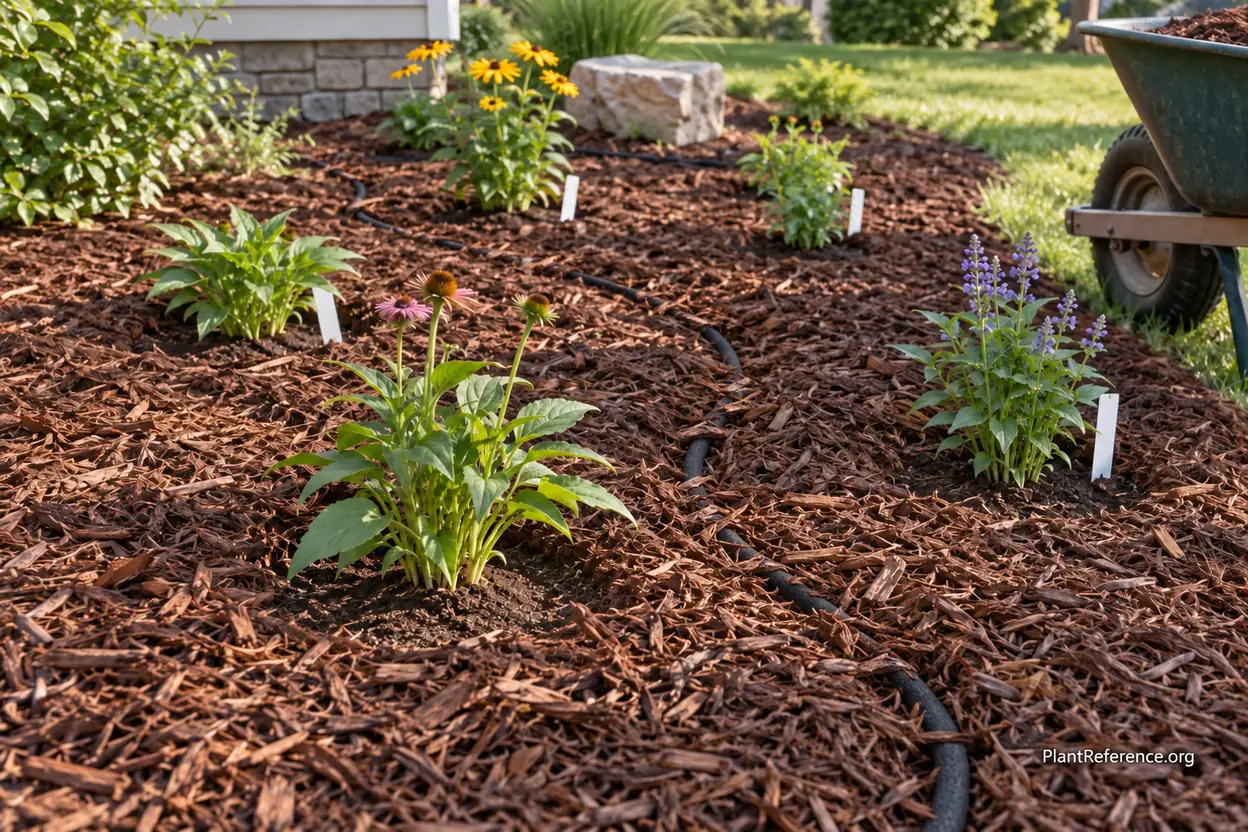
Mulch 2-3 inches (5-8 cm) deep, pulled back from the crown. Mulch touching stems traps moisture and invites rot.
Skip fertilizer entirely the first year. Most suburban soil already carries plenty of phosphorus, and pushing new transplants with nitrogen produces soft growth that flops. If you want to know what your soil actually needs, a $15 test through your county extension office beats guessing every time.
The Mistakes That Make Easy Plants Hard
Almost every failure I hear about traces back to one of four things.
Planting too close together. Nursery pots look small in an empty bed, so people crowd them. Three years later they're dividing everything. Space to the mature width on the tag, and fill the gaps with annuals while you wait. When crowding does happen, How to Divide Perennials: A Species-by-Species Guide explains the timing by species.
Overwatering established plants. Sedum, catmint and Russian sage all rot in soil that stays wet. After year one, water them only during genuine drought.
Cutting everything down in October. Some perennials need their foliage over winter, and some seedheads feed birds. When to Cut Back Perennials in Fall (And What to Leave) and How to Prepare Perennial Gardens for Winter by Species sort out which is which.
Buying one of everything. A bed with fifteen single plants looks like a collection, not a garden, and it's harder to maintain. Plant in groups of three or five. Perennial Combinations That Look Good Together and Plan a Perennial Garden That Blooms Spring to Fall show how the groupings work across a season.
Get those four right and this list of ten will run itself for a decade.
Every plant on this list is stocked at ordinary garden centers in spring and fall, and fall planting gives roots a head start while soil is still warm. Start with three species rather than ten, get through one full season, and add from there. That's how people end up with gardens they enjoy instead of chores they resent.
Frequently Asked Questions
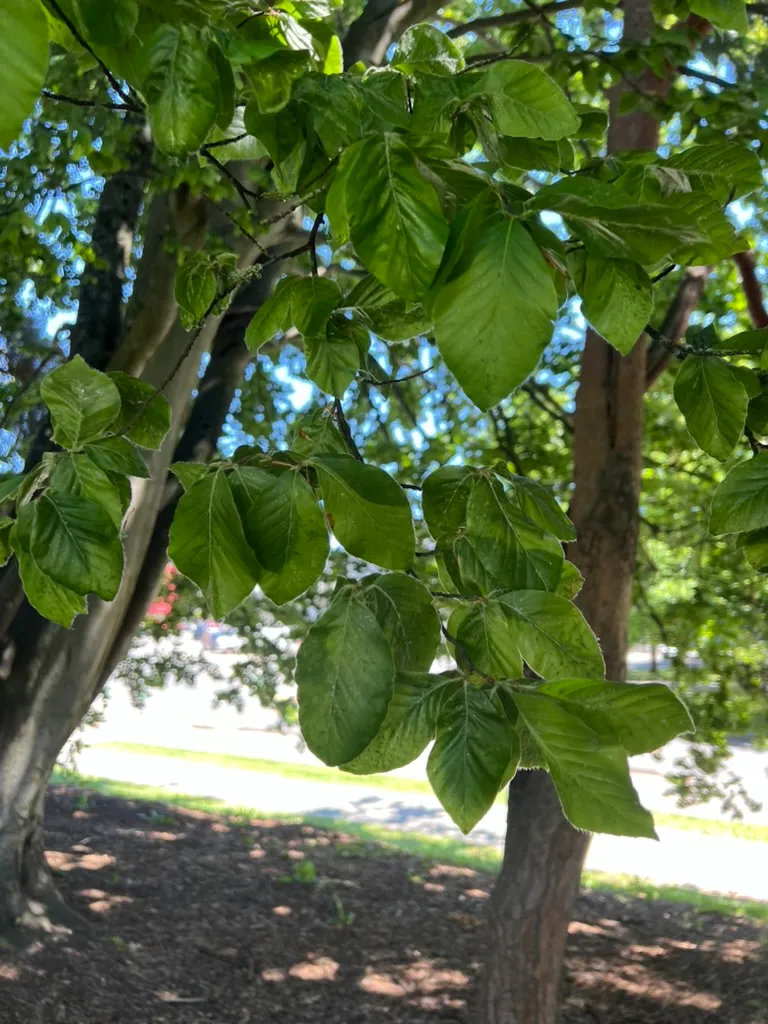
Reading about plants and recognising them are different skills. These three build the second.
- Daily PlantIdentify the day’s mystery plant from a close-up photograph.
- Keyed OutWork a dichotomous key, lead by lead, to name a hidden specimen.
- Name That PlantName a specimen from botanical clues dealt hardest first.
Free to play, no account needed
Tagged with
Bill is a third-generation nurseryman who runs a small family garden center on the outskirts of Kansas City. His grandfather started the business in the 1960s, and Bill took over after working as an ag teacher for a decade. He knows the plants that work in the Kansas City area better than anyone—he's grown most of them himself and watched customers succeed or fail with the rest. Bill specializes in trees and shrubs for the Midwest, perennial borders that handle the region's hot summers and cold winters, and helping customers make sensible choices rather than impulse buys. He writes the way he talks to customers: patient, knowledgeable, and honest about what's worth the money and what isn't.