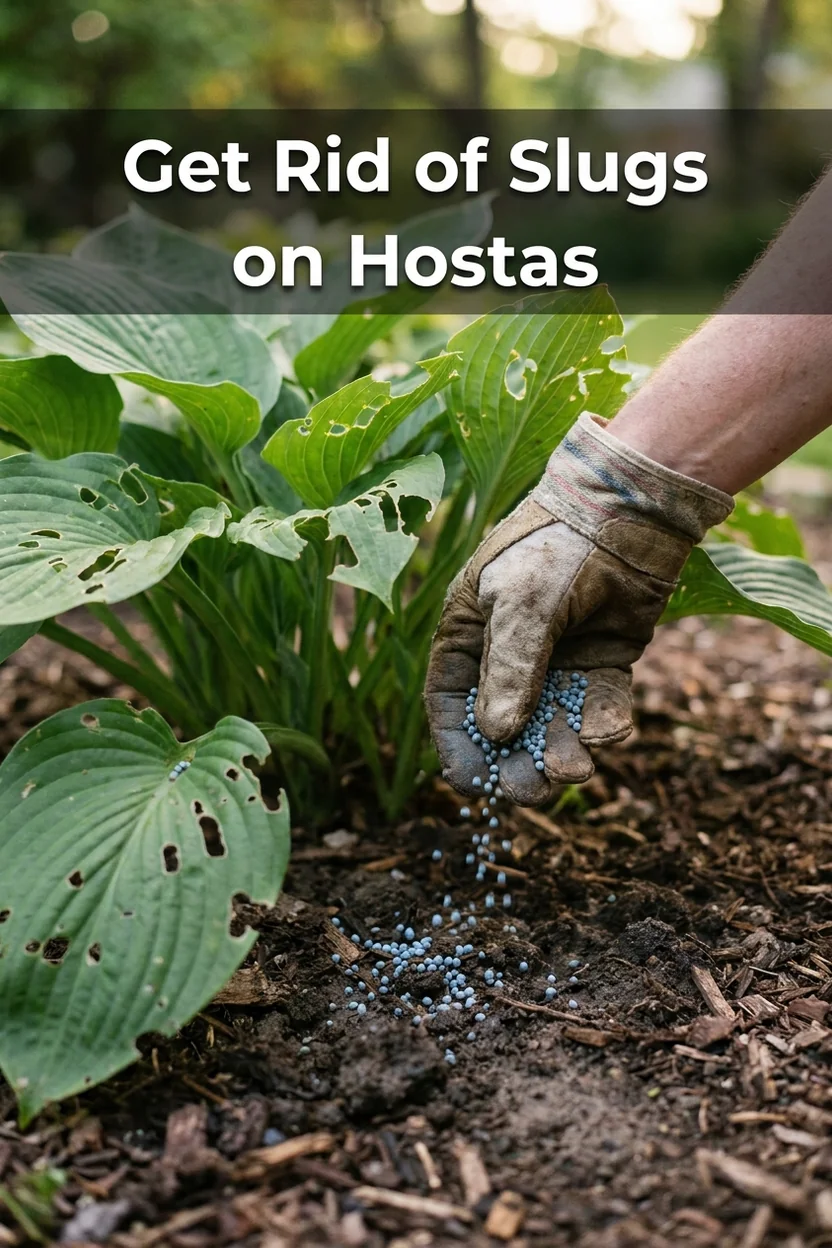
How to Get Rid of Slugs on Hostas: What Works
Pets & Toxicity
Recorded toxicity for plants linked in this guide. An unknown status is not a safety assessment.
Toxic to pets: hostas, sum and substance hosta, blue mouse ears hosta and 1 moreDetailsHide
Hosta 'Sum and Substance' — Toxicity Warning
Toxic to petsView Hosta 'Sum and Substance' plant profile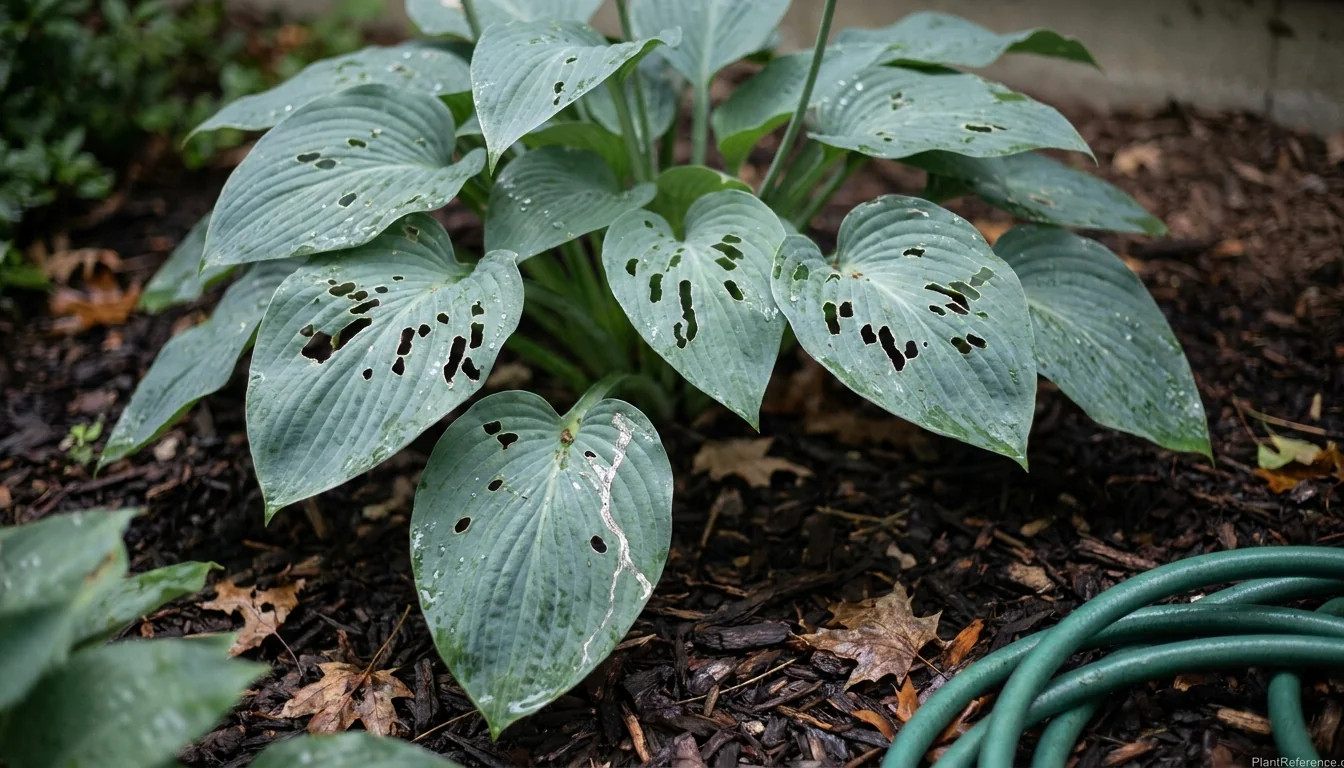
— Image © PlantReference.org 2026
Every June I get the same question from people who have just walked out to a hosta bed that looked fine a week ago and now looks like someone went at it with a hole punch. Slugs on hostas are the most common complaint in New England shade gardens, and the frustrating part is that most of the popular advice does very little. Here is what actually reduces the damage, roughly in the order I'd do it.
Why Slugs Go Straight for Hostas
🌿Hosta spp. (HOSS-tuh) is close to a perfect slug food. The leaves are broad, soft, held low to the ground, and the plant wants exactly the conditions slugs want: shade, consistent moisture, and a mulched bed that stays damp under the canopy.
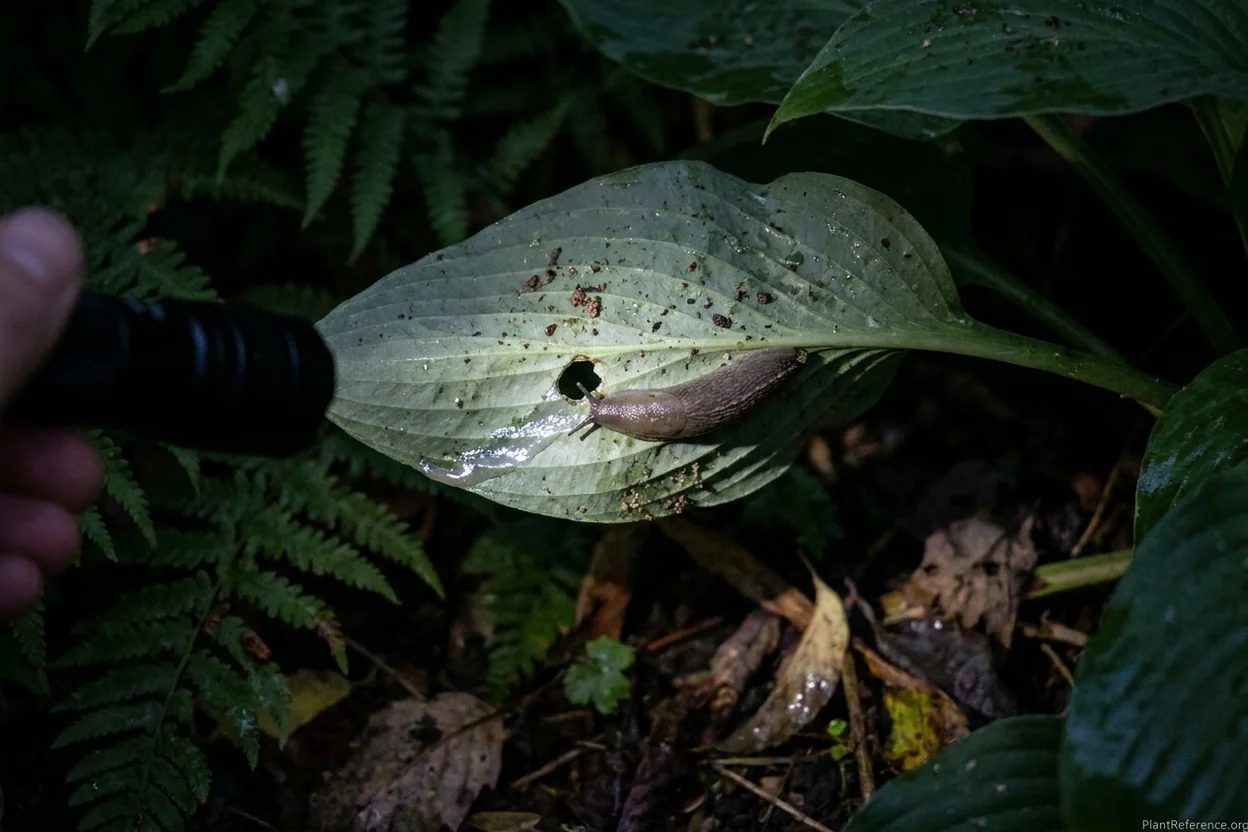
Slugs feed at night and shelter during the day under mulch, stones, boards, and the hosta's own lower leaves. That's why you can stand in a wrecked bed at noon and see no pest at all. Feeding is mainly at night, but can also occur on cool, damp days, and it accelerates sharply after rain or a heavy evening watering.
Understanding that timing is most of the battle. Every effective method below either targets slugs when they are active or makes the bed less comfortable for them the rest of the time. The same logic runs through Raised Bed Pest Problems: Identification and Organic Control Methods.
Make Sure It's Actually Slugs
Spend two minutes confirming the culprit before you treat anything. Slug damage can mean irregular holes between veins or chewed leaf edges; other pests can look similar. Look for dried mucus trails on the foliage or the soil in early morning light—they catch the sun and are unmistakable.
Slugs: irregular holes between veins or chewed edges, silvery trails, damage often worse after rain
Deer: whole leaves or entire stems removed, torn rather than cut, damage overnight in a single visit
Rabbits: clean 45-degree cuts on stems, damage usually close to the ground
Earwigs: irregular holes or chewed edges; confirm by finding them feeding after dark
Sun scorch: dry brown or bleached patches; dead tissue can later drop out
Missing whole leaves can be mammal or slug damage; confirm the culprit first. Slug bait does not deter mammals. A mammal problem needs a different fix, usually involving fencing or repellents rather than anything you scatter on the ground.
Iron Phosphate Bait: The Method That Works
Iron phosphate bait is one effective slug control available to home gardeners, and it's the one I recommend first every time. Slugs eat it, stop feeding after eating enough bait, and die over several days, sometimes up to a week—usually out of sight under the mulch, which is why people sometimes assume it didn't work.
The active ingredient is a compound of iron that breaks down into soil nutrients. Organic eligibility varies by product. It is lower hazard than metaldehyde, not harmless: follow the label and keep bait away from children and pets. Contact a poison service or veterinarian if swallowed. That matters if you garden with pets around.
Application is where most people get it wrong. The instinct is to pile it around the plant like fertilizer, and that is both wasteful and less effective.
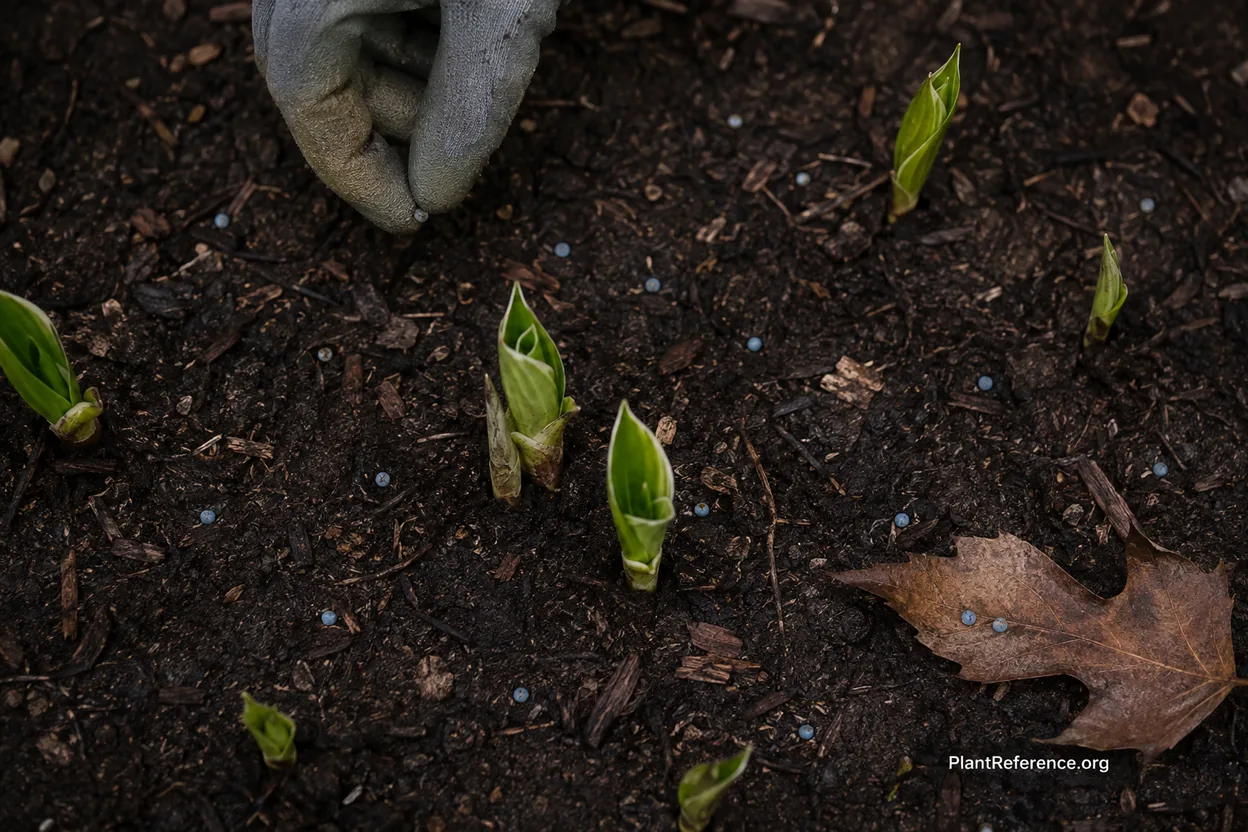
Scatter thinly and evenly over the soil surface, at the product label’s rate; never in piles
Apply at dusk, when slugs are about to become active
Apply to damp soil—slugs are more active there; do not wet the granules unless the label directs it
Follow the product label’s placement instructions; scatter evenly and never pile bait against stems
Reapply only when needed and as the product label permits, checking bait condition and slug activity after rain
Start in early spring as the hosta shoots first push through, not in June when the damage is already done. Slugs lay eggs in soil and leaf litter, and eggs can overwinter, so keep monitoring through the whole season.
Hand-Picking and Trapping
Unglamorous, free, and genuinely effective for the first two weeks of the season. Go out with a flashlight two hours after dark on a damp evening, work through the hosta bed, and drop what you find into a jar of soapy water.
Keep going on consecutive nights until numbers fall. After that, switch to a weekly patrol to catch the stragglers.
Board traps are the low-effort version. Lay a 12 by 12 inch (30 by 30 cm) square of plywood flat on the soil between plants in the evening. Slugs shelter underneath it at dawn. Flip it each morning and scrape the slugs into soapy water. A grapefruit or melon half laid cut-side down does the same job and is easier to dispose of.
Barriers and Home Remedies: What Holds Up
This is where most gardening advice goes off the rails, so here's an honest sort.
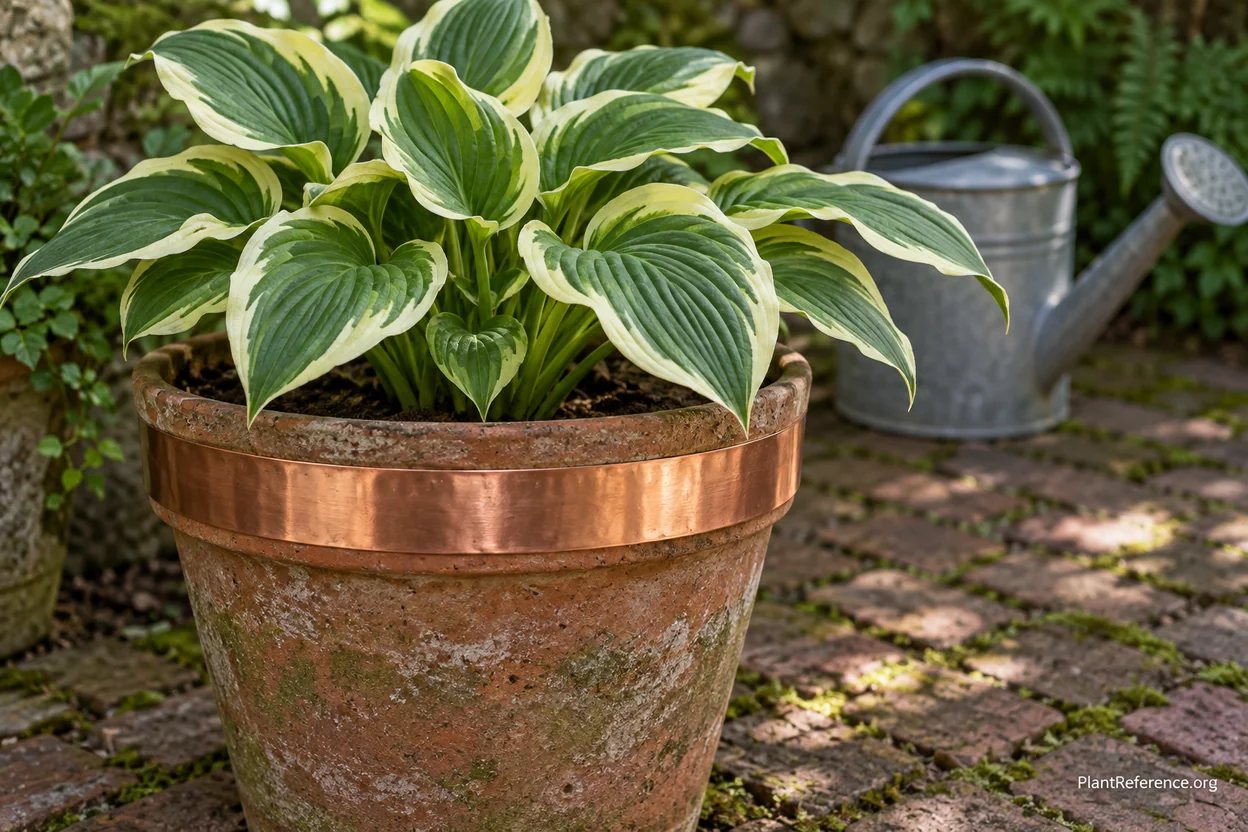
Copper tape may help. Copper tape trials give mixed results; keep barriers clean and continuous, with slugs inside removed—and slugs can bypass it if a leaf bridges over the tape.
Beer traps catch slugs. They attract slugs from only a few feet away, so their reach is limited. A sunken cup of beer can fill up impressively while the hostas next to it keep getting eaten. Refill frequently and combine with other controls.
Diatomaceous earth, eggshells, coffee grounds, and sand may disappoint. Dry diatomaceous earth loses its barrier effect when wet; the others lack reliable protection. Save your money.
Salt kills slugs and damages soil structure and plant roots. Don't.
Cultural Fixes That Cut Slug Pressure
Change the habitat and you reduce the population you have to fight. None of these are dramatic on their own; together they cut damage substantially.
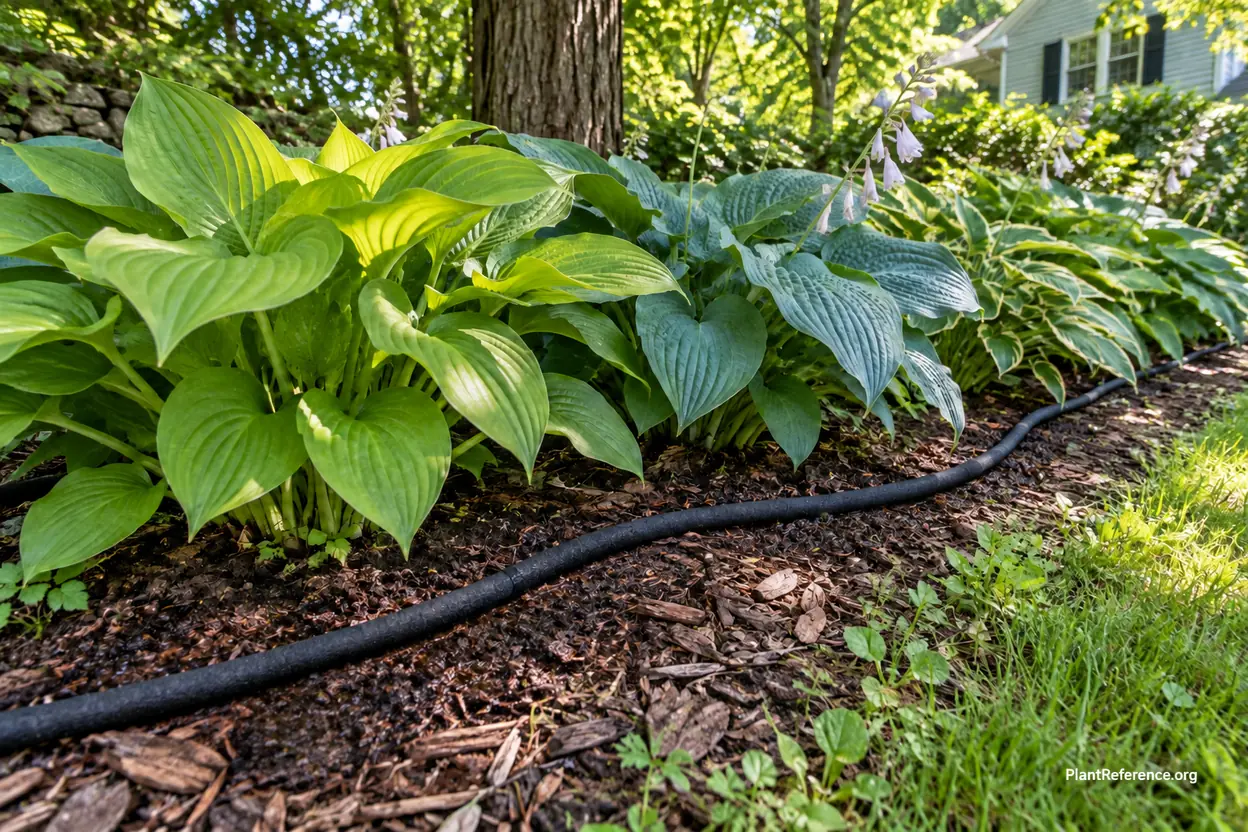
Water in the morning, not the evening. This is the highest-value change most people can make. A bed watered at 6 p.m. is soaking wet exactly when slugs become active. Watered at 7 a.m., the leaf surfaces are often dry by nightfall. A soaker hose or drip line makes this easy and keeps water off the foliage entirely—see Raised Bed Irrigation Systems: Watering Solutions for Consistent Growth for setup options.
Pull mulch back 2-3 inches (5-8 cm) from the crown of each hosta. Slugs shelter in the damp layer right against the plant.
Thin the canopy above. Beds under a dense tree canopy can stay damp after rain. Selective pruning can improve airflow and light, but preserve suitable shade; many hostas cope with morning sun well. The drainage principles in Poor Drainage in Raised Beds: Causes and Fixes for Waterlogged Soil apply here too—poor drainage keeps the bed damp and favourable to slugs.
Clear excess leaf litter, unused boards, and pot saucers from the affected bed in autumn. Eggs can overwinter in soil and under debris. Fall cleanup helps alongside spring control; retain habitat for slug predators elsewhere in the garden.
Slug-Resistant Hostas Worth Planting
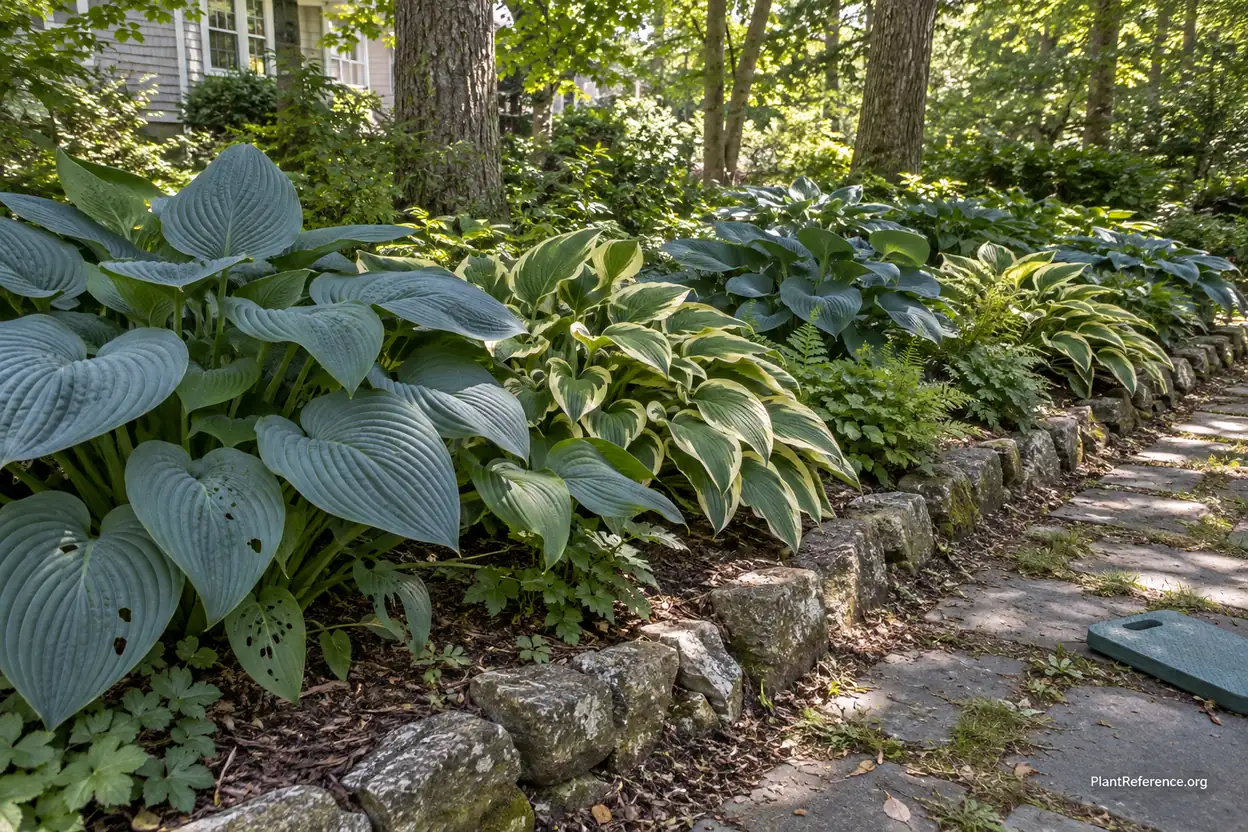
If one particular hosta gets destroyed every single year while its neighbours look fine, the variety may contribute. Slug resistance in hostas correlates closely with leaf substance—the thickness and toughness of the leaf. Thick leaves resist feeding better; colour alone is no guide, and none is immune.
Cultivar | Leaf Character | Slug Resistance | Zones |
|---|---|---|---|
Hosta 'Halcyon' | Heavy blue, thick substance | Good | 3-9 |
Hosta sieboldiana 'Elegans' | Very thick puckered blue | Good | 3-9 |
Huge, thick chartreuse | Good | 3-9 | |
Miniature, thick blue-green | Good | 3-9 | |
Hosta 'Above the Clouds' | Large, cupped blue leaves | Not established | 3-8 |
Thin white emerging foliage | Susceptible | 3-9 |
Hosta 'Halcyon' is the one I plant most often in problem beds—the blue waxy coating can wear off, but its thick leaves offer useful slug resistance. Hosta sieboldiana 'Elegans' also has good resistance but wants more room. At the other end, 🌿Hosta 'White Feather' is beautiful and may suffer slug damage, but still needs moist, well-drained shade; moving it into dry soil or direct sun risks damage.
Swapping three or four badly chewed plants for thick-substance cultivars can improve the look of a bed alongside the other controls. When you're planning replacements, Plan a Perennial Garden That Blooms Spring to Fall is a useful starting point for what to pair them with.
Your Season-Long Slug Plan
Early spring: clear leaf litter and old foliage from the bed before shoots emerge
As shoots appear: monitor for slugs; if needed, apply iron phosphate bait thinly at its label rate
First two weeks: night patrols with a flashlight; continue until slug numbers fall
Through spring: check bait and slug activity after rain; reapply only as the label permits
All season: water in the morning when possible, at soil level
Midsummer: pull mulch back from crowns; prune selectively if needed, preserving suitable shade
Autumn: cut back spent foliage; clear excess litter and unused boards from the affected bed
You are not going to eliminate slugs from a New England shade garden, and chasing that goal will make you miserable. The realistic target is keeping damage low enough that the foliage still looks good from six feet away, which is often achievable with bait, morning watering, and the right cultivars. If your garden sits in a genuinely wet region, Stop Slugs in the Pacific Northwest Garden Safely and Pacific Northwest Gardening Guide: Climate, Soil & Plant Selection cover the extreme end of the same problem. And if the plants are struggling for reasons beyond the holes, Why Your Raised Bed Plants Are Stunted: Diagnosing Growth Problems and Best Grass Seed for Shade Under Trees: 5 Species That Actually Work are worth a look before you blame the slugs for everything.
Frequently Asked Questions
Reading about plants and recognising them are different skills. These three build the second.
- Daily PlantIdentify the day’s mystery plant from a close-up photograph.
- Keyed OutWork a dichotomous key, lead by lead, to name a hidden specimen.
- Name That PlantName a specimen from botanical clues dealt hardest first.
Free to play, no account needed
Tagged with
Kevin is a landscape contractor in the Boston area who specializes in cold-climate perennial gardens and hardscaping. He studied landscape design and worked at a prominent nursery on the North Shore before starting his own design-build firm. Kevin's gardens are built to handle New England weather—freeze-thaw cycles, nor'easters, late springs, and heavy snow loads. He's particularly interested in native perennials and shrubs that provide four-season interest without constant maintenance. Kevin writes about cold-hardy plant selection, winter garden structure, and building landscapes that look good even in February.