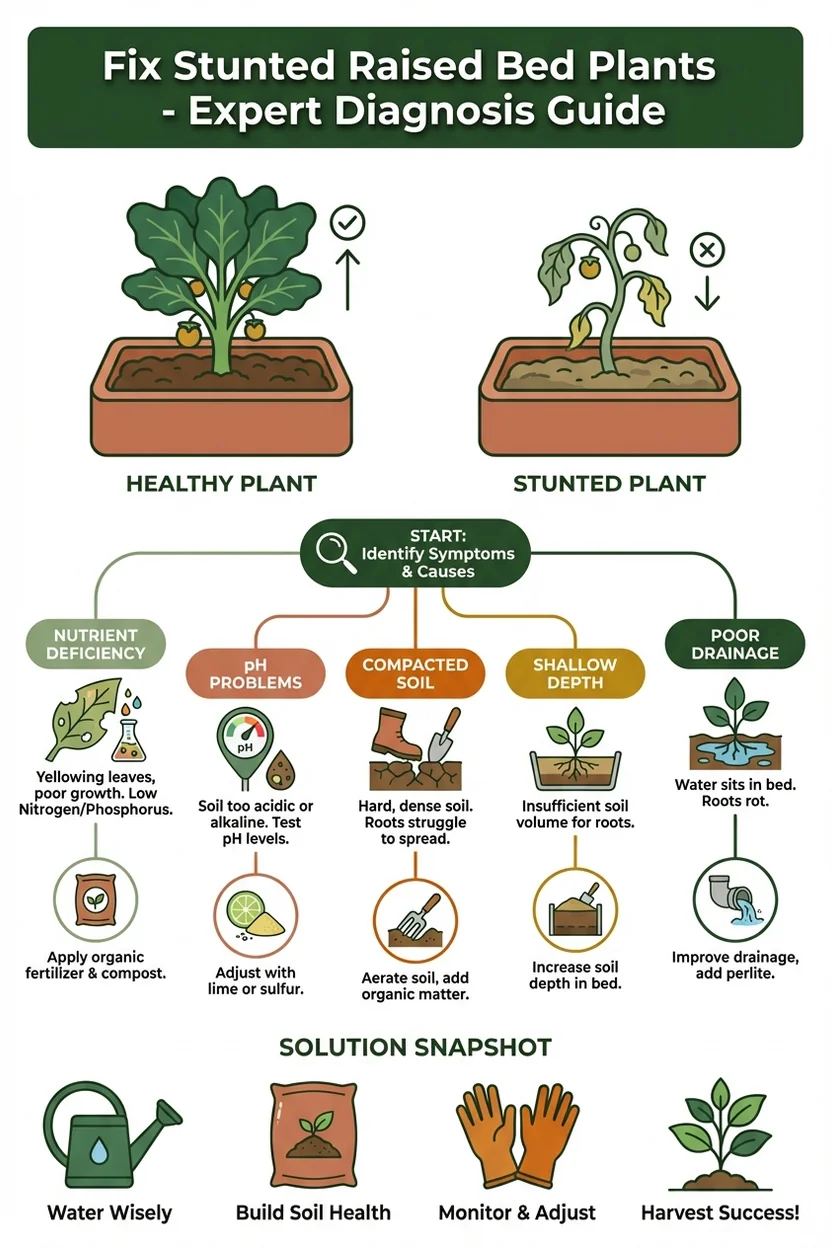
Why Your Raised Bed Plants Are Stunted: Diagnosing Growth Problems
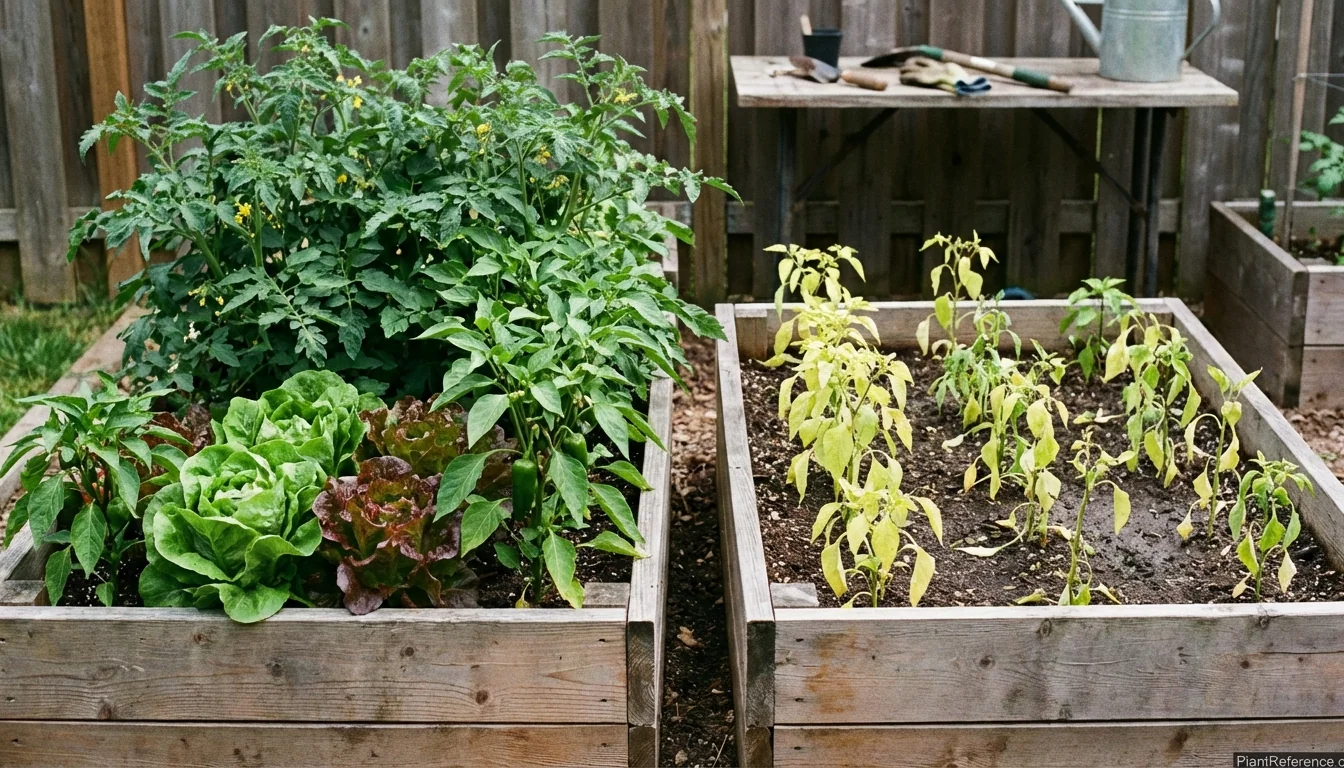
— Image © Plant Reference 2026
Nothing is more frustrating than watching your carefully planted raised bed vegetables remain small and sickly while your neighbor's garden thrives. When raised bed plants not growing becomes your reality, the good news is that stunted growth almost always indicates a correctable underlying problem rather than plant failure.
The controlled environment of raised beds actually makes diagnosis easier than troubleshooting In-Ground Garden Design|in-ground gardens. With defined soil boundaries and known inputs, we can systematically eliminate potential causes and implement targeted solutions that typically show results within 2-4 weeks.
Visual Diagnosis: Identifying Growth Problems
Plant symptoms provide the first clues to growth problems, and each type of stunting creates distinct visual patterns. Understanding these symptoms helps narrow down the root cause before investing in soil tests or amendments.
Nutrient-related stunting appears as overall pale coloration, with leaves showing yellow or light green coloring instead of deep, vibrant green. Older leaves typically show symptoms first, as plants redistribute nutrients from mature leaves to support new growth. Plants may appear proportionally correct but significantly smaller than expected for their age.
Compaction-related stunting creates a distinctive "bonsai effect" where plants develop normal leaf color but remain dramatically undersized. Root restriction from compacted soil prevents proper nutrient and water uptake, resulting in plants that look healthy but grow extremely slowly.
pH-related problems manifest as interveinal chlorosis—a distinctive pattern where leaf veins remain green while tissue between veins turns yellow. This occurs because pH imbalances prevent roots from absorbing iron and other micronutrients, even when they're present in the soil.
Depth-related stunting shows up differently in root crops versus leafy vegetables. Carrots and radishes may develop stubby, malformed roots, while tomatoes and peppers show normal early growth that suddenly slows as roots hit barriers.
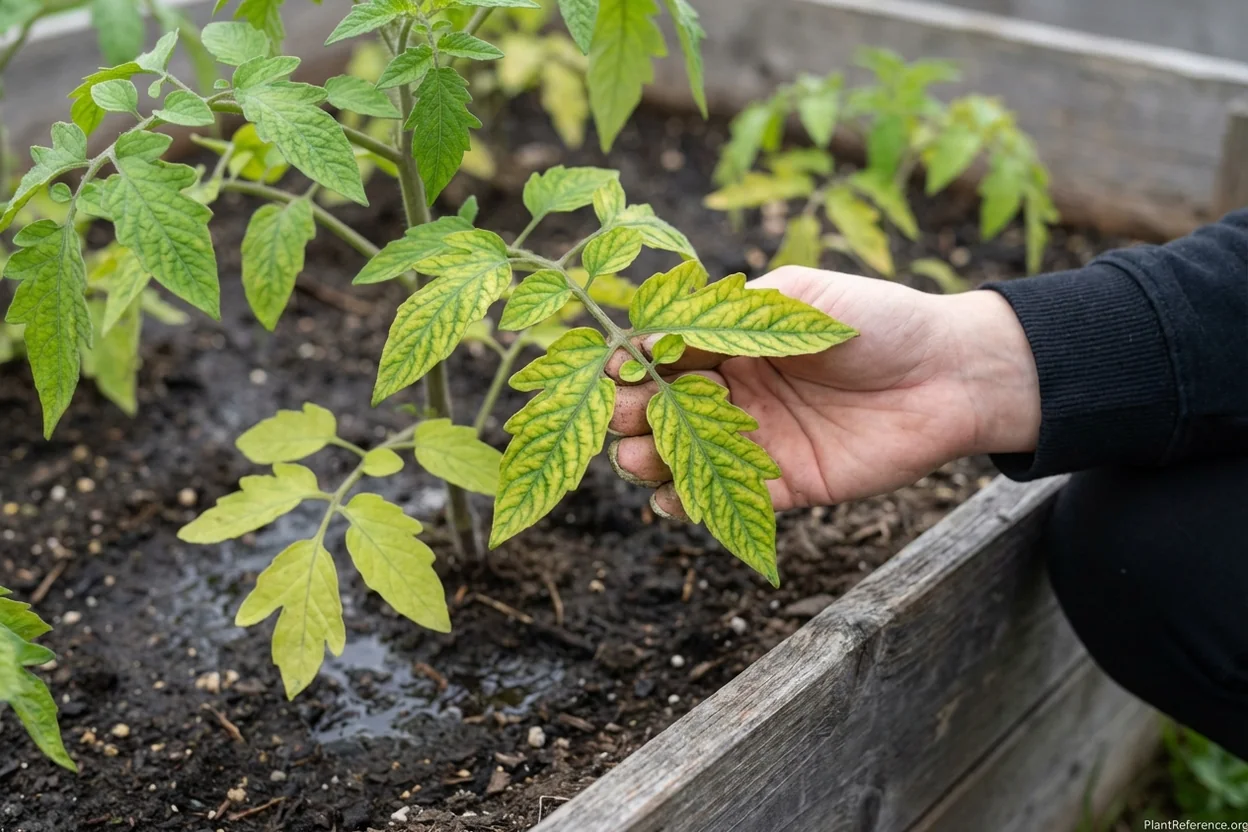
Nutrient Deficiency: The Most Common Culprit
Raised beds create unique nutritional challenges that don't exist in traditional ground-level gardens. The elevated, well-draining nature of raised beds means nutrients leach away more rapidly than in regular garden soil, requiring more frequent feeding than many gardeners realize.
Nitrogen deficiency appears first as overall yellowing of older leaves, starting from the bottom of the plant and progressing upward. Plants may show normal growth patterns initially but then slow dramatically as soil nitrogen becomes depleted. This is particularly common 6-8 weeks after planting when initial soil nutrients are exhausted.
Phosphorus deficiency creates distinctive purpling on leaf undersides and stems, often accompanied by very slow root development. Plants may appear healthy above ground but show minimal growth because root systems aren't developing properly to support larger plant size.
Potassium deficiency shows as brown, crispy edges on leaves combined with poor fruit development. Tomatoes, peppers, and other fruiting vegetables are particularly susceptible, often setting flowers that drop off instead of developing into fruit.
The rapid drainage in raised beds means water-soluble nutrients wash away quickly, especially during heavy rainfall or frequent irrigation. Sandy soil mixes, while excellent for drainage, don't retain nutrients as effectively as heavier soils with more organic matter.
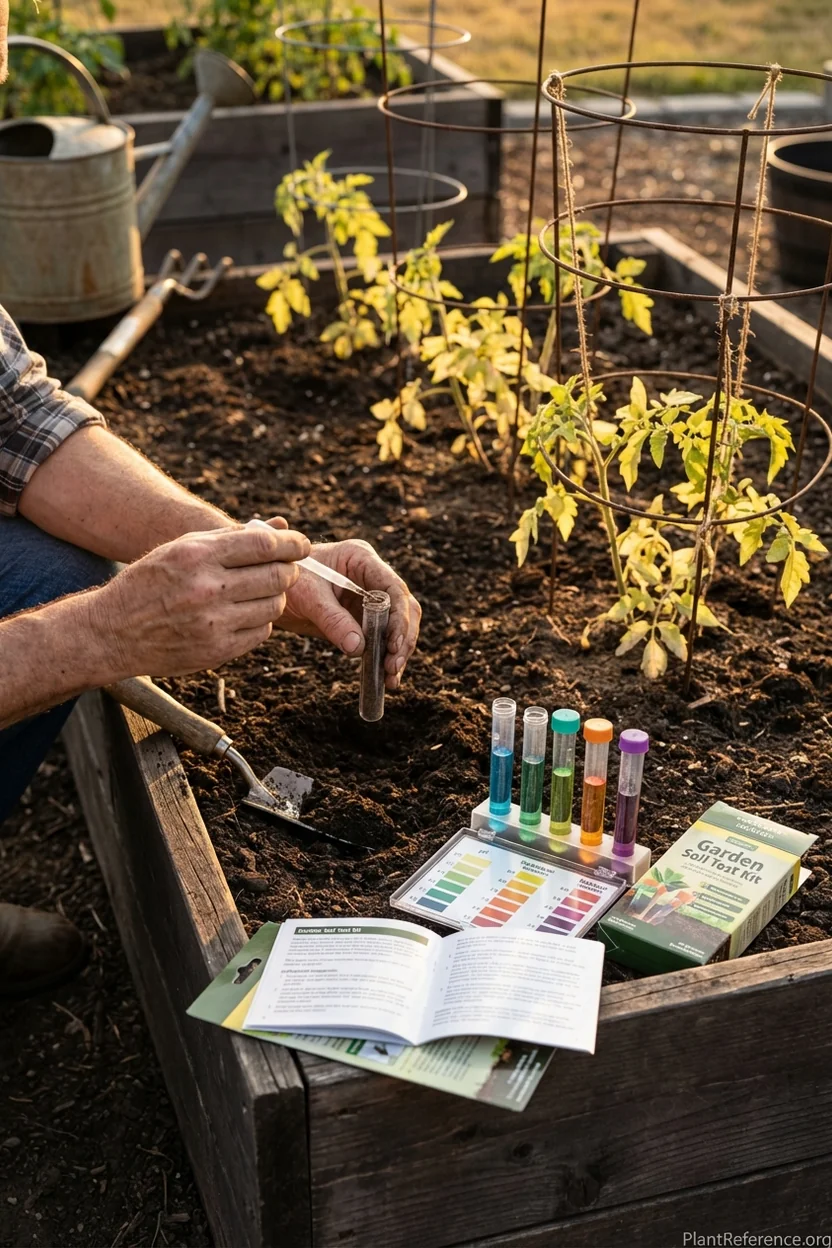
Testing soil nutrients requires either a comprehensive soil test through your county extension office or home test kits that measure nitrogen, phosphorus, and potassium levels. Laboratory tests cost $15-25 but provide detailed results including micronutrient analysis and specific fertilizer recommendations.
Soil Compaction: Hidden Growth Killer
Compacted soil in raised beds might seem impossible, but it's actually quite common and often goes undiagnosed because gardeners assume elevated beds automatically drain well. Compaction occurs when soil particles get pressed together, eliminating air spaces that roots need for proper development.
Causes of compaction include walking on wet soil, over-tilling, and using soil mixes with inadequate organic matter. Many gardeners unknowingly compact their beds by stepping into them during planting or maintenance, especially when soil is moist.
Testing for compaction involves the simple "screwdriver test"—inserting a long screwdriver or metal probe into the soil. It should penetrate easily to at least 8 inches (20 cm) in good raised bed soil. If you encounter resistance after just a few inches, compaction is likely restricting root growth.
Visual indicators include water pooling on the soil surface instead of soaking in immediately, and plant roots growing horizontally along the soil surface instead of penetrating downward. You may also notice that established plants tip over easily because shallow root systems can't provide adequate anchoring.
Compaction creates a cascade effect where poor drainage leads to anaerobic soil conditions, which kill beneficial soil organisms and further reduce soil structure. This explains why plants in compacted beds often show multiple symptoms—stunted growth, yellowing leaves, and increased susceptibility to Root Rot in Plants|root rot diseases.
The solution involves physical decompaction followed by organic matter addition. Using a broadfork or garden fork, pierce the soil every 6 inches (15 cm) to a depth of 8-10 inches (20-25 cm), then rock the tool gently to create fissures without bringing compacted soil to the surface.
pH Problems: When Plants Can't Access Nutrients
Soil pH controls nutrient availability more than any other single factor, and raised beds are particularly susceptible to pH fluctuations because their smaller soil volume changes more rapidly than large ground-level gardens.
Most vegetables require soil pH between 6.0-7.0 for optimal nutrient uptake. When pH drops below 6.0 (acidic) or rises above 7.5 (alkaline), plants cannot absorb nutrients efficiently even when fertilizers are present in adequate quantities.
Acidic soil symptoms include stunted growth combined with dark green foliage, poor flowering, and increased susceptibility to disease. Acid-loving crops like Growing Blueberries|blueberries may thrive while tomatoes and peppers struggle in the same bed.
Alkaline soil symptoms create the distinctive interveinal chlorosis mentioned earlier, where leaves show yellow tissue between green veins. Iron becomes chemically unavailable in alkaline conditions, creating this characteristic pattern even when iron is present in the soil.
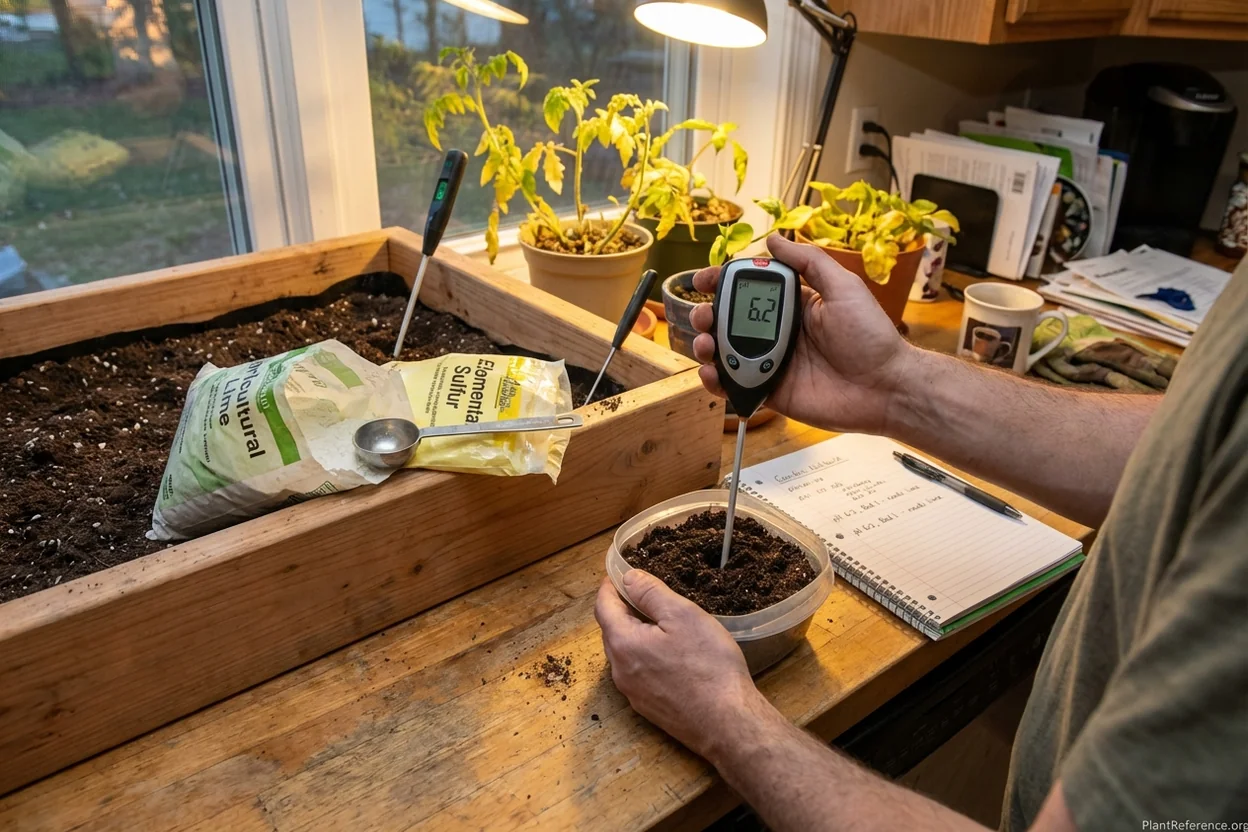
pH testing requires either digital pH meters ($15-40) or simple pH test strips ($8-15). Test multiple areas within each bed, as pH can vary significantly even within a small raised bed depending on water flow patterns and previous amendment applications.
Correcting acidic soil requires agricultural lime, applied at rates of 1-3 pounds per 100 square feet (0.5-1.4 kg per 10 square meters) depending on current pH and soil type. Lime works slowly, taking 6-8 weeks to show effects, so patience is essential.
Correcting alkaline soil uses elemental sulfur at rates of 0.5-2 pounds per 100 square feet (0.2-0.9 kg per 10 square meters). Sulfur also works gradually, requiring 2-3 months for full pH adjustment.
Inadequate Soil Depth: Room to Grow
Many raised bed gardeners underestimate soil depth requirements, creating beds that look adequate but restrict root development below the soil surface. Different vegetables have vastly different rooting needs, and insufficient depth creates growth limitations that aren't immediately obvious.
Minimum depth requirements vary by crop type. Leafy greens like Growing Lettuce|lettuce and Growing Spinach|spinach need 6-8 inches (15-20 cm), while root vegetables like carrots require 12-14 inches (30-35 cm). Tomatoes, peppers, and other large fruiting vegetables perform best with 18-24 inches (45-60 cm) of soil depth.
Diagnosing depth problems involves examining root development by carefully digging beside established plants. Healthy plants should show roots extending throughout the available soil depth, while depth-restricted plants show dense, circular root masses that stop abruptly at barriers.
The most common depth limitation comes from beds constructed on hard surfaces like concrete or heavily compacted clay subsoil. Plants may grow normally for 4-6 weeks until root systems reach these barriers, then growth slows dramatically even though above-ground symptoms may not appear immediately.
Solutions depend on the specific situation. Beds on concrete or pavement need complete soil depth provided within the frame, requiring 18-24 inches (45-60 cm) of quality soil mix for versatile vegetable growing. Beds on clay subsoil benefit from breaking up the underlying clay with a pickaxe or mattock to create drainage and root penetration.
For existing shallow beds, the most practical solution often involves adding height by stacking additional boards or frames on top of existing structures, then filling with quality soil mix. This approach costs less than complete reconstruction while providing the root space plants need.
Drainage Issues: Too Much or Too Little Water
Raised beds can experience both drainage problems and water retention issues, creating seemingly contradictory symptoms that confuse gardeners. Understanding how water moves through elevated soil helps diagnose these problems accurately.
Poor drainage symptoms include stunted growth combined with yellowing leaves, fungal growth on soil surfaces, and plants that wilt despite moist soil. This typically results from clay-heavy soil mixes or beds with solid bottoms that prevent water escape.
Excessive drainage symptoms show as rapid wilting on hot days, frequent watering requirements (daily or more), and plants that appear stressed despite regular irrigation. Sandy soil mixes or very shallow beds often create these conditions.
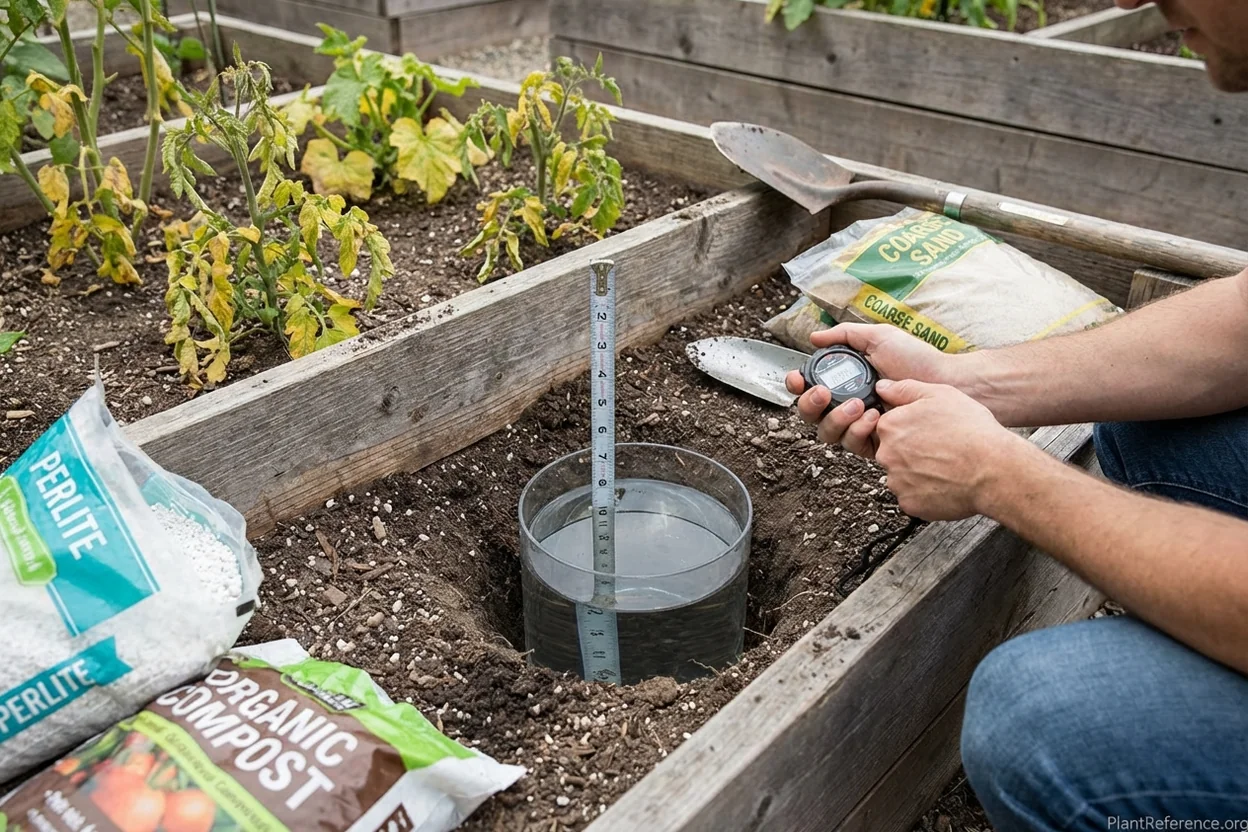
Testing drainage involves the simple "percolation test"—digging a hole 12 inches (30 cm) deep and filling it with water. Well-draining raised bed soil should absorb this water completely within 2-4 hours. Water remaining after 6 hours indicates drainage problems, while water disappearing in under 1 hour suggests excessive drainage.
Improving poor drainage requires adding coarse materials like perlite, coarse sand, or small gravel to the soil mix. The goal is creating soil structure with adequate air spaces while maintaining water-holding capacity for plant roots.
Addressing excessive drainage involves increasing organic matter content with compost, aged manure, or coco coir. These materials hold moisture while still maintaining good drainage characteristics essential for healthy root development.
Environmental Stress Factors
Environmental conditions can create growth problems that mimic soil-related issues, making accurate diagnosis essential before implementing expensive soil amendments that won't address the real problem.
Light stress appears when raised beds receive insufficient sunlight, typically less than 6 hours daily for most vegetables. Plants become tall and spindly (etiolated) as they stretch toward available light, with pale green foliage and weak stem development. This commonly occurs when beds are placed too close to buildings, fences, or large trees.
Temperature stress affects raised beds differently than ground-level gardens because elevated soil warms faster in spring but also overheats more easily in summer. Dark-colored beds or those with southern exposure may reach soil temperatures that damage roots, creating stunted growth despite adequate moisture and nutrients.
Wind stress in exposed locations causes desiccation and physical damage that stunts growth. Constant wind movement increases water loss from leaves faster than roots can replace it, creating chronic water stress even with adequate soil moisture.
Overcrowding stress occurs when plants compete for space, light, and nutrients. Many beginning gardeners plant too densely, thinking raised beds can support higher plant densities than traditional gardens. While Benefits of Raised Beds|raised beds are more productive per square foot, each plant still needs adequate space for proper development.
Diagnosing environmental stress requires observing plants during different times of day and weather conditions. Plants that wilt in afternoon sun but recover in evening may have temperature or wind stress rather than soil problems. Plants that lean heavily toward one direction indicate insufficient light from that side.
Recovery Timeline and Expectations
Understanding realistic recovery timelines helps manage expectations and prevents premature abandonment of treatment protocols. Most soil-related growth problems show improvement within 2-4 weeks, but full recovery often takes a complete growing season.
Nutrient deficiency corrections typically show the fastest results. Liquid fertilizers can produce visible improvement in leaf color within 7-10 days, while granular fertilizers require 2-3 weeks for noticeable changes. New growth shows improvement first, while existing damaged leaves may not recover fully.
pH adjustments work more slowly because chemical changes in soil take time. Lime applications require 6-8 weeks for significant pH changes, while sulfur applications may take 2-3 months. Plants begin responding to improved nutrient availability as pH approaches optimal ranges.
Compaction remedies show intermediate timing, with root development improving within 2-3 weeks after decompaction. Above-ground growth improvements become visible 3-4 weeks later as improved root systems begin supporting larger plant size.
Environmental modifications can show immediate effects if the stress factor is eliminated completely. However, plants may need several weeks to recover from previous stress damage and resume normal growth patterns.
Patience is essential during recovery periods. Continue monitoring soil conditions and plant symptoms, but avoid over-correcting with additional amendments that could create new imbalances. Most raised bed problems respond well to single, targeted interventions given adequate time to work.
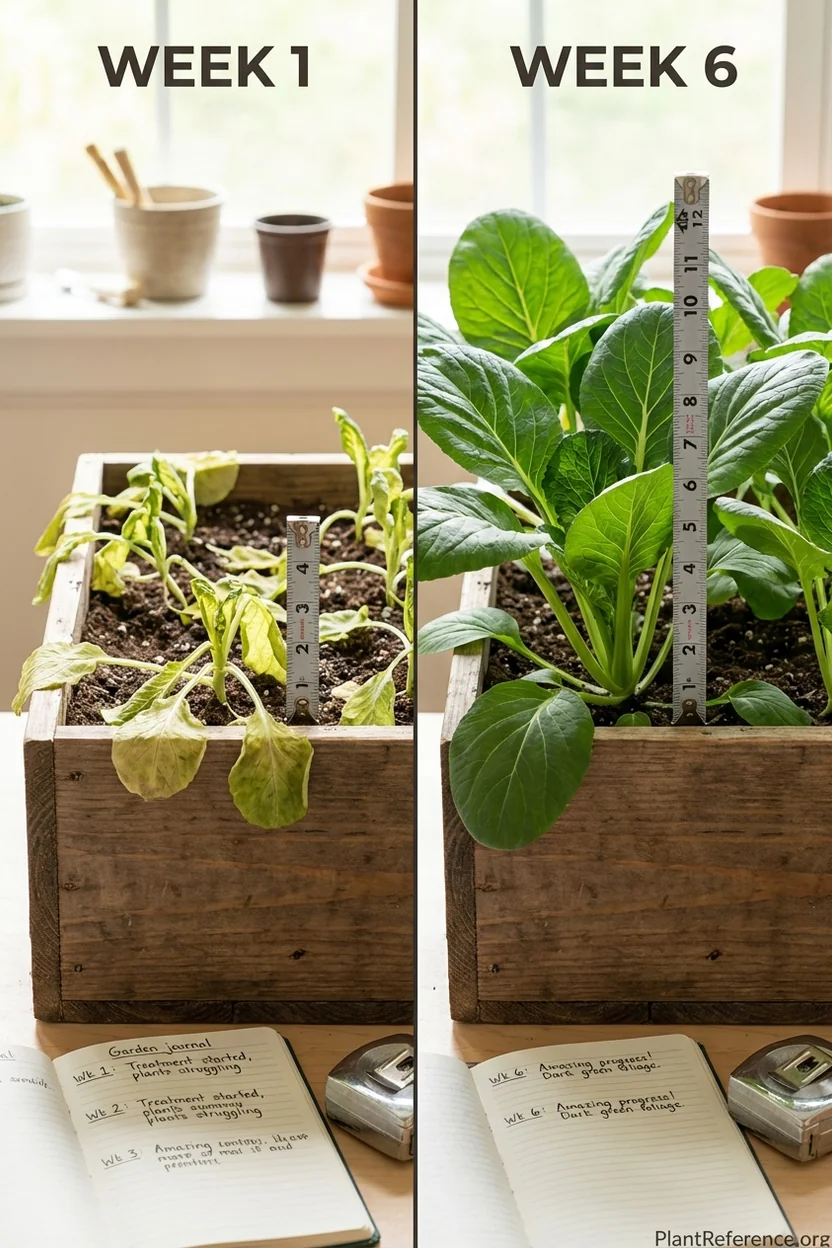
The key to successful diagnosis lies in systematic evaluation rather than guessing. Start with visual symptoms, confirm with appropriate tests, implement targeted solutions, and monitor progress. Most raised bed growth problems are completely correctable with proper identification and treatment.
Remember that raised bed gardening creates an intensive growing environment that requires more attention to soil management than traditional gardens. Regular monitoring and maintenance prevent most problems from developing, while quick response to early symptoms prevents minor issues from becoming major setbacks.
Frequently Asked Questions
Reading about plants and recognising them are different skills. These three build the second.
- Daily PlantIdentify the day’s mystery plant from a close-up photograph.
- Keyed OutWork a dichotomous key, lead by lead, to name a hidden specimen.
- Name That PlantName a specimen from botanical clues dealt hardest first.
Free to play, no account needed
Priya is a soil scientist at an agricultural extension office who gardens on a quarter-acre suburban lot in Indianapolis. Her professional work focuses on soil health and nutrient management, which gives her a perspective most gardening writers don't have—she thinks about what's happening underground before worrying about what's happening above it. Priya maintains a large pollinator garden, grows herbs and vegetables, and is slowly converting her conventional lawn to a mix of native grasses and low-growing groundcovers. She writes about soil health, composting, fertilizer use, and building the kind of foundation that makes plants thrive without constant intervention.