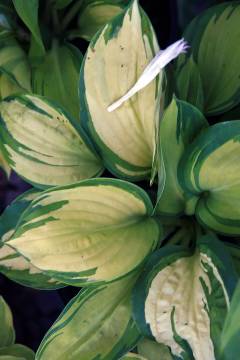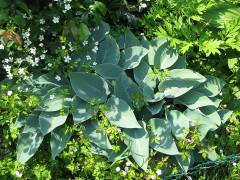
Hosta, Genus, 'Blue Mouse Ears', Cultivar,
- Genus
- Cultivar
blue mouse ears hosta
Overview
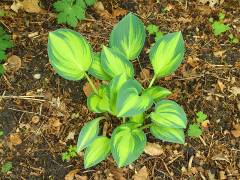
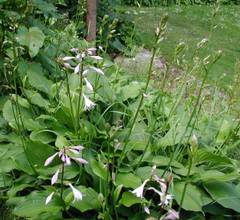
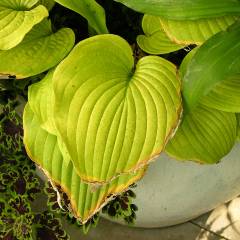
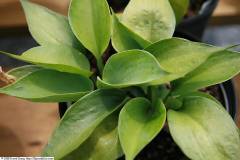
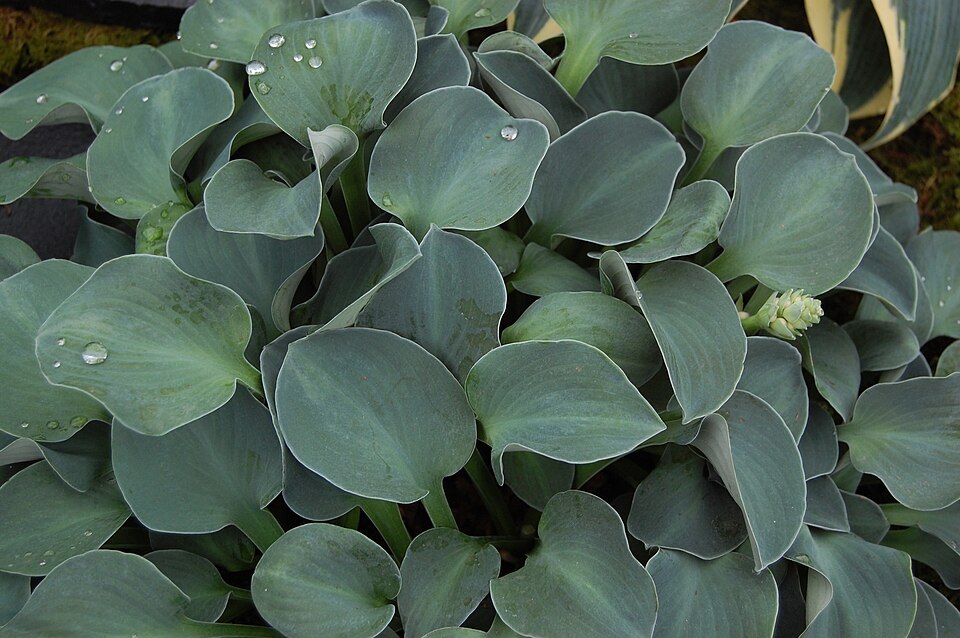
Hosta 'Blue Mouse Ears' is a miniature herbaceous perennial hosta forming a tight rounded mound 6-8 inches (15-20 cm) tall and 12-14 inches (30-35 cm) wide at maturity (approximately 4-5 years). Leaves are rounded to broadly ovate, 1.5-2 inches (4-5 cm) long and 1.25-1.75 inches (3-4 cm) wide, very thick-substanced, blue-gray with a heavy silvery wax that fades partially to green-blue by midsummer. Foliage emerges in late April-May and dies back after first hard frost. Flower scapes 8-10 inches (20-25 cm) tall emerge in late June through July, carrying 8-12 lavender bell-shaped flowers each 1 inch (2.5 cm) long. The thick leaf substance reduces slug damage compared to thinner-leaved hostas. Plants spread by short rhizomes 1 inch (2.5 cm) per year, slowly building density rather than expanding outward. The cultivar was registered in 2000 by Emile and Jane Deckert and named American Hosta Growers Association Hosta of the Year in 2008.
Native Range
Garden hostas are derived from species native to East Asia, primarily Japan, Korea, and parts of China, where wild types occur on shaded forest floors, stream banks, and cliff edges at 1,000-7,500 feet (300-2,300 m) elevation. Hosta 'Blue Mouse Ears' is a sport (genetic mutation) discovered on H. 'Mouse Ears', itself derived from H. tardiflora parentage.Suggested Uses
Planted at the front of shaded beds, in container compositions, fairy gardens, alpine troughs, and rock gardens, spaced 12-15 inches (30-38 cm) apart. The compact size suits small-space gardens. Container culture is reliable in pots 1-3 gallons (4-11 L) with consistent moisture; container plants need division every 3 years.How to Identify
Appearance
Size & Dimensions
Height6" - 8"
Width/Spread1' - 1'2"
Bloom Information
Late June through July in zones 4-7 with peak bloom over 2-3 weeks. In zones 8-9, bloom may begin in late May. Each flower lasts 2-3 days; total scape bloom holds 10-14 days. Flowers are produced reliably each year on mature clumps; scape size is small relative to the foliage mound.
Detailed Descriptions
Flower Description
Lavender bell-shaped flowersFoliage Description
Blue-gray with silvery waxGrowing Conditions
Sun Requirements
Requires 2-5 hours of direct sunlight daily
• Full Sun: 6+ hours of direct sunlight
• Partial Shade: 3-6 hours of direct sunlight
• Full Shade: Less than 3 hours of direct sunlight
Care & Maintenance
Care Guide
Plant in spring or fall in dappled shade or part shade in zones 4-9; full afternoon sun causes leaf scorch and bleaches the blue color in zones 6-9. Soil must remain consistently moist but well-drained; weekly watering is sufficient in cool weather, but plants may require 2 watering events per week during dry summers. Mulch with 1-2 inches (2.5-5 cm) of shredded leaves or bark in spring. Slugs and snails feed less on this thick-leaved cultivar than on standard hostas but may still damage emerging shoots; iron phosphate baits or copper barriers reduce damage. Hosta virus X (HVX) shows as mottling on leaves and is incurable; affected plants are removed and bagged for disposal. Divide every 5-7 years in early spring; small clumps may be divided as soon as 3 years.Pruning
Cut spent flower scapes to basal foliage immediately after bloom to redirect energy to the rhizome. Remove yellowed or damaged leaves at any time during the growing season. Cut all foliage to ground level after first hard frost in late October-November or in early spring before new shoots emerge.Pruning Schedule
Prune: March, July & November
summerfallearly spring
Container Growing
Suitable for container growing
Minimum container size: 1 gallons