Hosta, Genus, 'Francee', Cultivar,
- Genus
- Cultivar
Francee hosta
Garden cultivar (sport of 'Fortuna' discovered 1986); Hosta species native to East Asia
Overview
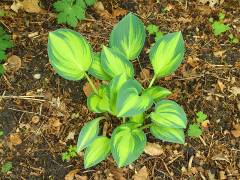
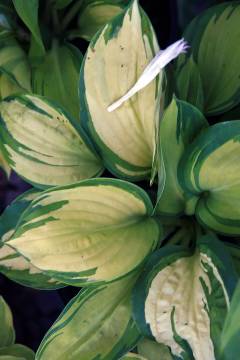
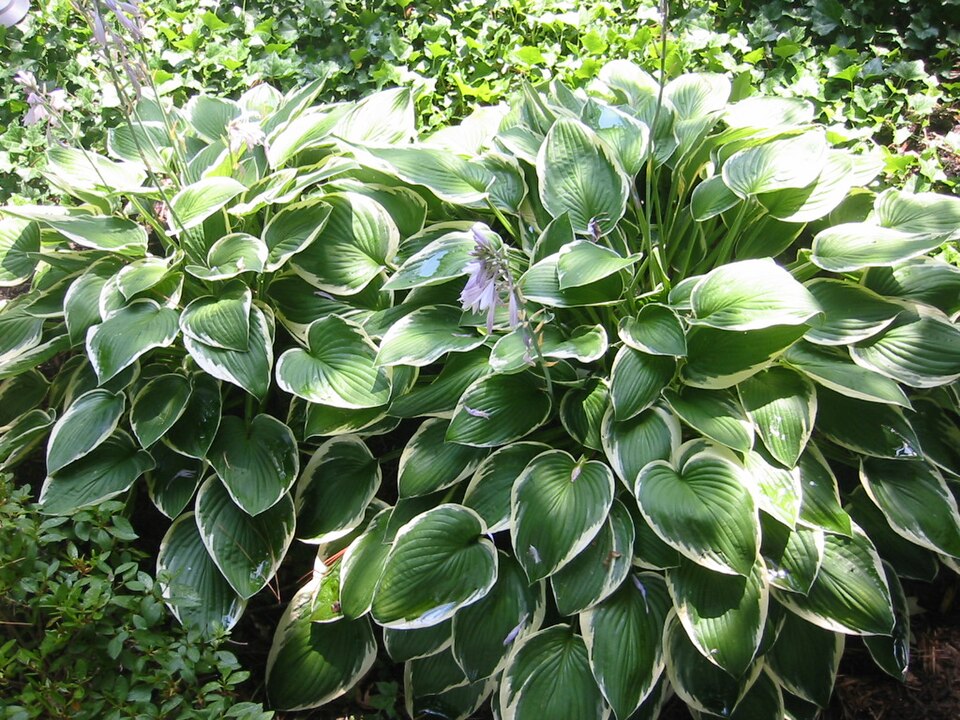
Hosta 'Francee' is a white-edged hosta forming a clump 18-24 inches (45-60 cm) tall and 36-48 inches (90-120 cm) wide. Heart-shaped (cordate) leaves 6-8 inches (15-20 cm) long carry a smooth (non-corrugated) dark green center bordered by a 0.25-0.5 inch (6-12 mm) crisp white margin. The white edge is genetically stable and maintains its width and brightness through the growing season; reversion to all-green leaves occurs in roughly 5-10% of mature clumps over 10+ years and is removed by cutting reverted shoots at the crown. Discovered as a sport (mutation) of Hosta 'Fortuna' in 1986 and registered with the American Hosta Society. Lavender bell-shaped flowers open on 30-36 inch (75-90 cm) scapes from late June through July, drawing hummingbirds and bumblebees. Fully herbaceous: foliage yellows and collapses with the first hard frost, and the crown remains dormant until April-May emergence. White-tailed deer browse hostas heavily; unprotected plants in deer-pressure areas are eaten to ground level. Slugs and snails produce irregular holes in the leaves; the smooth (non-corrugated) leaf surface allows easier slug traversal than puckered cultivars. Mildly toxic to dogs, cats, and horses (saponins) if ingested in quantity. Hardy to USDA zone 3 (-40°F / -40°C). Crown rot in waterlogged soil.
Native Range
The cultivar 'Francee' arose as a sport of Hosta 'Fortuna' in 1986 and was registered with the American Hosta Society. Hosta species are native to forest edges, rocky slopes, and stream banks in Japan, Korea, and northeast China.Suggested Uses
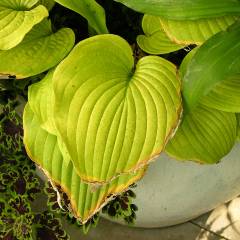
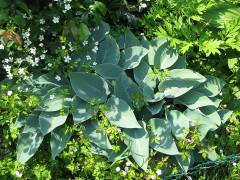
Used in shade and woodland gardens, as a groundcover under deciduous trees, and in mixed shade borders, spaced 36-48 inches (90-120 cm) apart for a closed mound. Container culture in 7+ gallon (26+ liter) pots is reliable, with overwintering protection in zones 3-5. The contrast between green center and white margin remains visible in low-light shade conditions where solid-green foliage merges with surrounding shadow.How to Identify
Appearance
Size & Dimensions
Height1'6" - 2'
Width/Spread3' - 4'
Bloom Information
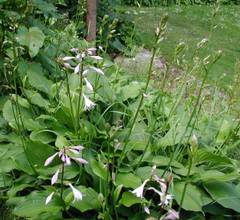
Lavender bell-shaped flowers open on 30-36 inch (75-90 cm) scapes from late June through late July in zones 4-7 and from June in zones 8-9. Individual scape bloom lasts 2-3 weeks; total clump bloom extends 3-4 weeks as scapes flower in succession. Hummingbirds and bumblebees are the primary pollinators. Fragrance is light to absent.
Detailed Descriptions
Flower Description
Lavender, bell-shaped, on tall scapesFoliage Description
Dark green with stable crisp white marginGrowing Conditions
Sun Requirements
Requires 1-4 hours of direct sunlight daily
• Full Sun: 6+ hours of direct sunlight
• Partial Shade: 3-6 hours of direct sunlight
• Full Shade: Less than 3 hours of direct sunlight
Care & Maintenance
Care Guide
Performs in partial to full shade in moist organic-rich loam with pH 6.0-7.5; morning sun is tolerated in zones 3-6 but afternoon sun in zones 7+ scorches both green centers and white margins. Soil moisture is maintained evenly; established plants tolerate brief dryness but go dormant early in extended drought. Slugs and snails are the primary cosmetic pest; iron phosphate baits and copper barriers are common control methods. White margins burn faster than green centers in dry or sun-exposed conditions, making moisture and shade more critical for variegated hostas than for solid-green types. Crown rot develops in waterlogged sites. Deer browse hostas to ground level in pressure areas; physical barriers are required where deer pressure is high. Hardy to USDA zone 3.Pruning
No structural pruning is required. Spent flower scapes are cut at the base after bloom to redirect energy and prevent self-seeding. Foliage is left until it yellows and collapses with the first hard frost, then removed to reduce slug egg overwintering. Reverted all-green shoots are cut at the crown when they appear, since reversions can outcompete the variegated tissue. Division every 4-6 years in early spring or early fall rejuvenates clumps that thin in the center.Pruning Schedule
Prune: November
fall
Container Growing
Suitable for container growing
Minimum container size: 7 gallons