Image 1 of 5
1 / 5
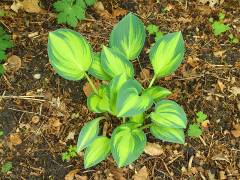
© Photo by and (c)2006 Derek Ramsey (Ram-Man). Location credit to the Chanticleer Garden., some rights reserved (CC-BY-SA) · Wikimedia Commons
Hosta, Genus, 'Sum and Substance', Cultivar,
- Genus
- Cultivar
sum and substance hosta
Garden hybrid; registered by Paul Aden 1980; genus native to Japan, Korea, and China
Overview
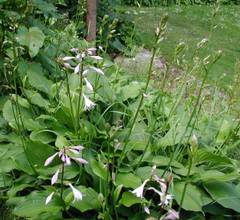
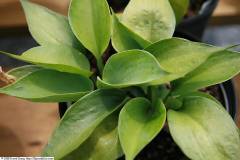
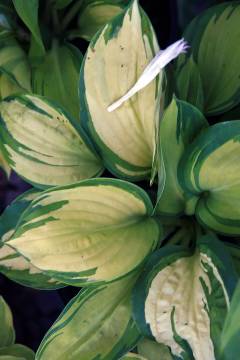
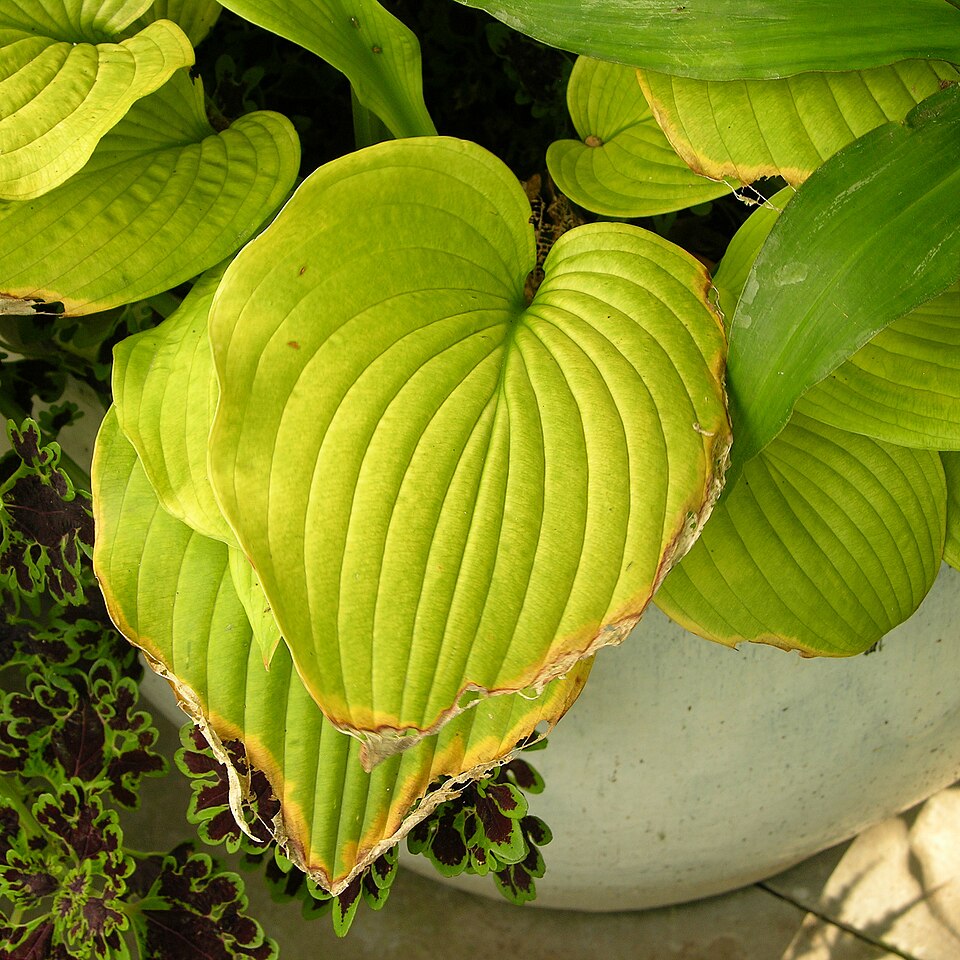
Hosta 'Sum and Substance' is a giant mounding deciduous perennial reaching 30-36 inches (75-90 cm) tall and 48-72 inches (120-180 cm) wide, among the largest hostas in general cultivation. It carries broadly heart-shaped, glossy leaves 15-20 inches (38-50 cm) long in bright chartreuse to golden-yellow; the color runs deeper gold in brighter positions and holds chartreuse in partial shade. The leaf surface is lightly puckered with a thick, glossy finish rather than the matte, waxy coating common to most hostas, which makes the plant readable at garden distance. Pale lavender funnel-shaped, lightly fragrant flowers open on 40-inch (100 cm) scapes in July and August. The plant takes more direct sun than most hostas, up to 6 hours of morning light in most climates, and that extra light drives the gold deeper. Growth is moderate to fast, and it is hardy to zone 3. It needs room, since a single mature plant covers 25-40 square feet (2.3-3.7 sq m), and dry soils in sun cause leaf-edge scorch. All parts are toxic to cats and dogs if eaten.
Native Range
Hosta 'Sum and Substance' is a garden hybrid registered by breeder Paul Aden in 1980 and grown widely as a large-leaved gold hosta. The genus Hosta is native to East Asia, in the moist mountain forests of Japan, Korea, and China, and has been in Western gardens since the 19th century.Suggested Uses
Grown as a single specimen in borders and woodland gardens, spaced 48-72 inches (120-180 cm) apart, since one mature plant covers 25-40 square feet (2.3-3.7 sq m). The chartreuse-gold color lightens shaded borders and contrasts with dark-green or blue neighbors. Its greater sun tolerance lets it reach into spots where blue hostas would bleach. It also grows in very large containers of at least 15 gallons (57 L). Dry soils and small gardens without room for the mature spread are poor fits.How to Identify
Appearance
Size & Dimensions
Height2'6" - 3'
Width/Spread4' - 6'
Colors
Bloom Information
Pale lavender funnel-shaped, lightly fragrant flowers open on 40-inch (100 cm) scapes in July and August for 3-4 weeks. The scent carries at close range, giving stronger flower-season value than most large-leaved hostas. The massive chartreuse-gold foliage stays the main feature. Bees visit the flowers.
Detailed Descriptions
Flower Description
Pale lavender, funnel-shaped, lightly fragrant, on 40-inch (100 cm) scapesFoliage Description
Bright chartreuse to golden-yellow; glossy; lightly puckered; very thick; 15-20 inches (38-50 cm) long; deepens to gold in more sunGrowing Conditions
Sun Requirements
Requires 3-6 hours of direct sunlight daily
• Full Sun: 6+ hours of direct sunlight
• Partial Shade: 3-6 hours of direct sunlight
• Full Shade: Less than 3 hours of direct sunlight
Care & Maintenance
Care Guide
Grow in partial shade to nearly full sun in moist, humus-rich, well-drained soil, hardy to zone 3 at minus 40 F (minus 40 C). The plant takes more sun than most hostas, 3 to 6 hours of direct morning light in most climates, and the added light deepens the gold. Even moisture matters more in sunny spots than shaded ones, since drought stress in sun scorches the leaf edges. The thick, glossy leaves resist slug damage better than thin-leaved hostas. A spring topdressing of balanced fertilizer or compost supports the fast growth and full leaf size. All parts are toxic to cats and dogs.Pruning
Remove flower scapes after bloom to steer energy into leaf growth rather than seed. Cut the dead foliage back after the first hard frost or in early spring before new growth starts. No other pruning is needed.Pruning Schedule
Prune: March & November
fallearly spring
Container Growing
Suitable for container growing
Minimum container size: 15 gallons