Hosta, Genus, sieboldiana, Species,
- Genus & species
Siebold's hosta
Japan (principally Honshu); moist montane meadows and forest margins
Overview
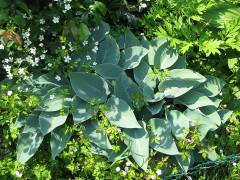
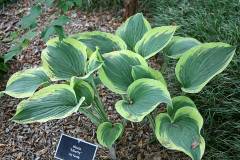
Hosta sieboldiana is a large, mounding, deciduous perennial reaching 24–30 inches (60–75 cm) tall with a spread of 36–48 inches (90–120 cm). Leaves are broadly heart-shaped, 10–15 inches (25–38 cm) long and nearly as wide, with a heavily corrugated (seersucker-like) surface and a waxy blue-green to gray-blue coating on the upper leaf surface. The leaf substance is thick and firm, and resists slug feeding more than thin-leaved hostas, though not completely. Pale lilac-white, bell-shaped flowers appear on 30-inch (75 cm) scapes in June–July, rising only slightly above the foliage mound; bloom duration is 2–3 weeks. Growth rate is slow, and the clump reaches full mature size over 4–5 years. Hardy in USDA zones 3–9. Direct afternoon sun bleaches the waxy blue bloom, the plant emerges later in spring than many hostas, and the 36–48 inch (90–120 cm) mature width requires substantial space.
Native Range
Hosta sieboldiana is native to Japan, principally on Honshu, in moist montane meadows and along forest margins. The epithet honors Philipp Franz von Siebold, the 19th-century physician and botanist who introduced many Japanese plants to European cultivation.Suggested Uses
Planted in shaded borders, woodland gardens, and containers of 7 gallons (26 L) or larger at 36–48 inch (90–120 cm) spacing. The large corrugated blue-green foliage anchors bold-texture plantings in shade, combining with finer-textured plants such as Astilbe, Athyrium filix-femina, and Heuchera. Slow growth reaches full mature size over 4–5 years, so the planting area matures over several seasons. The species is not suited to full hot sun (bleaches the blue bloom), dry soils, or containers smaller than 7 gallons (26 L), which restrict root development.How to Identify
Appearance
Size & Dimensions
Height2' - 2'6"
Width/Spread3' - 4'
Bloom Information
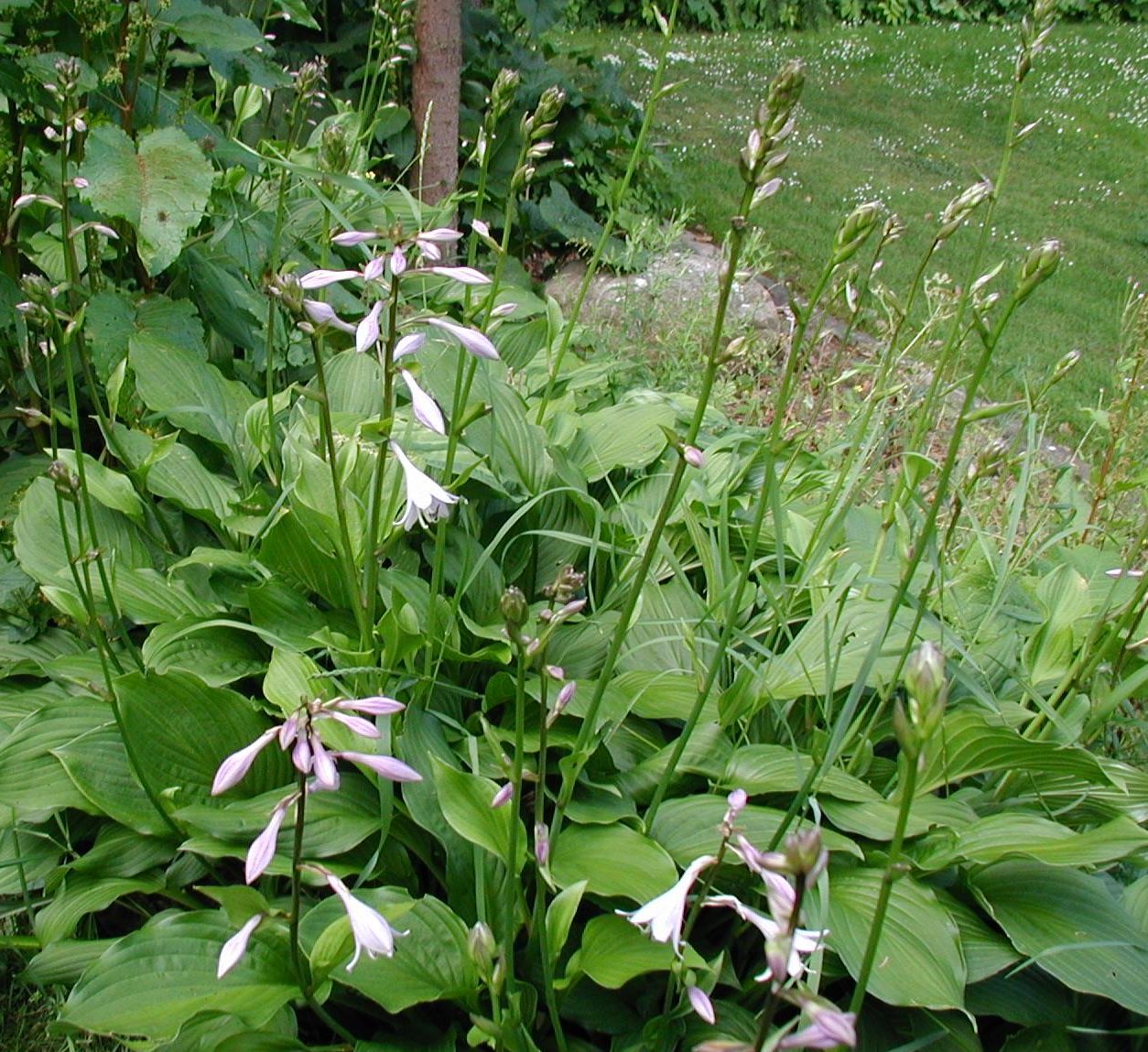
Produces pale lilac-white, bell-shaped flowers on 30-inch (75 cm) scapes in June and July. Bloom duration is 2–3 weeks. Scapes rise only slightly above the foliage mound, so the flowers sit in close relation to the large corrugated leaves rather than floating clear of them. The blue-green corrugated foliage is the longer-lasting visual element of the plant through the growing season.
Detailed Descriptions
Flower Description
Pale lilac-white; bell-shaped; on 30-inch (75 cm) scapes rising just above the foliageFoliage Description
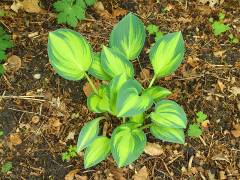
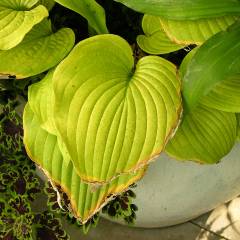
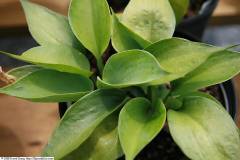
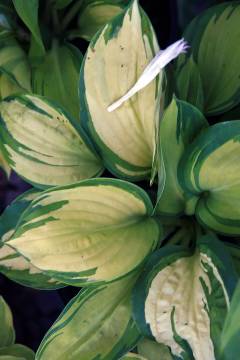
Blue-green to gray-blue with a waxy upper-surface bloom; heavily corrugated (seersucker-like); thick and firm substance; 10–15 inches (25–38 cm) long and nearly as wideGrowing Conditions
Sun Requirements
Requires 2-4 hours of direct sunlight daily
• Full Sun: 6+ hours of direct sunlight
• Partial Shade: 3-6 hours of direct sunlight
• Full Shade: Less than 3 hours of direct sunlight
Care & Maintenance
Care Guide
Plant in partial to full shade in moist, humus-rich, well-drained loam or clay soil at pH 5.5–7.0. Hardy in USDA zones 3–9. Morning sun is tolerated in cool climates, but direct afternoon sun bleaches the waxy blue upper-leaf bloom and can cause leaf scorch. The blue color is produced by a surface wax, and shaded conditions retain the strongest blue expression. Emergence in spring is later than many hostas. Slugs and snails feed on the leaves; the thick leaf substance reduces perforation damage relative to thin-leaved species. Water during dry periods and mulch lightly to conserve moisture.Pruning
Cut spent flower scapes back to the base after bloom if seed formation is not wanted. Cut all foliage back to the crown after frost browns it in fall, or leave it standing for winter structure and remove in early spring before new shoots emerge.Pruning Schedule
Prune: March & November
fallearly spring
Container Growing
Suitable for container growing
Minimum container size: 7 gallons