Hosta, Genus, ×, Hybrid, 'Abiqua Drinking Gourd', Cultivar,
- Genus
- Hybrid
- Cultivar
Abiqua drinking gourd hosta
Genus Hosta native to East Asia (Japan, Korea, China) in moist forest understory, stream banks, and mountain meadow habitats; 'Abiqua Drinking Gourd' is a garden hybrid registered by Walden West Nursery in Oregon; commercially grown across temperate North America and Europe
Overview
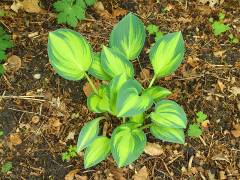
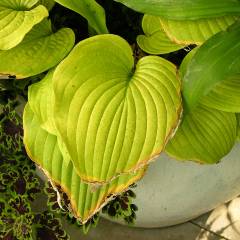
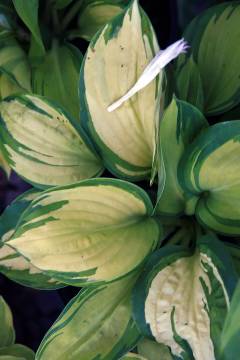
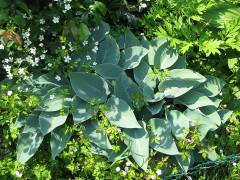
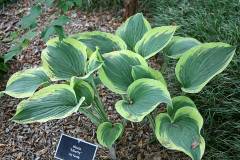
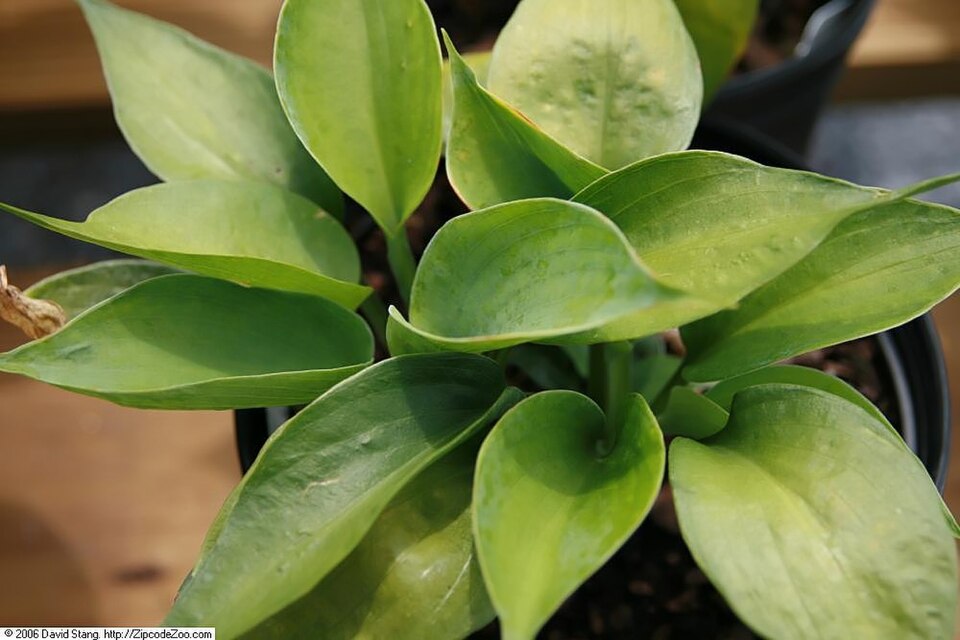
Hosta × 'Abiqua Drinking Gourd' is a medium-large blue hosta in the Asparagaceae family grown for the deeply cupped corrugated leaves that hold rainwater like miniature bowls — the 'drinking gourd' of the cultivar name. Plants reach 18–22 inches (45–55 cm) tall and 30–40 inches (75–100 cm) wide at maturity. Each leaf runs intensely blue-green with a heavy waxy bloom (pruinose coating) that creates the blue color. Leaves are deeply cupped (concave), heavily corrugated (puckered), and thick in substance — these three traits combined give the cultivar a sculptural leaf form that runs at the deeper-cupped end of the hosta range. After rain, the cupped leaves hold pools of water that catch light, adding a reflective element to the foliage display. The thick leaf substance and heavy corrugation give substantial slug resistance — slugs prefer thin smooth leaves and tend to avoid the thick bumpy texture of this cultivar, making 'Abiqua Drinking Gourd' more slug-tolerant than most hostas. The blue waxy bloom holds longest in full shade; morning sun and overhead irrigation wash the bloom away over time, turning the leaves from blue to green in sites with too much exposure. White bell-shaped flowers on short scapes barely above the foliage appear in July — the flowers run secondary to the foliage display. The cultivar runs slow to establish, requiring 4–5 years to reach full size from a small division. Bred by Walden West Nursery in Oregon. Deer eat hosta foliage. Toxic to dogs and cats if ingested.
Native Range
Hosta species are native to East Asia (Japan, Korea, China), where wild populations of the genus occur in moist forest understory, stream banks, and mountain meadow habitats across temperate East Asian climates. The 'Abiqua Drinking Gourd' cultivar is a garden hybrid registered by Walden West Nursery in Oregon and is grown commercially across temperate North America and Europe.Suggested Uses
Used as a specimen hosta in shade gardens where the deeply cupped blue leaves anchor the foliage composition. Container culture works in pots of 10 gallons (38 liters) or more. The sculptural leaf form gives architectural interest that flat-leaved hostas cannot match. Pairs with ferns, astilbe, and other narrow-leaved shade perennials for textural contrast. Position where rainwater pooling in the cupped leaves can be observed at human scale — near pathways, seating areas, or pond margins. The slug-resistant thick leaf substance suits the cultivar to gardens where slug damage limits the choice of other hosta cultivars. Sites with morning sun or overhead irrigation cause the blue waxy bloom to wash off; the cultivar's principal ornamental feature is lost across the growing season under those exposure conditions, so full-shade positions with base watering give the most enduring blue color across the growing season.How to Identify
Appearance
Size & Dimensions
Height1'6" - 1'10"
Width/Spread2'6" - 3'4"
Bloom Information
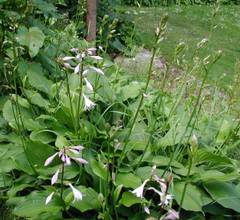
Flowering in July across approximately 3 weeks. White bell-shaped flowers on short scapes barely clear the foliage. The cupped blue foliage runs as the principal display with the flowers as a secondary feature. Flowers attract bumblebees and other large native bees during the brief bloom window.
Detailed Descriptions
Flower Description
White; bell-shaped; on short scapes barely above the foliageFoliage Description
Intense blue-green with heavy waxy pruinose bloom; deeply cupped concave heavily corrugated puckered thick-substanced leaves that hold rainwater like bowlsGrowing Conditions
Sun Requirements
Requires 2-4 hours of direct sunlight daily
• Full Sun: 6+ hours of direct sunlight
• Partial Shade: 3-6 hours of direct sunlight
• Full Shade: Less than 3 hours of direct sunlight
Care & Maintenance
Care Guide
Plant in partial to full shade with 2–4 hours of filtered light. Full shade preserves the blue waxy bloom longest — sites with morning sun or overhead irrigation lose the bloom over the growing season as the wax washes off, turning the leaves from blue to green. Moist humus-rich well-drained soil suits the cultivar. Water at the base — overhead irrigation washes the blue bloom from the leaves and accelerates the blue-to-green color shift. Mulch with 2–3 inches (5–8 cm) of organic material to retain soil moisture and to suppress weeds. Allow 4–5 years for the clump to reach full size from a small division. Remove spent flower scapes after bloom. Cut all foliage to ground level after frost browns it in fall. The cultivar is toxic to dogs and cats if ingested; deer eat the foliage and may need protection in deer-heavy areas.Pruning
Remove spent flower scapes at the base after bloom. Cut all browned foliage to ground level in late fall after frost has killed the leaves. No other seasonal pruning is needed. Avoid cutting green foliage during the growing season — the leaves are building energy reserves for the following spring's emergence cycle.Pruning Schedule
Prune: November
fall
Container Growing
Suitable for container growing
Minimum container size: 10 gallons