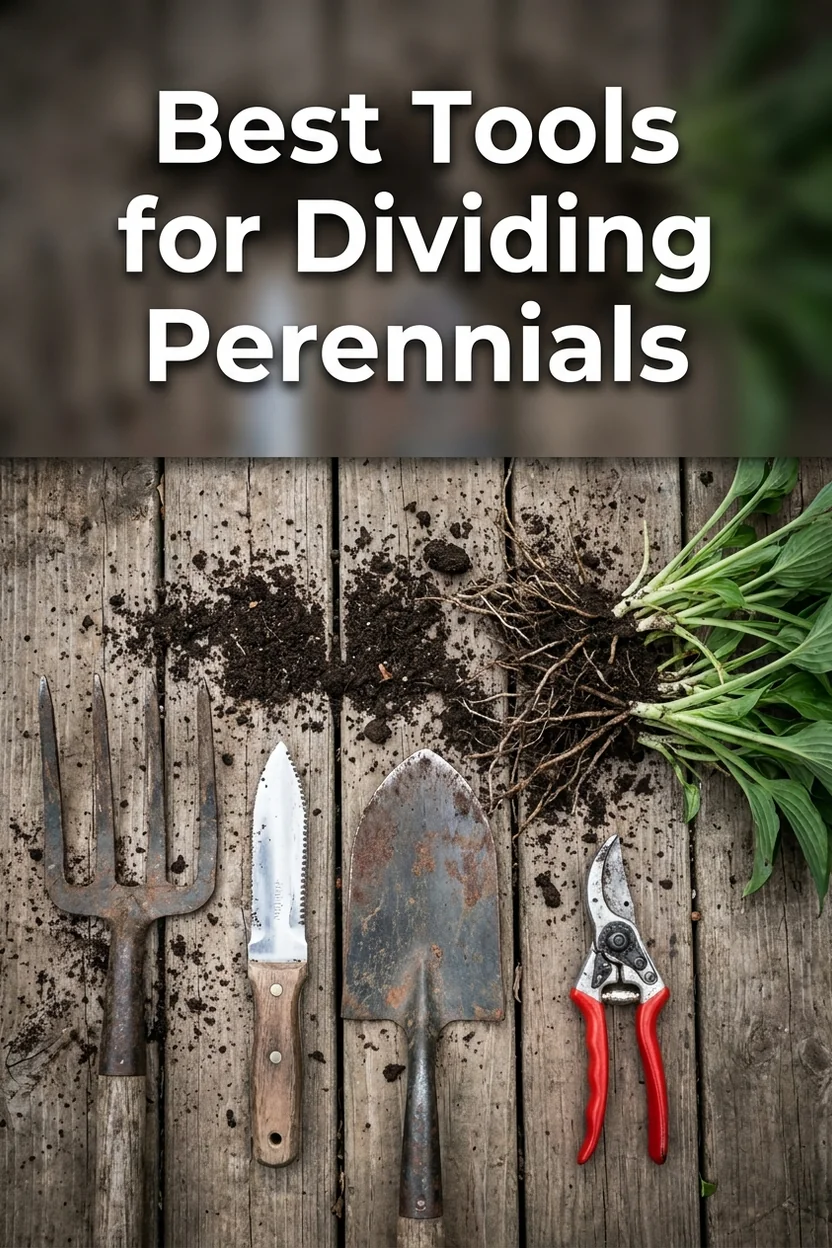
Best Tools for Dividing Perennials: Forks, Knives, Spades
Pets & Toxicity
Recorded toxicity for plants linked in this guide. An unknown status is not a safety assessment.
Toxic to pets: Stella de Oro daylily, bearded iris, Sarah Bernhardt peonyDetailsHide
Hemerocallis × 'Stella de Oro' — Toxicity Warning
Toxic to petsView Hemerocallis × 'Stella de Oro' plant profilePaeonia lactiflora 'Sarah Bernhardt' — Toxicity Warning
Toxic to pets and humansView Paeonia lactiflora 'Sarah Bernhardt' plant profile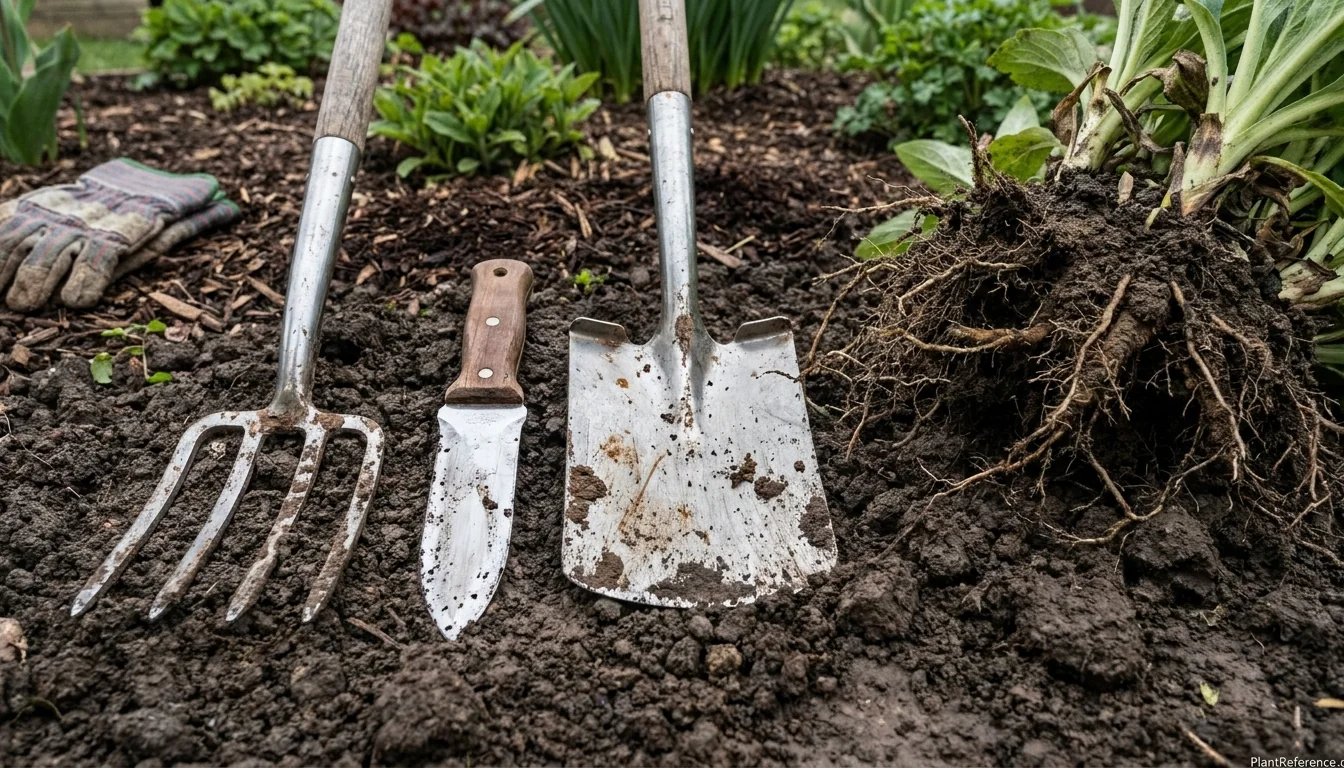
— Image © PlantReference.org 2026
I get asked about tools constantly, and the honest answer for perennial division is that you need fewer than the catalogues suggest — but the two or three you do need have to be good. The best tools for dividing perennials aren't chosen by plant name. They're chosen by root structure, and once you can recognise the three types, the buying decision takes about a minute.
Match the Tool to the Root, Not the Plant
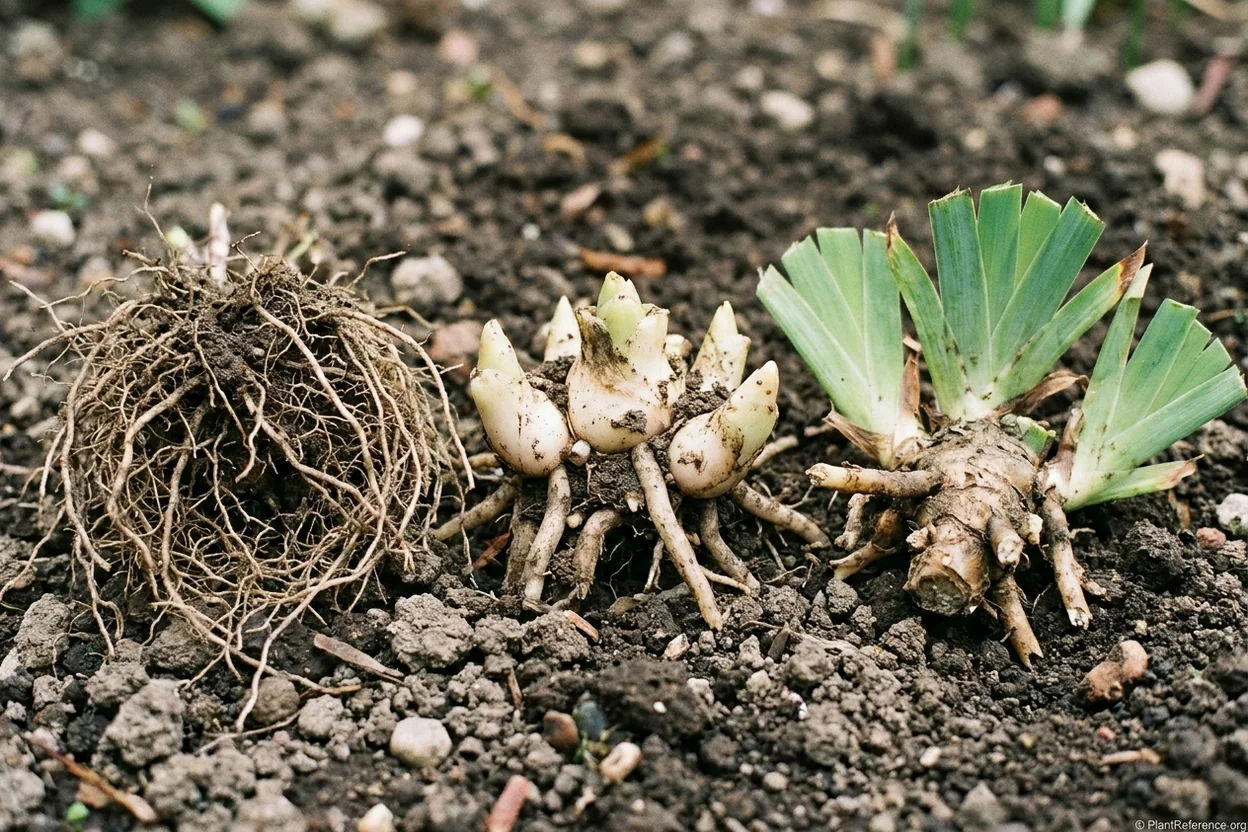
Perennial roots fall into three structures, and each wants a different action from the tool.
Fibrous roots are a dense tangle of fine, similarly sized roots with no obvious centre. 🌿Echinacea purpurea 'Magnus' (ek-in-AY-shuh pur-PUR-ee-uh) and 🌿Rudbeckia fulgida 'Goldsturm' are the classic examples. These pull apart. You want prying force, not cutting force — two forks inserted back to back and levered apart separates them along their natural fault lines with minimal root loss.
Clumping crowns are dense, woody or fleshy masses where individual growing points sit tight against each other. Hosta 'Halcyon', 🌿Hemerocallis 'Stella de Oro' and 🌿Astilbe chinensis 'Visions' all behave this way. A mature Hosta 'Halcyon' crown can be as tough as a fence post. These need cutting force — a sharp blade driven straight through.
Rhizomes are horizontal underground stems, thick and segmented, sitting at or just below the soil surface. 🌿Iris germanica is the one most gardeners meet. These get sliced into sections by hand with a knife, no digging leverage required. How to Divide Irises Without Killing Them
There's a fourth category worth naming: plants you shouldn't divide at all. Lavender and most woody-based subshrubs die when split. 🌿Paeonia lactiflora 'Sarah Bernhardt' can be divided, but only into pieces carrying 3-5 eyes each, and it sulks for two years afterward. How to Grow Peonies: Planting, Staking & 50-Year Blooms
The 7 Best Tools for Dividing Perennials
Radius Garden 203 Pro Stainless Digging Fork — Best Overall
Around $60-80. Four thick stainless tines on a resin-encased steel shaft, with an oversized O-grip handle that lets you push with your palm rather than pinching a D-handle. Stainless matters here for a reason people underrate: soil doesn't stick to it, so you aren't scraping mud off the tines every third clump.
The tines are the buying decision. Cheap forks use thin, flat, stamped tines that splay under lateral load — exactly the load you apply when you insert two forks back to back and pry. These don't. If you buy one tool from this list, buy this. How to Divide Perennials: A Species-by-Species Guide
Nisaku NJP650 Hori-Hori — Best for Clumping Crowns
Around $30-40. A 7.25 inch (18 cm) stainless blade, concave, sharpened on both edges with one side serrated, in a wooden handle. It's a Japanese soil knife and it is the single most useful tool for dividing hostas and daylilies.
The technique: lift the clump, hose the soil off the crown so you can see the growing points, then drive the blade down through the crown between them. The serrated edge saws through the fibrous outer tissue; the smooth edge finishes the cut. Ten seconds per division, and you can see exactly what you're cutting. How to Grow Hostas: Varieties, Care & Pest Solutions
Radius Garden 22011 Root Slayer Shovel — Best for Overgrown Clumps
Around $50-65. A V-shaped blade with serrated side edges and a sharpened tip, designed to cut through roots rather than push past them. For a 🌿Hemerocallis 'Stella de Oro' clump that's been in the ground eight years and gone hollow in the middle, this is the tool that gets it out of the ground in one piece.
It's not a finesse tool. Use it to lift and to quarter, then switch to a hori-hori for the actual divisions. Why Your Daylilies Stopped Blooming (And How to Fix It)
Fiskars Ergo Garden Fork — Best Budget Fork
Around $25-30. Four steel tines, welded boron steel head, moulded handle. It bends under the hardest prying — I've put a slight curve in one — but for the first few seasons of a garden it does the job at a third of the price of the Radius.
Buy this as your second fork if you're using the two-fork prying method on fibrous perennials. There's no reason both forks need to be premium. How to Grow Coneflowers (Echinacea) That Feed Pollinators
Fiskars Steel D-Handle Square Garden Spade — Best for Straight Cuts
Around $35-45. A flat, square-edged blade with a generous foot tread and a 14-gauge steel shaft. The flat blade is what distinguishes a spade from a shovel, and for division it means you can drive it straight down through a crown and get a clean vertical cut rather than a scooping tear.
The foot tread matters more than people expect. Thin-edged blades without a tread hurt after twenty divisions, and pain makes people rush and damage plants.
Corona BP 3180 ComfortGEL Bypass Pruner — Best for Cleaning Up Divisions
Around $18-25. Every division needs tidying afterward: damaged roots trimmed back to clean tissue, foliage cut to 4-6 inches (10-15 cm) to reduce transpiration while the roots re-establish. Bypass blades cut cleanly rather than crushing, which matters on tissue that's about to sit in wet soil.
Anvil pruners crush stems and give rot an entry point. Use bypass for anything living. When to Cut Back Perennials in Fall (And What to Leave)
CobraHead Broadfork — Best for Whole-Bed Renovation
Around $285-299. This is a specialist purchase and most gardeners don't need it. But if you're lifting and resetting an entire perennial border — the every-eight-years reset where everything comes out, the soil gets amended, and it all goes back in — a broadfork loosens a full bed width without inverting soil layers or destroying structure.
Five curved carbon steel tines, ash handles, built to be leaned on rather than jumped on. How to Prepare Perennial Gardens for Winter by Species
Tool | Price | Best For | Root Type | Skip If |
|---|---|---|---|---|
Radius Garden 203 Pro Fork | $60-80 | All-round lifting and prying | Fibrous, clumping | You only divide one plant a year |
Nisaku NJP650 Hori-Hori | $30-40 | Precise crown cuts | Clumping, rhizomes | Nothing — everyone should own one |
Radius Root Slayer Shovel | $50-65 | Overgrown eight-year clumps | Clumping | Your beds are under three years old |
Fiskars Ergo Garden Fork | $25-30 | Second fork for prying | Fibrous | You already own two forks |
Fiskars Square Garden Spade | $35-45 | Clean vertical crown cuts | Clumping | You have the Root Slayer |
Corona BP 3180 Pruner | $18-25 | Trimming roots and foliage | All | You own any bypass pruner |
CobraHead Broadfork | $285-299 | Full bed renovation | All | You garden in beds under 50 sq ft |
Fork vs Knife vs Spade: When to Use Each
Use two forks when the plant has fibrous roots and you want maximum divisions with minimum damage. Insert both forks into the centre of the clump back to back, tines interlocking, then pull the handles apart. The clump separates along its own weak points. This is the gentlest method available and the divisions establish fastest.
Use a knife when you can see what you're cutting. Lift the clump, wash the soil off with a hose, and the growing points become obvious. Cutting blind through soil is how people end up with divisions that have roots but no buds, which never recover.
Use a spade when the clump is too large to lift, too dense to pry, or you're taking a wedge off the edge of an established plant without disturbing the rest. Drive it straight down, cut the wedge free on all sides, and lift just that section. Most gardeners over-divide; taking a third off the edge and leaving the plant in place is often the better call. Plan a Perennial Garden That Blooms Spring to Fall
Keeping Division Tools Sharp and Clean
A dull blade tears crown tissue instead of cutting it, and torn tissue is an open door for rot in soil that's about to be watered heavily.
Touch up blade edges with a mill file or diamond stone before each division session — five minutes for all your tools
Wipe soil off stainless and carbon steel immediately after use; carbon steel rusts overnight in damp conditions
Disinfect blades between plants with 70% isopropyl alcohol if you've cut anything showing crown rot, leaf spot or virus symptoms
Rub wooden handles with boiled linseed oil once a season to stop them drying out and splitting
Store forks and spades hanging rather than standing on their tines or edges
Skip the bleach. A 10% bleach solution does sanitise, but it pits stainless steel over time and corrodes carbon steel quickly. Alcohol evaporates clean and doesn't damage the blade.
What You Can Skip
Powered dividers and reciprocating saw blades. They exist, they work, and they generate enough heat and vibration to damage the tissue around the cut. Fine for firewood, wrong for living crowns.
Root washing tubs and specialty division tables. A tarp on the lawn and a hose does the same job.
Machetes and "garden axes." They cut, but you can't control depth or see growing points, so you end up with divisions that have no buds.
A second hori-hori in a fancier steel. The Nisaku is stainless, holds an edge fine, and costs $35. Upgrading here buys nothing.
The realistic starter kit is a good fork, a hori-hori, and whatever bypass pruners you already own. Under $110 total, and it will handle every division job in an average garden for the next decade. Best Perennials for Shade: 12 Species That Thrive
Buy the fork and the knife first, use them for a season, and let the actual jobs in your garden tell you whether you need anything else. Most people find they don't. Why Your Peonies Won't Bloom: The 5 Most Common Causes
Frequently Asked Questions
Reading about plants and recognising them are different skills. These three build the second.
- Daily PlantIdentify the day’s mystery plant from a close-up photograph.
- Keyed OutWork a dichotomous key, lead by lead, to name a hidden specimen.
- Name That PlantName a specimen from botanical clues dealt hardest first.
Free to play, no account needed
Tagged with
Helen is an interior plant stylist in Los Angeles who works with restaurants, offices, and residential clients to select and maintain indoor plants. She studied design in college and got into plants when a client asked her to "green up" a mid-century modern home. Helen's expertise sits at the intersection of design and plant care—she thinks about light, scale, texture, and color, but she also knows which plants will actually survive in a given space. She's killed enough fiddle leaf figs in dark corners to know better. Helen maintains her own collection of over 80 houseplants in her apartment and writes about indoor plant selection, styling, and the practical side of keeping plants alive in interior environments.