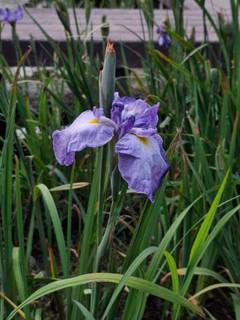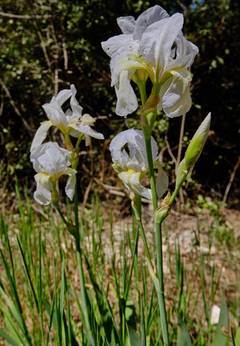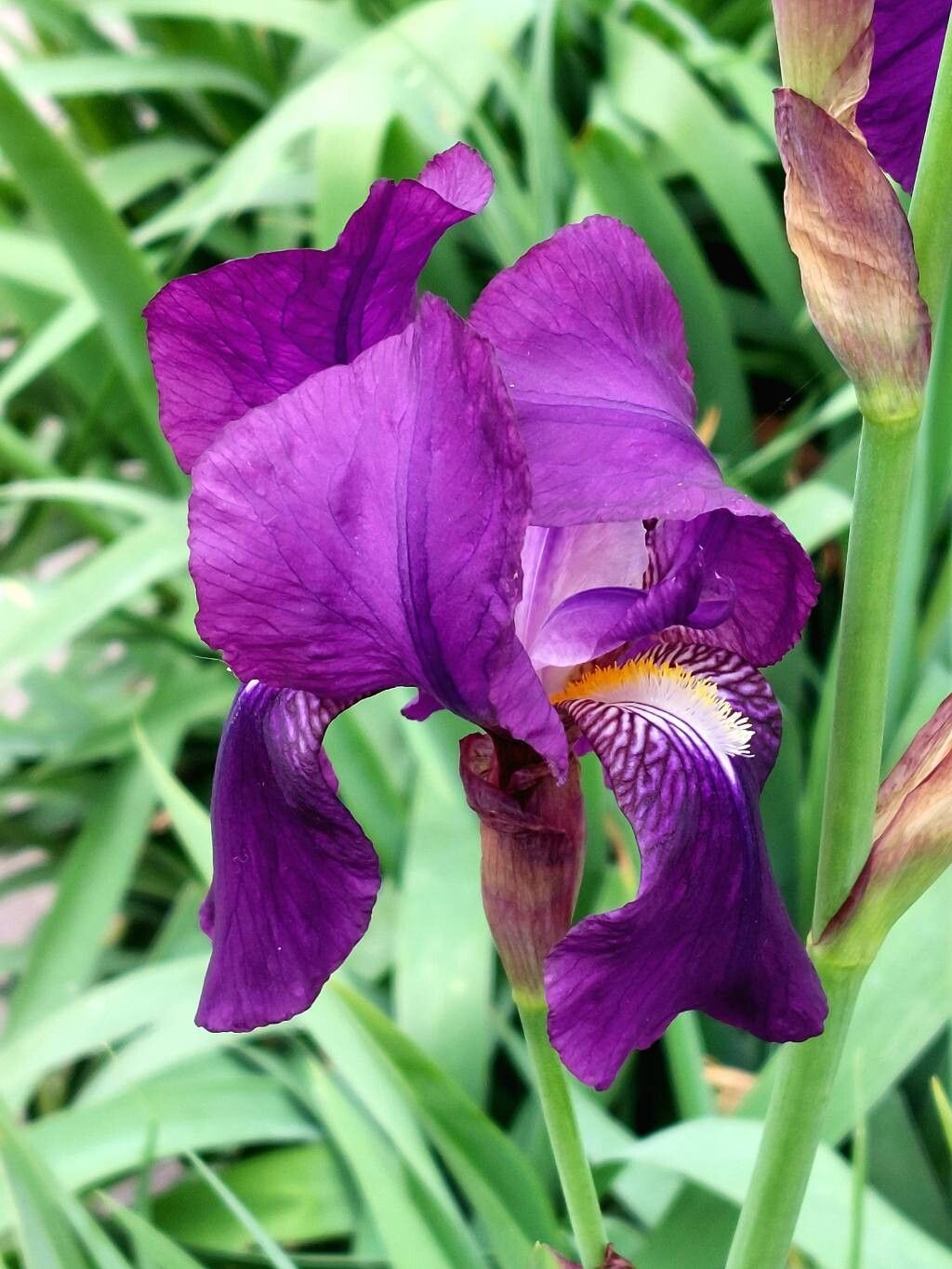
Iris, Genus, ×, Hybrid, germanica, Species,
- Genus & species
- Hybrid
bearded iris
Hybrid origin; naturalized in the Mediterranean and Europe
Overview
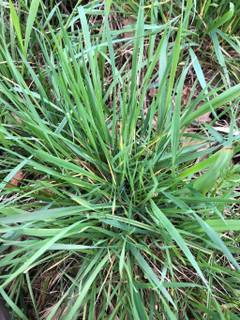
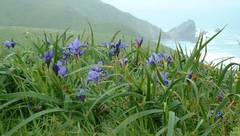
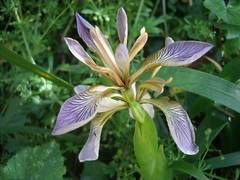
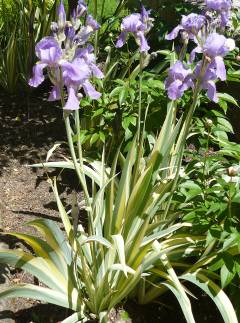
Iris germanica is a rhizomatous perennial in the Iridaceae family, growing 24-36 inches (60-90 cm) tall in bloom and spreading to form clumps 18-24 inches (45-60 cm) wide. Flat, sword-shaped blue-green leaves 12-24 inches (30-60 cm) long rise in fans from thick surface rhizomes. In late spring each branched stem carries several flowers 3-5 inches (8-13 cm) across, with three upright petals (standards) and three drooping ones (falls); the falls bear a furry line of hairs called a beard. The species flowers in violet to purple shades, and many garden cultivars extend the range across nearly every color. Iris germanica grows from rhizomes that sit at the soil surface and need sun exposure; burying them or crowding leads to rot and poor flowering. It is hardy in USDA zones 3 through 9 and tolerates drought once established, growing in full sun and well-drained, neutral soil. Clumps grow congested over three to four years and flower less until lifted and divided. Wet, shaded, or heavy soil encourages soft rot of the rhizomes and leaf spot. The leaves and rhizomes are toxic if eaten and the sap can irritate skin. Grown in mixed and dedicated iris borders, cottage gardens, and dry sunny beds.
Native Range
Iris germanica is a long-cultivated species of hybrid origin, grown for centuries and naturalized across the Mediterranean and parts of Europe. It is not known reliably as a wild plant and is grown throughout temperate regions.Suggested Uses
Grown in dedicated iris beds, mixed borders, cottage gardens, and dry sunny banks, spaced 12-18 inches (30-45 cm) apart with rhizomes at the surface. The sword-shaped foliage holds structure after bloom. It suits hot, well-drained sites.How to Identify
Appearance
Size & Dimensions
Height2' - 3'
Width/Spread1'6" - 2'
Colors
Bloom Information
Flowers in late spring, roughly May into June, with each stem opening several blooms in succession. The main display lasts two to three weeks per clump. Reblooming cultivars exist, but the species flowers once a year.
Detailed Descriptions
Flower Description
Violet to purple in the species; many colors in cultivarsFoliage Description
Blue-greenGrowing Conditions
Sun Requirements
Requires 6-12 hours of direct sunlight daily
• Full Sun: 6+ hours of direct sunlight
• Partial Shade: 3-6 hours of direct sunlight
• Full Shade: Less than 3 hours of direct sunlight
Care & Maintenance
Care Guide
Grows in full sun and well-drained, neutral soil, tolerating drought once established. The rhizomes sit at the soil surface and need exposure to sun; burying or mulching over them, or planting in shade, causes rot and reduces flowering. Water needs are low to medium, with wet or heavy soil leading to bacterial soft rot. In USDA zones 3 through 9 the plant is cold hardy and the foliage is semi-evergreen in mild climates. Clumps grow congested within three to four years and bloom less until lifted and divided in mid- to late summer. The leaves and rhizomes are toxic if eaten and the sap can irritate skin.Pruning
Spent flower stems are cut to the base after blooming, and damaged or browned leaves are trimmed through the season. Foliage is cut back to a fan about 6 inches (15 cm) tall when clumps are divided in mid- to late summer. Dividing every three to four years keeps clumps flowering.Pruning Schedule
Prune: June–August
summer
Container Growing
Suitable for container growing
Minimum container size: 3 gallons