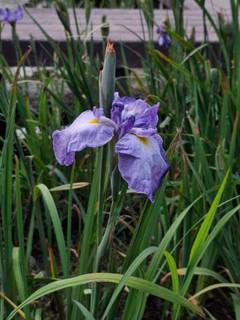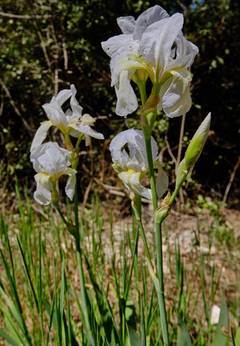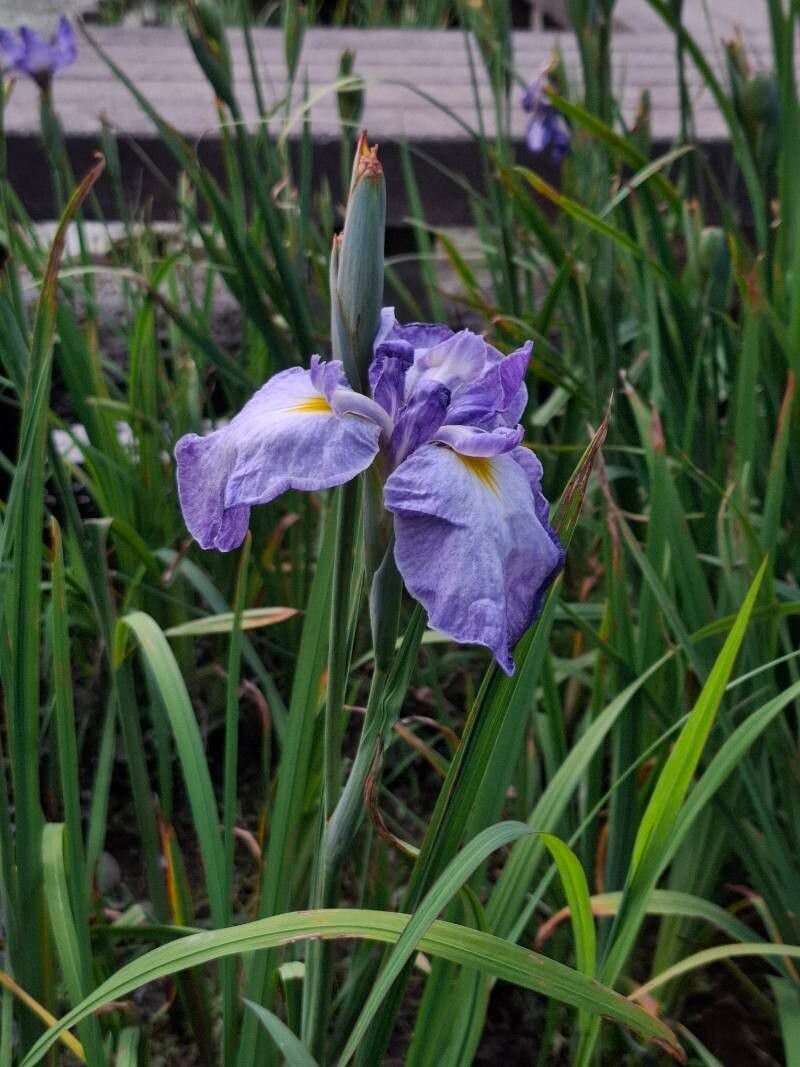
Iris, Genus, spp., Multiple species,
- Genus
- Multiple species
irises
Overview
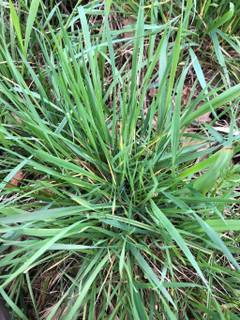
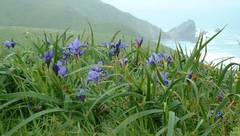
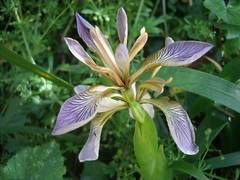
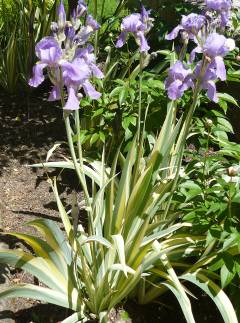
Iris is a genus of about 300 species of perennials in the family Iridaceae, found across the temperate Northern Hemisphere. Most grow from creeping rhizomes, while a smaller group grows from bulbs. The leaves are typically sword-shaped or grass-like, arranged in flat fans at the base. The flowers have a structure shared across the genus: three outer tepals, called falls, that arch downward, and three inner tepals, called standards, that stand upright, often with contrasting markings or a crest. Flower colour spans nearly the full spectrum, including blue, purple, white, yellow, brown, and bicolours. Plants range from 10 cm (4 in) in dwarf rock-garden species to 1.2 m (4 ft) or more in tall bearded and water irises. Groups include the bearded irises with a fuzzy band on the falls, the beardless Siberian and Japanese irises, and the crested and bulbous types. Flowering occurs mainly in spring and early summer, though some reblooming forms flower again in autumn. The rhizomes and bulbs contain irritant compounds that are toxic if eaten. Habitats span dry hillsides, meadows, woodland, and pond margins, depending on the group.
Native Range
Distributed across temperate regions of the Northern Hemisphere, including Europe, Asia, North Africa, and North America. Native North American species include I. versicolor of eastern wetlands and I. douglasiana of the Pacific coast. Wild irises grow in habitats from dry rocky slopes to marshes.Suggested Uses
Bearded irises are used in sunny borders and along paths, while Siberian and Japanese irises are planted at pond edges and in moist beds. Dwarf species suit rock gardens and the front of borders.How to Identify
Appearance
Size & Dimensions
Height4" - 4'
Width/Spread1' - 2'
Bloom Information
Most irises flower in spring and early summer, with bearded types blooming from April to June and Siberian and Japanese irises slightly later. Individual flowers last a few days, and a clump blooms over two to three weeks. Some bearded cultivars rebloom in late summer or autumn.
Detailed Descriptions
Flower Description
blue to purpleFoliage Description
greenGrowing Conditions
Sun Requirements
Requires 5-8 hours of direct sunlight daily
• Full Sun: 6+ hours of direct sunlight
• Partial Shade: 3-6 hours of direct sunlight
• Full Shade: Less than 3 hours of direct sunlight
Care & Maintenance
Care Guide
Growing needs vary by group: bearded irises grow in full sun and sharply drained, neutral to alkaline soil, with rhizomes set at the surface, while Siberian and Japanese irises grow in moist to wet, slightly acid ground. Most are hardy across the temperate zone, with many tolerating -30 C (-22 F). Bearded iris rhizomes rot if buried too deep or kept wet. Soft rot, leaf spot, and iris borer are the main problems. Crowded clumps flower less and gain from division.Pruning
Spent flower stems are cut to the base after bloom to stop seed formation. Foliage is left to feed the rhizome and trimmed only when it yellows in autumn. Clumps are lifted and divided every three to four years in mid- to late summer, with old central rhizomes discarded.Pruning Schedule
Prune: July–August
summer
Container Growing
Suitable for container growing
Minimum container size: 3 gallons