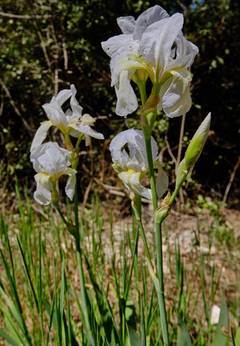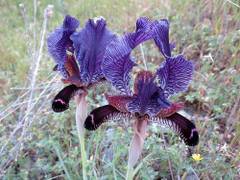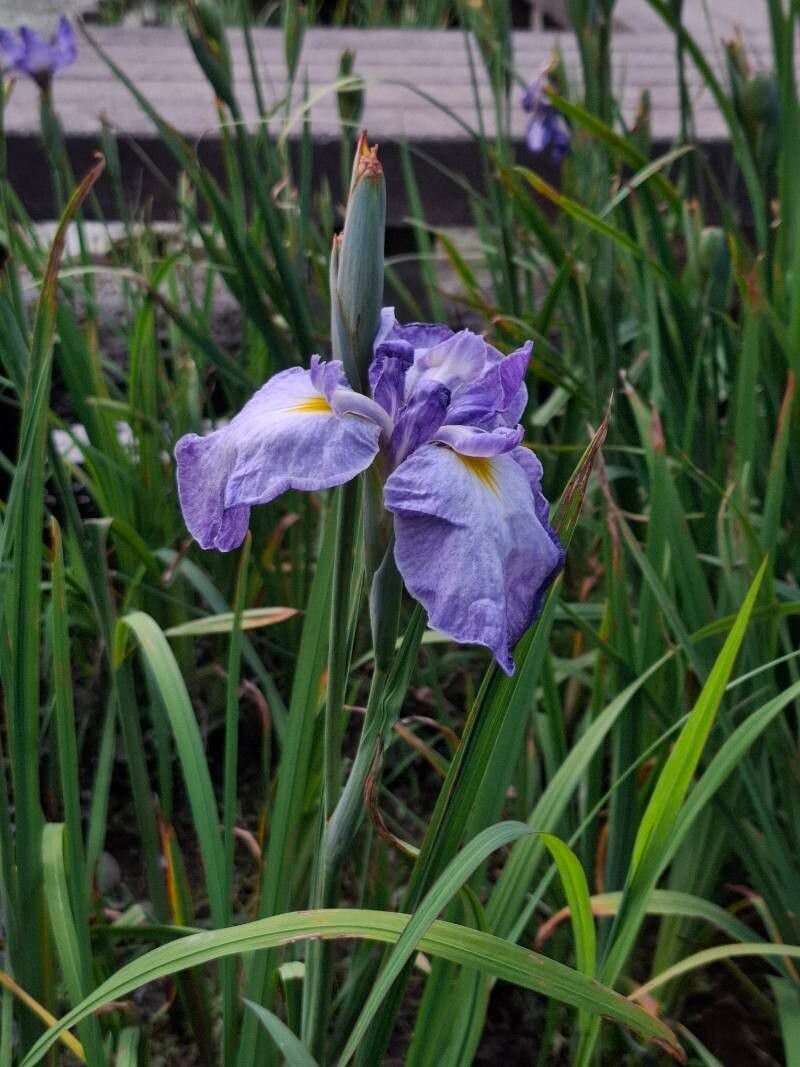
Iris, Genus, ensata, Species,
- Genus & species
Japanese iris
Japan, Korea, and northeastern China where the species grows in wet meadows, marshes, boggy ground, and along the margins of slow-moving streams at low to moderate elevations; widely cultivated in Japan for centuries with thousands of named Japanese cultivars representing one of the world's oldest ornamental plant breeding traditions
Overview
Iris ensata is a clump-forming rhizomatous perennial in the family Iridaceae, native to moist meadows, marshes, and stream banks across Japan, Korea, and northeastern China. Plants form upright fans of narrow sword-like leaves 18–24 inches (45–60 cm) tall carrying a pronounced central midrib through each leaf blade. In early summer, branched flower stems rise 24–40 inches (60–100 cm) and carry 2–4 beardless flowers 4–8 inches (10–20 cm) wide that run the largest in the iris family at the upper end of the flower-size range. Falls (the lower petals) are broad, flat, and spreading or reflexed in the species type; standards (the upper petals) are shorter and more upright in species forms, though modern cultivars often carry six similarly sized flat petals that create a nearly circular flower outline. Flower color selections range from white through lavender, violet, deep purple, pink, and bicolors, with intricate veining and contrasting signals at the petal bases across the cultivar range. Unlike bearded irises, I. ensata requires consistently moist, acidic, humus-rich soil and will not tolerate alkaline or persistently dry conditions in garden cultivation. All parts are toxic if plant material is ingested, with the rhizome and root carrying the highest toxicity concentration.
Native Range
Iris ensata is native to Japan, Korea, and northeastern China, where the species grows in wet meadows, marshes, boggy ground, and along the margins of slow-moving streams at low to moderate elevations across its native range. The species has been widely cultivated in Japan for centuries, and thousands of named Japanese cultivars represent one of the world's oldest ornamental plant breeding traditions — a cultivation history that extends far beyond the European-based cultivar traditions of most garden perennials in current commercial cultivation.Suggested Uses
Planted at the margins of ponds, streams, and water features; in bog gardens; and in consistently moist perennial borders at 18–24 inch (45–60 cm) spacing in zone-4-and-warmer gardens. The large flat flowers and upright foliage supply strong vertical and horizontal contrast in water-garden settings. Companion plantings with Rodgersia, Astilbe, Hosta, and ornamental grasses combine well in moist-site compositions. Long-lasting cut flower performance runs 3–5 days in water as the cut-flower contribution beyond the garden planting. All parts are toxic to pets and humans if plant material is ingested.How to Identify
Appearance
Size & Dimensions
Height2' - 3'4"
Width/Spread1'6" - 2'
Bloom Information
Bloom runs June through July in zones 4–9, typically 2–4 weeks after bearded irises. Each stem produces 2–4 flowers opening sequentially over 2–3 weeks. Individual flowers last 2–3 days. Established clumps produce multiple stems, which extends the display across the bloom window. In Pacific Northwest regional climates, bloom falls reliably in mid-June through mid-July each year.
Detailed Descriptions
Flower Description
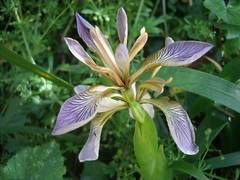
White, lavender, violet, deep purple, and pink coloration with bicolor selections carrying intricate veining and contrasting signals at the petal bases; very large beardless flowers 4-8 inches wide with broad flat spreading-to-reflexed fallsFoliage Description
Medium green; narrow sword-like leaves carrying a pronounced central midrib; upright foliage fans 18-24 inches tall across the growing season before the foliage yellows in fallGrowing Conditions
Sun Requirements
Requires 4-8 hours of direct sunlight daily
• Full Sun: 6+ hours of direct sunlight
• Partial Shade: 3-6 hours of direct sunlight
• Full Shade: Less than 3 hours of direct sunlight
Care & Maintenance
Care Guide
Full sun to partial shade in consistently moist-to-wet, acidic, humus-rich soil (pH 5.0–6.5) matches the species's cultivation needs. Unlike most irises, I. ensata requires reliable moisture throughout the growing season and performs well in bog gardens and at the margins of ponds and water features. Soil is not allowed to dry out during active growth, or flower production declines sharply. Alkaline soils and limestone-influenced positions cause plants to yellow and decline — planting these positions runs a poor fit for the species. Rhizomes are planted no deeper than 1–2 inches (2.5–5 cm) below the soil surface. Mulching runs heavily to retain moisture and moderate soil temperature across the root zone. An acid-forming fertilizer is applied in early spring as new growth emerges. Division runs every 3–4 years immediately after flowering or in early fall to maintain plant vigor.Pruning
Spent flower stems are removed at the base after blooming to direct energy back to the rhizome rather than into seed production. Foliage is cut back by half in fall after the leaves begin to yellow; remaining dead foliage is removed in early spring before new growth emerges from the rhizome. Division runs every 3–4 years in late summer to early fall — divisions are replanted immediately and watered thoroughly because rhizomes dry out quickly when exposed to air.Pruning Schedule
Prune: March, July & October
summerfallearly spring