Iris, Genus, pallida, Species, 'Variegata', Cultivar,
- Genus & species
- Cultivar
variegated sweet iris
Adriatic coast (Croatia, Slovenia, NE Italy; rocky limestone grasslands)
Overview
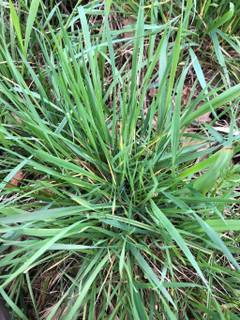
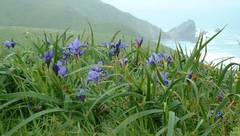
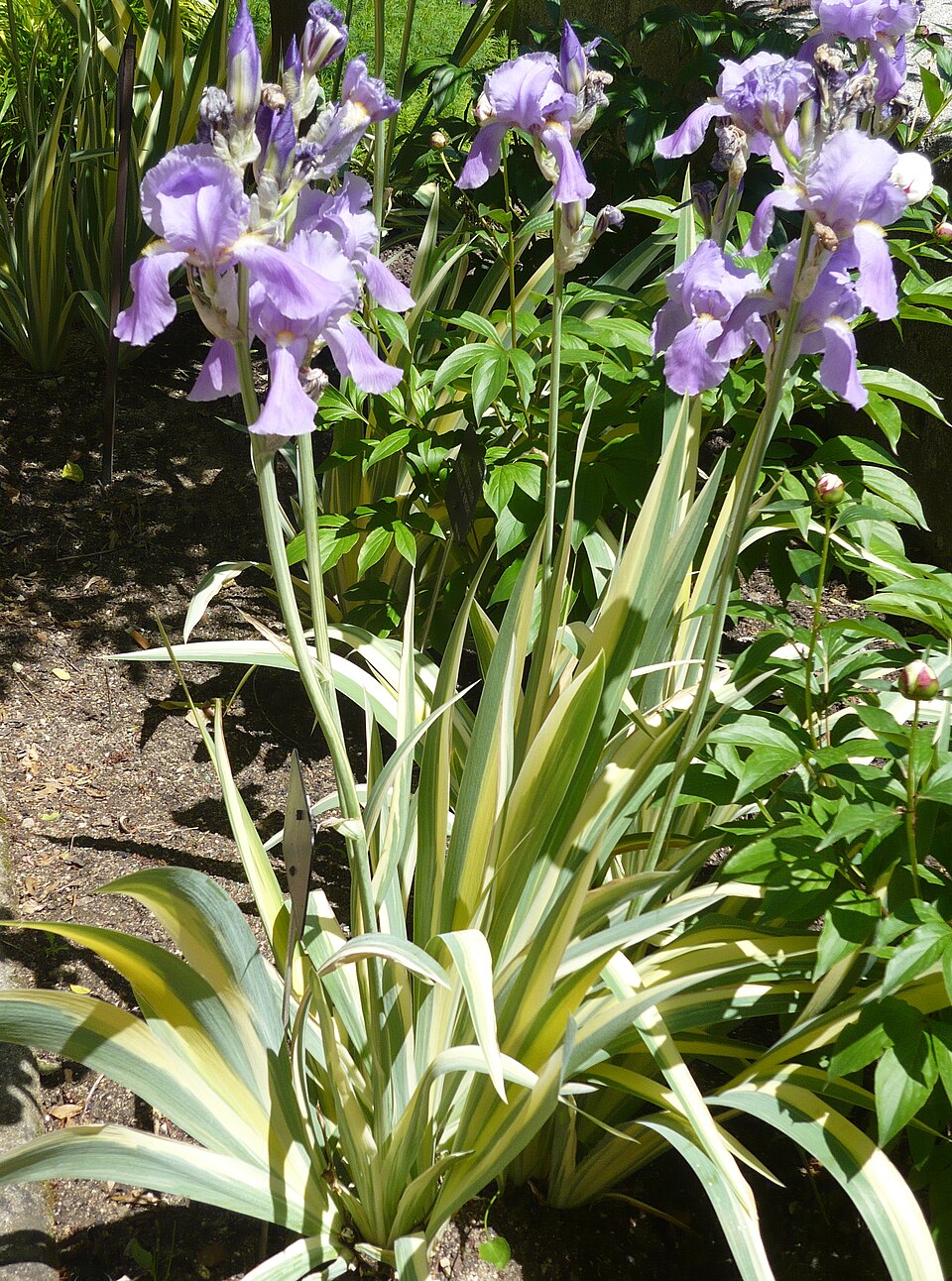
Iris pallida 'Variegata' is an upright clump-forming rhizomatous bearded iris reaching 24–30 inches (60–75 cm) tall with a spread of 12–18 inches (30–45 cm). The cultivar is the gold-striped counterpart of the silver-white-striped 'Argentea Variegata' within the species, and the two cultivars carry identical flowers while separating on foliage coloration alone. Broad sword-shaped deciduous leaves 18–24 inches (45–60 cm) long carry bold longitudinal golden-yellow and blue-green stripes, and the golden variegation produces a warm-toned foliage display that harmonizes with orange, red, and gold garden color schemes in positions where 'Argentea Variegata' with its cooler silver-white tones would not match the intended palette. Fragrant pale lavender-blue flowers 3–4 inches (8–10 cm) across carry yellow beards on branched stems in May–June. Foliage variegation holds vivid across the entire growing season without seasonal fading. Growth rate is moderate. Hardy to zone 4.
Native Range
Iris pallida is native to the Adriatic coast of the western Balkans—Croatia, Slovenia, and northeastern Italy—growing in rocky limestone grasslands on dry alkaline soils under hot Mediterranean summers and cool wet winters. The native calcicolous ecology gives the species its tolerance of alkaline garden soils, a trait rare among bearded irises and useful in garden positions with lime-rich soil where standard bearded iris hybrids struggle.Suggested Uses
Planted in sunny borders, Mediterranean-style gardens, dry sunny banks, and alkaline-soil positions at 12–18 inch (30–45 cm) spacing. The golden-yellow variegation harmonizes with warm color schemes (orange, red, gold, bronze companions) and serves as a counterpart in warm-toned gardens where 'Argentea Variegata' fits cool color schemes (blue, silver, white, lavender). The deciduous foliage leaves bare rhizome ridges visible through winter, so the cultivar is combined with evergreen companions in positions where winter garden interest matters. Wet soils, heavy shade, and waterlogged clay are poor fits for the cultivar.How to Identify
Appearance
Size & Dimensions
Height2' - 2'6"
Width/Spread1' - 1'6"
Bloom Information
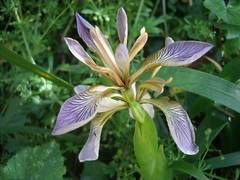
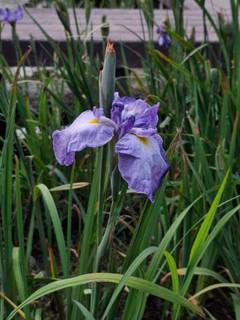
Fragrant pale lavender-blue flowers 3–4 inches (8–10 cm) across carry yellow beards on the falls and open on branched stems from May through June. The flowers match those of the silver-striped 'Argentea Variegata' exactly—the two cultivars separate on foliage color alone. Bloom duration is 3–4 weeks. The golden variegated foliage supplies ornamental interest from May through October beyond the flower season.
Detailed Descriptions
Flower Description
Pale lavender-blue with yellow beard; 3-4 inches; fragrantFoliage Description
Bold golden-yellow and blue-green longitudinal stripes; broad sword-shaped 18-24 inches; vivid all seasonGrowing Conditions
Sun Requirements
Requires 6-10 hours of direct sunlight daily
• Full Sun: 6+ hours of direct sunlight
• Partial Shade: 3-6 hours of direct sunlight
• Full Shade: Less than 3 hours of direct sunlight
Care & Maintenance
Care Guide
Rhizomes are planted shallowly with the rhizome top partially exposed at the soil surface, in full sun in well-drained neutral to slightly alkaline soil (pH 6.5–7.5) matching the species' native limestone-grassland ecology. Hardy to zone 4 (−30°F / −34°C). The golden variegation reads most vivid in full sun positions; partial-shade sites dim the coloration and reduce the ornamental value. Division every 3–4 years when flowering begins to decline maintains the clump's vigor, with division performed in mid-to-late summer (July–August) after bloom. Good air circulation around the rhizomes reduces fungal disease pressure typical of bearded irises in humid summer climates.Pruning
Spent flower stems are removed after bloom at the base. Foliage is cut back to a 6-inch (15 cm) fan shape during division in July–August to reduce transplant shock and accelerate re-establishment. Dead or damaged leaves are removed through the growing season as they appear. Hard cutback of healthy foliage during the active growing season starves the rhizome and is avoided.Pruning Schedule
Prune: July–August
summer
Container Growing
Suitable for container growing
Minimum container size: 3 gallons