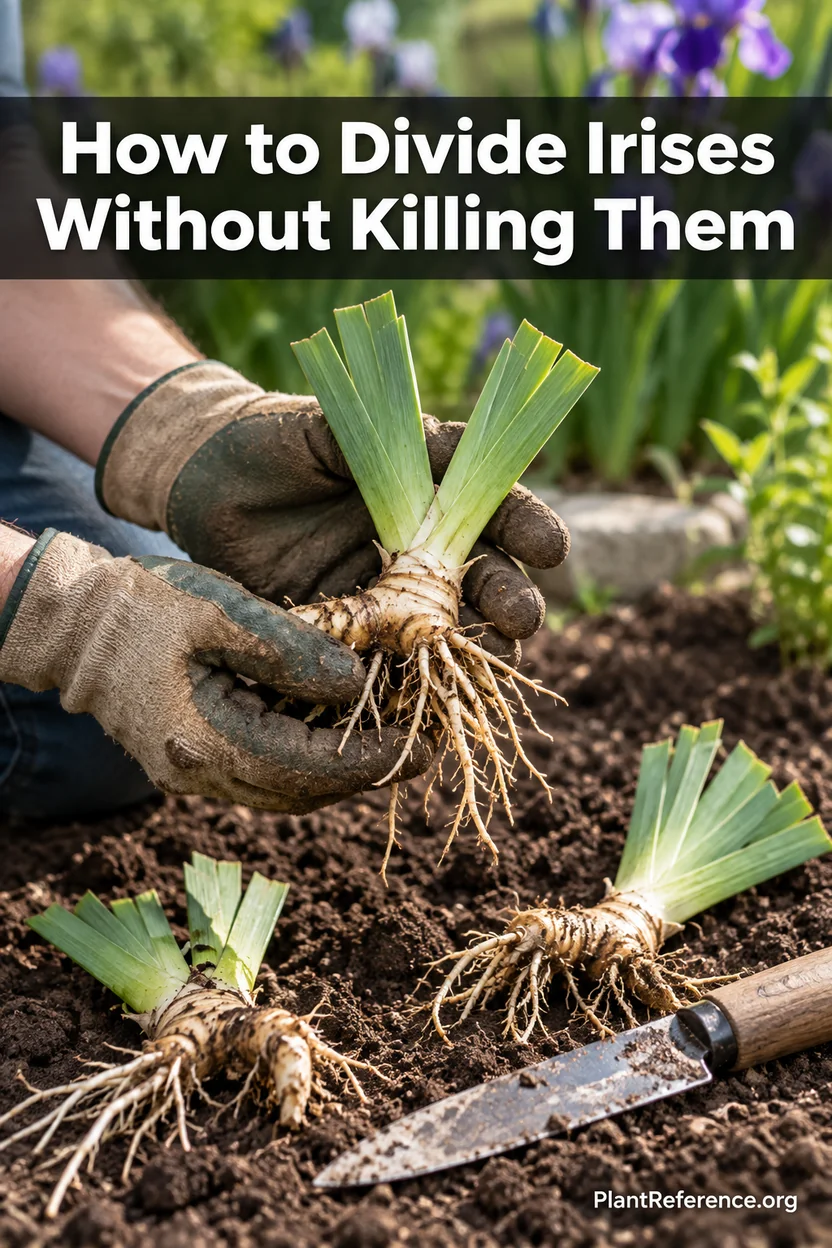
How to Divide Irises Without Killing Them
Pets & Toxicity
Recorded toxicity for plants linked in this guide. An unknown status is not a safety assessment.
Iris sibirica 'Caesar's Brother' — Toxicity Warning
Toxic to pets and humansView Iris sibirica 'Caesar's Brother' plant profile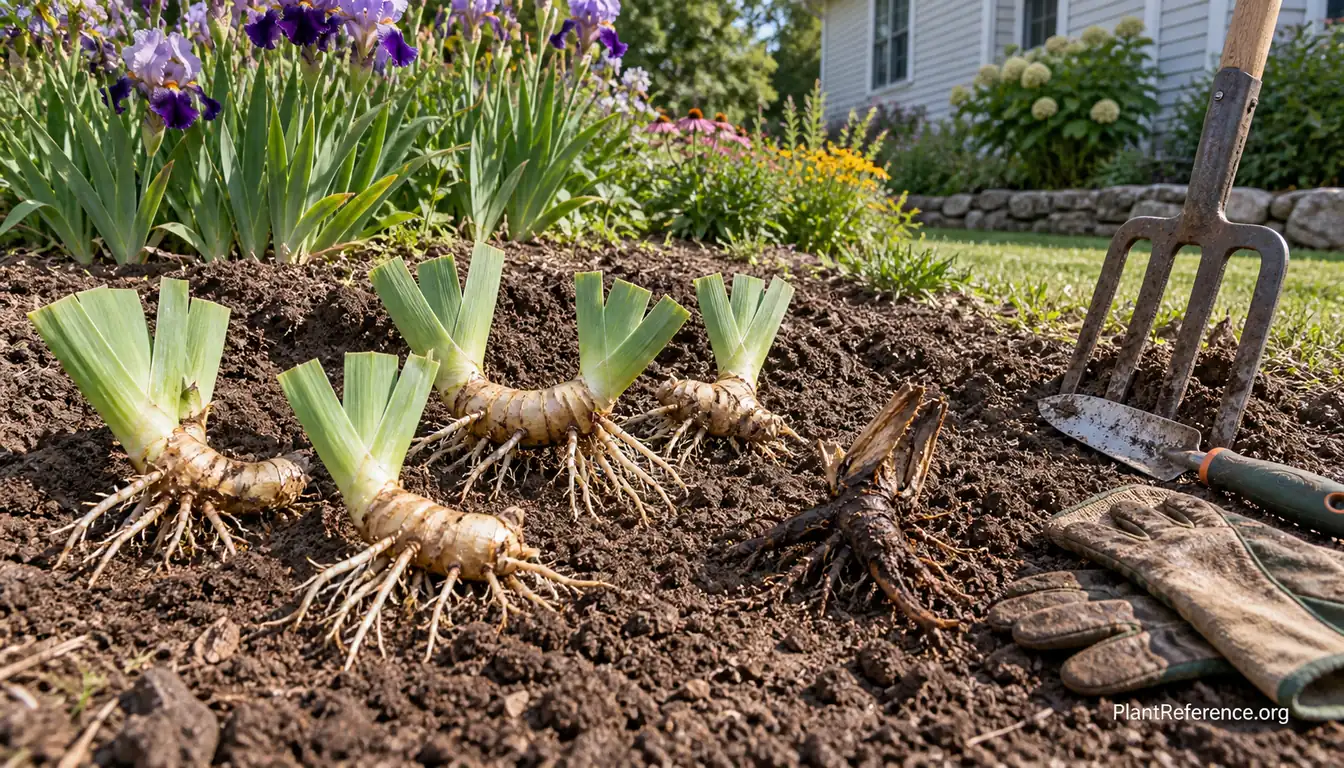
— Image © PlantReference.org 2026
Most people who ask me how to divide irises have already tried once and lost the plants. That is not bad luck. Iris division is unforgiving in two specific places — the timing and the replanting depth — and getting either wrong will rot a clump that had been perfectly happy for years. Get both right and division is one of the easier jobs in the perennial garden.
When to Divide Irises (And the Signs You Waited Too Long)
Bearded iris wants dividing every three to four years. The window is six to eight weeks after bloom finishes, which in Zone 6b means late July through August. That timing matters because the plant enters a short dormant rest after flowering, and roots re-establish readily in warm soil well before the ground freezes.
Spring division is a common mistake. Lift a bearded iris in April and you sacrifice that year's bloom and hand the plant a wounded rhizome heading into the wettest weeks of the year. The general rule across the border applies here: spring bloomers get divided in late summer, summer and fall bloomers get divided in early spring. That principle underpins most of the maintenance calendar in Plan a Perennial Garden That Blooms Spring to Fall.
Four signs tell you a clump is overdue:
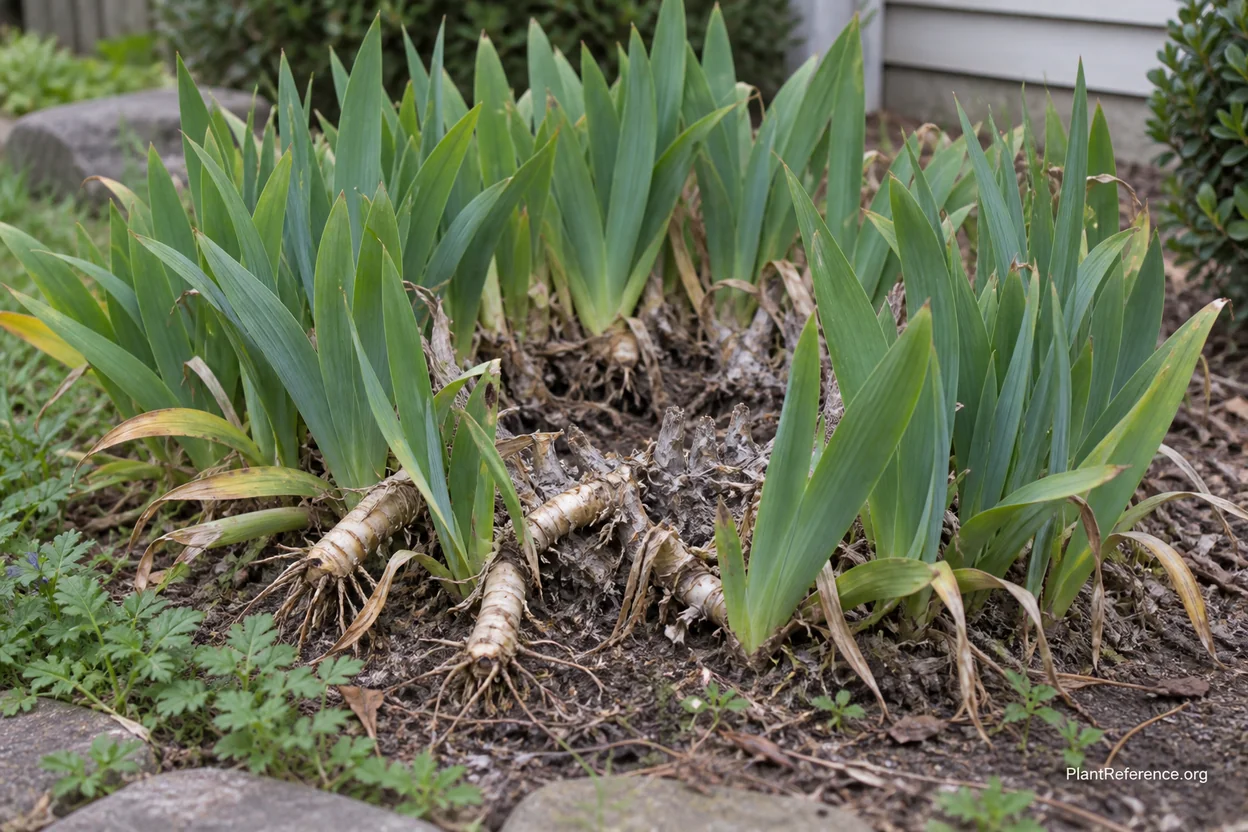
The donut. The center of the clump is bare or dead while the outer ring keeps growing — the classic signal that the mother rhizome has exhausted itself.
Fewer, smaller flowers. A clump that gave forty stems three years ago now gives twelve.
Rhizomes riding up. Crowded 🌿Iris germanica rhizomes push each other out of the ground and sit half-exposed at odd angles.
Rot showing up. Congestion holds moisture against the rhizomes, and bacterial soft rot follows.
Waiting an extra year is not fatal, but it costs you. Every season past the four-year mark means more woody dead center to throw away and fewer viable divisions to replant.
Bearded vs Siberian: Two Completely Different Jobs
The word iris covers plants with fundamentally different root systems, and the technique that saves one will kill the other. Before you put a fork in the ground, work out which you have.
🌿Iris germanica grows from thick horizontal rhizomes that sit at or just below the soil surface, with fat sword-shaped fans and a fuzzy beard on each fall petal. 🌿Iris sibirica grows from a dense fibrous root mass with narrow grass-like foliage and smaller beardless flowers. Japanese iris, 🌿Iris ensata, behaves like a moisture-loving Siberian with much larger flat flowers.
Feature | 🌿Iris germanica (Bearded) | 🌿Iris sibirica (Siberian) | 🌿Iris ensata (Japanese) |
|---|---|---|---|
Root type | Thick surface rhizome | Dense fibrous mass | Dense fibrous mass |
Best division window | 6-8 weeks after bloom (Jul-Aug) | Early spring or Aug-Sep | Late summer after bloom |
Divide every | 3-4 years | 4-5 years | 4-5 years |
Planting depth | Rhizome top exposed | Crown 1-2 in (2.5-5 cm) deep | Crown 2 in (5 cm) deep |
Moisture needs | Sharp drainage, dry summers | Consistent moisture | Wet feet, acidic soil |
Main failure mode | Rot from planting too deep | Root desiccation | Alkaline soil, drying out |
Drainage separates them as much as depth does. 🌿Iris germanica rots in soil that stays wet, so a bed that puddles needs fixing before you replant — the same diagnostics and remedies covered in Poor Drainage in Raised Beds: Causes and Fixes for Waterlogged Soil. 🌿Iris sibirica tolerates a damp spot happily and works at a pond edge where bearded iris would fail within a season. If your border soil is heavy enough that bearded iris has never thrived in it, building the bed up is a more reliable fix than amending down — the construction principles in How to Build a Raised Garden Bed: Step-by-Step Construction Guide apply to ornamental beds as readily as vegetable ones.
How to Divide Bearded Iris Rhizomes
Water the clump 24 to 48 hours before you start. Turgid tissue lifts cleanly and snaps apart where it should. A dry, stressed clump shatters.
Trim the fans first. Cut foliage back to 4-6 inches (10-15 cm) in an inverted V shape. This is not cosmetic — it cuts transpiration while the roots are severed and stops wind rocking the replanted division before it anchors.
Lift from the drip line. Push a garden fork in well outside the foliage and work around the whole clump, levering gently until it releases. A spade driven straight down through the middle slices rhizomes you wanted to keep.
Wash the soil off. A hose rinse is the only way to actually see what you have. You are looking for firm, pale, unblemished rhizomes with live white roots.
Discard the center. The old mother rhizome in the middle is woody, dark and finished — it will never flower again. Keep the young outer sections. Each division should have one healthy fan, 3-4 inches (7.5-10 cm) of firm rhizome, and a decent handful of roots.
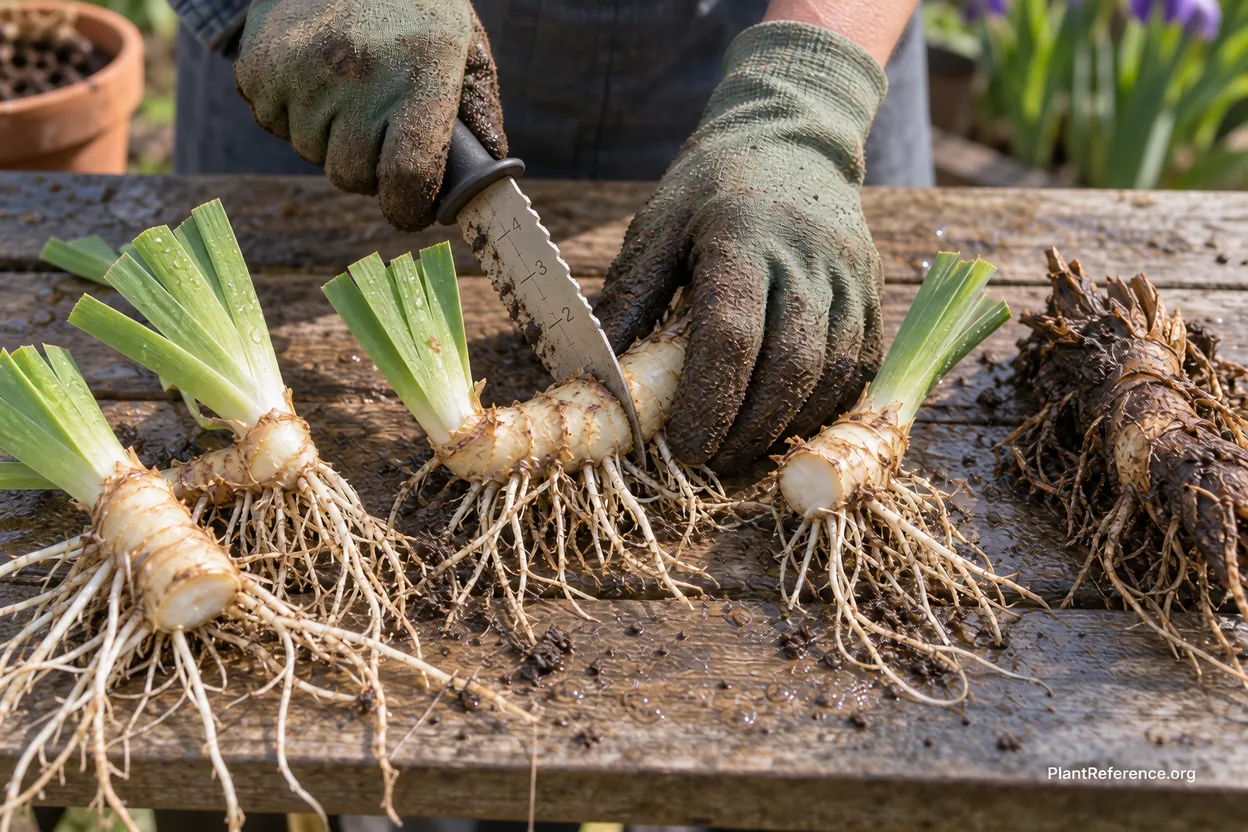
Separate by hand where you can. Young rhizomes often snap apart cleanly at the natural joint. Where they will not, cut with a sharp soil knife and disinfect the blade with 70% isopropyl alcohol between cuts, the same sanitation discipline that applies to any pruning job — see How to Prune Roses: When and How to Prune Every Type of Rose.
Inspect for borer and rot. A mushy, hollow, foul-smelling rhizome means iris borer, often with a pinkish larva up to 2 inches (5 cm) long inside. Destroy those — do not compost them. Bacterial soft rot shows as slimy, evil-smelling tissue; cut back to firm white flesh and let the cut surfaces cure in dry shade for a day or two before replanting.
Planting Depth: The Mistake That Kills Most Divisions
This is where people lose their irises, and it is entirely avoidable.
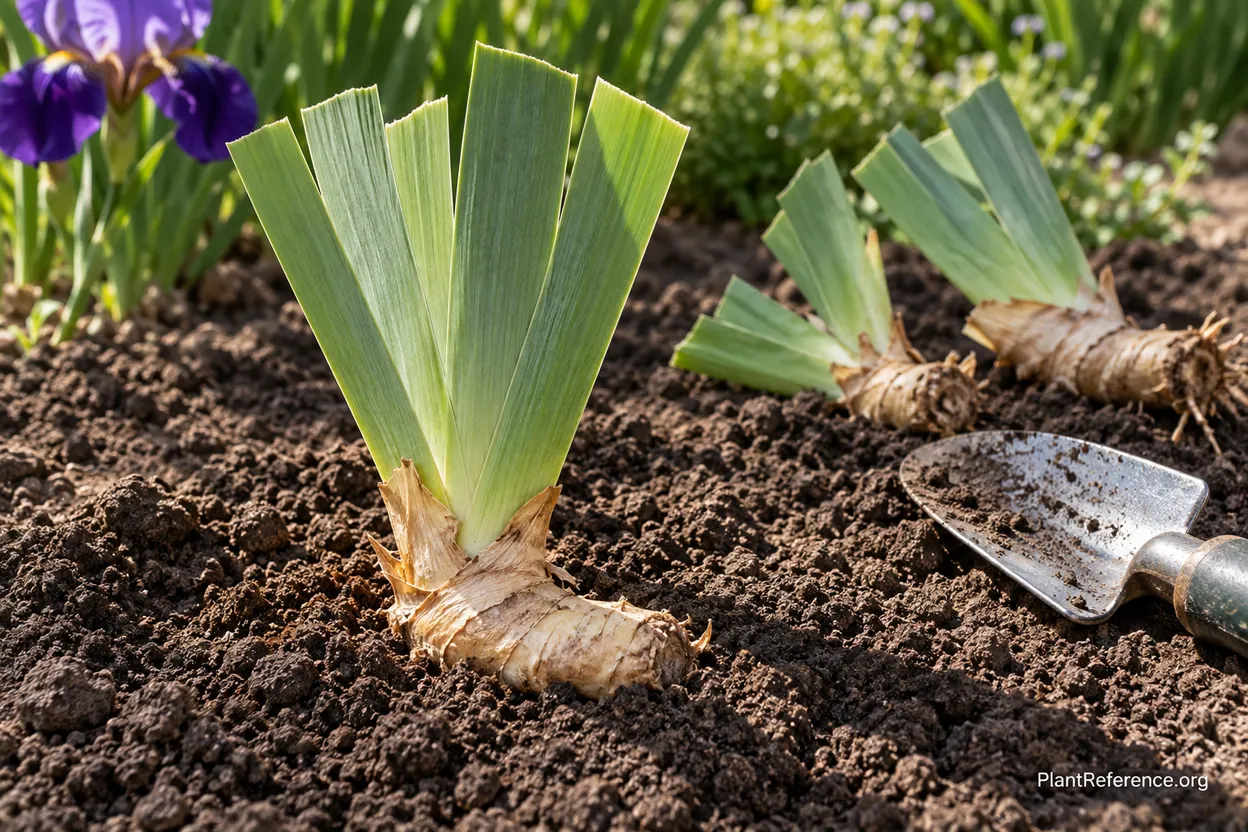
A bearded iris rhizome must sit with its top exposed at the soil surface. Not buried an inch down, not mulched over. The rhizome needs direct sun on its upper surface to initiate flower buds, and it needs air movement to stay dry enough to resist bacterial soft rot. Bury it and you get a clump of healthy-looking leaves that never blooms, followed a season or two later by rot.
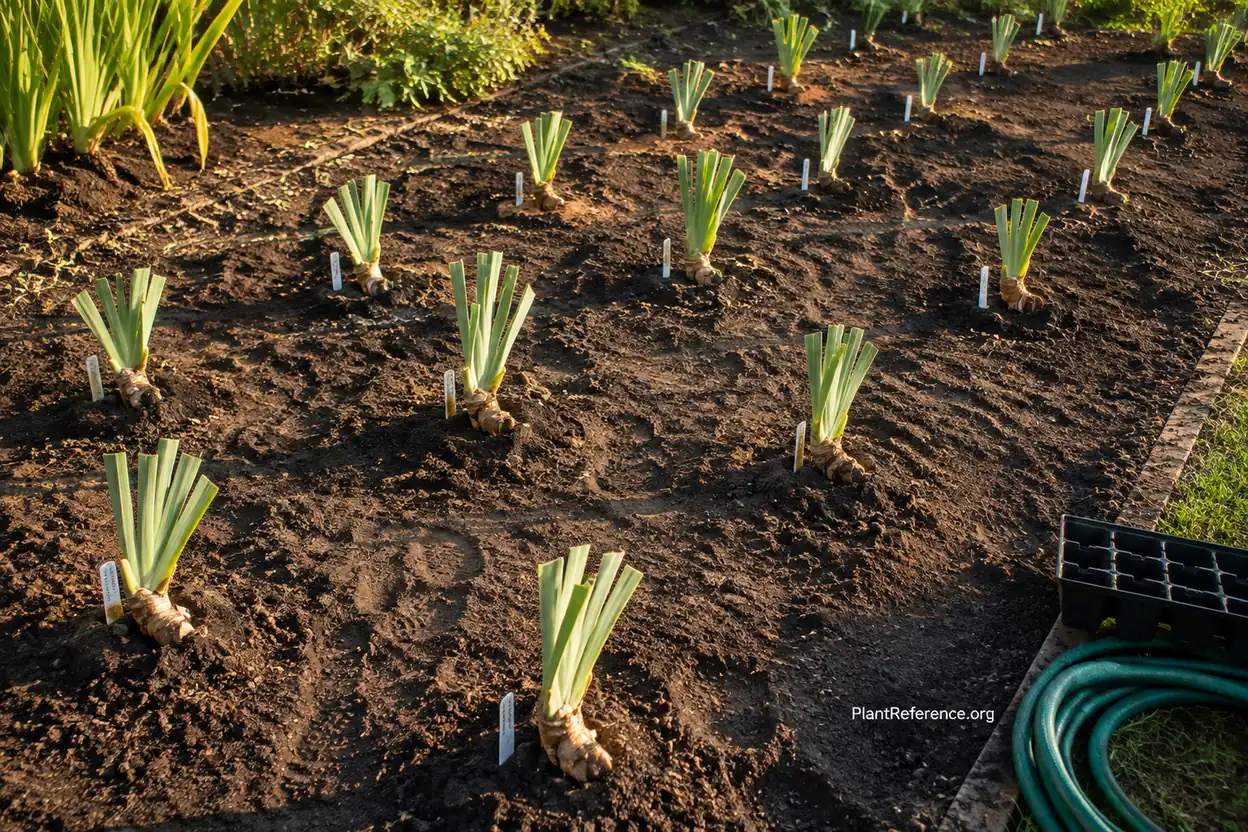
The planting method that works: dig a shallow hole and mound a ridge of soil down the middle. Straddle the ridge with the rhizome, drape the roots down both sides, and backfill only over the roots. When you finish, the top of the rhizome should be visible, like a potato half-buried in sand.
Space divisions 12-18 inches (30-45 cm) apart with the fans facing outward, so the rhizomes grow away from each other rather than back into a congested knot. Planting in groups of three with the cut ends toward the center gives you a full-looking clump in two seasons.
Amend the bed with compost while it is open, but keep nitrogen low. Fresh manure and high-nitrogen feeds push soft leafy growth that invites rot; a low-nitrogen fertilizer such as 5-10-10 or a scattering of bone meal worked into the backfill is all these plants want. If you are unsure what the bed is short of, test rather than guess — the approach in Nutrient Deficiencies in Raised Beds: Visual Diagnosis and Treatment and Raised Bed Soil pH Problems: Testing, Adjusting, and Maintaining Balance transfers directly to border soil.
Then leave the mulch off. Whatever you do for the rest of the bed, bearded iris rhizomes stay bare.
How to Divide Siberian and Japanese Iris
Everything above reverses for the beardless types.
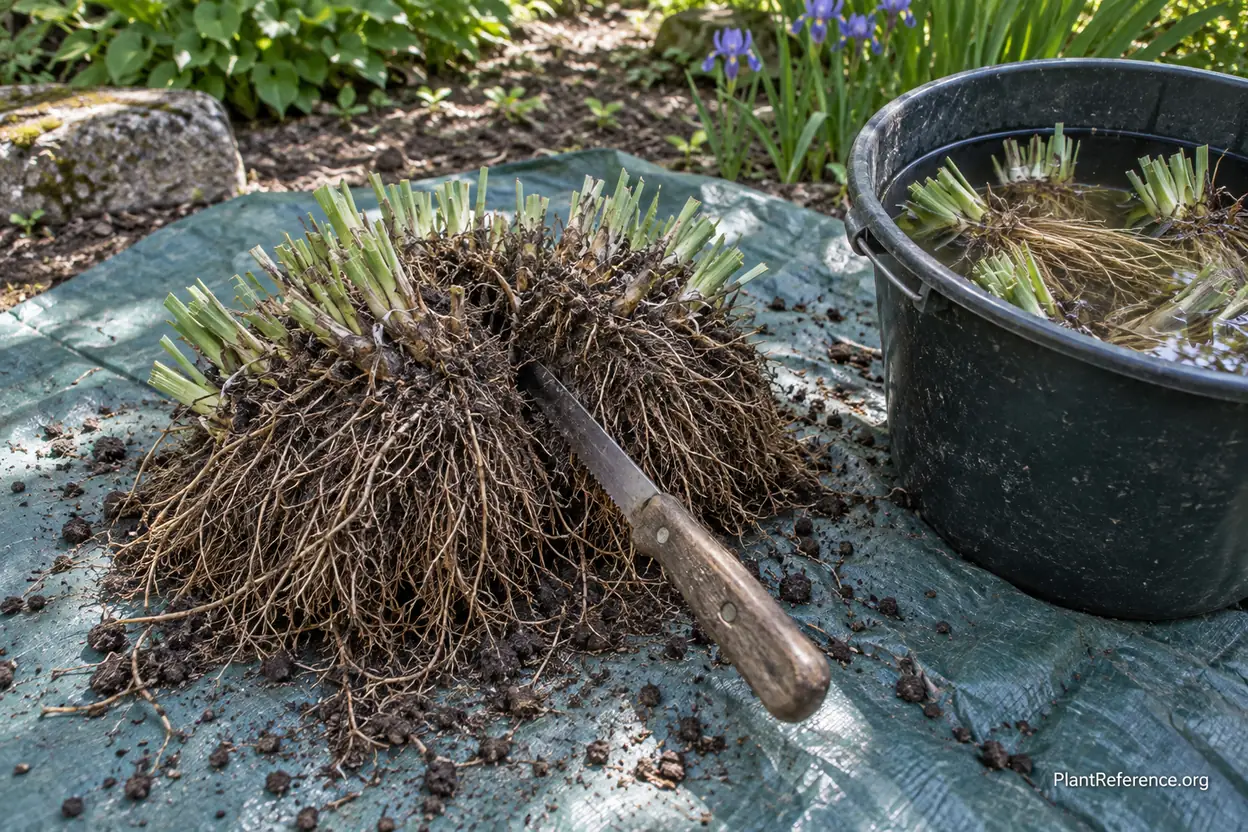
🌿Iris sibirica forms a dense fibrous root mass that gets genuinely tough with age. Lift it in early spring as growth starts, or in late August into September when reliable moisture returns. Cut the foliage to 6 inches (15 cm), lift the whole clump, and expect to work for it — a mature 🌿Iris sibirica 'Caesar's Brother' clump can defeat a spade. An old serrated bread knife or a reciprocating saw is not an exaggeration on a ten-year-old clump.
Aim for divisions with at least four or five growing points each. Smaller pieces survive but sulk for two seasons before flowering.
Replant at the depth the clump was growing, with the crown 1-2 inches (2.5-5 cm) below the surface. Unlike bearded iris, these roots must never dry out — work in shade, keep divisions in a bucket of water or under damp burlap, and water deeply after planting. Desiccated fibrous roots are the main reason Siberian divisions fail.
🌿Iris ensata follows the same method with two additions: it wants consistently wet soil through the growing season and genuinely acidic conditions. Lime near a Japanese iris is a slow death sentence, so keep it well away from anything you sweeten for the lawn or the vegetable beds — worth checking your seasonal liming plan in Lawn Care Schedule by Month: Your Complete Cool-Season Grass Calendar before you spread anything nearby. A free-draining, organic-rich mix suits all three species once depth is right, and the ratios in Best Soil Mix for Raised Beds: Creating the Perfect Growing Medium are a sound starting point for rebuilding a tired iris bed.
Aftercare and What to Expect Next Season
Water the new divisions in thoroughly, then back off. Bearded iris in particular needs far less water than people give it — soak once at planting, then water only during genuine drought while the roots establish. Consistently damp soil around a fresh rhizome wound is how soft rot starts.
Keep the area weeded but unmulched. Weeds compete hard with a division that has lost most of its root system, and the mulch you would normally reach for is exactly what these plants cannot have over the rhizome. The prevention-first approach in Raised Bed Weeds: Prevention Strategies and Control Methods works well here.
Cut the fans again to 6 inches (15 cm) after the first hard frost. This removes the leaf tissue where iris borer lays its eggs in autumn, which is the single most effective control available and costs nothing.
Then be patient. Divisions planted in August typically give a light bloom the following spring — a handful of stems rather than a display — and hit full flowering in year two. That is normal and not a sign anything went wrong. A clump that blooms sparsely in its first spring after division is a clump that is putting its energy into roots, which is exactly what you want.
Mark the locations before the foliage dies back. Bare-ground bearded iris is invisible in April and easy to spear with a spade, and a plant label costs less than a lost division.
Frequently Asked Questions
Reading about plants and recognising them are different skills. These three build the second.
- Daily PlantIdentify the day’s mystery plant from a close-up photograph.
- Keyed OutWork a dichotomous key, lead by lead, to name a hidden specimen.
- Name That PlantName a specimen from botanical clues dealt hardest first.
Free to play, no account needed
Tagged with
Kevin is a landscape contractor in the Boston area who specializes in cold-climate perennial gardens and hardscaping. He studied landscape design and worked at a prominent nursery on the North Shore before starting his own design-build firm. Kevin's gardens are built to handle New England weather—freeze-thaw cycles, nor'easters, late springs, and heavy snow loads. He's particularly interested in native perennials and shrubs that provide four-season interest without constant maintenance. Kevin writes about cold-hardy plant selection, winter garden structure, and building landscapes that look good even in February.