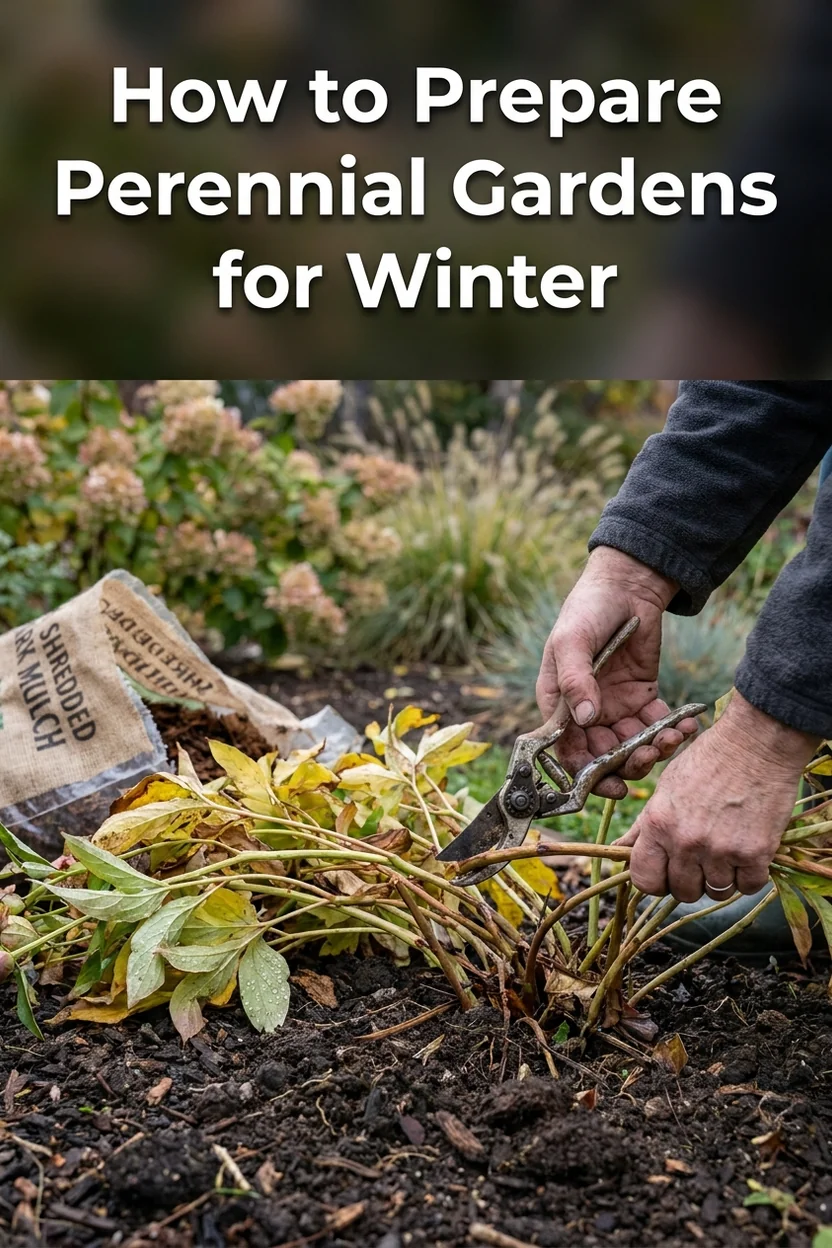
How to Prepare Perennial Gardens for Winter by Species
Pets & Toxicity
Recorded toxicity for plants linked in this guide. An unknown status is not a safety assessment.
Toxic to pets: garden peony, bearded iris, Siebold's hosta and 2 moreDetailsHide
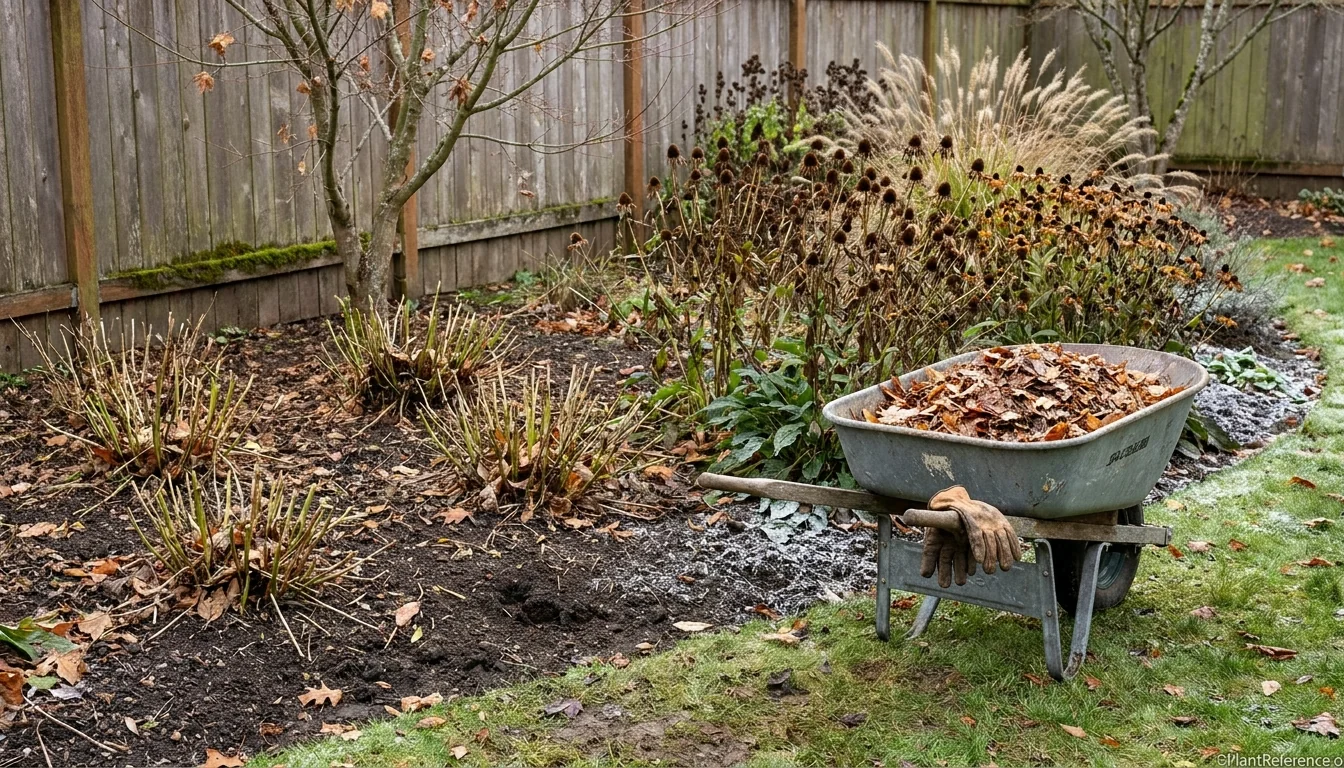
— Image © PlantReference.org 2026
Knowing how to prepare a perennial garden for winter is less about protecting plants from cold and more about managing water, timing, and airflow. A hardy perennial rated to Zone 4 does not die at -20°F (-29°C). It dies in March, sitting in a saucer of meltwater with its crown rotting, or with its roots pushed halfway out of the ground by a week of freeze-thaw cycles.
Why Perennials Actually Die Over Winter
I have dug up more dead perennials in April than I ever have in January, and the pattern is always the same. The crown is mushy, the roots below it are fine, and the plant sat in a low spot that collected runoff. Cold hardiness ratings assume decent drainage. They do not account for a bed that stays saturated from November through March.
The second killer is frost heave. When soil freezes and thaws repeatedly — which is most of a New England winter now — it expands and contracts, and shallow-rooted plants get levered upward until their crowns are exposed to drying wind. 🌿Heuchera villosa (HEW-ker-uh vil-OH-suh), coral bells, is the classic victim. Every spring I find clumps sitting an inch proud of the soil with white roots in the open air.
The third is a cleanup problem: cutting back too early. Foliage left green in October is still moving sugars down into the roots. Cut it in September and you have shortened the plant's fueling season by a month.
The Species-by-Species Cutback Checklist
There is no single rule for cutting back. The decision comes down to whether a species carries disease over winter, whether its foliage protects its own crown, and whether it holds up structurally. Here is how I sort the common ones.
Perennial | Cut Back in Fall? | Height to Leave | Reason |
|---|---|---|---|
Yes — always | 2 inches (5 cm) | Botrytis blight overwinters in the foliage | |
Yes — always | 2 inches (5 cm) | Powdery mildew spores persist on stems | |
Yes — always | 4-6 inches (10-15 cm) fan | Iris borer eggs overwinter in old leaves | |
Yes, after frost melts it | 1 inch (2.5 cm) | Slug eggs and crown rot in mushy foliage | |
Yes, after foliage yellows | 3 inches (8 cm) | Matted foliage traps moisture on crown | |
No | Leave standing | Seed heads feed finches all winter | |
No | Leave standing | Stems hold snow, seed heads feed birds | |
No | Leave standing | Rigid stems give winter structure | |
No | Leave all foliage | Evergreen rosette insulates its own crown | |
No | Leave all growth | Fall cuts trigger tender regrowth that dies | |
Light tidy only | 6 inches (15 cm) | Woody base needs its own stems for protection | |
Optional | 4 inches (10 cm) | Basal rosette overwinters green underneath |
Peonies are the one I get argued with most. People want to leave the foliage for looks. Don't — 🌿Paeonia lactiflora foliage is the single most reliable botrytis reservoir in a perennial border, and cutting it to 2 inches (5 cm) and removing it from the property breaks that cycle. If you want the full planting picture, How to Grow Peonies: Planting, Staking & 50-Year Blooms covers depth and siting, and Why Your Peonies Won't Bloom: The 5 Most Common Causes handles the follow-on problems.
Bearded iris is the other non-negotiable. Iris borer moths lay eggs on old 🌿Iris germanica leaves in fall, and those eggs hatch straight into the rhizome in spring. Cut the fans to 4-6 inches (10-15 cm), rake every scrap of debris away from the rhizomes, and bag it. How to Divide Irises Without Killing Them explains the rhizome handling in more detail.
What to Leave Standing (and Why It Matters)
A border cut flat in October is a border with nothing to look at until May. Standing stems also catch snow, and snow is the best insulation a perennial bed gets — a 6-inch (15 cm) blanket holds soil temperature far steadier than bare ground.
🌿Echinacea purpurea — seed heads feed goldfinches and juncos through January
🌿Rudbeckia fulgida 'Goldsturm' — dark cones read beautifully against snow
🌿Sedum spectabile — flat flower heads hold caps of snow all winter
Ornamental grasses — the single best source of winter movement and sound
🌿Nepeta racemosa — brittle stems shelter overwintering native bees
Roughly 30% of native bee species overwinter inside hollow or pithy plant stems. If you cut every stem to the ground in November, you have removed that habitat entirely. Leaving even a third of the border standing until April makes a measurable difference. How to Grow Coneflowers (Echinacea) That Feed Pollinators goes further into the ecology, and Perennial Combinations That Look Good Together helps you plan which clumps to leave where they'll actually look intentional.
For the full cutback logic across a wider plant list, When to Cut Back Perennials in Fall (And What to Leave) is the companion piece to this checklist.
Mulching: Timing Beats Material
This is where most winter prep goes wrong. Mulch applied in October keeps the soil warm, which keeps roots active, which delays dormancy and invites voles to move in for the season. Mulch applied after the top 2 inches (5 cm) of soil have frozen does the opposite — it keeps the soil frozen, which is exactly what stops frost heave.
Wait for two or three hard freezes. In most of New England that lands in late November or early December. Then apply 2-3 inches (5-8 cm) of loose material, keeping it pulled back an inch or two from every crown.
Shredded leaves — free, ideal texture, breaks down into the bed by June
Pine straw — stays loose and airy, never mats down over crowns
Evergreen boughs — excellent for shading crowns during winter thaws
Shredded bark — fine on established beds, too heavy over small crowns
Whole maple leaves — avoid; they mat into a wet mask that rots crowns
Shredded leaves are what I use almost exclusively. One pass with the mower over a leaf pile gives you a full season's mulch at no cost, and it feeds the soil the way bark never does.
Frost Heave, Wet Feet, and Crown Rot
Drainage is the fix that outlasts every other winter precaution. If a bed holds standing water for more than a few hours after rain, no amount of mulch will save marginal plants in it. Raising a bed 6-8 inches (15-20 cm) or amending heavily with compost changes the survival math permanently — Poor Drainage in Raised Beds: Causes and Fixes for Waterlogged Soil covers the diagnostics.
Water deeply one last time in late fall, before the ground locks up. Dormant roots still lose moisture to winter wind, and a plant going into December dry is a plant that desiccates by February. This matters most for anything planted that same year.
Skip the fall fertilizer. Nitrogen in September or October pushes soft new growth that has no chance of hardening off before the first hard freeze. If you want to feed, do it in spring when the plant can actually use it.
Borderline-Hardy Perennials That Need Real Protection
Anything rated one zone warmer than yours needs more than mulch. So does anything planted after mid-September, because it has not rooted in enough to resist heaving.
Evergreen boughs laid over crowns after the ground freezes, removed in early April
A double mulch layer, 4 inches (10 cm), on first-year plantings only
Burlap screens on the windward side of evergreen perennials and 🌿Heuchera villosa
Containers moved against a foundation wall and grouped together, or sunk into a spare bed
Container perennials are the most vulnerable of all — roots in a pot experience air temperature, not soil temperature, which effectively costs them two hardiness zones. A Zone 5 plant in a pot in Zone 5 will not survive. Sink the pot, group it, or accept it as an annual.
Lavender deserves its own note. Never cut 🌿Lavandula angustifolia back in fall. The old growth shelters the crown, and a fall cut triggers tender regrowth that dies at the first hard freeze, often taking the plant with it. Prune in spring once you see new leaves emerging on the woody stems.
Your Fall Timeline, Week by Week
Six weeks before first frost — stop fertilizing entirely, stop deadheading anything you want seed heads from
First light frost — cut back 🌿Iris germanica fans and any powdery-mildew-covered 🌿Phlox paniculata
After first hard freeze — cut 🌿Paeonia lactiflora, 🌿Hosta sieboldiana and 🌿Hemerocallis fulva, remove debris from the property
Late fall, before ground locks — water everything deeply, especially first-year plantings
After two or three hard freezes — apply 2-3 inches (5-8 cm) of loose mulch, add boughs over marginal species
Early April — pull mulch off crowns as growth starts, cut the standing stems you left for winter
Fall is also the best window for division on most spring-blooming perennials, so combine the jobs while you're already in the bed — How to Divide Perennials: A Species-by-Species Guide and How to Grow Daylilies: The Complete Guide to Division cover the timing. If deer pressure is part of your winter problem, Deer-Resistant Perennials: A Zone-by-Zone Planting Guide is worth reading before you replace anything that didn't make it. And when you're rebuilding beds in spring, Plan a Perennial Garden That Blooms Spring to Fall keeps the structure honest.
The gardens that come through February looking like something are the ones where the work was done in the right order, not the ones where everything got cut flat in a single October afternoon.
Frequently Asked Questions
Reading about plants and recognising them are different skills. These three build the second.
- Daily PlantIdentify the day’s mystery plant from a close-up photograph.
- Keyed OutWork a dichotomous key, lead by lead, to name a hidden specimen.
- Name That PlantName a specimen from botanical clues dealt hardest first.
Free to play, no account needed
Tagged with
Kevin is a landscape contractor in the Boston area who specializes in cold-climate perennial gardens and hardscaping. He studied landscape design and worked at a prominent nursery on the North Shore before starting his own design-build firm. Kevin's gardens are built to handle New England weather—freeze-thaw cycles, nor'easters, late springs, and heavy snow loads. He's particularly interested in native perennials and shrubs that provide four-season interest without constant maintenance. Kevin writes about cold-hardy plant selection, winter garden structure, and building landscapes that look good even in February.