Heuchera, Genus, villosa, Species,
- Genus & species
Hairy alumroot
Appalachian Mountains and interior highlands of the eastern United States
Overview
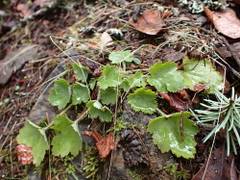
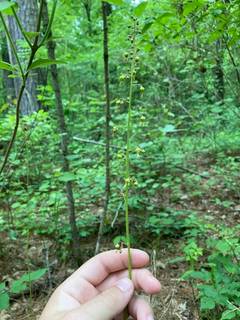
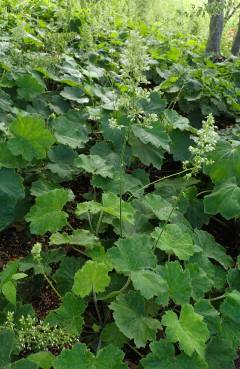
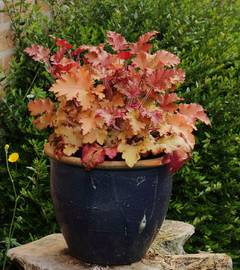
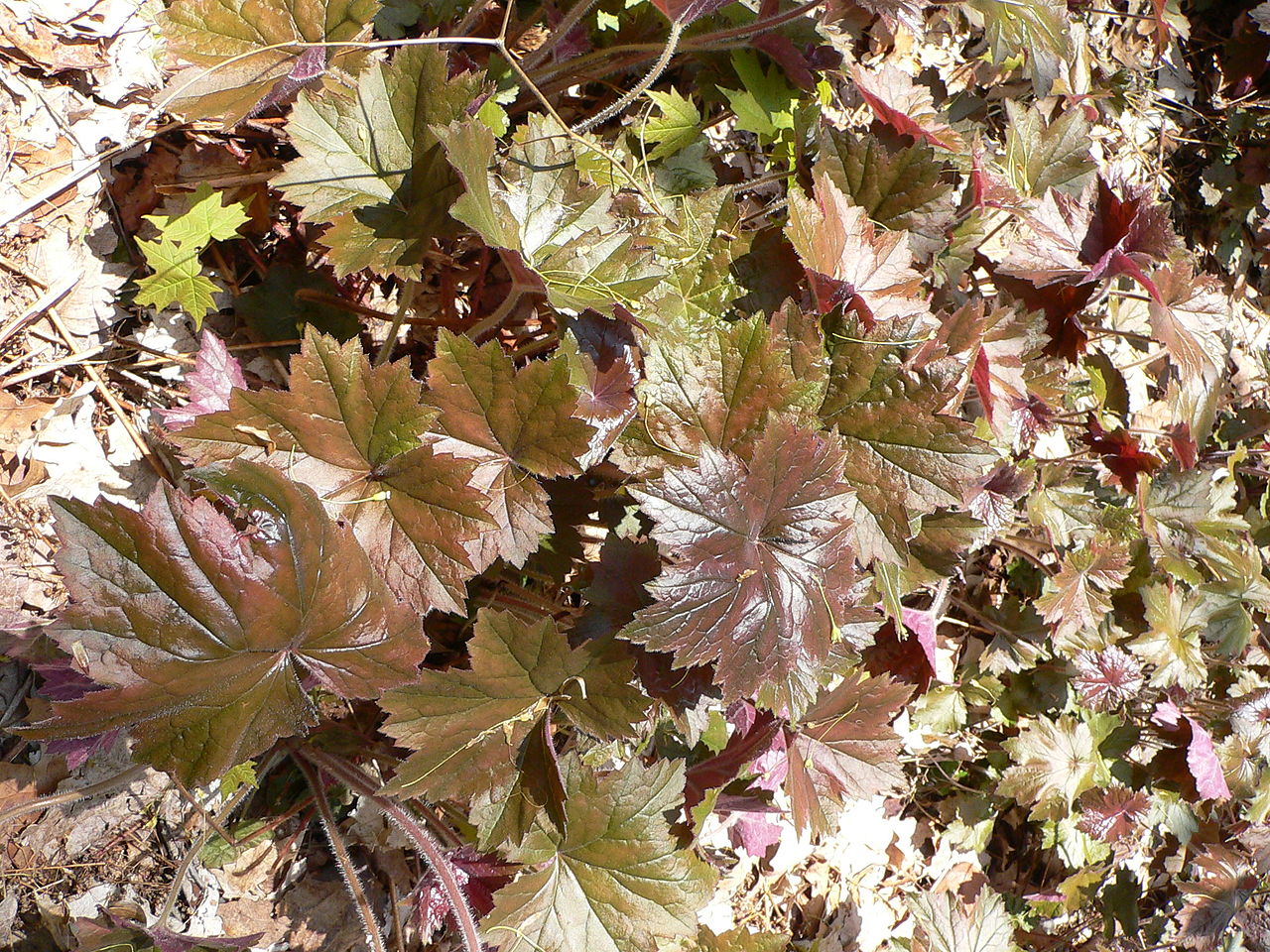
Heuchera villosa is a clump-forming herbaceous perennial holding a basal rosette of leaves 12-18 inches (30-45 cm) high and 18-30 inches (45-75 cm) across, with flowering stems carrying to 24-36 inches (60-90 cm). Leaves are maple-like, 3-8 inches (8-20 cm) wide, cut into five to nine shallow triangular lobes with pointed tips and coarse teeth, on petioles 4-8 inches (10-20 cm) long. Long spreading hairs cover the petioles, the leaf undersides, and the flowering stems. Foliage runs bright to olive green through summer and bronzes in cold weather, holding through winter in zones 7-9 and dying back in zones 4-5. Panicles of white to pale pink bell-shaped flowers, each 0.1-0.15 inch (3-4 mm) long with stamens projecting past the petals, open from July into October, later than other Heuchera species in cultivation. Winter freeze-thaw lifts the woody crown 1-2 inches (2.5-5 cm) out of the soil and the exposed roots then dry out, while plants in soil that stays wet are lost to crown rot. Black vine weevil larvae hollow the crown in container-grown stock. Hardy in USDA zones 4-9.
Native Range
Heuchera villosa is native to the eastern United States, from Pennsylvania and southern Indiana south through the Appalachians to Georgia and Alabama, and west into the Ozarks of Arkansas and Missouri. It grows on shaded sandstone and granite outcrops, cliff ledges, boulder faces, and rocky stream banks, rooting in thin humus pockets and rock crevices. Tolerance of southeastern summer heat and humidity is the reason the species appears in the parentage of many garden hybrids.Suggested Uses
Used in shaded rock gardens, wall-top and crevice plantings, woodland path edges, and as semi-evergreen edging in zones 7-9, spaced 18-24 inches (45-60 cm) apart. The species is planted at the base of shaded steps and retaining walls where the hairy petioles and pale panicles sit at close viewing height. Container culture works in pots of 2 gallons (7.5 L) or larger in a gritty bark mix, with plants moved out of winter sun in zones 4-5.How to Identify
Appearance
Size & Dimensions
Height1' - 3'
Width/Spread1'6" - 2'6"
Bloom Information
Panicles begin opening in mid-July in the southern part of the range and in early August farther north, running eight to ten weeks to the first hard frost in October. Each panicle holds 100-300 flowers that open from the base upward over two to three weeks. The flowers are small and pale, so the effect reads as a haze above the leaf mound rather than as a block of colour. Small solitary bees, sweat bees, and hoverflies work the shallow bells.
Detailed Descriptions
Flower Description
White to pale pinkFoliage Description
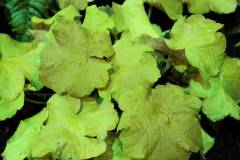
Bright to olive green, bronzing in cold weather, hairy on petioles and undersidesGrowing Conditions
Sun Requirements
Requires 2-6 hours of direct sunlight daily
• Full Sun: 6+ hours of direct sunlight
• Partial Shade: 3-6 hours of direct sunlight
• Full Shade: Less than 3 hours of direct sunlight
Care & Maintenance
Care Guide
Growth is steadiest in part shade with two to six hours of morning sun; foliage bleaches and scorches at the margins in full afternoon sun unless the soil stays damp. The species roots in humus-rich, gritty or rocky soil of pH 5.5-7.0 that drains freely, matching the crevice conditions of its native outcrops. Roughly 1 inch (2.5 cm) of water per week suits the shallow root system, and soil that stays saturated brings crown rot within a season. Crowns lift out of the ground over a freeze-thaw winter, and firming them back and drawing soil over the exposed woody base in early spring restores root contact. A spring topdressing of 1 inch (2.5 cm) of compost placed around, rather than over, the crown covers the season fertility. Clumps are lifted and divided every three to four years, with the woody rootstock cut into pieces carrying three or more growing points.Pruning
Winter-damaged and blackened leaves are cut at the petiole base in early spring as new growth starts, leaving the growing points at the centre of the crown intact. Flowering stems are cut to the base once the seed capsules brown in October, or left standing where the dried panicles are wanted through winter. The leaf mound needs no cutting back during the growing season.Pruning Schedule
Prune: March–April & October
early springfall
Container Growing
Suitable for container growing
Minimum container size: 2 gallons