Image 1 of 13
1 / 13
Plant Reference
Heuchera, Genus, micrantha, Species,
- Genus & species
native heuchera
Western North America — British Columbia south through Washington, Oregon, California, and east to Idaho; moist rocky outcrops, cliff faces, stream banks, shaded forest edges
Overview
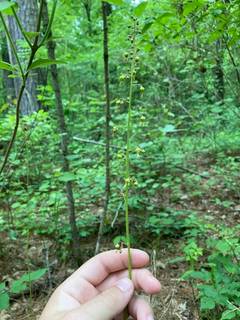
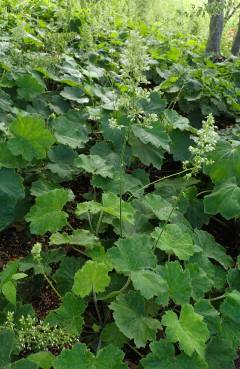
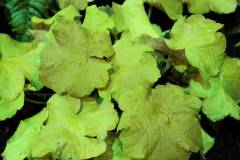
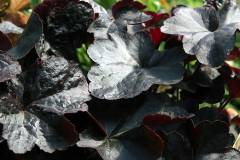
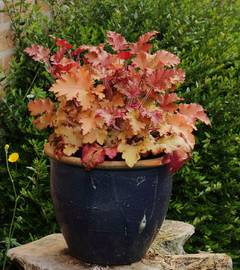
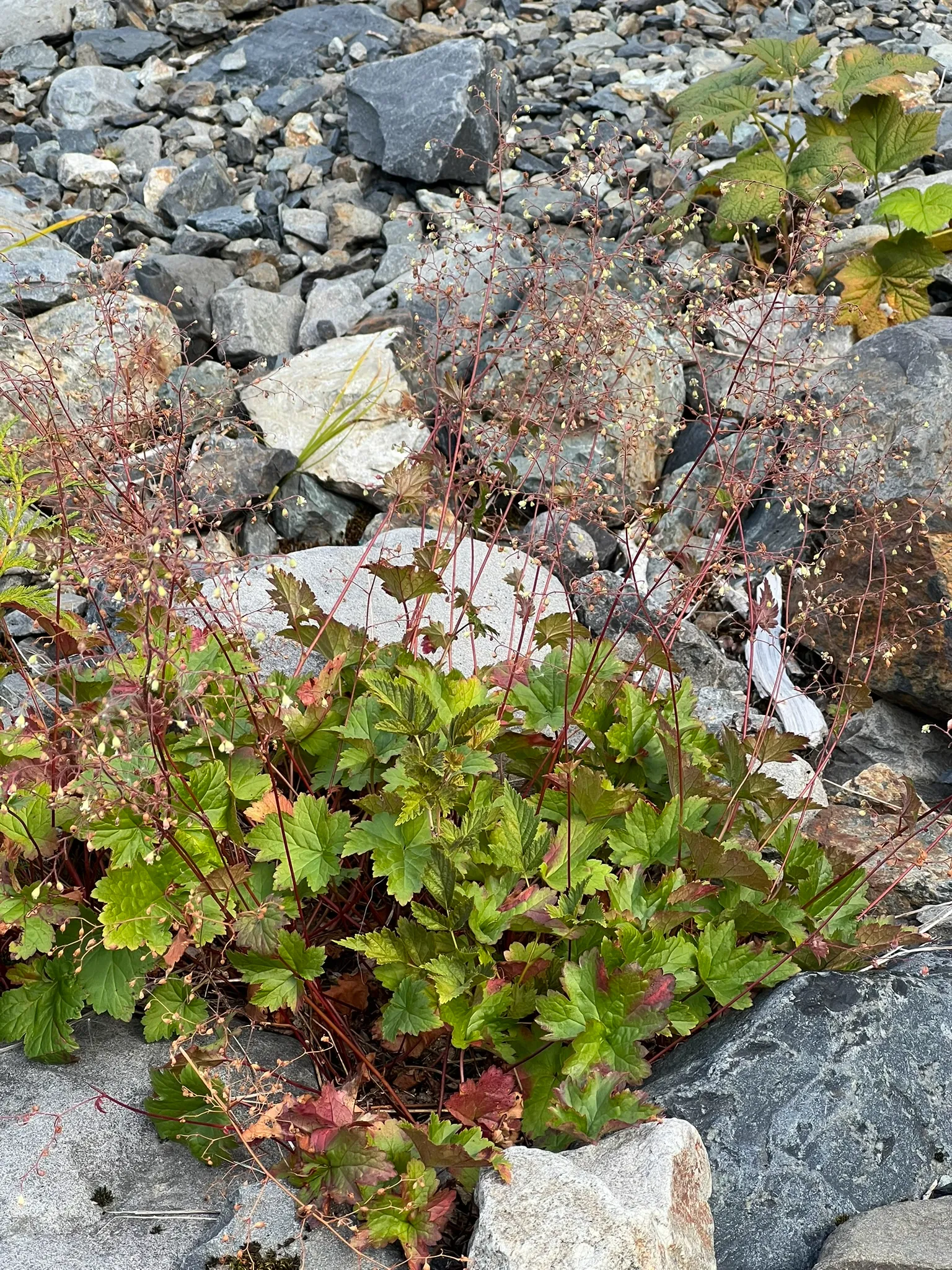
Heuchera micrantha is a clump-forming herbaceous perennial in the family Saxifragaceae. Plants form a basal rosette of rounded, palmately lobed leaves 2–4 inches (5–10 cm) wide with 5–9 shallow lobes, a cordate (heart-shaped) base, and prominent veining. Foliage is variably hairy and medium green, sometimes with light silvery mottling along the veins. Flowering stems are slender, wiry, and hairy, reaching 12–30 inches (30–75 cm) tall, while foliage remains at 6–10 inches (15–25 cm). From May through July, the stems bear loose, open panicles of many tiny five-petaled flowers 0.08–0.12 inch (2–3 mm) across in white to pale pink; the specific epithet micrantha means 'small-flowered'. Bloom duration is 6 weeks. Dried capsules persist into fall. The species is a parent of many horticultural Heuchera selections such as 'Palace Purple'. Leaf coloration is less saturated than in modern selections, and the tiny individual flowers register as a diffuse haze rather than a defined inflorescence.
Native Range
Native to moist rocky outcrops, cliff faces, stream banks, and shaded forest edges from British Columbia south through Washington and Oregon to California, and east to Idaho.Suggested Uses
Planted as a woodland groundcover and border edging in shade gardens and rocky woodland plantings at 12–18 inch (30–45 cm) spacing. The airy flower panicles and mounded basal rosettes add finely textured contrast among coarser shade plants. The parent species of many modern horticultural Heuchera selections suits native plant gardens and educational plantings. Combines with Polystichum munitum, Dryopteris expansa, Oxalis oregana, and Trillium ovatum in PNW shade gardens.How to Identify
Appearance
Size & Dimensions
Height1' - 2'6"
Width/Spread1' - 1'6"
Bloom Information
Produces loose, open panicles of tiny white to pale pink five-petaled flowers 0.08–0.12 inch (2–3 mm) across from May through July on slender wiry hairy stems 12–30 inches (30–75 cm) tall. Bloom duration is 6 weeks. The overall visual effect is a diffuse haze of small flowers above the basal foliage. Flowers supply nectar for native bees and hoverflies. Dried seed capsules persist into fall.
Detailed Descriptions
Flower Description
White to pale pink; tiny five-petaled flowers 0.08–0.12 inch (2–3 mm) on wiry hairy stems 12–30 inches; loose open panicles May–JulyFoliage Description
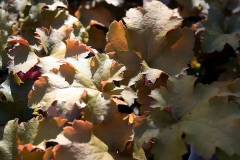
Medium green with occasional light silvery mottling along veins; rounded palmately lobed 5–9 lobes; 2–4 inches (5–10 cm) wide; cordate base; variably hairyGrowing Conditions
Sun Requirements
Requires 1-4 hours of direct sunlight daily
• Full Sun: 6+ hours of direct sunlight
• Partial Shade: 3-6 hours of direct sunlight
• Full Shade: Less than 3 hours of direct sunlight
Care & Maintenance
Care Guide
Plant in partial to full shade in humus-rich, well-drained loam, rocky, or sandy soil at pH 5.5–7.0. Hardy in USDA zones 4–9. Tolerates a range of moisture from well-drained to occasionally moist. Waterlogged soils and hot afternoon sun reduce vigor and can cause crown rot. Mulch lightly to conserve moisture and protect shallow roots. Divide congested clumps every 3–4 years in early spring, replanting the outer crown divisions and discarding the woody center.Pruning
Cut back flower stems after bloom if the diffuse flower effect is not wanted. Remove tatty basal leaves in late winter before new growth emerges. Divide every 3–4 years in early spring; replant crown divisions at the original soil level and discard the woody center of old clumps.Pruning Schedule
Prune: February–March
early spring
Container Growing
Suitable for container growing
Minimum container size: 2 gallons